
Table of Contents (12)
007 First Light could be the PS5 Pro showcase Sony actually needed
Console graphics arguments used to be simpler, and honestly, more annoying. You picked the pretty 30 FPS mode or the softer 60 FPS mode, then spent the next hour pretending the compromise did not bother you. It always bothered you. The higher frame rate felt better, but image quality often took the hit in exactly the places players notice most: shimmering foliage, unstable fine detail, crawling edges on fences and wires, and that weird softness that makes a game look less expensive in motion than it does in screenshots.
That is why 007 First Light is suddenly interesting as a tech story, not just a game story. The PS5 Pro version is being positioned around upgraded PSSR, Sony’s machine-learning-based PlayStation Spectral Super Resolution, with the promise of a cleaner, more stable image while staying on the all-important 60 FPS track. And unlike some early PS5 Pro messaging that felt suspiciously close to “trust us, it is better,” this one comes with a more coherent technical explanation. The upscaler has reportedly improved, the engine beneath it has evolved, and the target makes sense for the kind of cinematic stealth-action experience Bond-style games live or die on.
The short version is this: PS5 Pro is not trying to brute-force native 4K everything. It is trying to spend its performance budget more intelligently. PSSR is not wizardry; it is a very smart trade. Render fewer pixels internally, use reconstruction to recover a sharper output, and spend the saved GPU time on lighting, effects, detail, and frame-rate headroom. When it works, that is exactly the sort of compromise players stop noticing, which is the whole point.
PSSR 2, PSSR 2.0, upgraded PSSR: the label is messy, the goal is not
One thing worth clearing up immediately: public coverage has used a few different names for Sony’s newer reconstruction pass. Some reports call it PSSR 2, some call it PSSR 2.0, and Sony’s own messaging often leans on the safer phrase “upgraded PSSR.” If the naming feels a little untidy, that is because it is. The practical meaning is clearer than the branding. This is a newer version of Sony’s PS5 Pro upscaling pipeline, and the focus is not just sharper static images. The real focus is motion stability.
That distinction matters. Players do not experience games as still frames. They experience them while panning the camera through detailed scenes, sprinting through vegetation, sneaking past railings and grates, or watching facial close-ups under tricky lighting. An image can look fantastic in a frozen screenshot and still fall apart the moment motion starts. Early impressions of the upgraded PSSR across supported PS5 Pro titles have consistently pointed to better handling of those problem cases: less shimmering, less flicker, less breakup in thin geometry, and fewer distracting artifacts in motion.
That is exactly where the original version of PSSR had something to prove. Sony’s first crack at it was never a disaster, but it could look unstable in scenes packed with foliage, particles, fine patterns, or aggressive lighting. Those are not edge cases in modern blockbuster games; those are Tuesday. So when the conversation around 007 First Light centers on a cleaner and more stable reconstruction path by default on PS5 Pro, that is not marketing fluff by itself. It goes straight to the most visible weakness this class of technology has had to overcome.
Specifications
Why image stability matters more than a flashy resolution bullet point
Resolution talk gets way too much attention because it is easy to print on a box. Stability is harder to market, but it is what your eyes actually argue with. If a game outputs a nominally high-resolution image that flickers on foliage, crawls on window blinds, and turns hair, wires, or textured fabrics into a noisy mess during camera movement, the experience feels cheaper than the spec sheet suggests. That is why the improvement claims around 007 First Light are meaningful. They are aimed at the parts of image quality players notice subconsciously every second they play.
A stable 60 FPS image usually looks more premium than a sharper but restless one. That is the point Sony’s upscaling story has been circling for a while, and it is finally landing in a way normal players can understand. In a cinematic action game, the camera is always doing work: framing a corridor, following a takedown, pulling across a crowd, pushing into a face during dialogue. If the reconstruction is solid, all those moments feel deliberate and expensive. If it is not, the image can look like it is quietly vibrating under the scene.
Foliage is the classic stress test here because it is basically a conspiracy against every upscaler on earth. Leaves are thin, dense, semi-random, and constantly moving. Add lighting changes and camera motion and you have a recipe for shimmer. Fine geometry is no kinder: fences, metal grates, railings, thin architectural lines, patterned fabrics, and strands of hair all love exposing weaknesses in temporal reconstruction. Reports around upgraded PSSR specifically cite improvements in those areas, which is why the phrase “more stable” matters more than a vague promise of “better graphics.”

007 First Light is exactly the kind of game that exposes bad reconstruction
Bond games, or Bond-adjacent games if you want to be precise about the new story direction, tend to lean into a very specific visual language. Stylish interiors. Tailored clothing. Strong facial close-ups. Glossy surfaces. Thin architectural details. Dense exterior environments that want to look expensive without becoming unreadable. That combination is brutal for image reconstruction. Character close-ups reveal problems in skin detail, stubble, hair, and eyes. Luxury interiors are full of sharp lines and reflective materials. Outdoor areas tend to bring foliage, distant geometry, and lighting complexity into the mix.
That makes 007 First Light a better test for PS5 Pro image quality than some louder, more chaotic games. In a noisy explosion-heavy shooter, a lot of visual sins can hide behind spectacle. In a measured stealth-action sequence or a dialogue-heavy cinematic, there is nowhere to hide. If character detail smears in motion, if suit fabric sparkles strangely, if background foliage crawls during slow camera movement, players will see it. They may not describe it in rendering terms, but they will feel the image fighting them.
It also means improved reconstruction is not just about screenshots shared on social media. It affects the texture of the whole experience. Better temporal stability helps aiming feel cleaner because the scene is easier to parse in motion. It helps stealth readability because distant shapes and silhouettes hold together. It helps cinematics because faces and costume details do not dissolve into a soft, unstable soup when the camera moves in. For a game built around style, presence, and controlled pacing, that is a big deal.
The Glacier Engine is doing at least as much work as the upscaler
Here is the part that marketing blurbs usually skip: an upscaler is downstream of the renderer. It can only do so much if the input is messy. Feed it clean motion vectors, coherent temporal data, stable lighting, and sane post-processing, and it looks clever. Feed it alpha-heavy chaos, noisy effects, broken motion information, or inconsistent detail, and even a very good model starts guessing. That is why the Glacier Engine side of this story matters just as much as PSSR itself.
IO Interactive’s broader technical messaging around 007 First Light points to an evolved Glacier stack built with a 60 FPS target in mind on PS5 and Xbox Series X, alongside more advanced lighting and environmental systems. Public discussion around the engine has highlighted real-time global illumination work, richer volumetrics, and broader rendering upgrades that are meant to modernize the look without turning the whole frame budget into a bonfire. That balance matters. If the engine is more efficient and more coherent frame to frame, the upscaler has better material to reconstruct from.
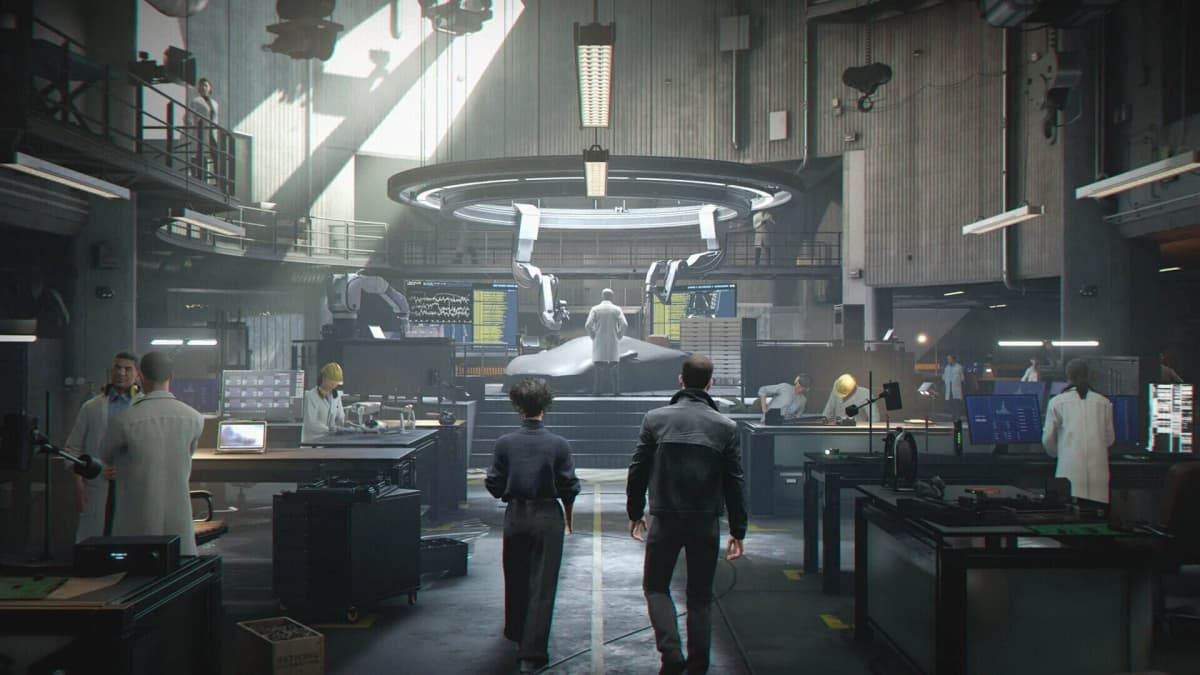
There is also a small but important technical clue in IO’s claim that the upgraded PSSR integration was quick and did not require per-scene tuning. If that holds true in the final shipping game, it says something nice about the pipeline. It suggests Glacier is already producing the kind of temporal data modern reconstruction likes to eat. That is not a guarantee of perfection, but it is a far better sign than a last-minute retrofit where a studio spends months patching edge cases after launch.
This is the difference between “AI upscaling” as a buzzword and reconstruction as an actual rendering strategy. The best implementations are not miracle add-ons. They are part of an engine-wide plan. The renderer is designed around a performance target, effects are budgeted with reconstruction in mind, motion data is handled properly, and then the upscaler turns those ingredients into a cleaner final image. When people say PS5 Pro support finally sounds believable here, that is why. The pitch is not just “more pixels.” It is a more complete story about how the frame gets built.
This also explains why the same upgraded PSSR can look different from game to game. Recent public testing across multiple PS5 Pro titles suggests the newer reconstruction library is generally better than the original, but implementation quality still matters. A system-level improvement can clean up a lot, yet games with weak inputs or minimal developer oversight can still show artifacts. 007 First Light is more promising than a simple after-the-fact patch precisely because it appears to be shipping with the improved path baked into its launch configuration.
Base PS5 versus PS5 Pro: what the difference should actually look like
The most useful expectation to set is also the least glamorous one: do not expect a generational leap in art direction or content density. Expect the same game to hold together better on PS5 Pro. The base PS5 version still uses a modern upscaling path, and nothing publicly suggests it will be some mangled compromise. In fact, if IO’s 60 FPS ambition across the standard consoles lands well, the base experience could still be very strong. The Pro version’s advantage is more likely to be refinement than reinvention.
That refinement still matters a lot. Compared with FSR 3.1.5 on base PS5, upgraded PSSR on PS5 Pro is being pitched as sharper, denser, and more stable, especially in foliage, fine geometry, and character detail. In practical terms, that means cleaner camera pans across detailed environments, fewer sparkling edges in the distance, better preservation of facial and costume detail in close-ups, and a more convincing image during traversal or action. The difference may not slap you across the face in every still image, but it should show up in motion over long play sessions.
That is the right way to think about PS5 Pro here. It is not about winning a paused zoom battle on a screenshot. It is about reducing the little visual irritations that quietly chip away at immersion. A console game is not a gallery of frozen screenshots; it is a chain of moving compromises. If PS5 Pro makes those compromises harder to see while keeping the same 60 FPS ambition, that is a meaningful upgrade even if the broad structure of the game remains the same.
The part no one should oversell: a 60 FPS target is not the same as a locked 60 FPS result
This is where a little skepticism is healthy. IO’s target matters, but a target is still a target. There is a huge difference between designing for 60 FPS and delivering an unwavering 16.7ms frame-time in every heavy scene, every dense combat sequence, and every effects-rich set piece. Upscaling helps GPU load. It does not magically remove CPU limits, simulation spikes, streaming hitches, or engine bottlenecks. That is why pre-launch phrasing should be read as promising, not final.
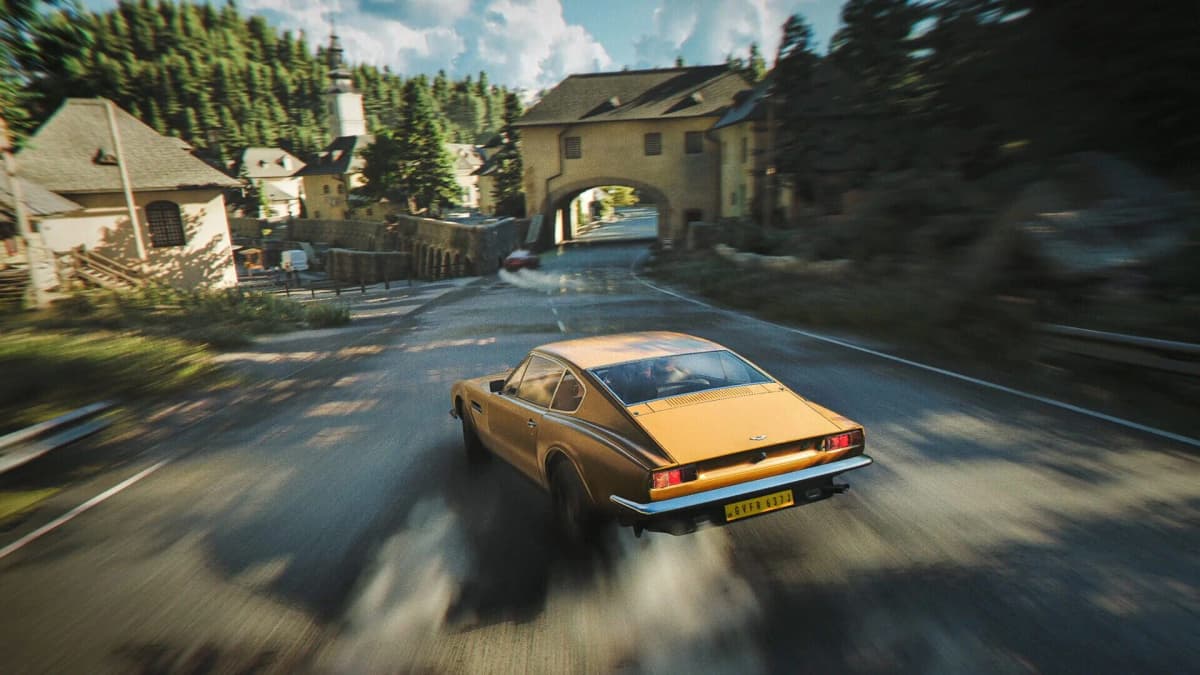
- Heavy foliage scenes: This is where improved reconstruction should shine, but it is also where rendering cost and image instability tend to collide.
- Close-up cinematics: Faces, hair, suit fabrics, and specular highlights will show whether the cleaner-detail claims are real or just optimistic.
- Fast camera motion: A good reconstruction pass survives quick pans without turning thin detail into shimmer soup.
- Action-heavy sequences: Particles, muzzle flashes, volumetrics, and dense lighting can still stress both performance and image quality at the same time.
- Frame pacing, not just frame rate: A game can average near 60 and still feel rough if delivery is uneven.
None of that is a knock on 007 First Light. It is just the reality of modern rendering. If anything, the encouraging part is that the technical conversation around the game sounds grounded. It is not pretending PSSR alone solves everything. The better read is that upgraded PSSR gives IO more room to chase a premium-looking 60 FPS presentation on PS5 Pro without the usual image-quality tax becoming so obvious.
Who should care about the PS5 Pro version, and who probably should not
If you already own a PS5 Pro, this looks like exactly the sort of game you bought that hardware for. Not because it will necessarily transform the design of the game, but because it targets the things the Pro is best at improving: reconstructed image quality, motion stability, and a more expensive-looking 60 FPS presentation. 007 First Light seems tailored to expose those benefits in all the right ways, from cinematic close-ups to foliage-rich exteriors to architecture full of thin, fussy detail.
If you own a base PS5, the answer is more practical. Upgrading just for this game only makes sense if you are especially sensitive to shimmer, softness, and the usual performance-mode compromises. The standard PS5 version still appears built around a legitimate 60 FPS ambition with FSR 3.1.5, which means the core experience is not being abandoned. The Pro version looks like the cleaner console presentation, but not necessarily the only acceptable one. That distinction matters when the hardware price is real money and not just a line in a slide deck.
And if you are the sort of player who mostly notices frame rate but not reconstruction artifacts, the Pro story may sound more dramatic than it feels. Some people immediately spot crawling edges and unstable foliage. Others do not care as long as controls feel responsive. Both reactions are fair. But for players who do notice image instability, it can be impossible to unsee once a game starts moving. Those are the players most likely to appreciate what upgraded PSSR is trying to fix.
✓ PROS
+
Upgraded PSSR targets the exact visual artifacts players notice most in motion
+
PS5 Pro gets the improved reconstruction path by default at launch
+
Glacier Engine upgrades suggest the visual leap is rooted in the whole pipeline, not a cheap sharpening trick
+
A 60 FPS goal fits the needs of a cinematic stealth-action game
✗ CONS
–
“PSSR 2” versus “PSSR 2.0” branding is still messy
–
A 60 FPS target does not guarantee a perfect lock in every scene
–
Base PS5 may still be good enough for many players, limiting the value of a hardware upgrade
–
Reconstruction quality always depends on implementation, not just the label on the box
The real takeaway: this is the kind of PS5 Pro story that finally sounds honest
The most encouraging thing about 007 First Light on PS5 Pro is not that it promises “better graphics.” Every platform update promises that. What stands out is that the claim lines up with real rendering logic. An improved reconstruction pipeline should help exactly where earlier implementations struggled. A game like this should benefit from cleaner motion stability because its visual identity depends on fine detail, facial clarity, and stylish environments. And an engine tuned around 60 FPS goals gives the upscaler a much better chance of looking good in the first place.
There is still room for caution until final capture analysis can confirm frame pacing, stress scenes, and side-by-side behavior. But as a tech case, 007 First Light makes sense in a way some early PS5 Pro showcases did not. It suggests Sony’s machine-learning upscale story is maturing, and more importantly, it shows what happens when a developer seems to understand the assignment. Not native-4K purism. Not empty AI buzzwords. Just a smarter path to a cleaner 60 FPS image on a fixed box under a television.
FinalBoss // Gear
Level up your setup
01Best-selling PS5 gameson Amazon→02DualSense controllerson Amazon→03PS5 SSD upgrades (M.2 NVMe)on Amazon→04Discounted game keyson Kinguin→
Affiliate links · As an Amazon Associate, FinalBoss earns from qualifying purchases.