
Table of Contents (10)
007 First Light makes the PS5 Pro pitch easy to understand
If there has been one recurring irritation in this console generation, it is the way “4K 60fps” keeps arriving with an asterisk the size of a bus. One mode looks cleaner but drops to 30fps. Another hits 60fps but leans so hard on image reconstruction that fine detail starts buzzing, edges crawl, and the whole picture feels like it is being held together by optimism and post-processing. 007 First Light is a particularly revealing case because IO Interactive’s new Bond game is visually rich in exactly the places where those compromises show up: advanced lighting, dense scene detail, refined shadow work, volumetrics, and lots of subtle motion in cinematic environments.
That is why the PS5 versus PS5 Pro comparison matters here. This is not a case where the base PS5 version is broken and the Pro version sweeps in like a superhero. Both consoles run the game well enough to be playable and, in the case of base PS5’s Performance Mode, impressively smooth. The real split is image quality. Base PS5 asks the upscaler to do a ton of rescue work. PS5 Pro, using Sony’s newer PSSR path, produces a noticeably cleaner, more stable picture while still targeting 60fps. This is the version of the PS5 Pro promise that makes sense: not louder marketing, just fewer compromises.
The buying question, then, is pretty simple. If 007 First Light is one of the games pushing the console decision, how much better is PS5 Pro in practice, and does that difference justify spending more money? The short answer is that PS5 Pro is clearly the better version, but the reason is more subtle than raw frame-rate bragging. It is cleaner, calmer, and closer to what base PS5’s 30fps Quality Mode is trying to achieve, except it gets there at 60fps.
Why this game is such a revealing console stress test
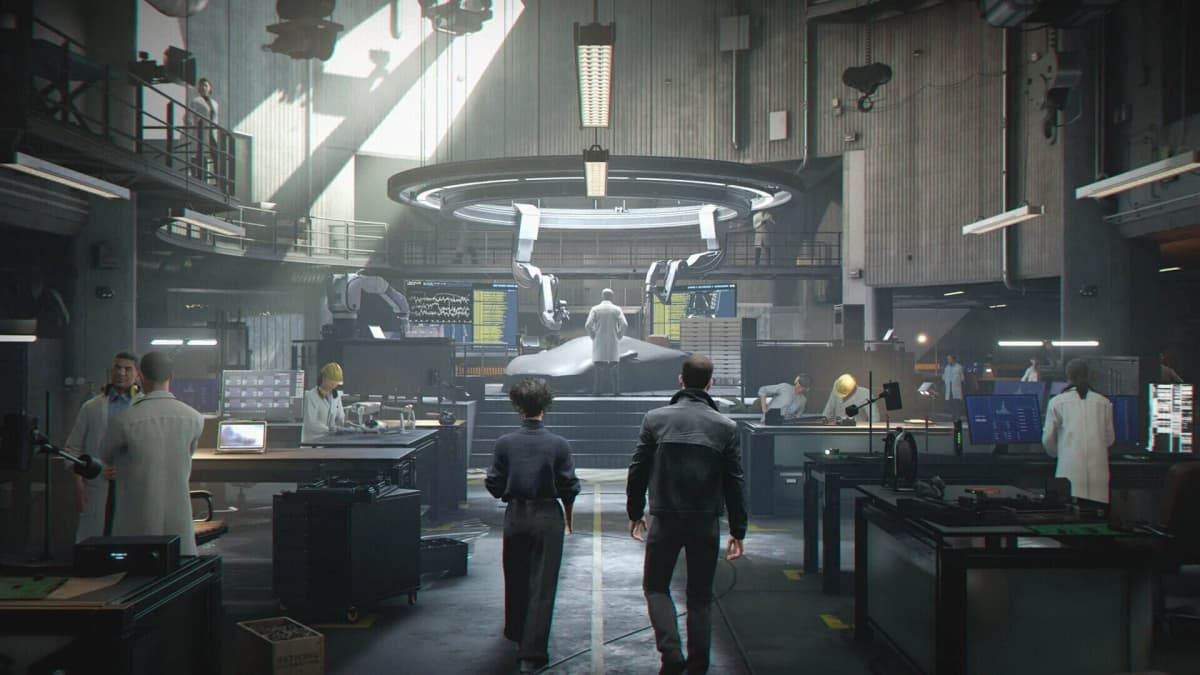
007 First Light is not just another cross-platform release with a Bond logo stamped on it. It is a current-generation Glacier engine showcase, and recent technical analysis has highlighted new rendering work that goes beyond a simple visual tune-up. The game uses a software RTGI solution, upgraded volumetrics, improved shadows, and more advanced NPC rendering than older Glacier outings. Those features matter because they create the kind of image that rewards stability. Soft light bouncing through a room, haze sitting in a corridor, shadow transitions on tailored clothing, distant geometry framed by specular highlights – these are exactly the details that fall apart first when the reconstruction pipeline gets overworked.
That is why this comparison is more useful than a lot of “Pro vs base console” face-offs. Sometimes the difference boils down to a slightly sharper image in still shots, which is nice but not exactly life-changing from a couch. Here, the technology stack itself puts reconstruction quality front and center. Base PS5’s upscaling path has more obvious work to do, and the result is that image artifacts become part of the conversation. PS5 Pro’s extra GPU headroom and cleaner reconstruction do not completely transform the art direction, but they allow the game’s visual strengths to survive intact more often.
PS5 Pro is not turning 007 First Light into a different game. It is letting the same game stop arguing with its own image reconstruction. That distinction is important, because it keeps expectations honest. If someone is hoping for a generational leap in geometry, animation, or completely new effects, that is not what is happening here. The gain is in presentation quality, and in a modern console game built around reconstruction, presentation quality is a bigger deal than it sounds.
Base PS5 still delivers the game, but the compromise is easy to spot
Let’s start with the important part: base PS5 is not a disaster. Recent analysis describes the 60fps Performance Mode as generally stable, and that matters because this kind of stealth-action experience benefits enormously from smoother motion. Camera pans feel better. Aiming feels better. The whole rhythm of moving through a level, reading a space, and reacting quickly works better at 60fps than it does at 30. Anyone pretending otherwise is doing the usual fake-purist thing where “cinematic” becomes a euphemism for sluggish.
The problem is how base PS5 gets there. Comparison coverage points to low internal rendering ranges in the 720p-to-1080p neighborhood depending on scene and mode, with FSR 3.1.5 doing the heavy lift to rebuild a 4K-class image. That is where the visible tradeoff appears. Fine details do not always hold together cleanly in motion. Edges can look rougher. Shimmering and instability become more noticeable on busy backgrounds, thin geometry, or distant detail. If the TV is large enough, or if the player is the sort of person whose eyes immediately lock onto aliasing, base PS5 Performance Mode can look more like an ambitious reconstruction than a naturally clean 4K presentation.
There is also the 30fps Quality Mode on base PS5, and that is the classic console compromise in one menu option. It gives the renderer more room to breathe visually, but it asks the player to accept halved motion fluidity. Some people still prefer that. There are players who would rather have the cleaner image and take the hit to responsiveness. But in a game like 007 First Light, where camera control, quick movement, and moment-to-moment responsiveness matter, the 30fps tax is not trivial. Base PS5 effectively makes you choose between the picture and the feel.
That is the entire frustration of the standard PS5 version in one sentence: it can either be smoother or cleaner, but it cannot comfortably be both. And once that becomes the choice, the PS5 Pro version starts making a lot more sense.

PS5 Pro mostly solves the compromise instead of just moving it around
On PS5 Pro, the headline is not “look at this insane frame-rate leap.” In fact, that would be the wrong way to describe what is happening. The real win is that the console can present a quality-style 60fps experience without forcing the player into the same visual sacrifice that base PS5’s Performance Mode makes. Recent technical coverage has described the Pro version as effectively locked at 60fps, and just as importantly, it does so with a much cleaner reconstructed image using Sony’s newer PSSR implementation.
That cleaner output is the key. Reported comparisons place the Pro’s internal render at roughly the 1270p class before reconstruction to 2160p output, which is still not native 4K in the old-fashioned sense. But native 4K is not really the point anymore. The point is what the final image looks like on an actual display, and here the Pro version lands much closer to what players wanted all along: quality-mode visual intent with performance-mode fluidity. Cleaner anti-aliasing, better retained detail, fewer crawling edges, and less obvious temporal instability make the whole presentation feel more expensive.
This is also why 007 First Light is one of the better showcases for PS5 Pro’s existence. Sony’s machine has sometimes been described in vague, almost mystical terms, as if “Pro enhanced” should automatically mean a huge upgrade in every game. That is not how this works. Some titles barely show the difference unless someone is pausing YouTube footage at 400 percent zoom. 007 First Light is a more persuasive case because the image-quality jump is visible in motion and because it lines up perfectly with the machine’s stated mission. This is not a magical new console generation. It is the end of a very specific compromise.
It also helps that the improvement appears consistent rather than isolated to one hand-picked scene. That sounds minor, but it matters. Plenty of impressive tech upgrades look great in a single neon-lit alley and then disappear in regular play. Here, the cleaner Pro presentation seems to hold across the game’s broader range of environments, which makes the upgrade feel like a platform-level improvement rather than a marketing bullet point.
FSR 3.1.5 versus PSSR explained without the marketing fog
Upscaling terminology has become one of those topics the games industry insists on describing with maximum jargon and minimum clarity. So here is the plain-English version. Both base PS5 and PS5 Pro are taking a lower-resolution image and reconstructing it into something that aims to look like a much higher-resolution final frame. Neither console is brute-forcing a big-budget game like this at untouched native 4K with every effect maxed. The difference is in how good the reconstruction is when the input image gets stressed.
On base PS5, 007 First Light uses FSR 3.1.5. AMD’s approach can work quite well, but when the internal render is low and the scene is packed with detail, it can reveal the usual weak points: unstable fine detail, shimmer on edges, and that vaguely “digitally stitched together” look in motion. On PS5 Pro, the game uses Sony’s PSSR path, and the benefit is not that it performs a miracle. The benefit is that it reconstructs the image more confidently. Details hold shape better. Anti-aliasing looks more deliberate. The final picture spends less time calling attention to the fact that it started at a much lower resolution.
A useful analogy is this: imagine both systems are trying to turn a rough pencil sketch into a clean magazine cover. Base PS5’s reconstruction sometimes leaves visible pencil marks. PS5 Pro inks over them more convincingly. The composition is the same. The artist is the same. But one version looks finished, and the other looks like it was rushed out of prepress five minutes early.
That matters in several concrete ways during play:
- Thin geometry looks steadier. Railings, wires, distant architectural edges, and other fine shapes are less likely to break into crawling noise on PS5 Pro.
- Anti-aliasing is more convincing. Better edge treatment does not sound glamorous, but it is one of the fastest ways to make a “4K” image stop looking fake.
- Motion holds together better. The image feels calmer during camera pans instead of constantly drawing attention to reconstruction artifacts.
- Fine detail survives distance more often. Textures, background elements, and subtle scene information look less mushy or unstable on the Pro version.
And that leads to one of the most important practical truths here: PS5 Pro is not making Bond prettier in the loudest way; it is making him look less reconstructed. That is a different kind of upgrade than extra effects or a giant FPS spike, but in a visually polished game it can be the more meaningful one.
What the difference looks like on a real TV instead of a paused comparison video
This is where hype needs a leash. From a normal couch distance, the PS5 Pro advantage is real but not always dramatic. On a mid-sized 4K TV viewed from far enough back, plenty of players will register the Pro version as “cleaner” without feeling like base PS5 suddenly became unacceptable. That subtlety is worth stressing because tech coverage can sometimes treat any image-quality gain like a revelation from the heavens. It is not that. The upgrade tends to show itself through stability and polish rather than a giant visual gut punch.
Change the setup, though, and the equation shifts. A larger 65-inch or 77-inch panel, especially an OLED with good motion handling and contrast, makes the Pro advantage easier to see. Sitting closer exaggerates it further. Fine detail, shimmering edges, and aliasing all scale up with screen size and viewing proximity. If the display is revealing enough, base PS5’s Performance Mode starts to look exactly like what it is: a smart but aggressive attempt to rebuild an expensive image from a limited source. PS5 Pro looks more composed.
Motion is the big separator. Still shots can make differences look bigger or smaller depending on where the pause lands, but play is where image stability earns its keep. A picture that holds together during movement simply feels higher-end. It looks less noisy, less fussy, less like the renderer is constantly re-negotiating what an object should look like from frame to frame. That calmer presentation is the Pro’s most valuable trick in 007 First Light.
There is also a harsh practical point nobody likes saying out loud: if the game is being played on a smaller screen, at a long viewing distance, or on a display that is not especially sharp to begin with, the upgrade case shrinks fast. In that setup, 60fps on base PS5 may be all that really matters. A lot of buyers would be better off hearing that plainly than being sold a fantasy about game-changing clarity they will never notice from their sofa.
The frame-rate story is less dramatic, but still important
One reason this comparison can get misunderstood is that people hear “PS5 Pro versus PS5” and immediately expect a giant performance gulf. That is not really the story here. Base PS5 already has a 60fps mode, and by current reports it is generally stable. PS5 Pro is not arriving to rescue a broken frame-rate graph. Instead, it changes the quality of the 60fps experience. That distinction matters because it explains why some players will consider the Pro difference essential while others will shrug and keep playing on standard PS5.
The real frame-rate advantage of Pro is psychological as much as technical: it removes the temptation to choose between smoothness and visual cleanliness. On base PS5, anyone bothered by reconstruction artifacts may feel pulled toward the 30fps Quality Mode. On PS5 Pro, that tension mostly disappears. The machine gives you the version many players wanted from the start – the better-looking one that still moves at 60fps. That is a far better use of extra horsepower than chasing an absurd headline number nobody asked for.
And yes, this absolutely matters in actual play. A stealth-action game lives on readability. Smooth camera motion, stable aiming, and clearer movement feedback all help the player feel in control. A 30fps mode can still be playable, of course, but once a game offers a good 60fps presentation, going backward is a much harder sell. PS5 Pro’s achievement in 007 First Light is that it keeps the feel while cleaning up the look.
Lighting, volumetrics, and shadow work benefit more than the raw screenshots suggest
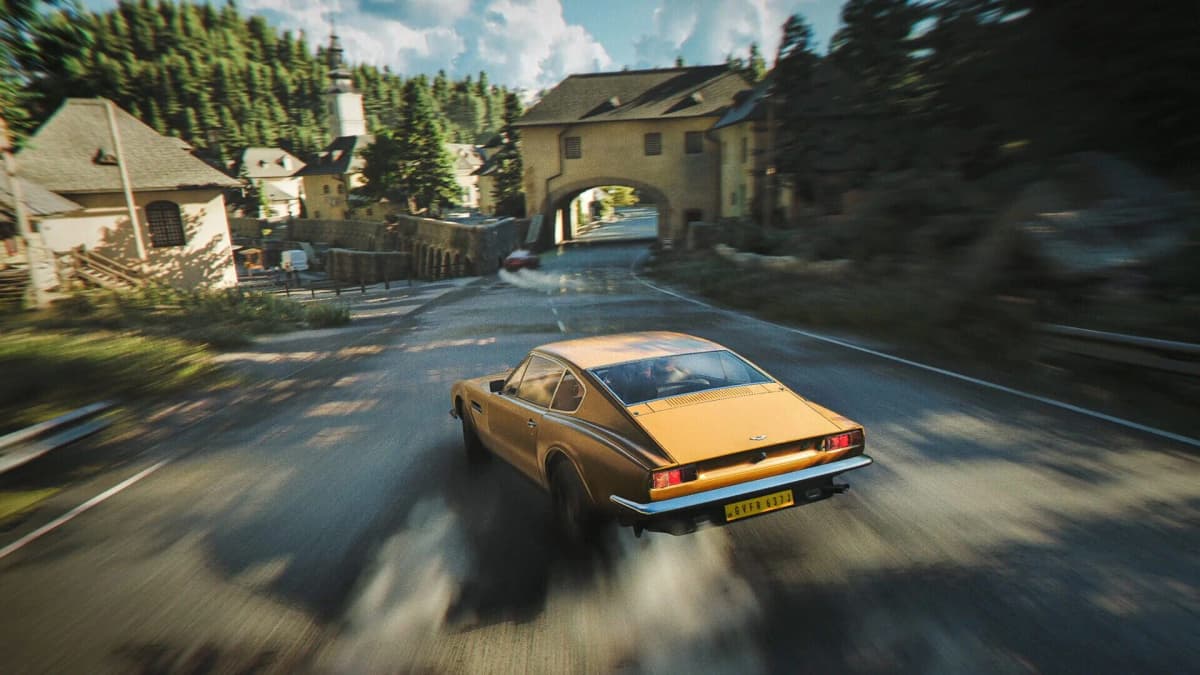
There is another layer to this that goes beyond simple sharpness charts. Recent technical coverage has praised 007 First Light for its software RTGI, improved volumetrics, shadow quality, and upgraded NPC rendering. Those are not flashy buzzwords for their own sake. They shape the mood of the entire game. Interiors feel grounded because light behaves more naturally. Atmospheric effects read better because the haze has depth instead of looking like a flat filter. Shadows carry more nuance, which helps sell materials, faces, and environments.
When the reconstruction chain is messy, those subtle wins are easier to lose. A noisier image does not just hurt edge quality; it can flatten the sensation of depth and undercut the confidence of the lighting. That is part of why PS5 Pro’s cleaner presentation matters more here than it might in a simpler-looking game. The renderer is doing enough interesting work that better reconstruction pays off across the entire scene, not just on a static close-up of Bond’s suit stitching.
The broader PS5 Pro story across other titles often includes more ambitious ray-tracing settings or better reflections, shadows, and lighting detail. In 007 First Light, the most immediate win is not some giant extra toggle screaming for attention. It is that the game’s already-advanced lighting stack survives the 60fps presentation with fewer scars. The base PS5 version still carries the artistry. The Pro version simply preserves more of it on the way to the screen.
The honest value calculation for buyers and upgraders
If someone is buying a PlayStation today and 007 First Light is high on the must-play list, PS5 Pro is the straightforward recommendation if the budget allows it. This is exactly the kind of software that makes the hardware proposition look coherent. You are not paying for abstract future potential. You are paying for a cleaner current-gen 60fps presentation in a visually sophisticated game, and that is a tangible benefit.
The harder case is the existing PS5 owner. For that player, 007 First Light alone is probably not enough reason to sprint to the checkout page unless image quality is already a major obsession. If base PS5 Performance Mode looks good enough on the current display, the upgrade becomes a premium purchase aimed at reducing artifacts and recovering visual polish. That is a real upgrade, but it is also a luxury upgrade. There is no point pretending otherwise.
The strongest candidates for PS5 Pro here are easy to identify: players with large 4K TVs, OLED owners, people who sit relatively close to the screen, and anyone who instantly notices shimmer or unstable fine detail. Those players are the ones most likely to appreciate what the Pro version is doing every single minute. By contrast, someone on a smaller screen, farther viewing distance, or a tighter budget will get a perfectly enjoyable experience from base PS5 and should feel no guilt about skipping the more expensive box.
There is also one final practical truth worth keeping in view. If a player already knows that FSR artifacts do not bother them, PS5 Pro is selling refinement, not rescue. That refinement is good – in this game, very good — but it is still refinement. That is the cleanest way to frame the spending decision.
Quick recommendation by setup
- Buy PS5 Pro for this game if the setup is a large 4K TV, especially OLED, and clean 60fps presentation matters as much as raw smoothness.
- Stay on base PS5 comfortably if the current console already handles the display from a normal sofa distance and Performance Mode’s artifacts are not a recurring annoyance.
- Use base PS5 Quality Mode only selectively if visual cleanliness matters more than responsiveness, because 30fps is still a meaningful tradeoff in a game built around movement and control.
- Treat this as a showcase, not a mandate if the upgrade decision is broader than one title. 007 First Light makes a strong case for Pro, but it does not suddenly make standard PS5 obsolete.
FinalBoss // Gear
Level up your setup
01Best-selling PS5 gameson Amazon→02DualSense controllerson Amazon→03PS5 SSD upgrades (M.2 NVMe)on Amazon→04Discounted game keyson Kinguin→
Affiliate links · As an Amazon Associate, FinalBoss earns from qualifying purchases.