
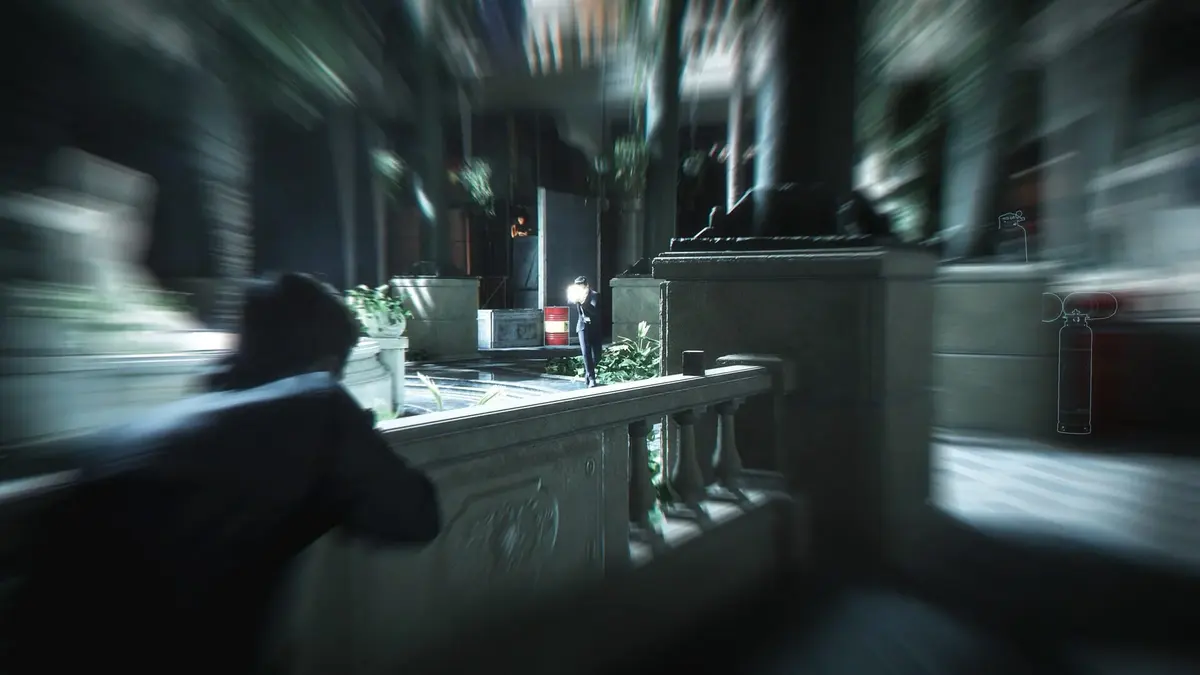
007 First Light Switch 2: Glacier Engine Changes and 30fps Target
007 First Light on Switch 2 Is Built Around Stable 30fps
The useful Switch 2 expectation for 007 First Light is straightforward: IO Interactive is targeting stable 30fps with a native port, scaling technology, tighter rendering budgets, and the same core Glacier engine systems running at lower settings. That is a more credible target than chasing 60fps while trying to retain real-time global illumination, volumetric smoke, dense crowds, and seamless level streaming.
The game launched on 27 May 2026 for PC, PlayStation 5, and Xbox Series X|S. Its Switch 2 release remains scheduled for later in 2026, with no exact date confirmed. IO has built the port around a different set of limits from the larger consoles, particularly memory, GPU headroom, asset streaming, and handheld-class power constraints.
| Platform tier | Performance target | Glacier strategy | Primary compromise |
|---|---|---|---|
| PC, PlayStation 5, Xbox Series X | 60fps target | Higher-quality real-time GI, volumetrics, shadows, and crowd detail | Requires substantially more GPU and memory headroom |
| Xbox Series S | 30fps target | Scaled rendering features and tighter resource allocation | RAM and GPU headroom limit the 60fps option |
| Nintendo Switch 2 | Stable 30fps target | Native port with upscaling, reduced asset detail, and lower feature tiers | Lower rendering budgets, stricter streaming limits, and mobile-class power constraints |
Glacier’s Biggest Upgrade Is the Ability to Scale Without Forking the Game
Glacier has been part of IO Interactive’s toolset since 1997, with a major architecture refresh in 2006. For 007 First Light, the studio has modernized it around a shared codebase that supports PlayStation, Xbox, PC, Switch 2, and iOS. That matters because Switch 2 is not receiving a cloud-streamed workaround like IO’s previous Nintendo Switch release. It is running locally, using the same game logic and content framework as the larger platforms.
The practical advantage is that IO can change data and quality settings per platform rather than maintain a radically separate game. Textures, mesh detail, crowd levels of detail, smoke resolution, shadow settings, and streaming budgets can be trimmed for Switch 2 without removing missions or rebuilding every gameplay system from scratch.
That approach also explains the 30fps target. A locked 30fps gives the engine 33.3 milliseconds to complete every frame. At 60fps, that allowance is cut to 16.7ms. Real-time global illumination, smoke simulation, crowd animation, AI, geometry streaming, and post-processing all have to fit inside that window. On a portable-focused system, stability is worth more than an unstable performance mode with constant frame-time spikes.
Seamless Streaming Is the Player-Facing Upgrade to Watch
The old Glacier approach relied more heavily on distinct streamed zones. 007 First Light moves to fully seamless streaming through dynamic “bricks”: small chunks containing geometry, textures, game logic, and related data that can load and unload as Bond moves through an environment.
For players, this should mean fewer obvious loading boundaries while moving between interiors, exteriors, vertical spaces, and larger mission areas. It also raises the stakes for the Switch 2 version. A streaming system that works beautifully on a fast desktop SSD can stumble when memory is tight, traversal speeds up, and several expensive areas are competing to stay resident.
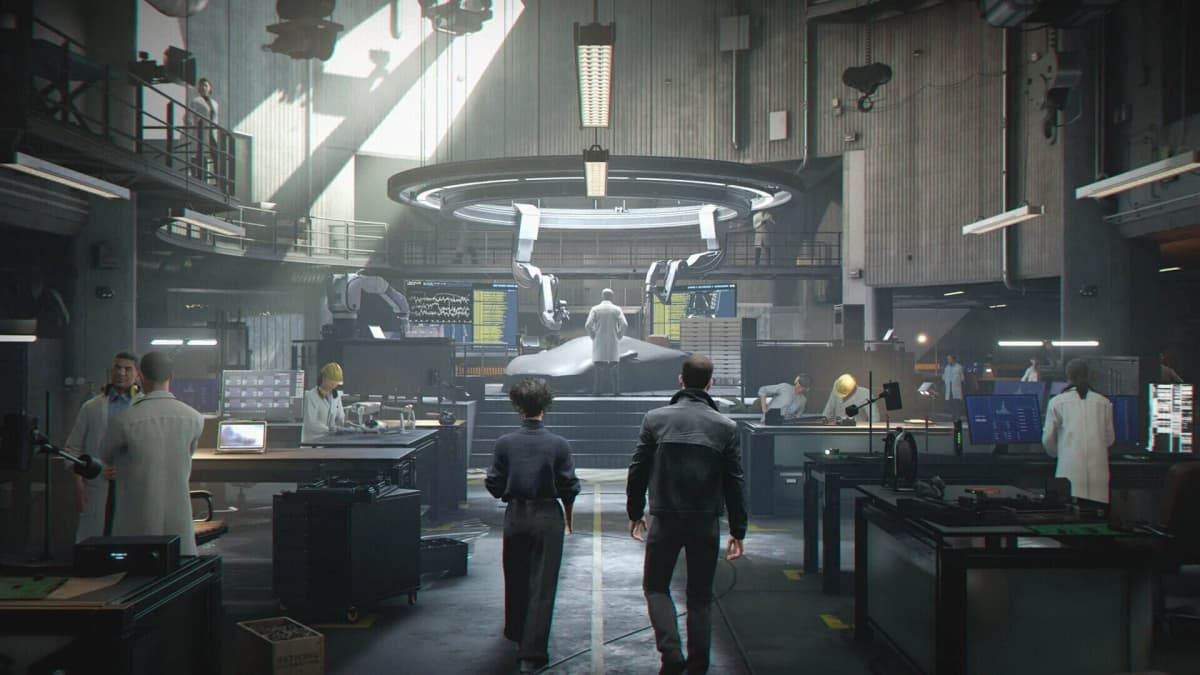
IO has tailored the underlying thread priorities, memory allocators, I/O queues, and asynchronous loading behavior for Switch 2 before layering in its rendering features. The goal is to keep the active area inside a predictable budget. Doors, elevators, camera cuts, and other natural pacing devices can still mask a demanding asset transition if a sequence would otherwise risk a visible hitch.
The Memory Budget Explains Where the Visual Cuts Will Land
IO’s Switch 2 planning budget allocates 9,381MB, compared with 10,481MB on PC. That 1,100MB gap does not describe either system’s total physical RAM; it is the working memory budget used for the game. The important detail is where IO is choosing to cut.
FinalBoss // Gear
Level up your setup
01Best-selling Switch 2 gameson Amazon→02Switch 2 accessorieson Amazon→038BitDo controllerson Amazon→04Discounted game keyson Kinguin→Affiliate links · As an Amazon Associate, FinalBoss earns from qualifying purchases.
| Resource area | Switch 2 treatment | What players are likely to notice |
|---|---|---|
| Core game systems, animation, physics, audio | Budgets remain broadly aligned with the larger build | Mission logic and systemic interactions are intended to remain intact |
| Textures | Lower-resolution texture sets sized for Switch 2 output limits | Less fine material detail at close range and more aggressive texture streaming |
| Geometry | Simplified meshes and stricter LOD use | Reduced distant detail and potential pop-in during fast movement |
| Rendering features | Lower-quality GI, smoke, shadows, reflections, and crowd rendering | A less dense image, especially in heavy effects scenes and large spaces |
This is the correct place to reduce the load. Shipping 4K texture data to a machine that will not display it effectively wastes storage bandwidth and working memory. IO is instead building Switch 2 content around the system’s maximum output resolution, then using scaling and upscaling to produce a cleaner final image. Exact docked and handheld resolution targets have not been published, and neither have any graphics-mode options.
Real-Time GI, Smolder Smoke, and Crowds Are the Expensive Parts
007 First Light pushes Glacier beyond the lighting model used in IO’s prior games. Fully real-time global illumination calculates indirect light dynamically, so a bright window, a fire, or a harsh interior fixture can affect the surrounding scene more naturally. Clustered lighting helps the renderer handle many light sources efficiently, but the combined GPU cost still climbs quickly in dense interiors and night-time setpieces.
The other major addition is Smolder, IO’s GPU particle system for large explosions, smoke, fine environmental motion, sparks, and debris. Previous Glacier particle workloads leaned more heavily on the CPU. Moving this work to the GPU frees CPU time for AI and simulation, but it shifts pressure toward GPU compute, memory bandwidth, and frame-time consistency.
Switch 2 retains these systems in scaled form. Expect lower-resolution volumetrics, fewer samples, less dense smoke coverage, simplified reflections, fewer shadow cascades, and reduced crowd detail. The important part is that the lighting and atmosphere systems remain part of the game’s visual language rather than disappearing completely. A Bond action sequence without smoke, reactive lighting, or ambient crowd motion would lose much of its intended texture.
Crowds also sit at the intersection of CPU and GPU limits. Glacier now moves portions of animation updates and culling to the GPU, while its updated entity/component system and job scheduler keep systemic behavior from overwhelming weaker CPUs. On Switch 2, that will translate into more aggressive culling, lower crowd counts at distance, simpler animation detail, and tighter AI behavior budgets in the busiest scenes.
Editor and Runtime Separation Helps IO Ship a More Resilient Build
One of the less flashy Glacier changes may be one of the most useful. IO has separated its editor tools from the runtime engine. During development, the runtime can crash without taking the editor down with it; after a fix, developers can reconnect and restore the scene in roughly one minute.
That does not guarantee a crash-proof retail game. It does reduce the cost of finding and fixing crashes, particularly when engineers are working through console-specific memory, threading, and streaming problems. For a cross-platform release with a native Switch 2 port, faster recovery and cleaner multi-threaded debugging are meaningful production advantages rather than back-end trivia.
Year One Support Makes the Technical Foundation More Important
IO Interactive and Amazon MGM Studios say 007 First Light passed four million copies sold worldwide within three months of launch. That includes 1.5 million copies in its first 24 hours and another 2.5 million afterward. The game’s Year One roadmap adds missions, challenges, gadgets, and more content, including Q’s G2 glasses.
For Switch 2, that roadmap turns the launch build into only the first test. Every additional mission, crowded location, particle-heavy setpiece, and new gadget interaction has to stay inside the same memory and frame-time constraints. Glacier’s shared codebase and scalable assets give IO a better foundation for that work, but the shipping port still needs to prove that its 30fps target survives the game at its busiest.