
Table of Contents (10)
007 First Light looks like a real Glacier leap, and the 60 FPS story starts with lighting
Strip away the Bond branding and the clean suits for a second, and the important takeaway from Digital Foundry’s recent deep dive is pretty straightforward: 007 First Light does not look like a simple Hitman-era tech refresh. It looks like IO Interactive has gone back into Glacier and upgraded some of the most expensive, most visible systems in the whole rendering pipeline.
The buyer-and-player question worth answering here is whether this technical pitch sounds like marketing fog or a genuine explanation for how IO wants to deliver a modern, cinematic action game at 60 frames per second on current consoles. Based on what Digital Foundry highlighted, the answer leans toward the latter. The headline change is a move to fully real-time global illumination, backed by a hybrid system that combines screen-space information with a probe-based lighting solution traced in software. Around that, IO is also talking about better volumetrics, improved material shading, more scalable crowd and animation systems, and smarter clustered lighting and shadow management.
That combination matters because 60 FPS is never the result of one magic trick. It is usually the result of hundreds of budget decisions that stop the renderer from lighting every scene like it has infinite time and infinite silicon. According to the current public messaging, 60 FPS is the target on PS5, PS5 Pro, and Xbox Series X, while Xbox Series S appears to be the exception or at least the biggest constraint. That alone tells you where the performance pressure is landing.
One important note before getting too comfortable: the Digital Foundry video was sponsored, and that matters. Sponsored technical deep dives can still be useful, especially when they include concrete engineering details, but they are not a replacement for independent launch-day analysis with frame-time captures, pixel counts, and worst-case stress testing. What they can do is tell us whether a studio is describing a real architectural shift or just tossing around buzzwords. Here, the details sound specific enough to take seriously.
Specifications
This sounds like an engine update, not a bullet-point patch note
The reason this deep dive landed differently from a lot of pre-release tech talk is that it did not revolve around one flashy acronym. Studios love saying they use ray tracing, machine learning, procedural animation, or whatever the fashionable term is that month. That alone tells you almost nothing. What matters is how those systems are wired together and whether they make sense on fixed hardware.
Digital Foundry’s reporting points to a more grounded story. IO is not describing a brute-force rendering revolution. It is describing a carefully chosen set of upgrades that fit the kind of game 007 First Light appears to be: cinematic, traversal-heavy, full of changing locations, rich materials, dynamic light sources, and scenes where atmosphere has to do a lot of storytelling. Bond worlds live on contrast. Bright sunlight pouring into a luxury villa. Dim hallways with reflective floors. A gala packed with moving bodies, glass, velvet, jewelry, and soft shadow detail. Rain on stone. Smoke in a corridor. Headlights cutting through mist.
That is exactly the sort of content where older lighting pipelines start showing their seams. A limited bounce-lighting approach can still look good in controlled conditions, and IO has made great-looking games before, but it often needs more handholding. Fully real-time GI changes that equation. It gives the engine a more dynamic understanding of how light should behave in the world instead of forcing artists to fake more of the result scene by scene.
This is the kind of engine upgrade players feel before they can name it. A room stops looking like a level assembled under studio lamps and starts looking like a space lit by actual surfaces. Characters fit the scene better. Corners stop going oddly flat. Moving from a bright courtyard into a dark interior feels less like crossing between two separate rendering rules.
What IO seems to be doing with real-time GI
The global illumination part is the real headline because it explains both the visual jump and the performance strategy. Based on the details shared through Digital Foundry, 007 First Light is using a hybrid approach: screen-space information for immediate, on-frame detail, combined with a probe-based system similar in spirit to DDGI, with the probe tracing handled in software rather than relying on a heavyweight hardware ray-traced path for everything.
That sentence can sound intimidating, but the practical version is simpler. Think of the renderer as pulling lighting clues from two places. First, it reads what is already visible in the current frame. That helps capture very local detail quickly. Second, it stores a more persistent, lower-cost lighting understanding of the environment through probes placed through the scene, then updates that data in real time. The result is not the same thing as full path tracing, and it is not pretending to be. It is a more scalable way to get dynamic indirect light into a console game that still wants to hold 60 FPS.
That tradeoff is smart. Full-fat hardware ray tracing can look fantastic, but on consoles it is also the fastest route to performance collapse if the rest of your frame is already busy with animation, AI, particles, transparency, dense geometry, and post-processing. IO seems to have picked the route that gets most of the practical wins without lighting the entire GPU budget on fire.

It also fits Glacier’s history. IO has always been strong at simulation-heavy spaces and systemic density. Hitman’s best levels were not technical show-offs because of one exotic effect; they were impressive because dozens of subsystems held together at once. Bond pushes Glacier into a more overtly cinematic lane, but the underlying philosophy looks familiar. Efficiency first. Scalable systems. Spend cycles where the player will actually notice them.
Real-time GI is not just prettier lighting. It is a workflow and consistency upgrade. If artists can rely on the engine to produce more believable bounce light in changing conditions, they spend less time brute-forcing fake solutions for every room, every time of day, and every scripted sequence. That does not just help visuals. It can help polish, because the team is fighting fewer isolated lighting hacks late in production.
Why this can help a 60 FPS target instead of sabotaging it
On paper, “real-time GI” and “60 FPS on consoles” sound like natural enemies. Usually they are. The trick is that IO does not appear to be chasing the most expensive version of the idea. It is chasing a version that can scale.
The hybrid setup matters because it avoids paying the maximum price for every lighting decision. Screen-space data is relatively cheap and detailed but incomplete, since it only knows about what the camera can currently see. Probe-based GI is broader and more stable for off-screen or room-scale lighting information, but it is coarser. Put together, they cover for each other’s weaknesses. That gives the engine a way to preserve convincing indirect light without tracing a huge number of rays through every scene in the most expensive possible way.
Then there is clustered lighting and shadow budgeting, which sounds dry until you remember what it really means. It means the engine is getting better at deciding which lights matter most, where they matter, and how expensive their shadows are allowed to be. Modern cinematic games love throwing lots of small lights into the scene: lamps, accent lighting, monitors, headlights, signage, chandeliers, reflections from glossy surfaces. If the engine treats all of them like equal priorities, performance gets ugly fast. A smarter clustered system helps IO keep the scene rich while controlling the cost.
That is likely one of the hidden reasons the 60 FPS messaging sounds plausible. Not because IO found a miracle optimization toggle, but because the renderer seems to have been redesigned around more disciplined budgeting. Lighting is one of the easiest places for a game to become visually ambitious and technically reckless at the same time. Glacier sounds more selective now.
Another factor is scalability. Digital Foundry’s summary emphasized crowd and animation improvements with cross-platform performance in mind. That matters more than it might sound. Animation systems are not free. Crowd simulation is not free. Background NPCs, procedural reactions, cloth behavior, traversal blends, facial performance, secondary motion-none of that is free. If the engine can tune those systems more intelligently by platform, then lighting upgrades no longer have to fight for the entire frame alone.
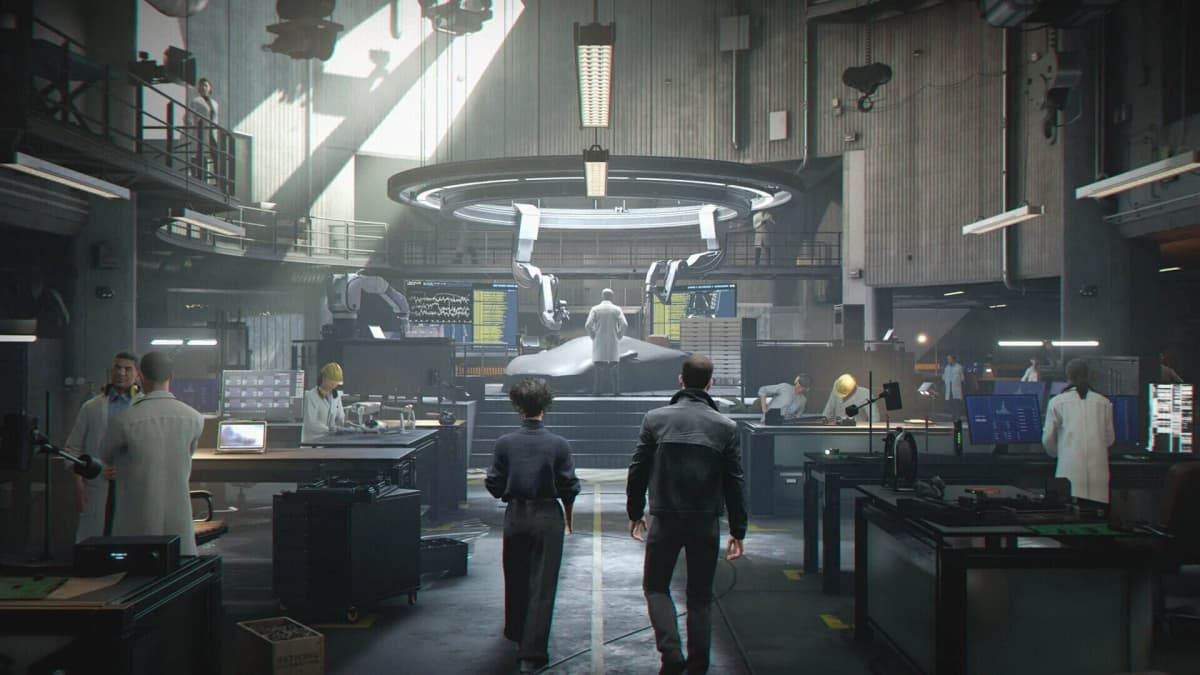
This is also where the Series S caveat stops being surprising. If one console variant is the clear outlier in public performance messaging, it usually means the game’s combined budget is sitting right at that uncomfortable threshold where every subsystem matters. Resolution, memory pressure, GI quality, crowd density, shadow map precision, animation update rates, and reconstruction quality start tugging against one another. Series S often ends up being the machine where those compromises are least invisible.
Volumetrics and material shading are not side dishes in a Bond game
If the GI overhaul is the structural upgrade, the changes to volumetrics and material shading are the parts players will immediately read as “next-gen,” even if they never use that phrase out loud. Bond fiction is obsessed with surfaces and atmosphere. Expensive fabrics. Polished wood. Wet asphalt. Metallic gadgets. Frosted glass. Smoke hanging in a room. Sunlight diffused through haze. Night scenes where beams of light carve through fog.
These are exactly the situations where old-school rendering shortcuts can make a game feel a little stagey. Good volumetrics give light a sense of presence in space. Good material shading makes surfaces react like they belong to the same world instead of each object having its own disconnected gloss model. When those two systems improve together, scenes gain a kind of coherence that is hard to fake with brute force post-processing.
That coherence matters at 60 FPS because fast camera motion is merciless. At 30 FPS, some image problems hide behind motion blur and simple persistence. At 60, the player sees more. Shimmer stands out more. Flat materials stand out more. Weak indirect light stands out more. The good news is that stronger material response and better atmospheric rendering can make a 60 FPS image feel richer even before raw resolution enters the conversation.
There is also a very practical angle here. Better materials and volumetrics help cinematic readability. In stealth-action scenes, players make split-second judgments based on contrast, silhouette clarity, reflected light, and depth cues. Smoke and haze are not just mood generators; they help define space. Material quality is not just visual vanity; it helps characters and objects read properly under varied lighting. If Glacier is better at this now, that is not cosmetic fluff. It is playability wrapped in style.
Where players will actually see the upgrade most clearly
The strongest real-world gains from this kind of engine work usually show up in a handful of scene types.
- Indoor-outdoor transitions: moving from a bright exterior into a dim interior is where weak GI often falls apart. Better bounce lighting should make those transitions feel smoother and more natural.
- Crowded luxury spaces: parties, casinos, embassies, and high-end social areas are nightmare scenarios for lighting, materials, and animation all at once. If First Light holds together there, Glacier really has evolved.
- Night scenes with wet surfaces: reflective streets and complex lighting are catnip for image instability. Strong material work plus stable reconstruction can make these scenes sing instead of shimmer.
- Fog, smoke, and weather: improved volumetrics are easiest to spot when headlights, flashlights, or directional sunlight interact with atmospheric effects.
- Close-up character shots: skin, hair, fabric, and jewelry expose weak shading fast. Bond games live on these shots, so better material response is a big deal.
That last point matters more than people sometimes admit. A lot of action games can survive mediocre close-up rendering because the camera spends most of its life far away. Bond cannot. The fantasy depends on faces, tailoring, props, and expensive-looking environments holding up under scrutiny. If the tech breaks during a close-up, the whole illusion wobbles.
PS5 Pro could end up being the easiest console recommendation
Outside the core engine upgrade, the most interesting platform-specific note is PS5 Pro. IO has said the console will use Sony’s upgraded PSSR rather than the FSR 3.1.5 solution used elsewhere, and the studio’s messaging suggests the integration was quick and broadly effective rather than a long bespoke optimization project. That does not automatically make PS5 Pro a miracle machine, but it does line up with what reconstruction quality often changes most: fine detail, motion stability, shimmering control, and overall image cleanliness.
For a game like this, that matters a lot. 007 First Light is exactly the sort of content that stresses upscalers: hair, fabric patterns, foliage, glossy reflections, busy interiors, transparent surfaces, fog, and a lot of high-contrast lighting. A better reconstruction pass can make the difference between “technically impressive but a bit noisy” and “surprisingly polished in motion.”
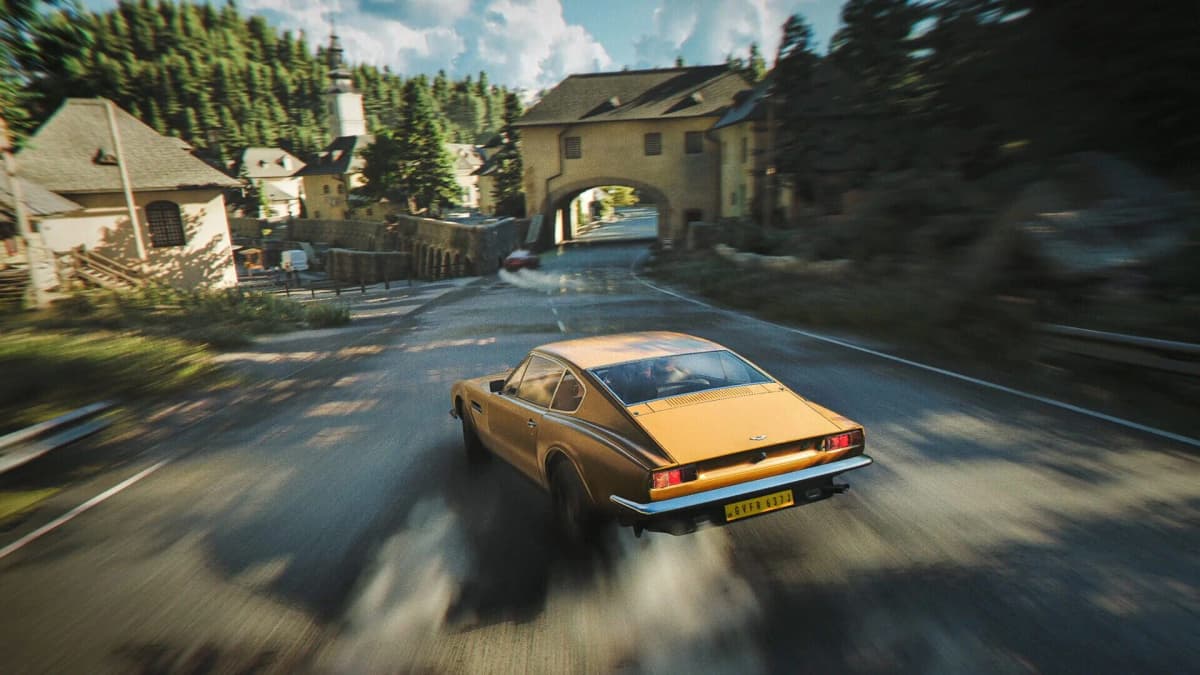
I would still be careful about reading too much into pre-launch promises here. Reconstruction tech can look great in selected scenes and wobble in edge cases. But if PS5 Pro really is getting the cleanest final image while keeping the same general performance target, that is a meaningful upgrade. Not a luxury bullet point. A practical one.
By contrast, the non-Pro consoles will live or die more visibly by their internal resolution choices and reconstruction stability. If the GI, volumetrics, shadows, crowd systems, and material improvements all stack up at once, something still has to give somewhere. Upscaling is where studios often recover that budget. Done well, nobody complains. Done badly, players notice it every time a camera pans across fine geometry.
The platform warning is still Xbox Series S
The clearest caution flag in the current public picture is Series S. The strongest claim in circulation is that 60 FPS is being targeted on basically every console variant except that one. Even without hard final numbers, that tells a story.
It suggests IO’s upgraded Glacier stack is scalable, but not infinitely so. A machine with tighter memory and lower overall graphics headroom forces harsher decisions. That can mean lower internal resolution, lower GI fidelity, reduced crowd density, trimmed volumetric quality, weaker shadow detail, and possibly a lower frame-rate target. Any one of those compromises can be acceptable. The problem is how visible they become when several stack together.
This does not mean the Series S version will be bad. It means it is the version most likely to reveal where Glacier’s new ambitions are expensive. And because so much of this game’s appeal is tied to atmosphere and image stability, the lower-end version is the one that most needs independent scrutiny after release. If there is a version to wait on, it is that one.
Who should feel reassured by this, and who should stay cautious
If you were worried that 007 First Light might just be a Bond skin stretched over older Hitman technology, this deep dive should calm that down quite a bit. The rendering changes sound too deep and too interconnected to dismiss as superficial. There is a real technical thesis here.
Players planning to buy on PS5, PS5 Pro, or Xbox Series X have good reason to be optimistic. The 60 FPS target sounds grounded in engine design choices rather than blind ambition, and the specific upgrades fit the kind of scenes this game wants to sell. PS5 Pro owners, in particular, have the most reason to watch closely if image quality matters as much as frame rate.
Players on Series S should be more patient. Not pessimistic, just patient. If the game lands with a visibly compromised image, lower frame rate, or reduced effects density on that system, it will not be because IO forgot how to optimize. It will be because this version of Glacier is finally trying to do more of the expensive stuff players keep asking for.
FinalBoss // Gear
Level up your setup
01Top-rated gaming headsetson Amazon→02High-refresh gaming monitorson Amazon→03Gaming chairson Amazon→04Discounted game keyson Kinguin→
Affiliate links · As an Amazon Associate, FinalBoss earns from qualifying purchases.