
10 Minecraft Farms That Quietly Turn Any Survival World Into Easy Mode
The older I get, the less patience I have for punching trees and eating raw zombie flesh on night three. These days, every new Minecraft world I start – whether it’s on PC, PS5, Switch, or my phone – follows the same pattern: scramble to survive, then slam down a tight set of farms that basically carry the entire playthrough.
This list is that exact toolkit: ten farm builds that take you from “please don’t let a creeper see me” to “my base runs itself while I’m mining in the Deep Dark.” Some of them are literally just dirt and seeds; others lean on simple redstone, hoppers, and observers. All of them work on modern versions (post-bee update, Caves & Cliffs ore changes, etc.), and I’ll flag anything you should watch for on Bedrock vs Java.
I’ve rebuilt every one of these designs across countless worlds: casual co-op on Xbox, touchscreen chaos on mobile, and full-on redstone nerd sessions on PC. They’re not the absolute most “meta” farms in existence, but they’re the ones that feel good to build, don’t instantly break every update, and genuinely change how you play.
We’ll start with farms that keep you alive – food and wood – then graduate into iron, infinite building blocks, wool, and finally XP. By the end, you’ll have a base that hums along even when you’re nowhere near it.
Table of Contents (11)
1. Starter Wheat Farm
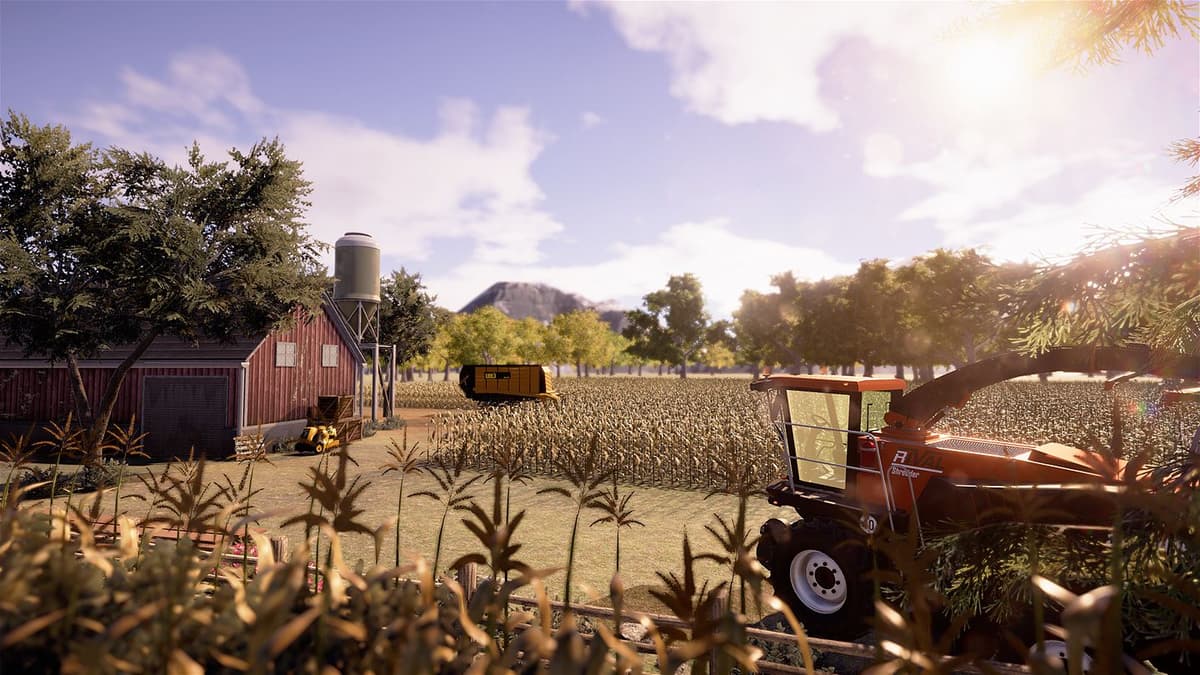
The very first thing I plant in a new world isn’t carrots or potatoes – it’s wheat. It’s boring, sure, but wheat quietly solves three huge problems at once: food (bread), animal breeding (cows and sheep), and early-game villager trading. If you’ve ever hit that point where your hunger bar is flashing and you’re gnawing on rotten flesh, a 30-second wheat patch would have completely avoided it.
The “day one” version is stupidly simple and works the same on Bedrock and Java: punch grass until you get a handful of seeds, craft a wooden hoe, dig a 1×1 water hole, then make a 9×9 square of tilled soil around it (water in the middle, 4 blocks in every direction). Stick your seeds down and forget about them while you explore. As long as you stay relatively nearby, they’ll grow in the background and start snowballing into stacks of bread.
Once I’ve got iron and a tiny bit of redstone, I usually upgrade this into a semi-automatic farm. The easy version is just rows of wheat with a water stream at one end: place your crops on tilled dirt, put trapdoors or pistons holding back water sources above them, then flip a lever to wash everything into a collection trench with hoppers and a chest. Replanting is still manual, but harvesting a double chest of wheat with a single flick never gets old.
This farm earns the top slot because it comes online fast and never really becomes obsolete. Even in late game, I’m using wheat to breed cows for leather, trade with farmer villagers for emeralds, and stock golden carrots. It’s the foundation that makes every other farm on this list easier to build.
2. Simple Tree Farm

Right after I plant wheat, I mentally stake out a patch of land for trees. Wood is everything in Minecraft: tools, chests, fences, building blocks, fuel if you’re desperate. I’ve had worlds where I flattened the nearby forest for a mega base and then realized I’d turned my spawn into a lumber desert. A compact tree farm fixes that before it becomes a problem.
The core idea is the same on every platform: collect a few saplings of your favorite wood type, then lay them out in a grid with enough space to walk between trunks – I like 4×4 or 5×5 sapling grids with three or four blocks between each tree. On Bedrock and Java, the trick that changed my life is putting slabs or full blocks a few blocks above the saplings. That stops certain trees (especially oaks) from growing those annoying giant, branching monstrosities that take three minutes and a broken axe to chop down.
In early game I keep this totally manual: plant saplings, chop trees as they grow, let leaves decay, and replant any saplings that drop. Later, once I’ve got a steady iron supply, I upgrade my axe to Efficiency and slap Mending on it, so I can stand there on autopilot turning an entire row of logs into planks. On Java there are fully automatic TNT-powered tree machines; on Bedrock those are a lot more finicky, so I stick to this semi-structured orchard style that’s basically future-proof.
This farm doesn’t look like much on day two, but when you start a big build and realize you can chew through several stacks of logs in minutes, having a neat grid of saplings and non-giant trees right next to your base feels like cheating in the best way.
3. Aesthetic Animal Farm

I used to just shove cows in a 5×5 dirt box and call it a day. Then I built a proper barn once, with separate pens, hay bales, and a little water trough, and now my worlds feel wrong without a cozy animal farm. This is where that wheat farm really starts to pay off.
The functional part is simple on any edition: lure two of each animal you care about – cows, sheep, maybe pigs or chickens – into fenced pens using wheat, carrots, or seeds. Give each pen a two-block-high fence, a gate, and good lighting so you don’t log in to find a creeper sharing the barn with your livestock. Once they’re enclosed, you can just run along the pens with wheat in hand, spam right-click (or tap), and watch the hearts pop off as your herd doubles and triples over time.
Where this farm gets fun is when you treat it as part of your base’s vibe instead of a checkbox. I like building a central barn with a peaked roof, hanging lanterns, and a tiny loft for hay storage. Add a slab “feeding trough,” a water cauldron as a drinking barrel, and maybe a composter or two. On Bedrock, I’ve found this kind of farm feels especially nice in split-screen co-op – one of us breeds and decorates while the other handles mining and redstone.
Is it efficient? Not really. You’re still manually breeding and butchering. But having a dedicated, good-looking animal area makes your world feel lived in, and it sets you up for later upgrades like an automated cow cooker or shearing line. It’s the calm, pastoral middle step between punching fish and running a full industrial slaughter machine.
4. Compact Cow Farm

This is usually the first “real” redstone contraption I build – the moment my cute little barn gets a slightly dystopian back room. A compact cow farm takes the breeding you’re already doing and funnels it into a tiny, semi-automatic steak and leather machine. It’s perfect if you’re redstone-shy but want to dip a toe into automation.
The layout I keep coming back to works on both Bedrock and Java: an upper chamber where adult cows stand in a 1×1 or 1×2 area (usually on top of a hopper), and a lower chamber where their babies get separated. You climb up, feed wheat to the adults until hearts stop appearing, and as they breed, the baby cows fall through a gap or get pushed by water into the lower kill chamber. Once they’ve grown, you either hit a button that releases lava for a moment (cooking them and sending drops into a chest via hoppers) or just whack them manually if you’re being nice.
The genius is that it’s compact enough to tuck under your barn or inside a wall, and it turns “oops, I forgot to eat” into “I have more steak than I can store.” On consoles and mobile, where precise redstone timing can be annoying, I keep the circuitry super minimal: one dispenser with a lava bucket, one button, and hoppers feeding into a chest. No fancy clocks, no weird observer chains to break in the next update.
I rank this so highly because it locks in two crucial resources – high-saturation food and leather for bookshelves and item frames – with almost no maintenance. Just remember: don’t accidentally feed your last two cows into the machine. I’ve done it. It’s depressing.
5. Easy Iron Farm

There’s a specific moment in every world where iron stops being “cool, I can make armor” and becomes “I need literal stacks of this to build hoppers, rails, and beacons.” Since the Caves & Cliffs ore distribution changes pushed iron veins deeper and made cave diving riskier, I basically consider an iron farm mandatory for any world that’s going to last more than a week.
Even the “easy” versions feel a bit technical, but the payoff is huge. The most reliable Bedrock-friendly layout I use looks like this: three villagers in a small room with beds and a workstation, a zombie nearby (but safely contained) to scare them, and a 5×5 or similar spawn platform where iron golems can appear. Surround that platform with water streams flowing into a kill chamber – usually a lava blade with hoppers underneath leading to a chest. On Java the spawning rules differ slightly, but the basic villager–zombie–platform combo is the same; you just want an edition-specific tutorial for the exact dimensions.
The hardest part is logistics: transporting villagers (boats and rails are your friends) and safely trapping a zombie without getting yourself murdered. Once it’s running, though, it’s a game-changer. I love checking the collection chest after a mining trip and finding several stacks of iron ingots waiting for me, plus the occasional poppy.
This farm earns its spot because it frees you from ever caring about natural iron spawns again. Want 30 hoppers for a new storage room, extra anvils, or a rail line across your base? You just take a stroll to your iron factory and help yourself.
6. Simple Cobblestone Generator

I used to laugh at cobblestone generators. Why would I “farm” the most common block in the game? Then I built a massive castle and watched double chests of cobble vanish in a blink. Since then, a basic cobblestone generator has lived somewhere in every long-term base I’ve made, especially on worlds where I’m not in the mood for endless cave runs.
The fundamental mechanic is identical on Bedrock and Java: when flowing water meets a lava source in a certain pattern, it creates cobblestone. The simplest layout is a short trench: lava on one side, water on the other, with a one-block gap in between where the cobble forms. You stand in front of that middle block, hold down your mining button with an iron or diamond pick, and just zone out while blocks break and regenerate.
The upgrade that makes this into a proper “farm” is adding collection. I like putting a hopper under the cobblestone block feeding into a chest, so any item that drops gets automatically stored. On some editions/latency setups it’s still faster to just stand close and vacuum blocks into your inventory, but the hopper backup is great for long sessions. If you’re fancy, you can build multiple generator cells side by side and strafe along them.
Pair this with the super smelter later in the list, and you’ve effectively got infinite smooth stone for modern builds – no strip-mining required. It’s not glamorous, but when you realize you can generate entire mountains’ worth of stone on a tiny footprint without leaving your base, it becomes one of those “why didn’t I do this sooner?” builds.
7. Super Smelter

Strictly speaking, a super smelter isn’t a “farm” because it doesn’t create items from nothing. But the first time you dump an entire shulker of ores or cobblestone into one and everything comes out cooked in a few minutes, it absolutely feels like cheating. Once I hit mid-game, this becomes my base’s industrial heart.
The core design is the same on both major editions: a row of furnaces (I usually start with 8–16), a hopper line feeding fuel into the back, another feeding items into the top, and either hoppers or a minecart with chest pulling smelted goods from the front into a collection chest. My favorite layout uses two minecarts with chests running on rails above and behind the furnaces, distributing items evenly. On controllers and mobile, setting up rails and powered rails can be a bit fiddly, but once it’s done you barely have to touch it.
Fuel is whatever your world supports: coal from mining, charcoal from your tree farm, or eventually lava buckets and bamboo. The magic is scale – instead of babysitting one furnace, you’re spreading the load across a whole bank. That means ore-doubling with Fortune, clearing massive terraforming projects, and cooking XP-farm drops becomes painless.
I love linking this to other farms on this list: feed cobble from your generator to make smooth stone, process iron farm drops into ingots, or auto-cook beef from your compact cow farm. It’s the logistical upgrade that turns your world from a bunch of separate builds into an actual factory.
8. Automated Crop Farm (Bee Greenhouse)
The bee update quietly turned basic crop farming into something much more fun. A bee-powered greenhouse looks gorgeous and lets you lean into semi-automation without building an ugly lag factory. This is my go-to “showpiece” farm once I’ve stabilized food and iron.
The concept works on both Java and Bedrock: crops like wheat, carrots, and potatoes grow faster when bees pollinate them. So you build a glasshouse with rows of farmland, place flowers along the paths, and tuck beehives or bee nests inside. Under each hive, put a campfire (with carpets on top for safety) so you can harvest honey and honeycomb without aggroing the bees. As the bees fly between flowers and hives, they naturally brush over your crops, giving them growth boosts.
You can go a few directions with automation here. The lightweight version is just manual harvesting: walk through with a hoe and seeds, break everything, and replant. The fancier version adds dispensers with water buckets at the ends of the rows to wash ripe crops into collection channels with hoppers and chests. On Bedrock, I’ve had good luck using observers above the crops to detect growth stages and trigger water flows, but that’s optional complexity.
What I love is how alive this build feels. Instead of a sterile underground farm, you’ve got bees buzzing, honey bottles filling up, and crops waving under glass. It turns necessary grind – food and honey – into something almost relaxing. Plus, honey blocks open up fun redstone and building tricks later, so you’re seeding future projects while stocking your pantry.
9. Automated Wool Farm

There’s a point mid-game where you realize how often you need wool: beds for nether runs, carpets for spawn-proofing and aesthetics, banners, pixel art, redstone wiring camouflaged in builds. Manually shearing a big flock gets old fast, which is why an automated wool farm is always on my to-build list once I’m comfortable with observers.
The standard design is surprisingly compact and works on modern Bedrock and Java: one sheep stands on a single grass block encased in glass. Under that grass is a hopper minecart running back and forth, feeding into a chest. In front of the sheep, facing its block, is an observer. On top of the observer sits a dispenser loaded with shears. When the sheep eats the grass, the block updates, the observer fires a redstone pulse, the dispenser shears the sheep, and the minecart collects the dropped wool through the floor.
You repeat this little module for each color you care about – I usually do at least white, black, gray, light gray, red, and whatever colors fit my current mega build. Dying the sheep once is enough; the wool always regrows in that color. On consoles and mobile, I build these in a row along a wall so it’s easy to check shear durability and refill dispensers.
The beauty of this setup is that it’s pure passive income. You go off mining, fighting, or decorating, and when you come back, the chests are quietly full of wool. Combined with a super smelter and a good wood supply, it lets you go wild with interior design, carpeted mob-proof paths, and colorful banners without ever thinking about resource costs again.
10. Easy XP Farm (Spawner-Based)
Once your base is humming with food and materials, the last bottleneck is always XP. Enchanting, repairing Mending gear, combining books – it all needs those green orbs. There are insanely complex end-game XP farms out there, but the one I return to in almost every world is the humble spawner grinder. It’s simple, reliable, and feels like upgrading a danger into a resource.
Step one is finding a naturally generated spawner – zombie, skeleton, or cave spider. They’re most common in dungeons and abandoned mineshafts, so keep an eye and ear out while you’re exploring caves. When you spot one, resist the reflex to break it. Instead, light up the room, wall it off, and mark the coords. From there, the basic design (on both Java and Bedrock) is to carve out a rectangular chamber around the spawner, flood it with water streams that push spawned mobs into a chute, and then drop them far enough that they’re left at one hit from death.
Your “farm” room sits at the bottom of that chute: a 1-block gap where you can swing a sword or swipe on mobile, with hoppers collecting drops into chests. You stand there, AFK or casually watching a show, letting mobs pile up, then mow them down in batches for a burst of XP and loot. Skeleton variants spit out bones and arrows; cave spiders add string and spider eyes, which are surprisingly valuable for trades and brewing.
If you’re on Bedrock and want to go harder late-game, a silverfish-based XP farm near a stronghold can outpace most designs in raw XP per hour, but it’s riskier to set up. The spawner grinder, though, is the trusty workhorse: easy materials, no command tricks, and it turns one of Minecraft’s scariest early discoveries into a permanent resource engine.
From Bare Hands To Automation: Stitching It All Together
The thing I love about this set of farms is how naturally they chain into each other. Wheat and trees keep you alive and supplied, animals and cows turn that into reliable food and leather, iron and cobblestone generators give you the raw industrial power to spam hoppers and stone builds, and the greenhouse, wool modules, and super smelter make your base look and feel like a real place. Top it off with a spawner XP farm and suddenly every enchantment, every tool, every big project is within reach.
Whether you’re on Bedrock on a Switch, Java on a high-end PC, or poking blocks on a phone, these ten builds are the ones that consistently make my worlds feel like they’ve “clicked” into their long-term form. You don’t need to build them all at once, and you can absolutely tweak the aesthetics and layouts to match your style – medieval barns, futuristic factories, underground labs, whatever. But if you work through them in roughly this order, you’ll feel that satisfying shift from scrambling to survive to calmly planning what ridiculous mega base you’re going to tackle next.
FinalBoss // Gear
Level up your setup
01Top-rated gaming headsetson Amazon→02High-refresh gaming monitorson Amazon→03Gaming chairson Amazon→04Discounted game keyson Kinguin→Affiliate links · As an Amazon Associate, FinalBoss earns from qualifying purchases.
Want to Level Up Your Gaming?
Get access to exclusive strategies, hidden tips, and pro-level insights that we don't share publicly.
Ultimate Top Strategy Guide + Weekly Pro Tips