
The best Castlevania games on Nintendo now offer an unusually strong route through the series’ history, from punishing NES action games to the exploration-heavy Igavanias. Start with Aria of Sorrow for the best all-round experience, then choose based on whether you want challenge, classic platforming, or completionist history.
Castlevania: Aria of Sorrow is the best Castlevania game currently available on Nintendo hardware for most players. It has the cleanest balance of movement, combat, exploration, and character progression in the series’ portable era, and the Nintendo Switch version in Castlevania Advance Collection removes the old problem of hunting down aging Game Boy Advance cartridges. More importantly, it still feels great the second you pick it up. That matters in a series where reverence for history can sometimes excuse clunky starts.
This ranking covers the games Nintendo players can access through the Castlevania Anniversary Collection, Castlevania Advance Collection, and Castlevania Dominus Collection. That distinction matters. Some of these were born on Nintendo hardware, others arrive on Switch through preservation-focused collections, and the difference helps explain why the catalog feels so much healthier in 2026 than it did a few years ago. You are not choosing between obscure carts and auction-site prices anymore; you are choosing between clearly defined branches of the franchise.
Castlevania has always had two very different 2D identities. One is the deliberate, stage-by-stage action platformer built around committed jumps, sub-weapons, and enemies placed to ruin your rhythm. The other is the Igavania: a sprawling castle game built around map completion, gear, abilities, backtracking, and the satisfying realization that a locked door from three hours ago is finally open. Nintendo Switch now has strong access to both styles, which makes a ranked list like this more useful than a simple nostalgia roll call.
The 40th anniversary is a useful moment to sort the essential games from the historical curiosities. The original Castlevania reached Japan on the Family Computer Disk System on September 26, 1986, then became a defining NES action game. Four decades later, Switch offers a far better on-ramp than Nintendo players had for years: the major Game Boy Advance and Nintendo DS entries are preserved, the classic games sit in a separate collection rather than being buried behind expensive old hardware, and the series has a brand-new stop on the calendar instead of feeling frozen in museum glass.
These placements value how well each game plays now, how clearly it represents a branch of the series, and whether it gives a newcomer a reason to keep going. Historical importance helps, but it does not automatically win a high rank. A game with awkward systems or thin replay value cannot coast on being old. By the same token, a bonus inclusion in a modern collection does not suddenly become essential just because it is easier to buy. This list is here to help you choose what to play next, not to flatter every artifact in the vault.
Table of Contents (14)
Choose Your First Castlevania by Play Style
- Best all-round Castlevania: Castlevania: Aria of Sorrow — fast combat, rewarding exploration, and the Soul system make it the most complete beginner pick.
- Hardest polished Igavania: Castlevania: Order of Ecclesia — demanding enemies and precise Glyph combat reward players who want friction and mastery.
- Classic action-platforming: Castlevania III: Dracula’s Curse — branching routes, multiple allies, and tough stages make it the definitive NES-style choice.
- Most approachable classic game: Super Castlevania IV — its eight-direction whip control and smoother pacing make the old-school formula easier to learn.
What the 40th Anniversary Changes for Nintendo Players
The anniversary is not just a marketing excuse to repost key art. It changes the backlog in practical ways. On the celebration side, Konami made the original 1986 Castlevania available for free on iOS and Android from September 25 through October 24, 2026 through Castlevania: 40th Anniversary, an enhanced mobile release with a visual touchpad and offline play. That is separate from Nintendo hardware, but it puts fresh attention on Simon Belmont’s first outing and pushes new players toward the Switch collections afterward.
For Nintendo players specifically, the important part is that Switch now serves as the franchise’s cleanest 2D archive. Advance Collection gives you the three Game Boy Advance games plus Dracula X, with modern aids such as rewind, save and load states, replay support, an encyclopedia, a music player, and region-version options. Dominus Collection covers the three Nintendo DS entries and bundles Haunted Castle with Haunted Castle Revisited, plus rewind, quick saves, new art, and a database-style presentation. Anniversary Collection remains the classic branch.
Then there is the new game. Castlevania: Belmont’s Curse launches on Nintendo Switch, PC via Steam, PlayStation 5, and Xbox Series X/S on October 15, 2026, with a free demo arriving October 1. It follows Rose, the daughter of Trevor Belmont from Castlevania III, as she fights through Paris and Dracula’s castle in 1499 using the Vampire Killer whip. It is a 2D Castlevania-style game with a grapple hook and an upgrade system earned after killing bosses. On most platforms it targets 60FPS, while the Switch version runs at 30FPS.
That launch detail matters to this ranking because it gives the backlog a new endpoint. If you are starting now on Nintendo, you are no longer climbing toward an empty shelf. You can move from the foundational classics to the GBA and DS peaks, then straight into a new Belmont-led game that clearly draws from the side-scrolling lineage. In other words, the anniversary turns this from a history lesson into a live reading order.
1. Castlevania: Aria of Sorrow
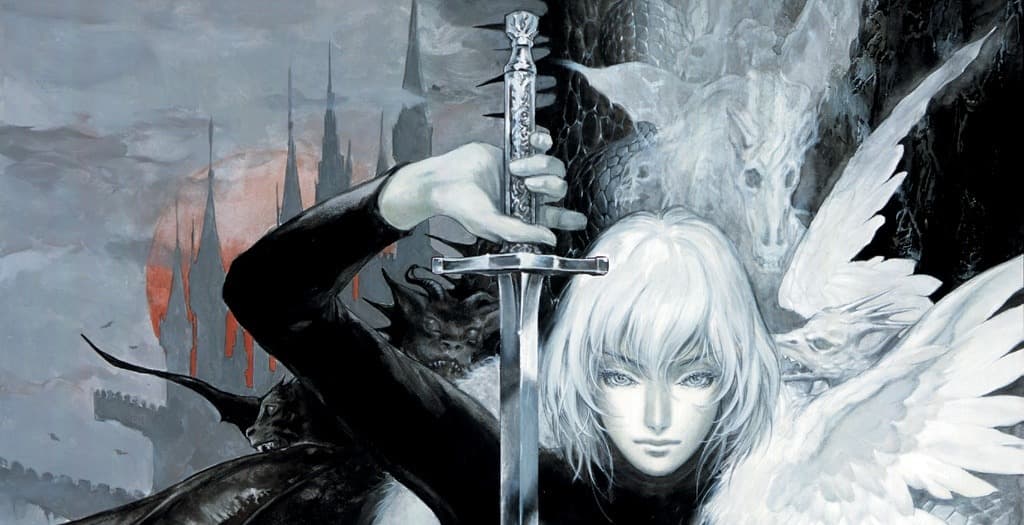
Aria of Sorrow earns the top spot because it understands that an exploration game needs momentum. Soma Cruz moves quickly, attacks cleanly, and gains abilities at a pace that keeps the castle changing without turning every new room into an inventory-management exercise. The result is the most immediately playable Igavania on Nintendo platforms, and still the easiest recommendation when someone asks for one Castlevania instead of a seminar.
The central hook is the Tactical Soul system. Defeated enemies can leave behind souls that grant attacks, passive effects, transformations, and utility powers. One soul might let Soma throw a weapon, another may improve his mobility, while others alter how a boss encounter feels. The system gives regular enemies a reason to matter beyond experience points. A room full of familiar monsters can still produce the drop that completes a build or provides a needed traversal power, which is a neat way of making grind-adjacent repetition feel purposeful instead of dead time.
Aria also avoids one of the genre’s recurring sins: making the player feel slow before the game gets interesting. Its castle is dense rather than bloated, its map is readable, and its weapons create enough variation without producing pages of forgettable loot. The best equipment is meaningful, but raw stat inflation never overwhelms the platforming and boss fights. If you like action RPG structure but hate feeling buried under junk, this is the portable Castlevania that keeps its priorities straight.
Where it fits is equally clear: this is the endcap of the GBA exploration era and the strongest reason to buy Castlevania Advance Collection on Switch. That collection also makes the game much easier to approach on modern Nintendo hardware, with rewind and save-state support there if you want them, rather than because the design needs them to survive. For anyone who wants one answer rather than a franchise history lesson, start here. It is the best all-rounder, the best ambassador for the Igavania branch, and the game most likely to make the rest of this list look inviting instead of obligatory.
2. Castlevania: Order of Ecclesia
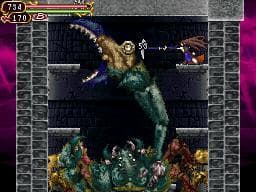
Order of Ecclesia is the best pick for players who finish Aria of Sorrow and immediately want the series to push back. It is stricter, colder, and much less interested in making the player feel powerful early. That is precisely why it lands this high. Nintendo has plenty of comfortable replays; it has fewer Castlevania games that feel this sharp without becoming messy.
Shanoa’s Glyph system is the standout mechanic. Instead of treating weapons as simple pickups, the game lets her absorb enemy abilities and equip them to each hand or combine them into specialized attacks. The strongest setups have a rhythm to them: a rapid physical option for close pressure, a ranged Glyph for awkward enemies, and an expensive union attack held back for emergencies. Managing hearts and other combat resources is part of every difficult encounter rather than an afterthought. That gives the battles a tactical edge the simpler gear-heavy entries do not always match.
Its structure separates it from the castle-only design associated with the earlier Igavanias. Order of Ecclesia sends Shanoa through villages, forests, towers, and hostile outdoor areas before the full castle experience opens up. That makes its opening feel more like a focused action game, with individual stages built around hazards and enemy placement. The design gets richer once the larger map arrives because those early locations establish a harsher world outside Dracula’s walls instead of treating the castle as the only meaningful place in existence.
The trade-off is real. Enemy damage is high, some bosses demand disciplined positioning, and careless experimentation can drain resources fast. Players looking for a relaxed first run should choose Aria instead. But if you want the most polished challenge-focused Igavania on Switch, this is it. In series terms, it is the demanding finale of the DS trio, now preserved in Castlevania Dominus Collection with quick saves and rewind support that make repeat attempts less annoying without softening the underlying design. It is where the exploration branch stops being cozy and starts expecting excellence.
3. Castlevania: Dawn of Sorrow
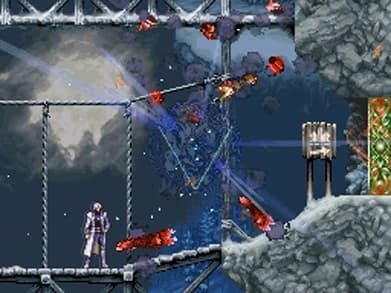
Dawn of Sorrow had the unenviable task of following Aria, and it wisely kept the core idea intact. Soma returns, the Tactical Soul system returns, and the castle remains built around gradually expanding movement options. The sequel is a little more ornate, a little more crowded, and more willing to lean into Nintendo DS-specific flourishes, but its strengths are still the strengths people came for in the first place.
The big practical advantage today is that Castlevania Dominus Collection presents Dawn in a form that no longer depends on owning original DS hardware. Its dual-screen origins are visible in menus and map presentation, but the game’s essential strengths survive perfectly well: crisp movement, a huge supply of enemy souls, varied weapons, and a castle designed for players who enjoy clearing suspicious gaps from a map. If you like the sense that every detour might lead to either a shortcut or a build-changing tool, Dawn keeps feeding that loop.
Dawn is lower than Aria because it can feel fussier. The soul collection has more layers, the visual style divided fans at release, and some design choices clearly wanted to prove the DS could do something the GBA could not. The touch-screen seal moments remain more gimmick than revelation. They interrupt a combat system that otherwise thrives on quick reactions and weapon familiarity. It is the kind of sequel that adds more before asking whether more was the thing anyone needed.
Still, the fundamentals are too strong to dismiss. In the series flow, this is the first DS continuation of Soma’s story and the most obvious next stop after Aria. It belongs above the more experimental or narrower entries because it still delivers a full, satisfying map-completion obsession. Play it after Aria, not before; the comparison becomes kinder once the original’s economy and pacing are fresh in your mind, and Dawn then reads less like an imperfect copy than a generous sequel with a few DS-era bad habits.
4. Castlevania: Portrait of Ruin
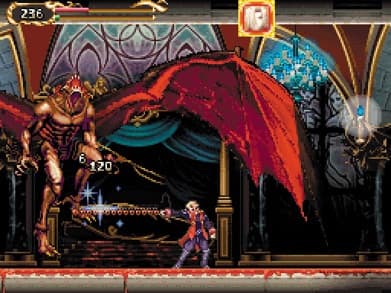
Portrait of Ruin is the series’ most varied Nintendo DS Igavania. Jonathan Morris and Charlotte Aulin can be switched in and out, giving the game a two-character structure that changes exploration and combat more than most Castlevania gimmicks ever do. Jonathan is the direct physical fighter; Charlotte specializes in magic, ranged pressure, and different kinds of utility. That split gives the game a personality immediately, rather than asking you to wait for a late-system reveal.
The portraits are the other major twist. Rather than keeping every major area inside one continuous castle, Portrait of Ruin uses magical paintings as gateways to distinct worlds. That lets the game move through dramatically different visual themes and hazards without abandoning the larger Castlevania framework. It feels like a collection of focused excursions tied to one central headquarters, which is a smart way to break up the usual stone-hallway fatigue without losing the pleasure of a home base.
That variety gives it an advantage over the more single-minded Dawn of Sorrow. Players can experiment with partner combinations, swap approach mid-fight, and find a favorite division of labor between weapon attacks and spellcasting. The duo system occasionally asks for more menu attention than the best games in the series need, but it creates real tactical choices rather than a cosmetic character swap. If you like a Castlevania that keeps showing you new room themes and new combat wrinkles, this is the DS entry with the broadest smile.
It ranks fourth because its strongest ideas can also make it feel less unified. Aria and Order of Ecclesia have sharper individual identities. Portrait is a better choice for the player who has already learned the formula and wants the widest set of environments, weapon styles, and party-based tricks in one game. Within the Nintendo access path, it sits in Dominus Collection as the middle DS chapter and the most flexible “what next?” recommendation after Dawn. It is not the cleanest first step, but it is one of the most generous second or third ones.
5. Castlevania III: Dracula’s Curse
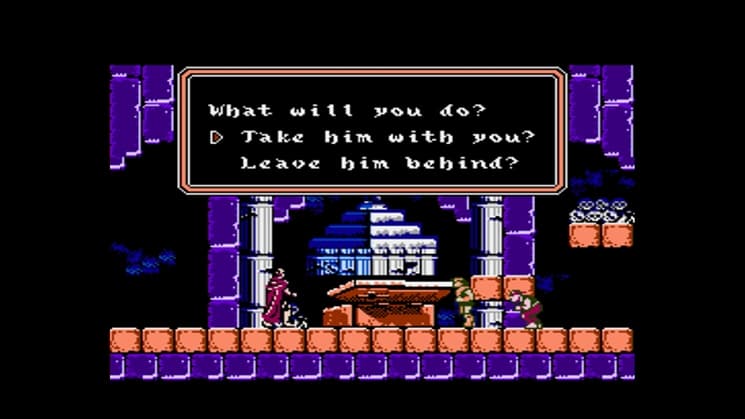
Castlevania III: Dracula’s Curse is the essential classic Castlevania because it turns the original game’s rigid action into a real adventure without softening the series’ bite. Trevor Belmont heads toward Dracula’s castle, but branching routes and recruitable allies make the journey feel far bigger than its NES hardware should allow. It is the classic game on this list with the strongest sense of scope.
The branches matter because they change how players handle the game’s platforming and enemy patterns. A companion can bring different mobility or combat options, while the route itself can put you in an entirely different sequence of stages. That gives Dracula’s Curse replay value that many 8-bit platformers simply do not have. Finishing it once reveals only one version of its campaign, which makes it feel much less like a single solved challenge and more like a set of harsh possibilities.
Its difficulty is unapologetic. The Belmont jump has commitment, knockback can be catastrophic near pits, and sub-weapon management is vital. That harshness is part of the appeal, but it means this is a game to meet on its terms. Sprinting through it with modern action-game instincts usually ends with Trevor being knocked backward into a hole by an enemy you had already hit. If you enjoy games that teach patience through punishment, this is prime Castlevania.
Where it fits is simple: this is the defining early example of the stage-based branch and the clearest classic-era recommendation in Castlevania Anniversary Collection. It also matters more in 2026 because Belmont’s Curse follows Rose, Trevor Belmont’s daughter, which gives Dracula’s Curse fresh connective tissue instead of purely archival value. It remains the first classic entry to play after sampling the original because it has the sharper structure, the better reason to replay, and the kind of escalating stage design that explains why old Castlevania became a standard rather than a one-game novelty.
6. Super Castlevania IV
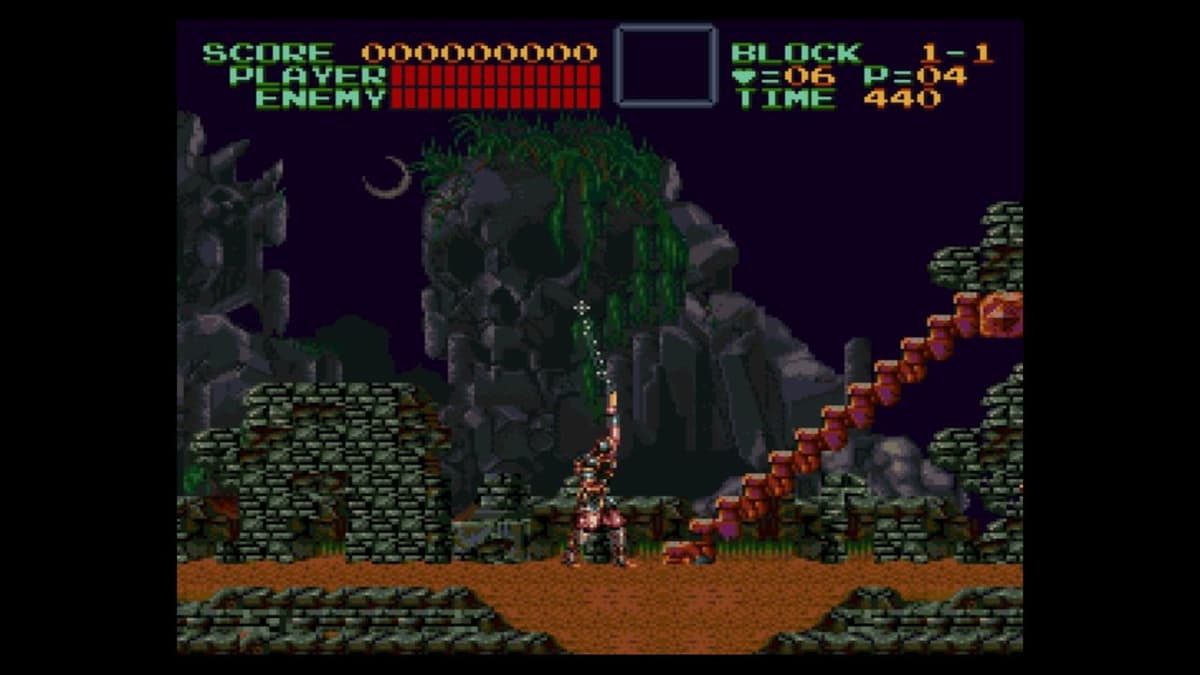
Super Castlevania IV is the classic-era recommendation for players who respect the old games but do not enjoy fighting their controls. Simon Belmont’s whip can attack in eight directions and can be held out defensively, giving the player much more agency against enemies approaching from odd angles. That one change makes a massive difference, because classic Castlevania is often less about raw speed than about controlling space one threat at a time.
The game is still deliberate. Jumps need care, hazards are everywhere, and Simon is not built for frantic improvisation. But the control scheme makes the action feel smoother and more expressive than the NES titles. Whipping upward at a flying enemy or holding the chain in place to block a projectile creates a feeling of direct response that the earlier games cannot match. If Dracula’s Curse is where the classic formula becomes ambitious, Super Castlevania IV is where it becomes comfortable to inhabit.
Its stages also make excellent use of the Super Nintendo’s visual effects. Rotating rooms, moving environments, and elaborate background work give the journey a theatrical quality. Some of those effects are more memorable than mechanically elegant, but they sell the idea that Simon is crossing a supernatural gauntlet rather than a row of interchangeable platforming stages. The game feels staged in the best possible sense: dramatic, eerie, and eager to show off.
It does not replace Dracula’s Curse as the most ambitious old-school entry; its route structure and roster are simpler. It does, however, provide the smoothest and most approachable version of classic Castlevania currently easy to play through Anniversary Collection on Switch. If your question is not “Which old Castlevania matters most?” but “Which old Castlevania still feels best in my hands?”, this one has the stronger case.
7. Castlevania: Circle of the Moon
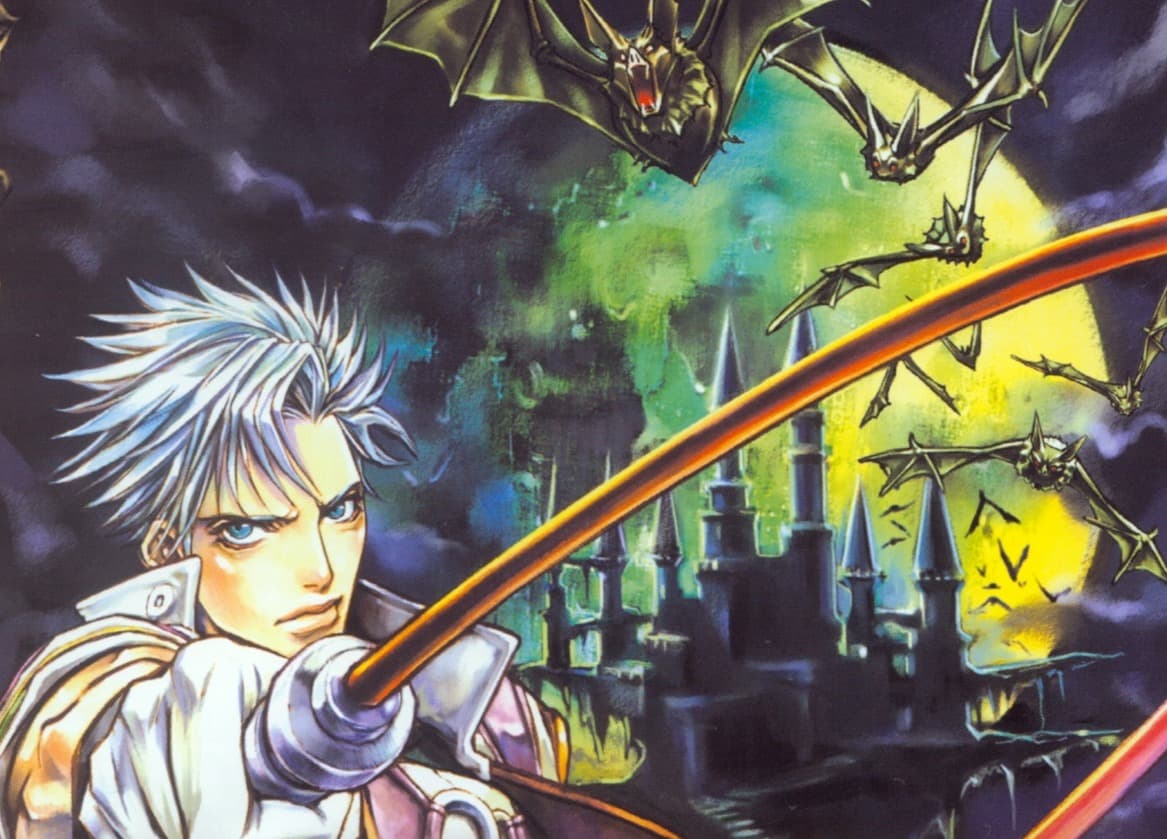
Circle of the Moon is the most distinctive Game Boy Advance Castlevania, and it remains a fascinatingly stubborn game. Nathan Graves moves through a large castle, gains abilities, and pursues the kind of map completion familiar from the later portable entries. Yet its tone and systems make it feel much harsher than Aria of Sorrow or Harmony of Dissonance. That friction is either the whole appeal or the reason you bounce off it.
The DSS card system drives that identity. Players collect cards and combine them to create elemental effects, weapon alterations, passive bonuses, and other combat changes. The possibilities are extensive, though the original design makes discovery less transparent than it should be. A useful combination can feel transformative, but the game often leaves the player to learn its logic through trial, luck, or persistence. For some players, that opacity creates mystery. For others, it feels like the game hiding its good ideas in a locked drawer.
Circle‘s difficulty is also more old-school than its map suggests. Enemies hit hard, movement is weightier, and certain bosses can expose weak preparation immediately. This is an Igavania with a classic Castlevania sternness. That mixture will frustrate players expecting Aria‘s breezy flow, yet it gives Circle an atmosphere and tension that the smoother games sometimes lack. You do not coast through this castle; you survive it, then learn how to control it.
In franchise terms, it is the opening GBA-era exploration entry, preserved in Advance Collection alongside later refinements of the formula. That placement is useful because it lets you see the branch learning in real time. Circle of the Moon is for players who enjoy systems with rough edges, opaque secrets, and a real sense that the castle is dangerous before it becomes familiar. It sits lower because I would not hand it to a newcomer first, not because its identity is weak.
8. Castlevania: Harmony of Dissonance
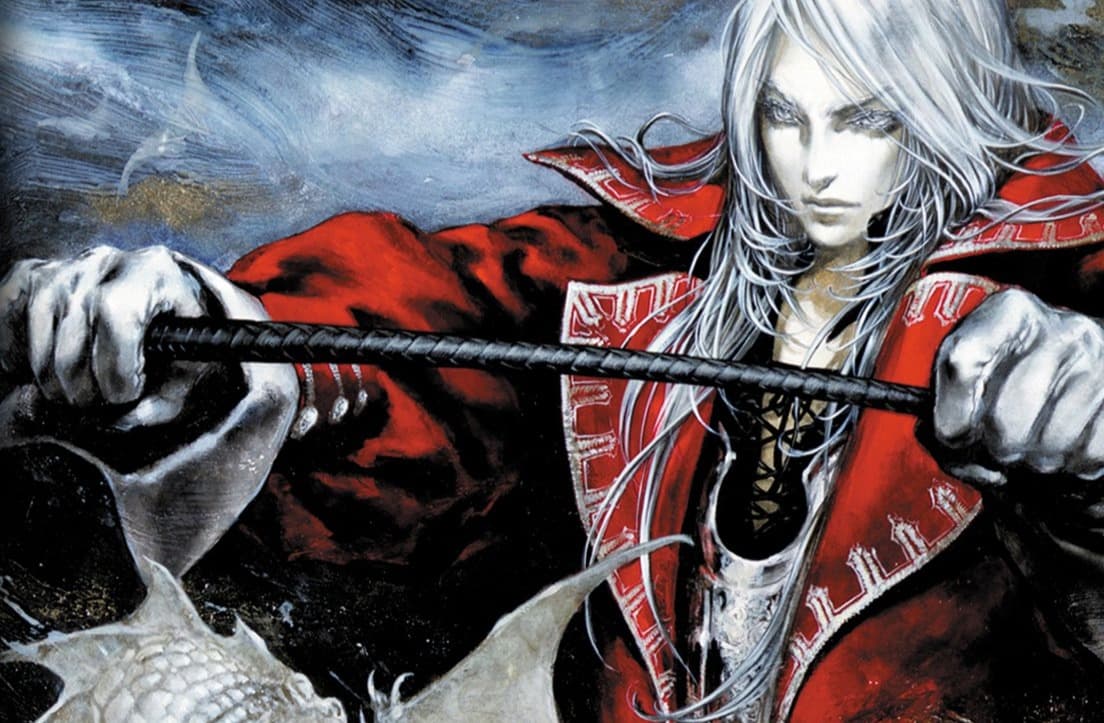
Harmony of Dissonance is the least essential GBA Igavania, but calling it disposable would miss its value. It moves quickly, gives Juste Belmont a broad set of movement tools, and builds its progression around a castle with an unusual dual-state structure. The game is an enjoyable extra course for anyone who wants more exploration after Aria, especially if your main wish is simple: let me keep dashing around another haunted labyrinth.
Juste’s speed is the key distinction. He feels more agile than the protagonists in several earlier Castlevania games, which makes exploration brisk even when the castle’s layout becomes confusing. The spell-book combinations also add a welcome layer to sub-weapons, allowing familiar tools to become more specialized attacks rather than remaining fixed pickups. If you like tinkering with combat tools but do not need the Soul system’s collectible compulsion, Harmony has a lighter, more breezy rhythm.
Its weaknesses are obvious enough to explain the placement. The castle can be visually repetitive, the music has a divisive synthetic character, and its progression lacks the clean escalation found in Aria. Harmony sometimes gives the player a large amount to explore without always making the destination feel memorable. It is never barren, but it is also not especially elegant.
Series-wise, this is the second GBA exploration game and a useful bridge between Circle of the Moon‘s harsher experimentation and Aria‘s more refined payoff. On Switch it lives in Advance Collection, where it works best as a companion piece rather than a first-choice recommendation. Treat it as another angle on why the GBA branch mattered, not as the one game that has to carry the whole portable era on its shoulders.
9. Castlevania: Dracula X
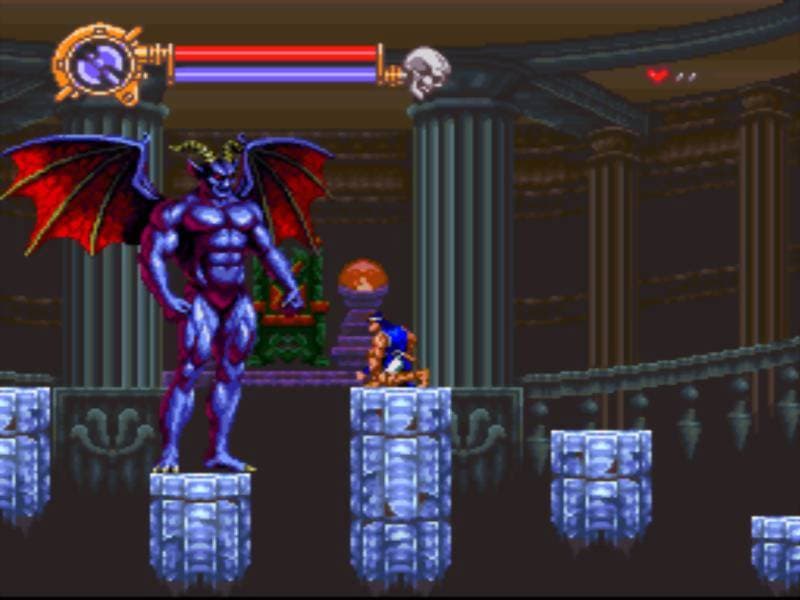
Dracula X belongs on this list for a specific audience: players who want a compact, hard-edged action platformer and have no interest in filling a castle map. It is a straight-ahead Richter Belmont game built around the old rules — careful jumps, enemy memorization, whip reach, and the importance of holding onto the right sub-weapon. In an era where every legacy series gets stretched into a lifestyle game, there is something refreshing about a Castlevania that simply wants to be nasty for a few hours.
Its appeal is its lack of sprawl. There is no gear build to optimize and no long detour simply because a locked passage has become available. A stage presents a hostile route, demands execution, and moves on. That economy can feel especially good after the enormous inventory pools and ability chains of the Igavanias. Sometimes you want a castle map. Sometimes you want Richter to stop getting knocked off stairs for the next ninety minutes.
It is also one of the less forgiving games in the collections. Richter’s vulnerability near ledges, the pressure of incoming enemies, and the limited room for sloppy movement give it the flavor of a challenge run even on a first clear. The game is not interested in teaching every system gently; it expects players to observe the stage and improve. That makes it easy to admire and a little harder to love.
This is also where the access-path clarification matters. Dracula X is the bonus SNES-era add-on in Advance Collection, not a handheld original in the same branch as the GBA trio. It ranks below the stronger classics because it has less breadth and fewer standout ideas than Dracula’s Curse or Super Castlevania IV. It remains valuable as a concentrated dose of old-school Castlevania. Load it up when the goal is a demanding evening of stage clears, not a weeks-long exploration project.
10. Haunted Castle Revisited and Haunted Castle
Haunted Castle Revisited earns a place over the original Haunted Castle because it gives one of Castlevania’s roughest historical artifacts a version that people can play for enjoyment. The original arcade game is important as a piece of series history, but its punishing structure and awkward feel make it more instructive than fun for many modern players. That is an honorable kind of relevance, but still not the same thing as a recommendation.
The revised version is the practical choice. It retains the basic arcade identity — Simon Belmont advancing through hostile stages toward Dracula — but gives the material a more considered presentation and a much friendlier reason to revisit it. Including both forms in Castlevania Dominus Collection is exactly the right preservation approach: the original remains intact, while players are given a version that is not merely a museum exhibit with a whip.
This slot is for series historians and committed collection players. Haunted Castle helps show how many directions Konami tested before the franchise settled into its stronger classic and exploration-driven templates. It also makes clear why the best Castlevania games are so carefully paced: enemy placement, recovery time, and movement feel matter as much as the whip and the monsters. Play it and you understand the series better, even if you do not come away wanting it near the top ten.
That is why it sits here rather than disappearing entirely. As a bonus preservation piece inside Dominus Collection, it absolutely deserves mention. As a mainline recommendation, it absolutely does not deserve to outrank the core GBA and DS adventures. Do not make this your first Castlevania, and do not expect it to compete with the top half of this ranking. Play Haunted Castle Revisited after the essentials, when the appeal is seeing a difficult branch of the series receive a more playable second chance.
11. Castlevania
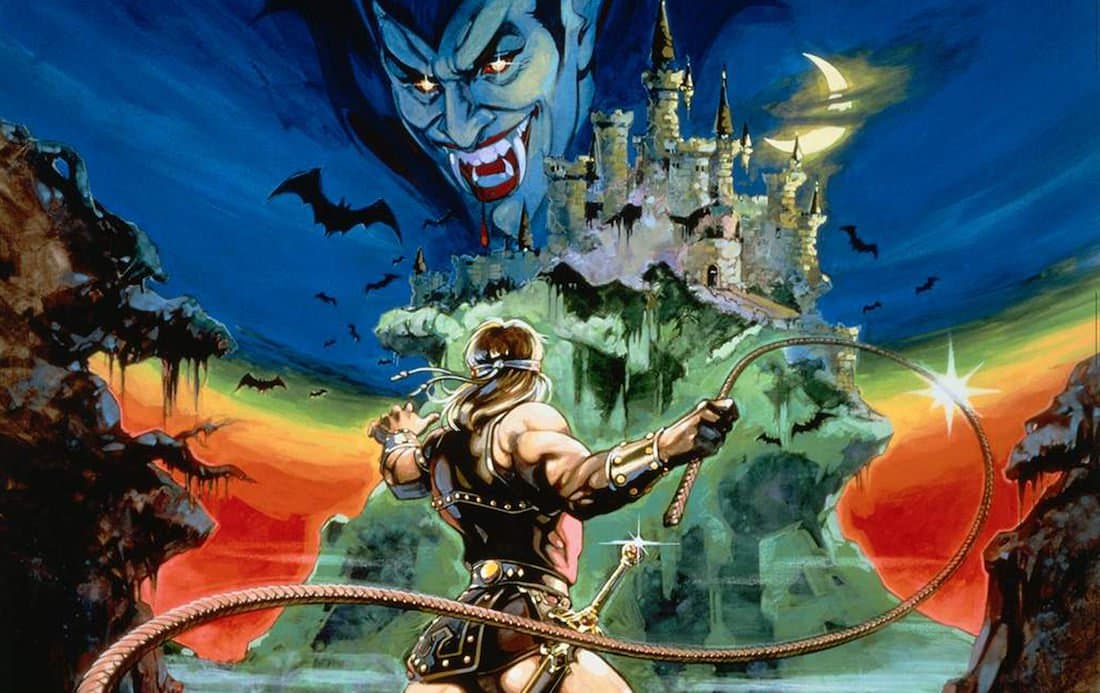
The original Castlevania is foundational, influential, and far less friendly than its reputation sometimes suggests. Simon Belmont’s first march toward Dracula’s castle established the whip combat, sub-weapons, gothic monsters, stairway fights, and deliberate platforming that the rest of the franchise spent decades refining. Plenty of later games do those things better. None of them get to exist without this one doing them first with such nasty clarity.
Its best quality is clarity. Every candle, platform, staircase, and enemy exists to test positioning. The game has little excess. You learn when to preserve a sub-weapon, when an enemy’s approach is designed to catch a jump, and why getting knocked backward is the true threat even when Simon has plenty of health left. Modern action games often soften that kind of lesson; Castlevania teaches it with a pit. That directness is still admirable, even when the punishment feels borderline rude.
The 40th anniversary campaign returned attention to the 1986 original with Castlevania: 40th Anniversary, an enhanced mobile release for iOS and Android. It featured a visual touchpad and offline play, and the original game was free from September 25 through October 24, 2026. That release sits apart from the Nintendo recommendation here, and it is also separate from the mobile availability of Castlevania: Symphony of the Night. But it underlines how central Simon’s first game remains to the anniversary celebration.
On Switch, the Castlevania Anniversary Collection is the better way to place it in context. The original ranks last only because later games improved its ideas so dramatically and because the Nintendo backlog now offers more immediately satisfying starting points. Play it as the opening chapter: short, demanding, unmistakable, and still capable of teaching exactly why this series became a pillar of action-platforming. Just do not mistake “foundational” for “best first.”
The Best Nintendo Castlevania Route in 2026
The efficient route is simple. Begin with Aria of Sorrow in Castlevania Advance Collection. Move to Dawn of Sorrow and Portrait of Ruin through Castlevania Dominus Collection if you want more map exploration, equipment, and collectible abilities. Pick Order of Ecclesia when you want the formula at its most demanding and mechanically exacting. That run gives you the cleanest view of why the exploration side of Castlevania became so influential.
For the traditional side-scrolling branch, start with Super Castlevania IV if control comfort matters, then play Castlevania III: Dracula’s Curse for the more ambitious and difficult version of the NES design. Save the original Castlevania, Dracula X, and Haunted Castle for the point where the series’ harsher habits sound appealing rather than punitive. Those games are better as sharpeners than introductions.
That leaves Nintendo players in a better position than the anniversary marketing alone might suggest. Switch now has the franchise’s main 2D lanes well preserved, whether you reach them through separate collections or the broader bundle packaging that groups the modern re-releases together. Meanwhile, Castlevania: Belmont’s Curse arrives on Nintendo Switch on October 15, 2026, with Rose — the daughter of Trevor Belmont — fighting through Paris and Dracula’s castle in 1499. Its 2D design includes a grapple hook and boss-earned upgrades, while the Switch version runs at 30FPS rather than the 60FPS target on other platforms. Until then, Aria of Sorrow remains the smartest first step: it is the game most likely to turn anniversary curiosity into a full Castlevania backlog.
FinalBoss // Gear
Level up your setup
01Best-selling Switch 2 gameson Amazon→02Switch 2 accessorieson Amazon→038BitDo controllerson Amazon→04Discounted game keyson Kinguin→
Affiliate links · As an Amazon Associate, FinalBoss earns from qualifying purchases.
Want to Level Up Your Gaming?
Get access to exclusive strategies, hidden tips, and pro-level insights that we don't share publicly.
Ultimate Top Strategy Guide + Weekly Pro Tips