
I still remember reaching the Magus fight in Chrono Trigger with a party setup that looked smart on paper and folded immediately in practice. That was the particular magic of the best SNES RPGs: they taught you systems through bruises, then made a clean victory feel like your own idea. The sprites have aged, sure. The decision-making hasn’t.
This ranking is for players who want turn-based battles, tactical positioning, party-building decisions, and stories that can still land without a nostalgia filter. I’ve excluded action RPGs and real-time hybrids where reflexes carry too much of the workload. Modern access matters, too: Nintendo’s Super Nintendo Entertainment System – Nintendo Classics service runs on both Nintendo Switch and Nintendo Switch 2 with a paid Nintendo Switch Online membership, while several former SNES exclusives now have strong remakes or remasters on current storefronts. For the games in Nintendo’s SNES library, access is subscription-based rather than sold one by one, so there is no separate per-game price listed there.
Table of Contents (13)
Start Here If You Want One Great SNES RPG
- Start with Chrono Trigger for the cleanest all-round JRPG campaign.
- Start with Final Fantasy VI for a huge cast and a world-changing story.
- Start with Front Mission if grid tactics matter more than leveling grinds.
- Start with Super Mario RPG if you want a fast, welcoming first run.
- Start with Tactics Ogre if you want political choices and punishing tactical maps.
Most of the list falls into one of two camps: games you can reach through SNES Classics on Switch or Switch 2 with Nintendo Switch Online, and games whose best current route is a remake or remaster sold separately on modern platforms. If you are not chasing museum-piece authenticity, that split is a blessing. These are old RPGs, not fragile artifacts. The point is to play them.
For more campaigns built around careful deployments and painful consequences, our guides to the best games like Final Fantasy Tactics and the best XCOM-like games are the next stop.
1. Chrono Trigger
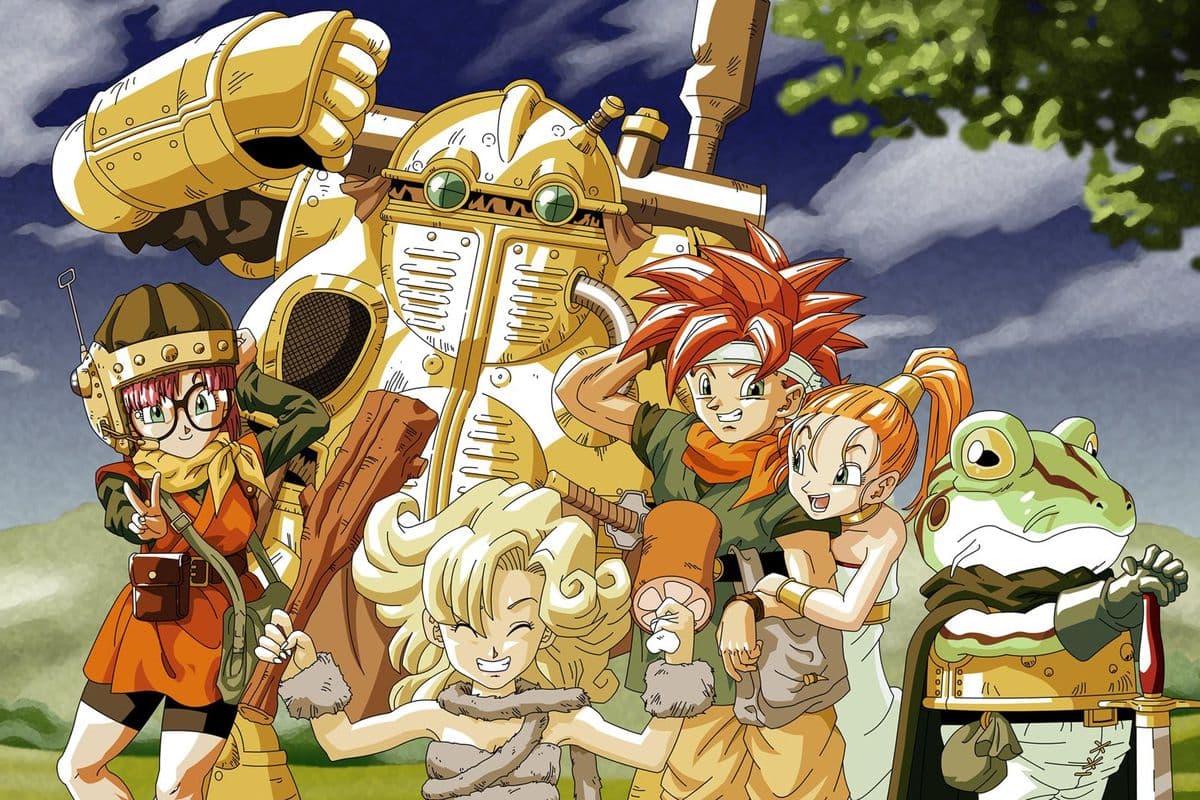
Release: 1995 | Platforms: Originally SNES; later versions on PlayStation, Nintendo DS, PC, iOS, and Android | Price/Access: Sold separately on current storefronts where available; original SNES copies are resale-market purchases
Chrono Trigger tops the best SNES RPGs because it understands pacing better than almost any RPG that followed it. Its Active Time Battle system — a turn system where actions fill on a timer instead of waiting in a rigid queue — keeps fights moving, but the real hook is how much battlefield positioning matters. Enemies do not sit politely in a line. They bunch up, drift apart, and invite you to think about attack angles. Dual and triple Techs turn party composition into an actual tactical question instead of a vibes-based favorite-character vote.
That design still feels sharp in 2026 because it trims away dead weight. Fights are quick, dungeons rarely overstay, and the time-travel structure gives every era a job. You are always either learning something mechanically, revealing something important, or setting up a payoff hours later. The game never forgets that momentum is part of storytelling. A lot of longer RPGs could still stand to relearn that lesson.
The other reason it holds up is that mastery feels personal. New Game Plus is not there to bloat the runtime; it turns knowledge into power. You come back with a better sense of Tech combos, boss pacing, and where the game quietly rewarded curiosity the first time. Start here if you want the cleanest argument for why the 16-bit JRPG became sacred text in the first place. Even now, Chrono Trigger feels less like homework from gaming history and more like a modern RPG that somehow arrived thirty years early.
2. Final Fantasy VI
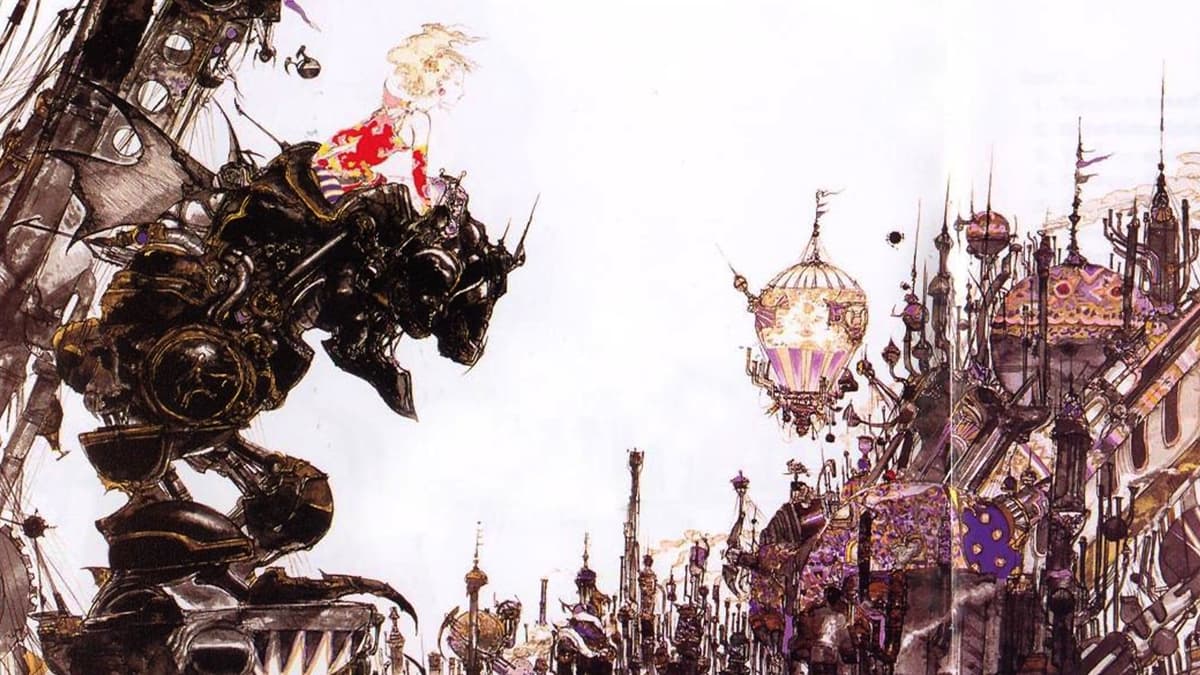
Release: 1994 | Platforms: Originally SNES; later versions include PlayStation, Game Boy Advance, PC, mobile, and the Pixel Remaster on modern consoles | Price/Access: Sold separately on modern storefronts; check current regional pricing for the Pixel Remaster
Final Fantasy VI earns second place because its middle act still lands like a body blow. Plenty of RPGs promise an ensemble cast; fewer make that cast feel like more than a stack of portraits waiting their turn. Final Fantasy VI gives characters combat identities that are easy to read at a glance — tools, blitzes, rage, dance, stealing, runic — then slowly loosens the rules through the Esper system. A brawler can learn backup healing. A support character can become a spell battery. A party that looked fixed early on turns flexible later without losing its personality.
That matters because the game’s best stretch is built on freedom. Once the world opens, party-building stops feeling prescriptive and starts feeling expressive. You are no longer asking which four characters the plot wants; you are asking which four you trust to solve the next problem. That is a bigger difference than it sounds. It turns a huge cast from a narrative flex into a mechanical playground.
The practical 2026 route is the Pixel Remaster, mostly because it removes the familiar excuses. Cleaner presentation, quality-of-life options, and easy availability make it far simpler to recommend than a scavenger hunt through old hardware. If you want the exact old texture of the SNES release, that version still has its own feel. But the reason Final Fantasy VI stays this high is not nostalgia varnish. It is because the game can still pivot from intimate character pain to big-apocalypse spectacle without dropping the player-facing systems that make the whole thing work.
3. EarthBound
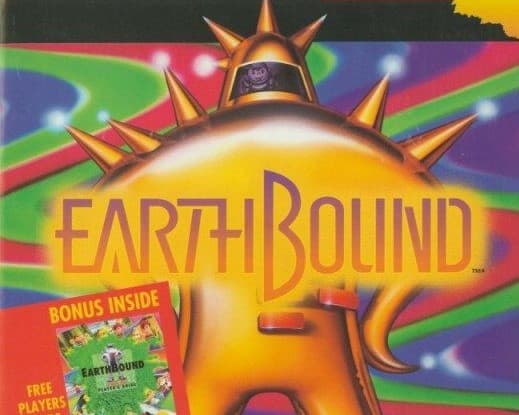
Release: 1995 | Platforms: SNES; available through Super Nintendo Entertainment System – Nintendo Classics on Nintendo Switch and Nintendo Switch 2 | Price/Access: Included with a paid Nintendo Switch Online membership
EarthBound remains the weirdest essential pick on this list, and one of its smartest ideas is also one of its kindest. When the game knows an enemy is completely outmatched, it can resolve that encounter automatically instead of dragging you through busywork. Combined with the rolling HP meter, which gives you a chance to respond before all damage settles, that small mercy trims a lot of the friction people expect from older turn-based RPGs. You still need to respect dangerous fights, psychic powers, and brutal status effects. You just do not have to personally swat every harmless pest on the way to the good stuff.
The other reason it still works is that its setting has barely been imitated well. Department stores, suburbs, diners, weird little tourist spots, and hostile blobs of nonsense give it a comic texture fantasy worlds cannot fake. The jokes are obvious enough on the surface, but the game’s tonal control is better than it gets credit for. It can move from goofy enemy designs to genuinely eerie territory without feeling like it changed genres in the middle of the sentence.
Stick with it past the point where the charm looks almost too cute to trust. EarthBound earns its place by using that friendliness as camouflage. Beneath the comedy is a game with real resource pressure, memorable towns, and one of the system’s most unsettling final stretches. It is also one of the easiest recommendations here for Switch owners because Nintendo’s SNES Classics service puts it a button press away. If you want a SNES RPG that still feels singular rather than merely influential, this is the one.
4. Live A Live
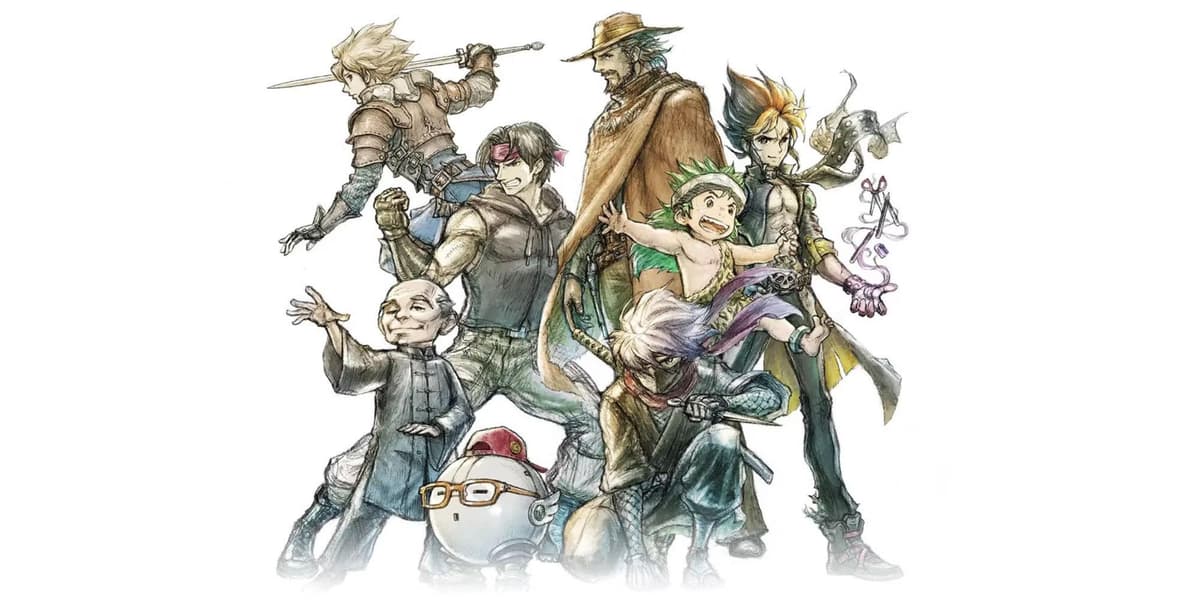
Release: 1994 on SNES in Japan | Platforms: Originally SNES; HD-2D remake on Nintendo Switch, PlayStation, and PC | Price/Access: Sold separately on modern storefronts; check current regional pricing
Live A Live is the best example of a SNES RPG getting a second life because modern hardware finally gives it the audience it always deserved. Its structure is still unusual: several short opening chapters jump between different eras and tones, from martial-arts succession drama to science fiction to something much closer to horror. Each scenario changes the rhythm enough to feel like a miniature design experiment. One chapter turns stealth into the main tension. Another leans on investigation. Another strips things down until the isolation is the entire point.
Combat is where the SNES bones still show through in the best way. Battles play out on a compact grid, with movement, facing, attack shape, and charge timing all mattering more than raw menu selection. That makes even brief encounters feel considered. You are not merely choosing a skill; you are choosing where to stand, who to expose, and whether a slower hit is worth giving the enemy room to act first.
The HD-2D remake does an excellent job of making those ideas easier to read without sanding off the game’s weird edges. That matters, because Live A Live is not great because it is smooth. It is great because it is bold. It takes swings the bigger canonized classics rarely do, then gets out before any single gimmick turns stale. It is also shorter than the average revered JRPG, which in this case is a feature, not a warning label. If you want proof that the SNES era had room for genuinely strange structure as well as comfort-food fantasy, put this near the top of the pile.
5. Tactics Ogre: Let Us Cling Together
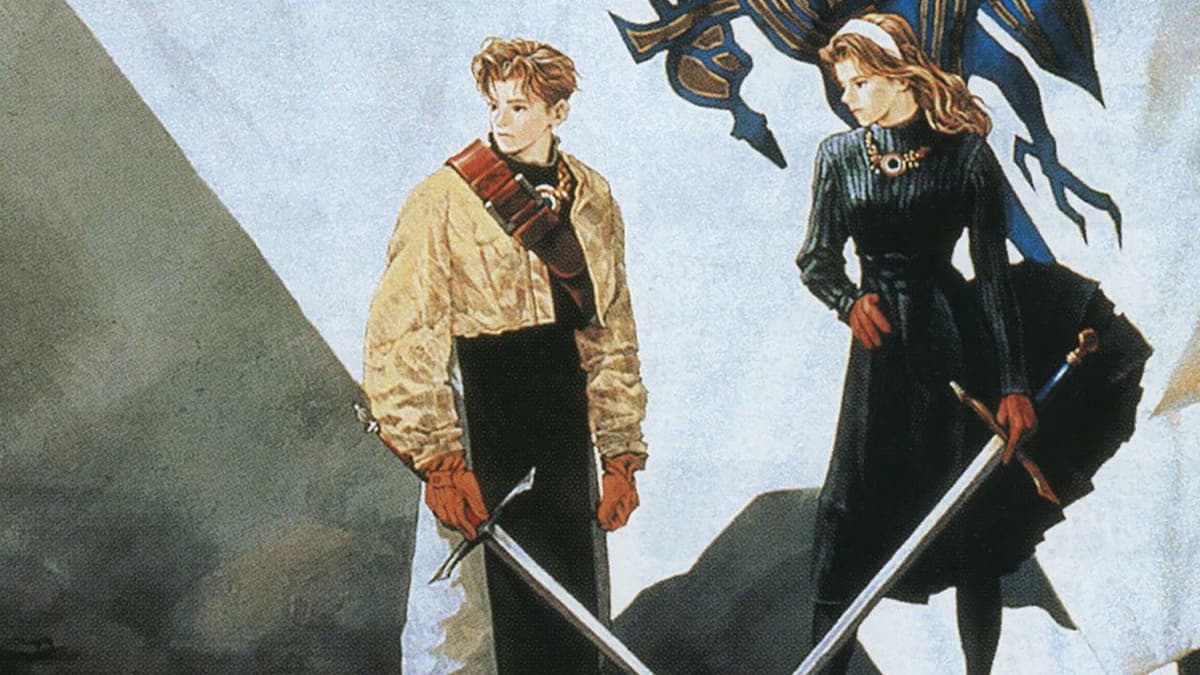
Release: 1995 on SNES in Japan | Platforms: Originally SNES; best modern route is Tactics Ogre: Reborn on current platforms | Price/Access: Sold separately on modern storefronts; check current regional pricing
Here is the demanding pick. Tactics Ogre takes the pleasures of tactical RPGs — height advantage, terrain, class roles, turn order, and damage ranges that can ruin an overconfident plan — and wraps them around political choices that do not politely wait for a perfect answer. A lot of strategy games talk a big game about consequence, then hide behind reversible side content. Tactics Ogre is much harsher and much more interesting than that. Its route splits and recruit differences make decisions feel like decisions, not decorative menu clicks.
What still separates it from lighter tactical comfort food is the texture of bad situations. A poor opening deployment can become a rescue mission. A unit left exposed on the wrong elevation can unravel an otherwise sensible plan. You are not only managing offense; you are managing the chain reaction that starts when one thing goes wrong. That pressure is exactly why some players bounce off it and exactly why the rest of us keep evangelizing it.
Tactics Ogre: Reborn is the right version for almost everyone in 2026. It presents the political conflict cleanly, makes systems easier to understand, and limits the brute-force solution of simply grinding well beyond the map’s intended difficulty. That last change matters more than any visual upgrade, because it preserves the game’s identity as a strategy RPG rather than a spreadsheet you can overpower with patience. If you want a campaign where ideology, map knowledge, and deployment discipline all matter at once, this is one of the strongest descendants of the SNES tactical tradition you can play.
6. Front Mission
Release: 1995 on SNES in Japan | Platforms: Originally SNES; modern route is Front Mission 1st: Remake on current platforms | Price/Access: Sold separately on modern storefronts; check current regional pricing
Front Mission is for players who think a mech should come with more problems than a sword with a bigger attack stat. Every Wanzer — the series’ name for its walking tanks — asks you to think in parts. Body, arms, legs, weapons, durability, and mobility all matter. Blow off an arm and you can cripple a unit’s offense without killing it. Break the legs and its movement collapses. Destroy the body and the machine is finished. Suddenly target selection is not a supporting detail. It is the fight.
That part-based damage system gives the game an attritional feel that still feels fresh. You are not chasing huge heroic swings so much as engineering breakdowns. A mission can turn on whether you disable a dangerous enemy fast enough, preserve enough mobility to control space, or arrive with the right weapon mix for the job. It scratches a very specific tactical itch: the pleasure of solving a battlefield through equipment logic as much as positioning.
The original SNES release also established the series’ grounded military tone, which helps it age better than some louder mech fiction. The stakes feel material. Machines break, loadouts matter, and victories feel assembled rather than bestowed. The remake is the sensible current route because it gives modern players cleaner menus and easier access, but the old design is the reason it makes this list. If you want grid tactics with hardware problems, targeted destruction, and a little less fantasy heroism, Front Mission earns its slot the hard way.
7. Final Fantasy V
Release: 1992 on SNES in Japan | Platforms: Originally SNES; later versions include PlayStation, Game Boy Advance, PC, mobile, and the Pixel Remaster on modern consoles | Price/Access: Sold separately on modern storefronts; check current regional pricing for the Pixel Remaster
Final Fantasy V has the best job system of the 16-bit era because it encourages nonsense and rewards discipline. On paper, those should cancel each other out. In practice, they make the whole machine sing. Characters master jobs, carry learned commands into other roles, and slowly become custom builds shaped by the player’s own habits. Spellblade on a fast attacker is the obvious crowd-pleaser. A heavy fighter carrying white magic is less flashy but often more useful. And yes, a party made of weird specialists can absolutely work if you understand what problem each one is actually solving.
That is why the game holds up. It is not only flexible; it is playful. It invites tinkering without turning every decision into a permanent life sentence. You can spend an evening building a clever setup, discover one catastrophic blind spot, and rebuild around it with a better read on the encounter design. Few SNES RPGs are this good at making experimentation feel like the intended way to play rather than a side effect for power users.
The story is lighter than Final Fantasy VI, and honestly that helps. Not every great 16-bit RPG needs to march around in the world-historic pose. Final Fantasy V succeeds by staying brisk, funny, and mechanically generous while still springing some nasty combat checks on the inattentive. The Pixel Remaster is the easiest recommendation if you want a current, clean version, but the real selling point is the same one it had decades ago: if party-building is your favorite part of the genre, this is still catnip.
8. Super Mario RPG: Legend of the Seven Stars
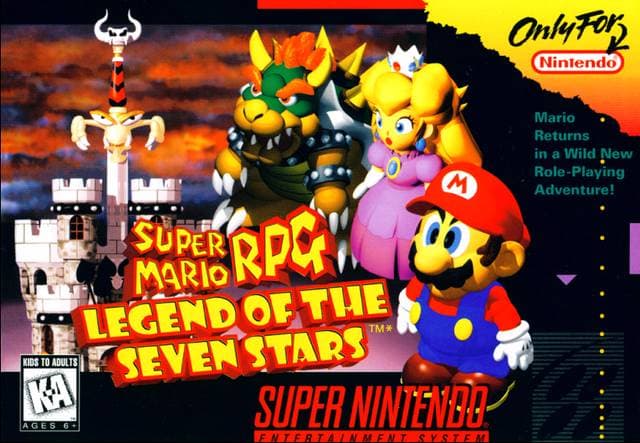
Release: 1996 | Platforms: Originally SNES; remake on Nintendo Switch | Price/Access: The Switch remake is sold separately; original cartridge prices vary widely on the resale market
Super Mario RPG remains the best gateway RPG on the Super Nintendo because it understands a simple truth: new players stay engaged when their turns ask them to do something. Timed button presses make attacks stronger and defense cleaner, so every command feels active instead of ceremonial. That tiny layer of input changes the whole texture of the battle system. Younger players, lapsed players, and people who usually bounce off menu combat all get a constant reminder that their attention matters.
The game’s bigger advantage is its lack of wasted motion. It is brisk, readable, and funny without feeling disposable. Towns move quickly, dungeons rarely drag, and the script lands jokes without leaning on self-congratulation. That pace makes it an unusually good first recommendation for someone curious about SNES-era RPGs but not interested in fifty-hour homework. It teaches genre rhythm through repetition, then gets out while the charm is still fresh.
The Switch remake keeps that structure intact while making battle feedback and presentation far easier on modern eyes. Veterans may still prefer certain details of the original, but for pure recommendation purposes the remake is hard to argue against. More importantly, the core design has aged with startling grace. Timed hits still feel good. The party still has personality. The campaign still ends before its welcome can wear thin. If you want a short, welcoming run that can lead directly into heavier classics afterward, Super Mario RPG is still one of the smartest doors into the whole subgenre.
9. Dragon Quest III
Release: 1996 SNES remake in Japan | Platforms: Originally represented here through its SNES remake; modern versions include the HD-2D remake on PC and current consoles | Price/Access: Sold separately on modern storefronts; check current regional pricing
Dragon Quest III belongs here for one big reason: party creation. Before many console RPGs trusted players to shape a group in a meaningful way, this one already understood the appeal of building a crew around trade-offs. You choose companions, select vocations, and decide whether your party survives through brute force, magic coverage, speed, or a deliberately risky balance of all three. That kind of authorship changes how you read every dungeon. Success feels earned because the party is not only strong; it is yours.
The SNES version helped make that design easier to love, sharpening the presentation and reinforcing why the game’s bones were so sturdy to begin with. Its structure is more traditional than something like Chrono Trigger, which means the pleasures are slower and steadier. You map routes, manage resources, and crawl back from dangerous places with a little more information than you had before. That loop is simple on paper and extremely hard to outgrow if it clicks with you.
The modern HD-2D release is the sensible current route for most players, especially on PC and contemporary consoles. What still matters, though, is not the coat of paint. It is the clean adventure logic underneath it. Dragon Quest III does not try to overwhelm you with systems. It gives you a framework sturdy enough to support different party identities, then lets the dungeon grind and course-correction create the stories. If you like old-school RPGs that treat preparation as part of the drama rather than a chore to skip, it still hits.
10. Lufia II: Rise of the Sinistrals
Release: 1995 | Platforms: SNES | Price/Access: No current official modern storefront listing is established here; original copies and older versions are mostly a resale-market hunt
Lufia II is the dungeon-first choice on this list. Its turn-based combat is solid, its party has enough warmth to carry the story, and its Capsule Monster side system gives tinker-minded players something extra to fuss over. But the real reason it still belongs is the puzzle design. Dungeons ask you to use tools, push blocks, read switch logic, handle traps, and think spatially often enough that the time between battles never turns into autopilot. Plenty of RPGs say exploration matters; Lufia II actually makes you prove you are awake.
That one design decision changes the whole flavor of the game. It feels closer to an adventure game in the best sense, with combat serving the crawl instead of replacing it. When you finally crack a room’s trick or realize how a tool changes the shape of future puzzles, the satisfaction is different from winning a hard boss. It is less about raw survival and more about rhythm: fight, think, solve, advance.
Then there is the Ancient Cave, which remains a small miracle. Its randomized, run-based structure anticipates a lot of later roguelike language without sacrificing the game’s broader identity. You go in, improvise with what you find, and learn just how much you actually understand about survival under pressure. Access is the catch. Compared with several games above, Lufia II is simply harder to play legally on current hardware. That keeps it out of the very top tier. Still, if dungeon design matters to you as much as plot twists do, few SNES RPGs have aged this well.
11. Romancing SaGa 3
Release: 1995 on SNES in Japan | Platforms: Originally SNES; remaster available on modern platforms including PC, consoles, and mobile | Price/Access: Sold separately on current storefronts; check current regional pricing
Romancing SaGa 3 is the pick for anyone tired of RPGs assuming every player wants guardrails, highlighted footprints, and a manager leaning over the shoulder whispering the next objective. You choose one of eight protagonists, gather allies from a wide pool, and move through a world that does not line up its opportunities in a neat, obedient row. That freedom can feel hostile at first. Good. Some games are improved by friction, and this is one of them.
Its formations do a lot of heavy lifting in combat. Where you place characters changes protection, exposure, and action flow, turning party arrangement into more than cosmetic bookkeeping. Then the spark system adds its own twist: characters can suddenly learn new techniques in battle, often right when a boss has revealed the flaw in your current plan. That gives the game a wonderful sense of improvisational discovery. You are not only executing builds; you are watching them mutate under stress.
The remaster makes this formerly Japan-only SNES gem far easier to recommend, but it does not pretend the underlying design is tidy. Expect opacity. Expect occasional cruelty. Expect moments where the game seems almost amused that you assumed it would explain itself more clearly. Then expect the payoff that comes from finally reading its systems on their own terms. Romancing SaGa 3 is not a comfort-classic in the Chrono Trigger mold. It is stranger, rougher, and more demanding. For the right player, that is exactly why it sticks.
12. Breath of Fire II
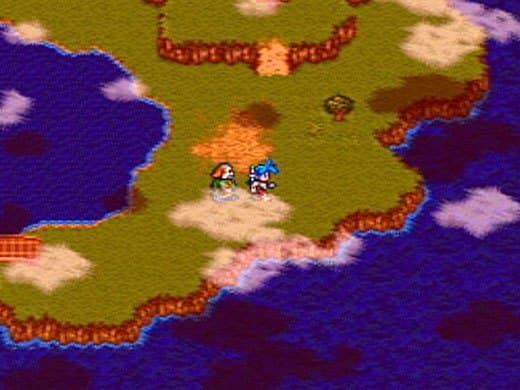
Release: 1994 | Platforms: SNES; available through Super Nintendo Entertainment System – Nintendo Classics on Nintendo Switch and Nintendo Switch 2 | Price/Access: Included with a paid Nintendo Switch Online membership
Breath of Fire II is imperfect, sometimes maddening, and still absolutely worth your time. The obvious draw is its town-building. As your settlement grows, it stops feeling like decorative set dressing and starts acting like a mechanical reward. Recruited residents add services, shops, and utility, which means the world changes in response to what the party has done. Old RPGs often ask you to save places that remain strangely static afterward. Breath of Fire II is much better at making progress feel material.
The bigger reason to persist is the shaman fusion system. Pair characters with shamans and their forms, stats, and battle roles can shift dramatically, opening the kind of build experimentation the game barely advertises loudly enough. It is one of those systems that makes you feel clever for paying attention. Suddenly a familiar party member is doing a different job, covering a weakness, or enabling a strategy you had not considered a few hours earlier.
There are old scars here, and there is no point pretending otherwise. The encounter rate can wear on your patience, and parts of the localization show their age. But the game earns grace through personality and mechanical ambition. It has more build identity than many smoother RPGs that arrived later, and being available through Nintendo’s SNES Classics service makes it far easier to recommend now than it used to be. If you can meet it halfway, Breath of Fire II rewards that effort with systems that still feel curious, generous, and a little underappreciated.
FinalBoss // Gear
Level up your setup
01Retro consoleson Amazon→028BitDo controllerson Amazon→03Capture cards (Elgato & more)on Amazon→04Discounted game keyson Kinguin→Affiliate links · As an Amazon Associate, FinalBoss earns from qualifying purchases.
Want to Level Up Your Gaming?
Get access to exclusive strategies, hidden tips, and pro-level insights that we don't share publicly.
Ultimate Top Strategy Guide + Weekly Pro Tips