
Table of Contents (14)
My first 30 minutes: a fever dream with a rifle
I booted up Black Ops 7 on a PS5, tossed performance mode on, nudged my FOV higher than default, and expected the usual blockbuster beats. Within half an hour, I was crawling through a lab corridor that kept shifting-walls breathing, flickers of Vorkuta bleeding in like ghosts, David Mason’s past weaponized against him. “Fear as a weapon” isn’t just a tagline here; it’s the lens everything passes through. One second I’m sweeping angles, the next I’m staring down something that looks like it walked out of Zombies and into my campaign. Not subtle. Kind of corny. And it works more often than it should.
What hit immediately: Treyarch’s comfortable in this psychological pocket. They’ve been here before-Black Ops 1’s chair, Cold War’s doorway labyrinth-and this time, the hallucinations aren’t side dishes. They’re the main course. The mission design still slips you into familiar roles (sneak, breach, hold), but the set dressing and the how-did-I-get-here lurches kept me locked in. I felt like the game was reaching out to rearrange the furniture in my head while I reloaded.
Key takeaways after finishing the campaign (and replaying parts in co-op)
- The hallucination sequences are the star—bold, unnerving, and surprisingly playable.
- Co-op is better than I feared, but solo still delivers the most potent story beats.
- Always-online, unpausable missions are a buzzkill in 2025, even with generous checkpoints.
- Avalon’s open-world missions feel like onboarding for Endgame, not essential storytelling.
- Gunfeel is classic Call of Duty—snappy, readable, satisfying—now with pickable abilities.
- Villain problem: The Guild’s CEO Emma Kagan barely registers; the ensemble carries the drama.
- Reused monsters and a multiplayer-map cameo undercut the campaign’s otherwise strong identity.
- No difficulty selection is weird; scaling with player count works but robs Veterans of that “dial it to max” ritual.
Solo or squad? How co-op changes the mood
I did my first run entirely solo—about 7.5 hours—and then spent another four bouncing through missions with two friends. Going alone morphs the experience into a haunted house. Your squadmates are “there” in the chatter, but physically you’re by yourself, which is a bizarre trick that somehow enhances the paranoia. It’s just you, the rifle, and Mason’s frayed psyche pulling at the edges of reality. The scripted beats land harder in quiet. I caught myself tiptoeing, actually listening for shifts in the mix that hinted a corridor wasn’t what it seemed.
Co-op, meanwhile, turns those same sequences into little chaos vignettes. The game scales enemy volume with player count, and it shows—robotic Guild heavies, more angles to cover, more plates to slap in. We had a memorable wipe in a hallucination segment when the hallway turned into a maw and spat out a boss-like creature. On solo, it felt like a mind-game; in co-op, it was a resource check. Fun? Yeah. Spooky? Not really. Treyarch chose to let both exist, and I appreciate the option, even if the tonal magic drains a bit when your friend is screaming about spare armor while you’re reliving Mason family trauma.
The no-pause rule bit me more than once. Midway through a stealth infiltration, the doorbell rang. I ducked into a dark corner, hoping the patrol path wouldn’t intersect me, because you can’t pause even solo. Came back to a downed state, burned a self-revive kit, and muttered words I can’t print. The generous checkpointing softened the irritation, but this is a campaign—I should be able to pause. Period.
Mission mix: tight corridors vs. the Avalon experiment
Across 11 missions you get a pleasing spread: classic corridor gunfights, a couple of slow-burn stealth sequences, set-piece sprints that feel like a designer tapping your shoulder every 10 seconds, and then the outliers—the Avalon missions. Avalon is a vast, city-sized sandbox you’ll recognize again in the Endgame epilogue, and eventually (we’re told) in a battle royale context. Inside the campaign, it’s where the pacing shifts gears, for better and worse.
On paper I like the idea: let the player take some initiative, pick a path, grapple up to rooftops, wingsuit off a highway sign, raid supply crates for abilities (bubble shields, kinetic jumps) and gear, then hit an objective. In practice, I did the thing every sandbox fears: I realized I could bypass most fights. Grapple, wingsuit, objective marker. Done. The missions don’t punish you for that efficiency, which is a design choice, but it saps momentum and makes the story feel like it’s waiting in the car while you loot.
To be fair, Avalon is miles better than the open-world-ish filler in Modern Warfare 3 (2023), where the campaign felt like a checklist dressed as a story. Here, objectives crack open The Guild’s secrets and push the “fear as a weapon” motif forward, but they still read like onboarding for Endgame. If you love the Warzone-adjacent rhythm of scanning, looting, and route-planning, you’ll vibe. If you came for Black Ops’ meticulously paced crescendos, Avalon is a speed bump you can’t entirely avoid.
Hallucinations that land (and the moments that don’t)
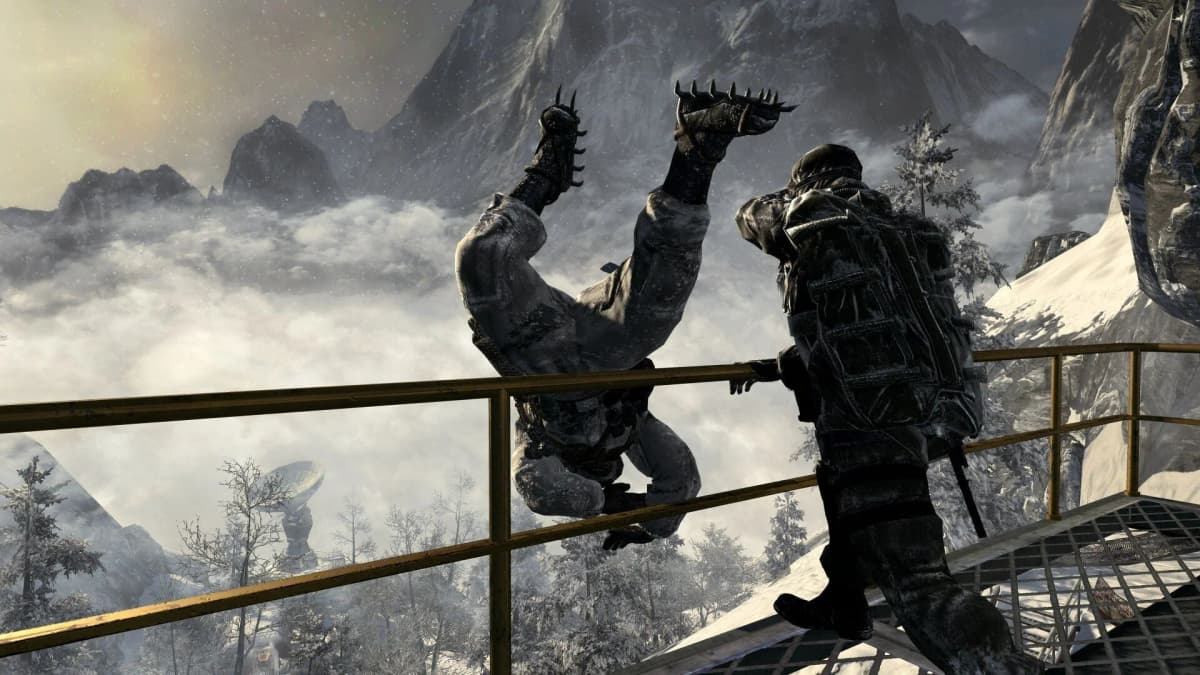
The campaign is at its best when it stops pretending reality is firm. There’s a mid-campaign stretch where you’re walking through a normal office block and the world blinks; suddenly you’re back in a prison yard that only exists in David Mason’s memory. The color drains, the audio cracks, and your brain does that tiny “wait—huh?” micro-stutter before enemies simply aren’t human anymore. It’s playable symbolism, and Treyarch mines it well.
There’s also a nightmare sequence involving Frank Woods that stuck with me. It reframes a key wound in the Mason family history not with exposition, but with punishment—you are made to feel the claustrophobia and regret. It’s not subtle, but Call of Duty isn’t a subtle series; it’s a confident one. This section is confident.
That said, the campaign sometimes cannibalizes its own atmosphere. A few enemy types look like they wandered in straight from Zombies, and not in a “the hallucination is blurring lines” way—more a “we had these models” way. Seeing obvious carryovers breaks the spell. There’s also a walk through a familiar multiplayer map that functionally makes sense (it’s “in” Avalon) but emotionally yanks you out of the story to remind you you’ve spent a lot of hours elsewhere in this franchise.
The faces and the void: performances vs. a flat villain
David Mason’s recast works fine. Milo Ventimiglia brings a steady, inward tension that fits a soldier carrying decades of fallout. Michael Rooker slipping back into Harper is candy: gravelly comic relief that doesn’t undermine the stakes. Leilani “50/50” Tupuola is the breakout—calm, competent, with a practical swagger boosted by bionics. And an older Troy Marshall grounds the squad with that weary handler energy.
The problem sits at the top: Emma Kagan, The Guild’s CEO. She’s supposed to be the avatar of technocratic control, all clean lines and corporate-speak, and I get the intent. But she never crystallizes into a presence. Her scenes feel like intermissions, not threats. In a story built on using fear as leverage, your villain needs to own the room or disturb it. Kagan does neither. The supporting cast and the hallucination framework do the heavy lifting while the antagonist hovers like a press release.
Progression in a campaign: clever or clutter?
Black Ops 7 borrows a light layer of Endgame systems for the story: gradual leveling, weapon rarities, upgrade stations where you elevate your favorite gun, and ability picks that tweak your approach. I mostly liked it. Snagging a bubble shield before a corridor defense felt like packing an extra parachute. The kinetic jump adds a verticality burst that saved me when I overextended. And the weapon stations let me commit to a mid-range setup without feeling punished for loyalty.

Where it ruffled my feathers is in the rhythm. On solo, the choices feel tactical. In co-op, they can become a second meta: who’s running shields, who’s the jumper, who’s on crowd control. That’s cool for replayability but nudges the campaign toward a loot-lite identity that doesn’t always serve the narrative spikes. There’s also the matter of self-revive kits and armor plates—lifesavers, yes, but they sand off the stakes in sequences that should be sharpening your nerves.
No difficulty menu, just scaling
There’s no traditional “Recruit/Regular/Hardened/Veteran” picker. The game adjusts challenge based on how many people are in your session. Playing alone is not a cakewalk; I got rolled by Guild robots more than once. But as someone who usually dials these campaigns to Veteran, I missed that ritual of planting a flag. Scaling does keep co-op from being a cakewalk, though—on a three-player run we had to actually coordinate during an extraction because enemies weren’t shy about flanking. It’s functional, but it doesn’t scratch the same itch as picking your poison and wearing it like a badge.
Controls, gunfeel, and performance
The shooting is immaculate in that Call of Duty way: hitscan clarity, fast ADS, clean recoil patterns you can dance with. The grapple hook is a joy when missions give it room; it turns street fights into vertical puzzles. The bubble shield pops with a satisfying “thunk” that feels like you’ve carved a moment of safety out of chaos. Not every ability lands—some are forgettable—but the kit doesn’t get in the way of the fundamentals.
On PS5, performance was steady for me. I noticed a couple minor hitches that felt network-related (that little “connecting” icon loves to remind you this is always online), and loading between heavier hallucination layers occasionally stuttered for a heartbeat, but nothing that broke flow. Audio’s a highlight: spatial cues telegraph the surreal shifts before your eyes catch up, and the score leans into discordant textures without drowning the gunfire.
Pacing, length, and the landing
Clocking my first run at around 7.5 hours felt right. I didn’t sprint past intel, but I wasn’t completionist, either. The campaign opens strong, dips during its first Avalon detour, rallies with a brutal middle-third that weaves character, horror, and tight encounters, and then flirts with over-explanation near the end before handing you the Endgame epilogue playground. The last couple missions do that Black Ops thing of letting you question what’s real and what’s manipulation, and while it doesn’t reach the high watermark of the original’s finale, it nails the series’ tone.
The Endgame epilogue itself is a cool coda conceptually—you get a taste of the larger map’s logic without jumping straight into a live-service mode. But again, it reads as a tease more than a climax. I’m fine with that as long as the campaign earns its own finish line, and for the most part, it does.
The little frictions that add up
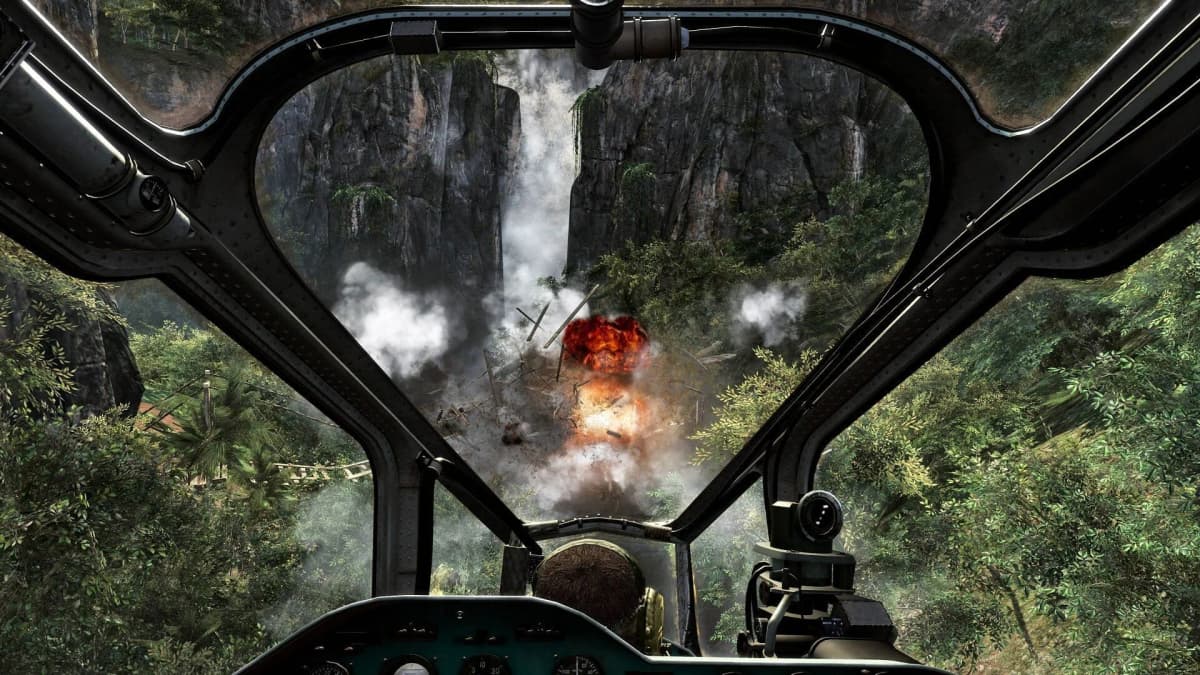
Beyond the big “always online” gripe, a few smaller scrapes stood out. A couple of reused enemy types break the thematic spell at bad moments. One throwback location cameo feels more like marketing than meaning. And while the squad banter charms, sometimes the scripting assumes your companions are physically present during solo play in ways that jar—hearing a line about “covering left” when it’s just me and a hallway of nightmares took me out of it for a beat.
None of these are fatal, but they’re the kind of things that keep a great campaign from being a classic. It’s a lot like playing a tight album with one or two tracks that sound like they were recorded in a different studio.
Who should play this
If you loved the brain-twisting, reality-bending DNA of Black Ops 1 and Cold War, this is your campfire. The horror-tinged hallucinations aren’t just flavor; they meaningfully shape encounters and storytelling. If you typically roll your eyes at loot boxes and progression systems in campaigns, you might bristle at the Endgame-lite layer, but it’s mostly additive rather than invasive.
Co-op fans will have a good time, especially if your group enjoys assigning roles around abilities and pushing through scaled firefights. Solo players (like me, on the first go) will get the sharpest emotional hit and the cleanest pacing—just know you can’t pause, so plan your snack breaks. If your favorite Call of Duty campaigns are the purest, most linear rollercoasters, the Avalon beats won’t ruin your night, but they also won’t be your favorite parts.
Bottom line and score
I came in wary of the co-op push and the open-world detours. I left impressed by how often the campaign commits to its central idea and lets the shooter fundamentals sing inside the weirdness. The villain is a miss. The always-online rule is nonsense. Avalon’s a mixed bag. But when Black Ops 7 leans into being a psychological shooter with a memory problem, it’s the freshest this franchise has felt in years.
Note on the full review: I’ll update this piece with a complete Zombies section and an overall score after I’ve sunk proper time into it. Given how much the campaign flirts with Zombies energy, I’m curious to see where Treyarch takes it this year.
TL;DR
- Psychological horror isn’t a gimmick here—it shapes missions in smart, playable ways.
- Co-op is genuinely fun and scales well, but solo offers the best story experience.
- Always-online means no pausing, even solo. It’s as annoying as it sounds.
- Avalon’s open missions feel like training wheels for Endgame, not essential plot.
- Abilities (grapple, bubble shield, kinetic jump) add spice without diluting the gunplay.
- Emma Kagan is a forgettable villain; the squad performances carry the campaign.
- Some reused enemies and a multiplayer-map cameo undercut immersion.
- Solid 7-8 hour run; strong middle stretch; sticks the landing well enough.
- Campaign score now: 8/10. Overall score pending Zombies impressions.
FinalBoss // Gear
Level up your setup
01Top-rated gaming headsetson Amazon→02High-refresh gaming monitorson Amazon→03Gaming chairson Amazon→04Discounted game keyson Kinguin→Affiliate links · As an Amazon Associate, FinalBoss earns from qualifying purchases.
Want to Level Up Your Gaming?
Get access to exclusive strategies, hidden tips, and pro-level insights that we don't share publicly.
Ultimate Reviews Strategy Guide + Weekly Pro Tips