
Table of Contents (9)
Back to Raccoon City… again
I booted up Resident Evil Requiem on Steam expecting a flashy anniversary victory lap, not a game I’d accidentally binge across two late-night sessions. Five years after Village, Capcom is calling this a return to survival horror roots for the series’ 30th birthday. In practical terms, that means tight corridors, scarce ammo (at least at the start), a lot of familiar locations, and the RE Engine being pushed harder than ever.
After about 12 hours for my first playthrough on PC (Ryzen 7 5800X, RTX 4070, 32 GB RAM, SSD), I came away torn. Requiem is absolutely gorgeous, fun to play, and it nails that feeling of being hunted… at least when you’re in Grace’s shoes. It’s also one of the safest, most risk-averse Resident Evil games Capcom has put out in years. It’s like the team emptied a bag of “Resident Evil Greatest Hits” into a blender and hit pulse.
If you’re hoping for a bold reinvention or something as weird as Village’s dollhouse or RE7’s opening hours, this isn’t that game. But if you want a slick horror FPS that hits the nostalgia buttons and doesn’t ask too much of you, Requiem is dangerously easy to enjoy.
The first night: Grace, an empty hotel, and actual fear
The opening hour with Grace Ashcroft might be the best slice of pure horror Capcom has done since the Baker house. You’re dumped in front of an abandoned hotel on the outskirts of Raccoon City, sent there alone by the FBI because apparently HR is still on vacation in this universe. Rain hammering the windows, the lobby half-flooded, emergency lights flickering just enough to make you hate every shadow-this is the RE Engine flexing hard.
Grace is not a supercop. She’s an analyst. The game sells that immediately through animation and controls. In first-person, her hands visibly shake when she raises her pistol. The reticle wobbles unless you hold your breath, and even then lining up a headshot on a slowly shambling corpse feels like threading a needle. The first time a zombie lurched out from behind a reception desk, I panicked, emptied half my magazine into the wall, and ended up mashing the melee button in a blind “get it off me” frenzy.
This is where Requiem feels genuinely oppressive. Narrow corridors, low field of view, lots of diegetic lighting (exit signs, vending machines, emergency torches) instead of neon “go here” markers. Every sound matters: floorboards creaking above you, distant wet gurgles, the hum of a generator that might hide something worse. With Grace, I was slow, methodical, constantly double-checking corners and counting bullets in my head.
After those first two hours, I thought, “Okay, Capcom actually did it-they made RE scary again in first-person.” Then Leon shows up.
Leon vs Grace: two protagonists, two completely different games
Requiem is built around a dual-protagonist structure. Grace is the anxious newcomer in first-person; Leon S. Kennedy is… well, Leon. Veteran monster blender with one-liners and a frankly unhealthy relationship with handguns. By default, Grace’s segments are FPS, and Leon’s are over-the-shoulder third-person, though there’s a menu option to unify the camera if you really want to. I stuck with Capcom’s intended split for the first run.
Grace’s sections are all about vulnerability. Limited ammo, small inventory, a crafting system that makes you scrape every last resource off the floor. The big twist here is her blood harvest mechanic: after dropping a zombie, you can siphon contaminated blood from the corpse or puddles on the ground, storing it in vials to later craft bespoke serums and stimulants. In theory it’s grim and thematic; in practice, it’s a risk-reward mini-game. Do you linger in that hallway a few extra seconds to harvest blood while you hear something breathing around the corner?
Early on, this kept me on edge. I’d weigh whether to sneak past a patrolling enemy and save my ammo or clear the room for more blood and potential crafting materials. The problem is that the game gradually becomes too generous. By the mid-game, my vials were usually full and my backpack stuffed with herbs and gunpowder. The survival tension quietly slips away if you’re even remotely thorough.
Leon, on the other hand, is basically starring in Resident Evil 4.5. When the camera snaps back and you see his worn leather jacket and that familiar side-part, everything about the game’s personality shifts. He moves faster, his aim is steadier, and the arsenal explodes: shotguns, SMGs, upgraded pistols, and a brutal hache for finishers that turn enemies into gore confetti.
Leon also runs on a different progression system. Enemies you kill feed a credit combo meter, and stylish plays-headshots, knife executions, multi-kills—spike the payout. At scattered terminals, you cash those credits in for ammo, new weapons, or weapon modules. It’s addictive in a very arcade way. I caught myself lining up headshots I didn’t need just to keep the combo going, which is fun, but it absolutely guts whatever “survival” vibe might have been left.
This contrast is the heart of Requiem. Grace is fear and scarcity; Leon is empowerment and catharsis. When the game alternates them thoughtfully—putting you through a tense stealthy slog as Grace before letting you vent as Leon—it works. When it strings too many Leon arenas together, Requiem forgets it’s supposed to be horror and starts drifting into self-parody.

Corridors, backtracking, and that infamous motorcycle chase
If you’ve played pretty much any Resident Evil since the PS1 era, you’ll recognize the skeleton underneath Requiem. Capcom leans so hard on familiar patterns that at times I felt like I was wandering through a museum of their level design tropes.
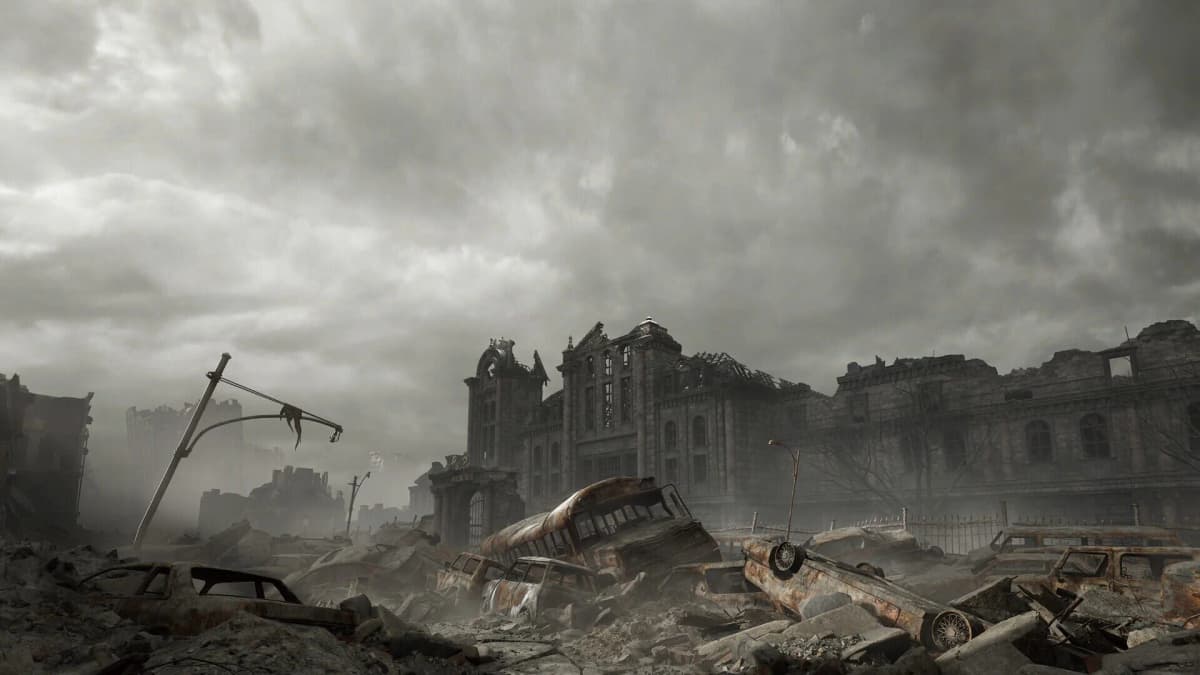
You get your modernized Spencer-esque mansion (this time as a luxury hotel), your underground labs, clammy sewer segments, and eventually the big nostalgic swing: a return to Raccoon City. On paper, that Raccoon City section is the highlight—slightly more open, with multiple streets and apartment blocks you can weave through, some light verticality, and optional side rooms hiding extra gear or files. For an hour or so, the game breathes.
The rest of the time, though, you’re in corridor city. Long, narrow hallways feeding into small combat arenas, then back out into another string of hallways. Classic key-item gating (red keycard, blue keycard, emblem pieces) sends you on predictable backtracking loops. I don’t mind old-school design when it’s used creatively, but you can feel the repetition here. There are entire stretches where you’re essentially doing “find fuse, plug fuse, get jumpscared on the way back” three times in a row.
Invisible walls are another immersion killer. At one point as Leon, I’m blocked from stepping over a knee-high pile of cardboard boxes even though I’d just leapt a burning gap in the previous room. In the Raccoon City streets, you see alleys that look explorable but bounce you off an invisible barrier. In 2026, in a game this pretty, those old-school constraints feel especially jarring.
And then there’s the motorcycle chase. Midway through the campaign, Leon jumps on a bike and you’re suddenly in a third-person rail shooter sequence, firing at pursuing mutant dogs while, yes, shooting exploding red barrels to clear roadblocks. It feels like a scene beamed straight in from a 90s direct-to-video action movie. Part of me grinned; part of me sighed. It’s entertaining in a dumb way, but it totally torpedoes the horror mood and underlines how unwilling Capcom is to leave those clichés behind.
Enemies, Nemesis-style stalkers, and surprisingly tame puzzles
The enemy roster is a nice mix of classic and new. Regular zombies look fantastic in a disgusting way: bloated office workers, construction workers still in their gear, and one stand-out archetype, the screeching opera singer whose shrill wail draws in nearby infected if you don’t shut her up fast. There’s also a deeply unpleasant, overfed baby-like B.O.W. that crawls faster than it has any right to and soaks up ammo like a sponge. The RE Engine’s gore system goes to town on all of them—blown-off limbs, shredded jaws, torsos ripped open by shotgun blasts.
Requiem also introduces a couple of persistent pursuers in the Nemesis tradition. One hulking experimental bioweapon in particular stalked me through a late-game research wing, forcing me to reroute my mental map on the fly as he punched through walls I thought were safe. These moments are when the game genuinely sings: limited resources, no clear safe rooms, and the constant audio tell of something heavy moving just out of sight.
Requiem also introduces a couple of persistent pursuers in the Nemesis tradition. One hulking experimental bioweapon in particular stalked me through a late-game research wing, forcing me to reroute my mental map on the fly as he punched through walls I thought were safe. These moments are when the game genuinely sings: limited resources, no clear safe rooms, and the constant audio tell of something heavy moving just out of sight.
🎮 Get This Game at the Best Price
Compare prices instantly and save up to 80% on Steam keys with Kinguin — trusted by 15+ million gamers worldwide.
*Affiliate link — supports our independent coverage at no extra cost to you
Boss fights, unfortunately, are the opposite of inspired. You’ve seen most of these patterns before: “shoot the glowing weak spot,” “kite it around the arena and wait for it to expose itself,” “shoot the explosive canisters conveniently placed around the room.” They’re big, they’re loud, and they do the job, but I can’t think of a single boss encounter I’m dying to replay.
Puzzles are equally safe. Expect simple symbol-matching, code hunting via handwritten notes, the occasional circuit reroute, and some light environmental riddles (“rotate the statues to face the right directions” style). Nothing as clever as the best of the police station brainteasers in RE2 Remake, and certainly nothing as surreal as Village’s dollhouse sequence. I never got properly stuck; at worst I wandered an extra five minutes before noticing a slightly shinier drawer handle.
It gives the game a surprisingly brisk pace, but if you miss the mental friction of classic survival horror puzzle design, Requiem isn’t going to scratch that itch.
RE Engine in 2026: viciously pretty and well-optimized
Whatever else you can say about Requiem, it’s a technical showpiece. The RE Engine has been impressive since RE7, but here it feels like Capcom has it dialed in to muscle memory. On my PC at 1440p, with ray tracing on and the higher-quality lighting presets, I hovered between 110 and 144 FPS for most of the campaign. The frame-time graph was boring in the best way—no weird stutters when opening doors, no big hitches during combat.
The lighting work is what really sells the atmosphere. Path-traced interiors are soaked in rich, indirect light: candles casting soft pools of glow in the hotel chapel, cold fluorescent spill in the labs bouncing off stainless steel and glass, sodium streetlamps turning Raccoon City’s wet asphalt into an orange smear. The more grounded the location, the better the engine sings.
Character models are high quality, though faces can sometimes have that slightly over-waxed look Capcom can’t quite shake. Get too close to some environmental textures and you’ll notice a few muddy assets, but those are exceptions in an otherwise lavish presentation. The dismemberment and impact physics are genuinely gnarly—lining up a shotgun blast to remove a zombie’s leg and watching them crawl still never got old.
Two technical nitpicks from the PC side. First, the FOV is way too tight out of the box, especially in first-person. It adds to the claustrophobia, sure, but also to motion sickness. I lasted about an hour before I went looking for a mod to widen it. Second, the mouse sensitivity and acceleration curves took real fiddling to get to a comfortable place; it felt tuned primarily for controller play. Neither issue is fatal, but they’re noticeable if you’re particular about your controls.
On the audio front, Capcom’s attention to detail pays off. The soundscape during Grace’s segments in particular is viciously effective: the scrape of something on the floor above, distant sirens from the city, the sticky squelch of stepping in something you don’t want to identify. Weapons sound meaty and distinct, from the pop of a basic handgun to the percussive thump of a pump-action shotgun.
Voice acting is solid across both English and French, though Leon’s writing leans very hard into “90s action hero.” A few of his punchlines landed for me early on; by the back half, I was rolling my eyes more often than not. He’s still charming, but Capcom could stand to trust the character’s presence instead of drowning him in quips.
Story, fan service, and the 30th anniversary problem
Story-wise, Requiem is perfectly serviceable and deeply unsurprising. The T-Virus is still kicking around, bad people are still trying to monetize bioterror, and Raccoon City refuses to stay dead. The narrative spends its first few hours leaning into psychological horror with Grace—hallucinations, disorienting cuts, the sense that she might not be seeing the full picture—before settling into a more straightforward conspiracy plot once Leon fully enters the picture.
The real draw is the fan service, and Capcom doesn’t even pretend to be subtle about it. Returning locations, familiar documents, cameos tucked away in optional files, and more than a few shots framed to echo iconic moments from earlier games. As a long-time fan, I’ll admit I smiled more than once at a familiar hallway or a certain piece of shattered signage in Raccoon City.

The flip side is that the game rarely feels like it has its own identity. Village was messy and experimental, but it had a personality. Requiem feels like a carefully curated anniversary album—polished, enjoyable, but afraid to do more than remix old hits. Grace is the best attempt at something new here, and she absolutely works as a perspective character. I just wish the script had given her more to do emotionally once Leon enters the stage; she gradually fades into the role of “anxious but competent partner” instead of being allowed to fully own the narrative.
Who Resident Evil Requiem is really for
After finishing the campaign and poking at some of the unlockable extras, it’s pretty clear who Capcom made this for:
If you’ve been with the series since the PS1 days, Requiem feels like a lavish comfort meal. The corridors, the key hunts, the familiar viruses and acronyms, the return to Raccoon City—it’s a greatest-hits package wrapped in cutting-edge tech. You’ll probably roll your eyes at a few of the more blatant callbacks, but the sheer craft on display makes it hard to stay mad.
If you came in through RE7 or Village and loved the weirder, more experimental side of modern Resident Evil, Requiem might feel a bit conservative. It borrows their first-person DNA and some of their pacing tricks, but it rarely goes for the jugular in the same way. The horror peaks early with Grace and then gradually gives ground to Leon’s action hero power fantasy.
Newcomers can absolutely jump in here—the plot is self-contained enough—but a good chunk of the emotional weight of returning locations and faces will be lost on you. Mechanically, though, it’s a solid entry point: generous checkpoints, reasonably forgiving combat, and puzzles that won’t send you to a wiki.
FinalBoss // Gear
Level up your setup
01Top-rated gaming headsetson Amazon→02High-refresh gaming monitorson Amazon→03Gaming chairson Amazon→04Discounted game keyson Kinguin→
Affiliate links · As an Amazon Associate, FinalBoss earns from qualifying purchases.
Want to Level Up Your Gaming?
Get access to exclusive strategies, hidden tips, and pro-level insights that we don't share publicly.
Ultimate Reviews Strategy Guide + Weekly Pro Tips