
Table of Contents (8)
A beautiful medieval disaster: my time with 1348 Ex Voto on PC
The first 30 minutes of 1348 Ex Voto had me convinced I’d found a hidden gem. You open on plague-ridden medieval Italy, all crumbling stone and smoky torchlight, playing a would-be knight named Aeta sparring with her childhood friend Bianca in a castle courtyard. There’s banter, there’s tension, there’s that unmistakable “oh, they’re in love” energy that sapphic Twitter has been starved for. The performances from Alby Baldwin (Aeta) and Jennifer English (Bianca) are immediately strong; the way Aeta’s voice cracks when she tries to play it cool hit a little too close to home.
And then I had to actually fight people.
Across the next several hours, 1348 Ex Voto went from “hey, this could be the next cult-favorite indie” to one of the most persistently aggravating action games I’ve touched in years. The tragedy isn’t just in the story; it’s in watching a genuinely evocative setting and earnest queer-coded premise get smothered by a lock-on system so aggressively hostile that it feels like the real final boss.
My first hours in plague-stricken Italy
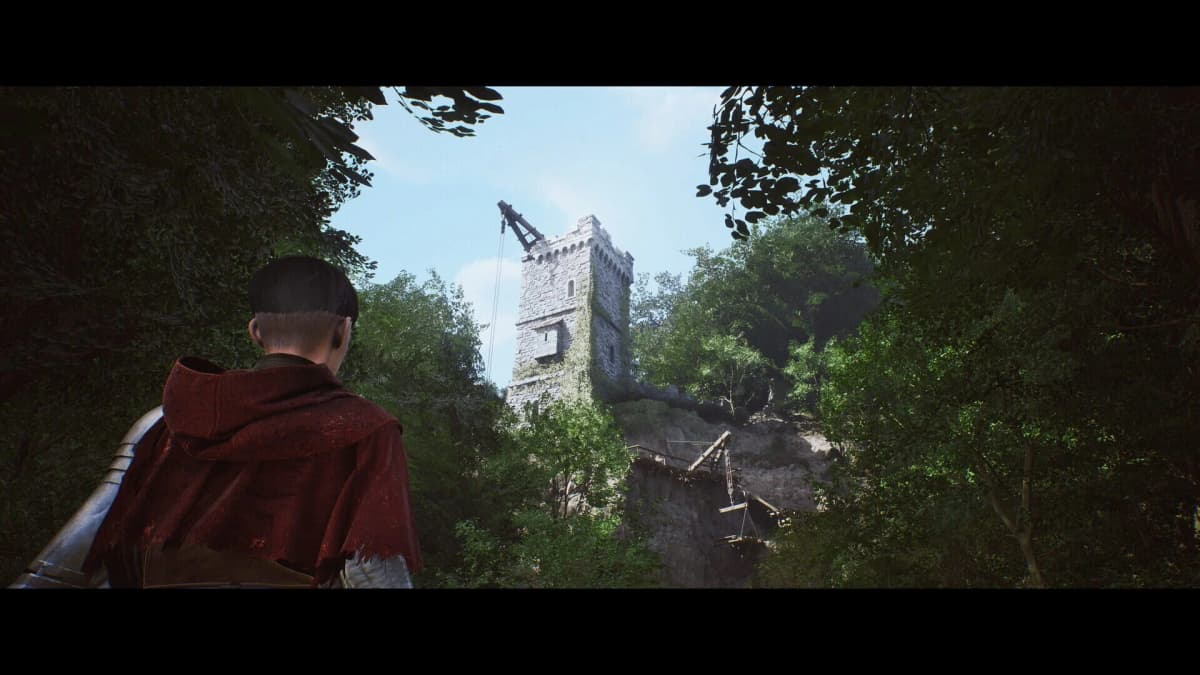
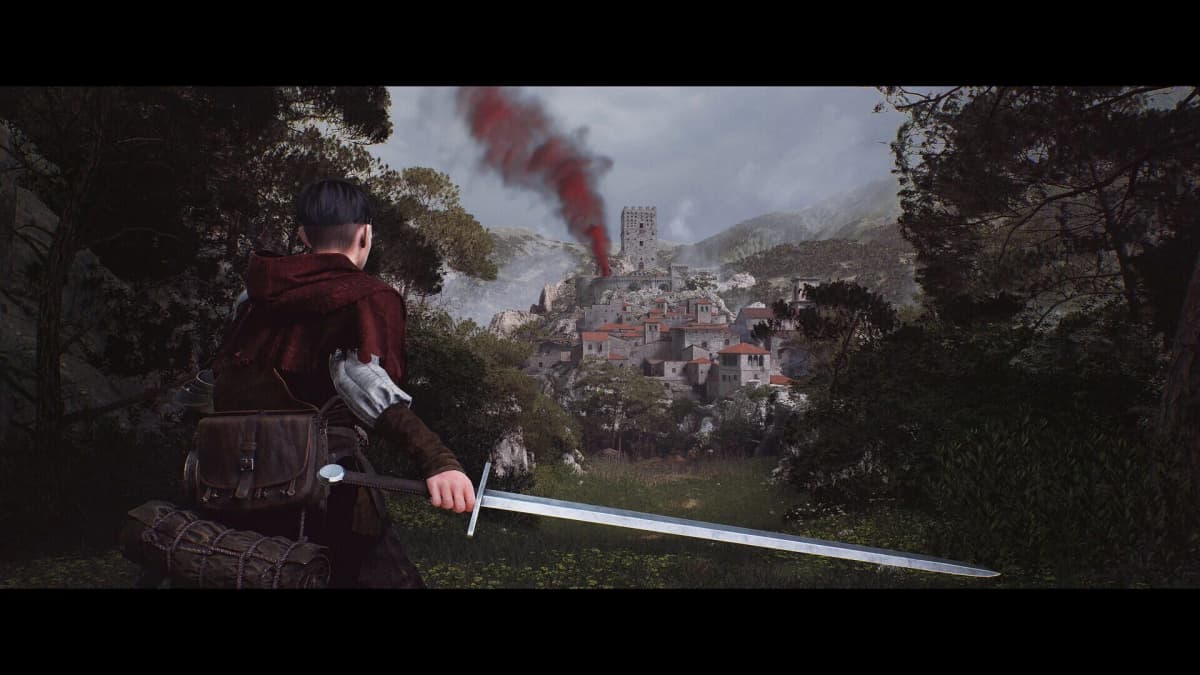
This is a linear third-person action-adventure, not an RPG or open-world. You move from level to level along a pretty strict path: villages ravaged by pestilence, gloomy camps, fortified outposts. The 15-person team at Sedleo clearly poured everything they had into making 14th-century Italy feel thick with disease, desperation, and piety. Smoke hangs in the air, church bells echo over distant hills, and every ramshackle hut looks like it could collapse under the weight of all the misery inside.
What struck me early on was how much I wanted to explore more than the game would let me. Pathways branch just enough to tease freedom, only to funnel back into the critical route. Fields that look perfectly climbable are invisible walls. There’s no real roaming; you’re on rails, albeit nicely dressed ones. I don’t mind linearity when it’s focused, but here the level design constantly suggests a world bigger than the game is willing to support.
Moment to moment, you’re doing a mix of walking through story beats, shoving crates to reach ledges, and looting anything that glows. That looting, oddly, is one of the most satisfying parts of the whole package. Opening a chest or snatching up a scroll comes with a chunky audio cue and a crisp little animation that tickles the brain in that “one more container” way. You grab food for healing, parchment for skill upgrades, and religious pendants that function as collectibles. Annoyingly, lots of corpses, chests, and weapons are just set dressing, not interactable, which clashes with how lootable the world initially appears.
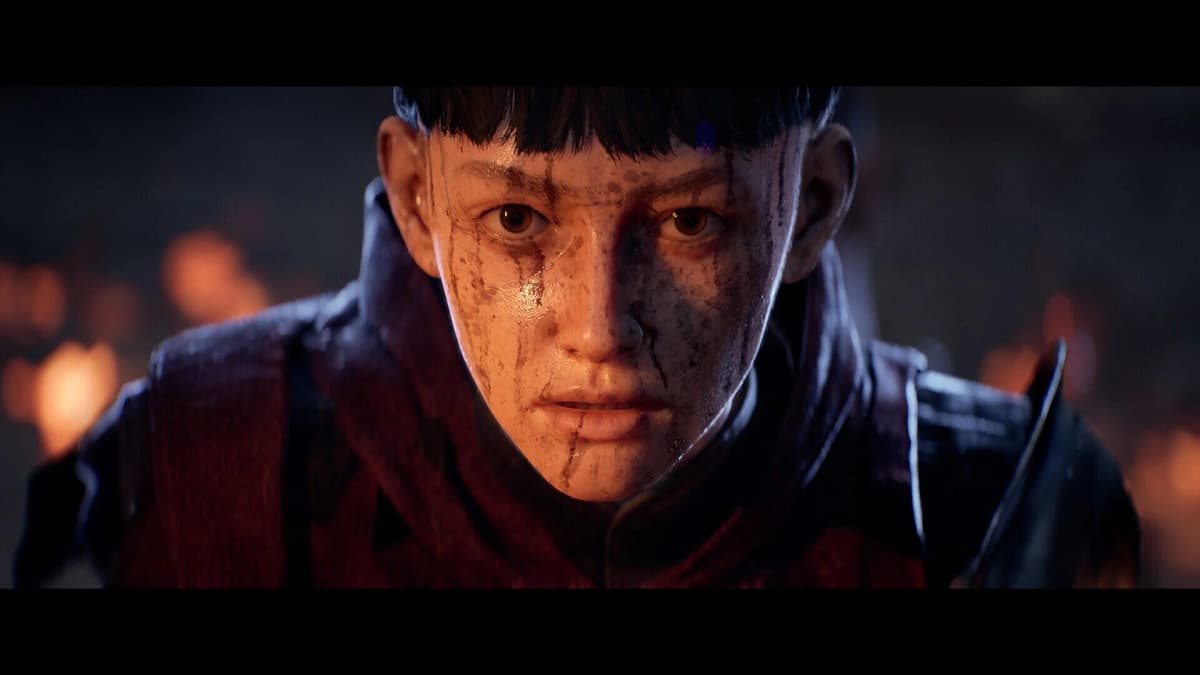
Facial animation is where the cracks in the presentation show up fast. Aeta usually looks fine – focused, determined, occasionally vulnerable. Bianca, on the other hand, often looks like someone is badly puppeteering a wax figure. Both characters tend to speak mostly with their bottom teeth, producing this uncanny, corpse-like effect that undercuts emotional scenes. It’s not game-breaking, but when the whole experience leans so hard on narrative and performance, it’s impossible to ignore.
Combat that feels like fighting the camera, not the guards
Sedleo has talked up its European martial arts-inspired swordplay and motion capture, and you can see glimpses of that ambition in Aeta’s moveset. On paper, it’s a familiar template: light and heavy attacks, blocks, parries, and a lock-on system for one-on-one duels. In practice, the lock-on is so catastrophically bad that it drags everything else down with it.
Once you click into lock-on, your field of view tightens to a suffocating tunnel. There’s no slider to widen it. Your entire perspective glues itself to a single enemy, and the game is stubborn about which one that is. It will happily latch onto a guy across the arena instead of the spearman currently trying to skewer you, and swapping targets mid-fight is imprecise at best.
The real nightmare starts when multiple enemies crash in. Picture this: I’ve nearly chipped down one guard’s health bar. I’m reading his swings, landing parries, feeling like maybe, finally, the combat is starting to click. Then another enemy wanders into the edge of frame. The lock-on, for reasons known only to whatever vengeful deity oversees camera logic, decides that this new arrival is now my sworn rival, instantaneously spinning the camera 180 degrees. My inputs fling Aeta in the wrong direction, my original target strolls out of view, and by the time I wrestle control back, that enemy has reset his position and health.
This isn’t a one-off glitch; it’s the baseline experience. I spent close to two hours on a mid-game encounter that throws waves of guards at you in a cramped space, not because the enemies were especially clever or because I was under-leveled, but because the lock-on kept yanking me away from the target I’d been chipping down. Every failure felt like I was losing to the camera, not to any enemy design. Even writing about it later, I could feel my jaw clenching again.
When the system briefly behaves, you can see the skeleton of something that might have worked. Timing a parry, countering with a quick riposte, then rolling behind a shielded foe can feel satisfying for all of two or three exchanges. But the moment another enemy joins in or the game line-of-sight bugs out for half a second, the lock-on snaps, the camera whips, and you’re back in the spiral.
Enemies, meanwhile, don’t seem bound by any of these rules. They happily swarm you from off-screen, attack through the blind spots your narrow FOV creates, and enjoy the luxury of resetting without consequence whenever the targeting decides you’ve had enough competence. Combat in challenging games is supposed to be demanding but fair. 1348 Ex Voto consistently feels like the odds are stacked because your own tools are sabotaging you.
Layer on top of this a camera that likes to sit just a little too close to Aeta’s back and a tendency for environments to feature tight corridors, and I regularly found myself dizzy and disoriented, spinning around in clumsy circles while guards poked me to death. It’s rare that a single systemic flaw can almost single-handedly tank an action game, but that’s what’s happening here.
Looting, skill scrolls, and the illusion of depth
The progression layer circles around three things: lootable food for healing, parchment scrolls used as skill points, and modular sword components that alter Aeta’s fighting style between one-handed and two-handed options. On paper, again, there’s an interesting idea: discover martial treatises in-world, apply them to your style, and slowly shape Aeta into the knight you want her to be.
The problem is that the game rarely tells you what you’ve actually unlocked. I’d spend several scrolls on a new technique, get a little notification that I’d learned some Latin-named maneuver, and then… nothing. No tutorial box explaining the input. No move list in the menu. No subtle change in stance to clue me in. After a while, I stopped trying to guess and just assumed Aeta was automatically weaving these techniques into her combos independent of me.
The only upgrades I could reliably feel were the sword parts. Swapping in a heavier blade for chunkier two-handed strikes or a lighter one for faster slashes did change the pacing of combat in a noticeable way. But again, any nuance gets chewed up by the lock-on carnage. It doesn’t matter how distinct your moveset is if you’re constantly attacking the wrong direction.
The only upgrades I could reliably feel were the sword parts. Swapping in a heavier blade for chunkier two-handed strikes or a lighter one for faster slashes did change the pacing of combat in a noticeable way. But again, any nuance gets chewed up by the lock-on carnage. It doesn’t matter how distinct your moveset is if you’re constantly attacking the wrong direction.
🎮 Get This Game at the Best Price
Compare prices instantly and save up to 80% on Steam keys with Kinguin — trusted by 15+ million gamers worldwide.
*Affiliate link — supports our independent coverage at no extra cost to you
Exploration does feed into this system in a satisfying loop: see a side path, loot a chest, feel your pockets get heavier. That itch is real, and to the game’s credit, it understands the power of a good “shunk” sound and a quick item pop-up. The issue is that the depth promised by the skill tree and martial talk never really materializes. You’re not mastering a complex combat system; you’re wrestling with a clumsy one that pretends to have layers.
Sapphic devotion, class rage, and a story that loses its nerve
Narratively, 1348 Ex Voto is pitched as Aeta’s journey across plague-wracked Italy to rescue Bianca, a postulant who vanishes after a violent raid. That hook works. Aeta’s devotion is loud and clear: she compares herself to Orpheus at one point, swearing she won’t look back and lose Bianca the way he lost Eurydice. She’s repeatedly mistaken for a boy on the road, echoing stories like Blue Eye Samurai in a medieval European key, and if you’ve ever been gendered incorrectly yourself, there’s something quietly validating there.
The marketing has understandably latched onto the “lesbian knight” angle, but if you go in expecting a full-bodied romance, brace for disappointment. After that strong opening sparring scene, Bianca spends most of the runtime off-screen. You get glimpses of their bond through memories and the occasional scene, yet over a roughly six-hour campaign, they share shockingly little time together. The chemistry is there in flashes, but the game keeps their relationship at arm’s length, more subtext than text.
Instead, the story gradually pivots toward a commentary on class and privilege: who gets to be a knight, who is disposable, what desperation does to people trapped in systems designed to crush them. On its own, that could have been powerful. Late-game reveals try to reframe what you thought you understood about Bianca’s situation and the forces aligned against both women.
The problem isn’t the subject; it’s the execution. The writing wants to condemn a viciously classist society, but in doing so, it ends up throwing its most victimized characters under the bus. Without spoiling specifics, a key twist essentially blames those harmed by the system for the harm they cause in response, without giving them enough interiority or time for us to really sit with their choices. It gestures at radical empathy, then recoils into a more conservative moral stance that feels out of step with the ground it’s been laying.
By the time the credits rolled, I felt more betrayed than moved. The early hours promise a story about stubborn, tender devotion cutting across plague, gender roles, and social rank. What I got instead was a rushed meditation on class injustice that never fully commits, capped with an ending that lands with a thud rather than a heartbreak. The ideas are there; the follow-through isn’t.
Visuals, performance, and rough technical edges
Running on PC, the game’s strongest asset consistently remained its environments. Streets feel filthy and lived-in, countryside vistas carry a haunting beauty, and there’s a believable density to the props and architecture that sells the period setting. Lighting does a lot of heavy lifting too, especially in chapel interiors and campfires at night.
Outside of the stiff faces, character animation during cutscenes fares reasonably well, helped by grounded motion capture. Baldwin and English carry more weight through line delivery than the models can always support, but the performances themselves are genuinely solid. If this were a pure narrative adventure with fewer combat demands, those strengths might have been enough to elevate the whole thing.
Technically, the package feels rough around the edges. The close camera and abrupt lock-on shifts don’t only hurt gameplay; they can be physically uncomfortable over long sessions. I also ran into odd jank here and there, from enemies getting briefly snagged on geometry to animations desyncing in busy fights. Not constant, but enough to remind you this is a small-team production that probably needed more time and polish.
Who, if anyone, should play 1348 Ex Voto?
This is where it gets tricky. There is an audience for what Sedleo is trying to do here. If you’re deeply into historical settings, especially late-medieval Europe outside the usual English or French focus, 1348 Ex Voto hits a niche you don’t often see. If you’re hungry for any game that puts a masc-presenting woman and her devotion to another woman at the center, there’s value in simply seeing Aeta exist on-screen.
But you have to weigh that against the reality of actually playing it. This isn’t one of those “janky but charming” indies where the rough mechanics are cushioned by heart. The broken lock-on shapes nearly every encounter. You can’t sidestep it by dropping the difficulty or grinding more upgrades; the core problem isn’t numbers, it’s camera logic and targeting behavior.
If combat-heavy action games are your comfort food and you’re curious about how a tiny team tackles the genre, you might wring some fascination out of dissecting what goes wrong here. Personally, though, as someone who happily replays punishing games for fun, I found myself dreading each new combat arena, counting the minutes until I could just walk and listen to Aeta talk again.
FinalBoss // Gear
Level up your setup
01Top-rated gaming headsetson Amazon→02High-refresh gaming monitorson Amazon→03Gaming chairson Amazon→04Discounted game keyson Kinguin→Affiliate links · As an Amazon Associate, FinalBoss earns from qualifying purchases.
Want to Level Up Your Gaming?
Get access to exclusive strategies, hidden tips, and pro-level insights that we don't share publicly.
Ultimate Reviews Strategy Guide + Weekly Pro Tips