
Table of Contents (8)
A plague-soaked PS5 exclusive that can’t stop tripping over its own sword
My time with 1348 Ex Voto on PS5 swung harder than Aeta’s longsword. For the first hour, I was completely in: a grim plague-era Tuscany, creaking wooden carts on muddy roads, sickly sunlight bleeding through church windows. Then the fighting started to matter, and things began to crack-lock-on flipping out mid-swing, enemies rubber-banding around the arena, frame drops during key story beats. By the time the credits rolled about six hours later, I felt weirdly protective of this game… and also deeply frustrated with it.
That push and pull is the story of 1348 Ex Voto: a visually striking, weird little indie with big PS5-exclusive ambitions, dragged down by clumsy combat design and technical roughness that never quite goes away.
How 1348 Ex Voto first hooked me: mud, marble and a knight named Aeta
I went in mostly because I’m a sucker for grounded medieval settings. No dragons, no magic fireballs-just steel, faith and dirt. 1348 Ex Voto, from tiny studio Sedleo, promised a plague-year revenge story in real Tuscan locations, rendered in Unreal Engine 5. That was enough to get me to download it on PS5 and clear an evening.
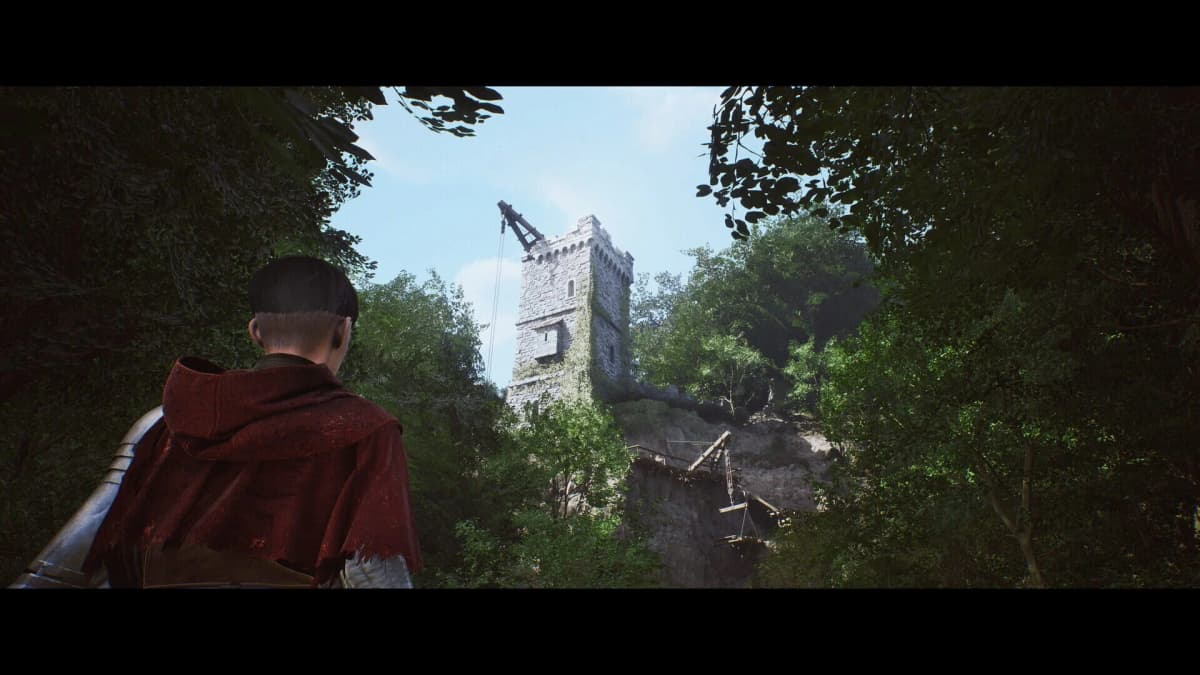
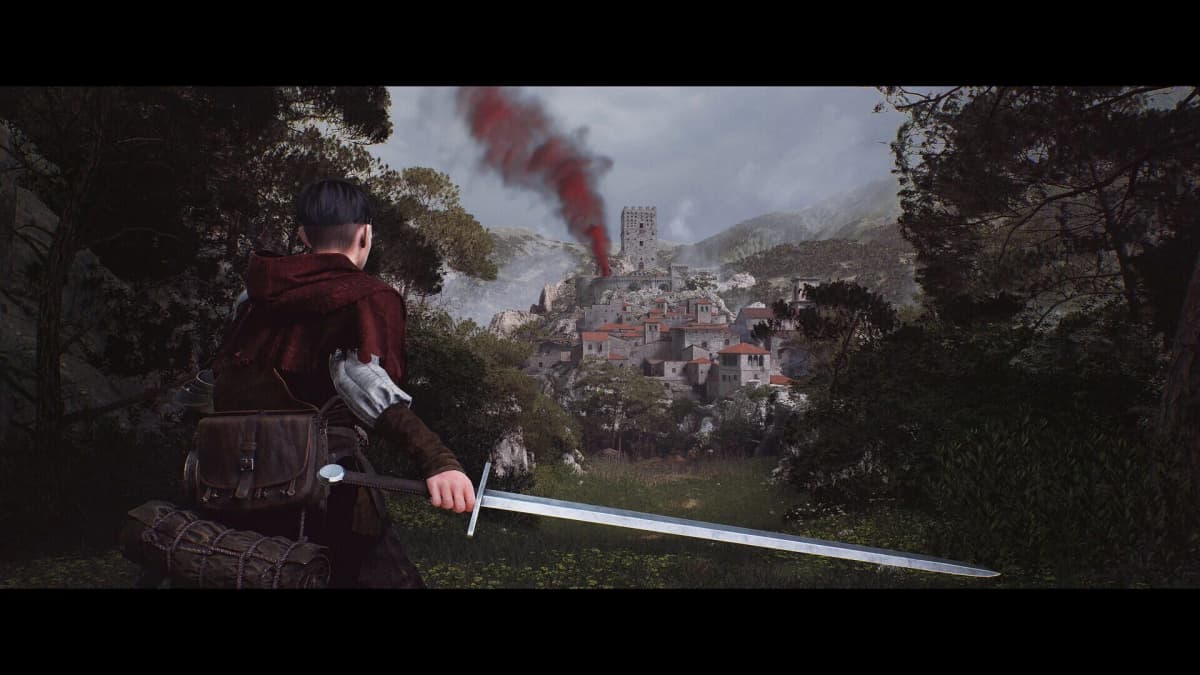
The opening did not disappoint. You’re dropped into 14th-century Italy right as the Black Death is chewing through the countryside. On my OLED, the game’s lighting and materials did a lot of heavy lifting: damp stone glistening in candlelight, tattered banners swaying over a town square, ochre hillside farms fading into a sickly haze. It felt closer to a grounded spin on A Plague Tale than a typical AA hack-and-slash.
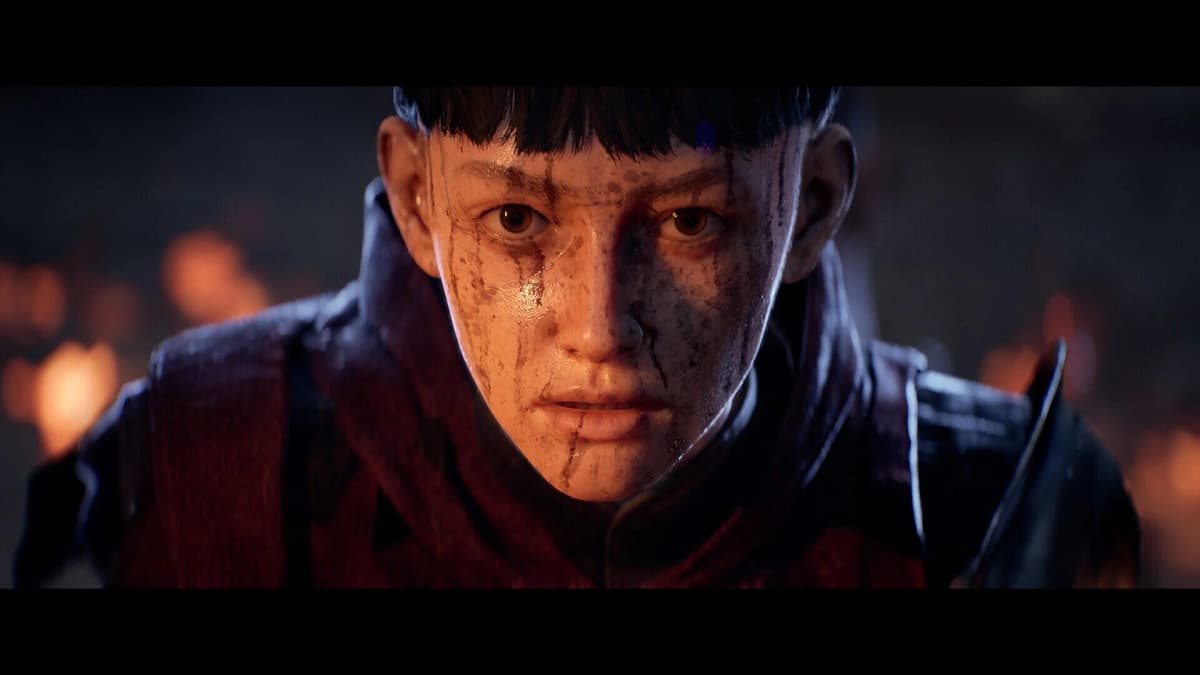
Aeta, the protagonist, immediately stood out. She’s a woman who’s carved out a place as a knight, and the game plays it more like folk legend than Twitter bait. There are whiffs of Joan of Arc and Orpheus in her quest-descending into horror for a loved one, pushing against a world that doesn’t quite know what to do with her. The cutscenes, framed in tight, almost theatrical shots, sell that tone. Voice work is strong too; Aeta’s performance in particular carries a lot of scenes the stiff facial animation can’t.
For that first stretch, walking through villages, listening to hushed arguments about plague and faith, I genuinely thought I was in for a sleeper hit. Then the game handed me a sword and asked me to use it—again, and again, and again.
Combat that wants to be grounded… but mostly feels like work
The pitch for the combat is great on paper: realistic European martial arts, different stances, stamina-conscious duels instead of flashy combo fests. In practice, on PS5, it feels like a cousin to Kingdom Come: Deliverance that never really grew out of its prototype phase.
Mechanically, you’ve got light and heavy attacks, a block, dodge, parry, and a small skill tree that lets you tweak damage or unlock new follow-ups. Fights are mostly against human enemies—bandits, soldiers, a few armored types—and occasionally a bigger “boss” with a chunky stamina bar you’re meant to chip away through well-timed counters.
Early on, when you’re facing one or two enemies, it sort of works. There was a moment in a narrow alley where I squared off against a single armored guard, trading blows in a slow, tense duel. Reading his tells, blocking just before impact, then punishing with a heavy slash that chipped a visible chunk off his guard meter—that felt good. Not slick, but purposeful.
The problem is that this sense of deliberate, grounded combat disintegrates the second there are more than two enemies or the lock-on decides to have Opinions (capital O). Instead of careful spacing and timing, fights devolve into frantic camera wrangling and hoping the targeting system doesn’t betray you mid-swing.
By the back half of the game, I wasn’t thinking about learning enemy patterns or experimenting with skills. I was managing annoyance: trying not to get stun-locked by two guys off-camera because the game refused to lock on to the one actually hitting me.
The lock-on system is the real final boss
If there’s one thing that soured my time with 1348 Ex Voto more than anything else, it’s the targeting system. I don’t say this lightly: on PS5, it’s one of the most unreliable lock-ons I’ve dealt with in years.
You click the right stick to focus on an enemy, and in theory, the camera should anchor to them while you dance around and manage your stamina. In reality, the game constantly second-guesses you. I lost count of how many times mid-combo the lock-on jumped from the enemy in front of me to someone way off to the side, whipping the camera around like I’d yanked the stick. More than once I literally got motion-sick in busy fights from the sudden swings.
One specific encounter really drove it home: a late-game courtyard fight where three armored enemies rush you while archers pepper the area from above. I locked onto the closest swordsman, parried twice, went for a punish… and the camera snapped to an archer on a balcony behind me. My heavy attack whiffed into empty air, my guard meter was wide open, and the guy I’d been dueling took the chance to flatten me from off-screen. That basic scenario—“I didn’t die because I messed up, I died because the targeting freaked out”—happened far too often.
It’s not just disorienting; it directly undermines the game’s stamina and guard-break systems. Enemies have a sort of posture meter you’re supposed to whittle down with focused pressure. When the lock-on unexpectedly flips targets, that rhythm collapses. You can’t stick with one opponent long enough to meaningfully pressure them without fighting the camera at the same time.
And no, there’s no option to widen the FOV or adjust how aggressive the camera is. Everything feels cramped and in-your-face. In tight hallways or around corners, you’ll sometimes see nothing but a close-up of Aeta’s shoulder while you’re technically being stabbed in the side.
By the time I reached the final boss—a genuine difficulty spike compared to the rest—I wasn’t losing because I hadn’t learned the pattern. I was losing because a last-minute target switch would yank my view away at the worst possible time. When the credits rolled, relief was a bigger emotion than triumph.
Technical hiccups on PS5: mostly playable, never fully smooth
On the performance side, my experience with the PS5 version sat in that annoying middle zone: rarely catastrophic, never truly polished.
There’s no fancy graphics menu—you get what you get—but it feels like a 60fps target that the game doesn’t always hit. Roaming small villages or walking interior corridors, everything felt smooth. Once I got into denser outdoor areas with multiple enemies and effects, I started noticing hitches. Not full-on slideshow, but enough micro-stutters during heavy combat that it made the already-touchy timing windows and camera issues feel worse.
Texture pop-in is also hard to miss. More than once I watched a muddy road “sharpen” a second or two after loading into an area, or distant stonework snap from blurry to crisp as I approached. Character models are weaker than the environments: from a distance, Aeta’s armor and cloth look great in motion, but close-ups in cutscenes betray low-detail faces and some stiff, almost puppet-like movements.
I had one hard crash to the PS5 home screen during a mid-game mission transition and a couple of weird physics moments where enemies got stuck jittering on geometry. Nothing game-breaking, but for a short, linear game that leans so heavily on immersion, every glitch stands out more.
The lack of manual saves amplifies all this. 1348 Ex Voto uses pure autosave, and the checkpoints aren’t always generous. On one late-game sequence with waves of enemies, a cheap death from a camera swing meant replaying a good five or six minutes of the same encounter, multiple times. When the core combat is already grating, that repetition gnaws at your patience fast.
Linear levels, light exploration, and not much to actually do
This isn’t an open-world RPG. It’s a firmly linear action-adventure—think closer to Hellblade or the more guided stretches of The Last of Us in structure, though not in refinement.
The campaign is split into a series of levels that funnel you from one encounter or story beat to the next. There are occasional side paths hiding loot or a collectible, but don’t expect meaningful side quests or alternate routes. The game’s own art is almost begging for more: when you crest a hill and see a ruined tower in the distance, you want to wander, poke at the edges, see how this plague has reshaped the world. Instead, invisible walls and limited climbing spots nudge you back onto the critical path.
The main “activity” between fights is looting. To its credit, rummaging through abandoned houses and overturned carts has a certain grim satisfaction. I liked quietly sifting through plague-stricken homes, picking over the remnants of lives interrupted. Resources feed into upgrades and gear tweaks, though the progression system feels more like a checkbox than a meaningful buildcraft layer. By the final chapter my Aeta didn’t feel dramatically different than in the midgame—slightly tougher, slightly stronger, but not transformed.
Because the game is only around five to six hours long, the repetition kicks in fast. “Walk-to-fight-cutscene” becomes the dominant rhythm. There were points in the midgame where I could feel the designers run out of ideas for encounter variety, leaning on yet another group of similar bandits in a slightly different courtyard. With stronger, more flexible combat, this would just be “fine”; with the current systems, it becomes a slog.
Story, acting, and the almost-great tone
What kept me going in spite of the combat was the atmosphere and the cast. 1348 Ex Voto has a real sense of place. The framing leans into religious iconography and folk legend in ways that feel specific, not generic “grimdark.” Aeta isn’t written as a quip machine or an empty cipher; she’s stubborn, wounded, and slightly larger-than-life in that mythic way.
The supporting characters, from order priests to villagers caught in the gears of plague and politics, land mostly thanks to voice work. I wish the facial animation and lip-sync were on the same level; they often aren’t, and there are scenes where the audio performance is doing all the heavy lifting while the faces look oddly detached from the emotion.
Narratively, the game flirts with some big ideas—faith as control, gender expectations in medieval orders, the ways grief curdles into obsession—but it never quite commits. Threads appear (a sideways glance at Aeta’s place among male knights, a moment of intimacy that hints at queer subtext) and then fade into the background without much payoff. By the ending, I felt like I’d been handed a box of interesting themes while the script kept hurrying me toward the next duel instead of sitting with them.
Still, compared to how rough the combat feels, the narrative side comes off as one of the game’s stronger aspects. It’s not profoundly deep, but it’s earnest, and a couple of late-game scenes between Aeta and a key figure in her past genuinely landed for me despite the technical stiffness.
Who 1348 Ex Voto is actually for
After finishing it, I struggled to imagine the ideal player for 1348 Ex Voto, because so much depends on what you’re willing to put up with.
If you’re the kind of person who can forgive clumsy mechanics as long as the world is compelling, there is something here. The plague-soaked Tuscan countryside, the quiet, oppressive soundscape, and Aeta’s myth-tinged revenge arc create a mood I don’t see often, especially from a tiny team working in this AA space. I don’t regret my time with it, even though I swore at the lock-on more than I have in any game this year.
If, that said, you play third-person action games for the feel of the combat—if precision, responsiveness, and camera behavior are non-negotiable for you—this is a hard sell in its current state. The core systems aren’t just “a bit janky”; they actively fight against you in ways that patch notes would have to seriously overhaul, not just lightly tweak.
As a full-priced must-play PS5 exclusive? Absolutely not. As a curiosity for people obsessed with grounded medieval settings, maybe—especially if it gets patched and shows up discounted down the line.
FinalBoss // Gear
Level up your setup
01Best-selling PS5 gameson Amazon→02DualSense controllerson Amazon→03PS5 SSD upgrades (M.2 NVMe)on Amazon→04Discounted game keyson Kinguin→Affiliate links · As an Amazon Associate, FinalBoss earns from qualifying purchases.
Want to Level Up Your Gaming?
Get access to exclusive strategies, hidden tips, and pro-level insights that we don't share publicly.
Ultimate Reviews Strategy Guide + Weekly Pro Tips