
The best turn-based RPGs in 2026 cover far more ground than the old “pick Attack from a menu” stereotype. This list includes party-focused JRPGs, grid-based tactical campaigns, modern hybrids with visible turn orders, and older classics that still teach newer games a lesson in pacing. Every pick has a clear turn-based core, a distinct reason to play it, and a platform route that does not require digging through a decade of store pages.
The ranking favors games with decisions that stay interesting after the first ten battles: party composition, turn manipulation, terrain control, resource pressure, or a campaign structure worth seeing through. Action RPGs and real-time tactics games are out. Some of these are brand-new 2026 releases, while others are older essentials that remain the best answer on their platform. These are the 15 games to play when planning the next turn is the whole point.
Table of Contents (17)
Start Here If…
- You want the strongest new story-driven RPG: start with Final Fantasy Resonance.
- You want an enormous modern JRPG with a readable combat system: pick Metaphor: ReFantazio.
- You want brutal tactical maps and flexible builds: begin Tactics Ogre: Reborn.
- You want a classic that still moves: load up Chrono Trigger.
- You want roguelite tactics with short, replayable runs: go straight to Dunebound Tactics.
Release years below refer to the specific version being recommended, not always the original debut of the series.
1. Final Fantasy Resonance

Release year: 2026. Platforms: PlayStation 5, Nintendo Switch 2, Nintendo Switch, Xbox Series X|S, PC via Steam, and Xbox on PC.
Final Fantasy Resonance earns the top slot because it makes turn order visible and gives the player a reason to obsess over it. The timeline across the top of the screen shows exactly who acts next, while elemental weaknesses and stagger gauges turn each round into a setup for a much bigger payoff. Break an enemy’s stagger gauge and the party gains an extra action during the bonus phase at the end of the turn. Stagger every enemy in one round and “sweeping stagger” gives the whole party another action. That is not ornamental complexity. It is the whole pitch.
The appeal is simple: good turns snowball because you earned them. Instead of chipping away until numbers fall over, you are constantly asking whether this is the round to set up a collapse, cash in on a weakness, or hold resources for a cleaner chain. That visible cause-and-effect makes it easy to read, even when the system starts piling on status effects, summon timing, and party order. It is the kind of combat that invites optimization without becoming homework.
Outside battle, random encounters and a minimap that changes color as combat approaches give travel an intentionally old-school rhythm. In battle, Finner’s ability to bring Espers directly onto the battlefield adds a real party wrinkle instead of turning summons into a disposable cutscene button. Start here if you want a big-budget turn-based RPG built around momentum rather than attrition, and one that remembers the genre can feel both classic and mechanically hungry at the same time.
2. Metaphor: ReFantazio
Release year: 2024. Platforms: PlayStation 5, PlayStation 4, Xbox Series X|S, and PC.
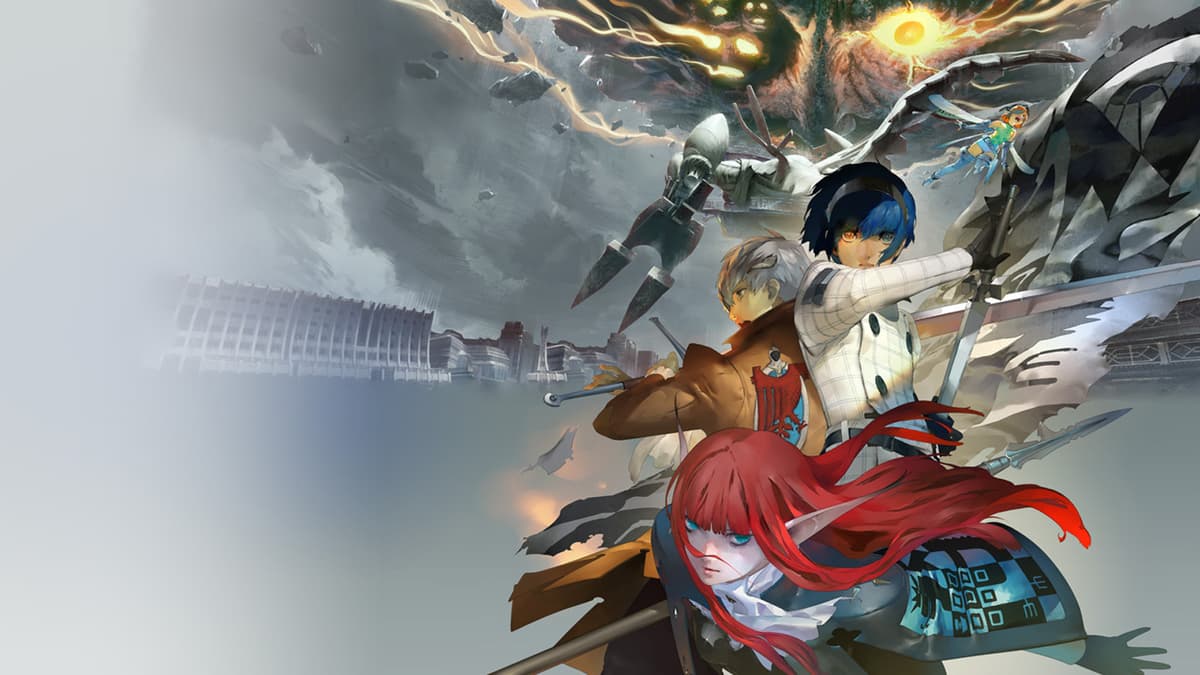
The best thing about Metaphor: ReFantazio is how clearly it understands that a party-building RPG needs both freedom and friction. Its Archetype system lets characters change combat roles, but the game keeps asking whether the clever class combination in theory is actually helping against the dungeon in front of you. You can build a flexible team, but the enemy lineup, elemental coverage, and resource costs keep testing whether your favorite setup is actually good or merely stylish.
The battle flow helps a lot. Weakness exploitation leads to extra actions in that familiar Shin Megami Tensei and Persona tradition, where correct reads let you keep momentum and sloppy turns get punished fast. Smaller enemies can be handled quickly in the field, while bigger encounters flip into fully turn-based fights. That split keeps routine trash from dragging while preserving the serious planning for bosses and dangerous packs. It is a smart answer to the modern JRPG problem of asking players to spend forty hours proving they already understand basic mechanics.
It also has the nerve to make calendar management matter without turning every day into clerical work. Travel time, deadlines, bonds, and dungeon preparation all point back to the same practical question: what does this party need before the next major problem? That is why it lands so well as a recommendation. It is a large, handsome RPG, but the systems do not hide behind spectacle. They stay legible, they stay demanding, and they keep party-building at the center of the experience.
3. Clair Obscur: Expedition 33
Release year: 2025. Platforms: PlayStation 5, Xbox Series X|S, and PC.
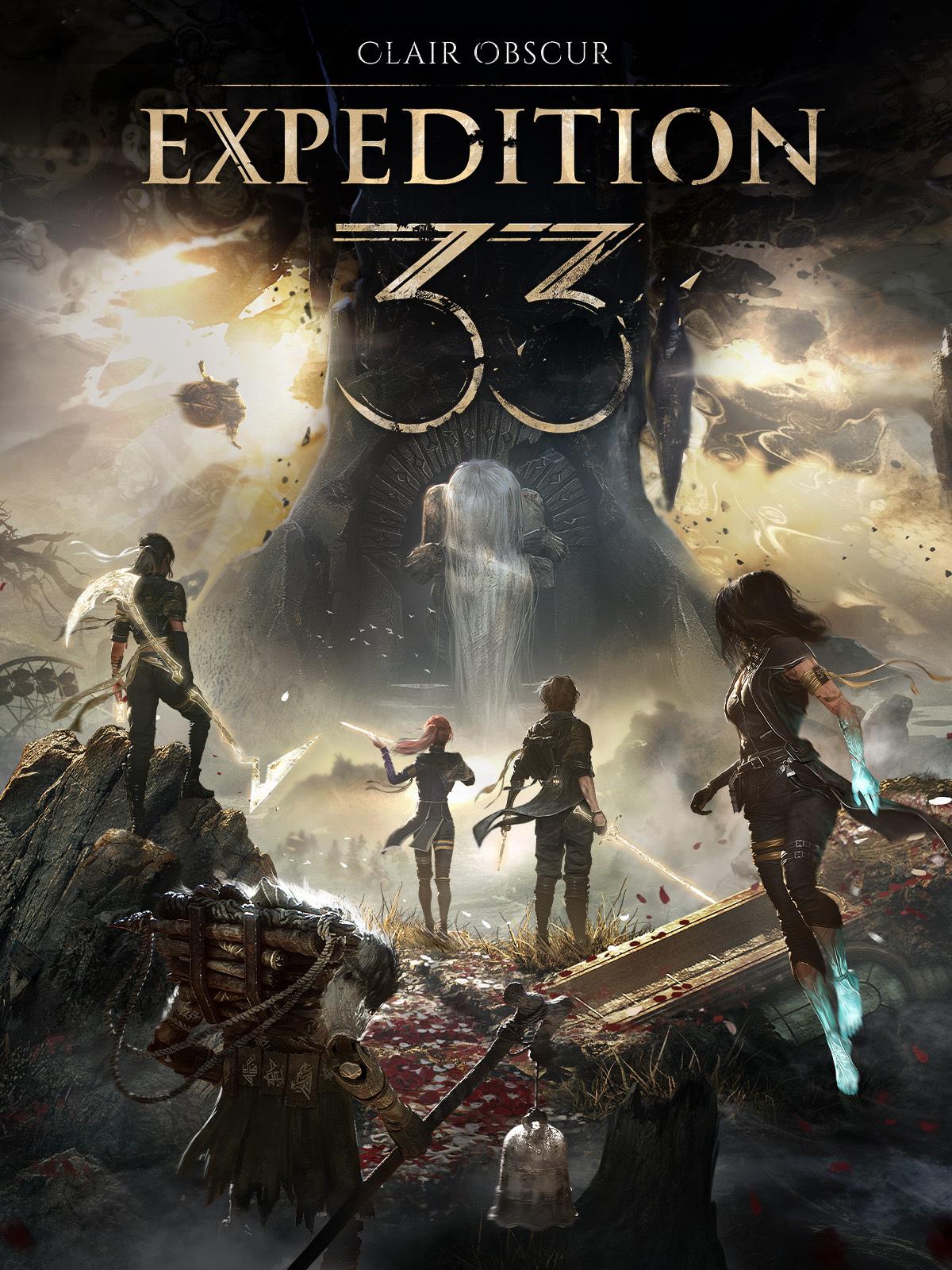
Clair Obscur: Expedition 33 takes the familiar turn-based format and injects a little physical tension into it. Enemies telegraph attack strings that can be dodged, parried, or jumped over, so surviving is never merely about having enough healing items or a high enough level. The command menu still does the heavy lifting, but defense becomes something you perform rather than passively receive. That one choice gives the whole battle system a sharper pulse.
What makes the game work is that the active layer does not replace role-playing decisions; it amplifies them. Build quality, elemental planning, and resource management still matter, because a successful parry does not rescue a lazy party setup forever. Instead, the reactive mechanics reward attention on top of preparation. A good strategy can unravel if you stop reading the enemy, and a risky strategy can survive because your execution stays clean. That balance keeps encounters from falling into autopilot without turning the RPG side into decoration.
That also makes Clair Obscur an excellent recommendation for players who think turn-based games sometimes become too comfortable. This is not the pick for a fully relaxed, one-hand-on-a-drink experience. It is the pick for someone who wants the pleasures of menu planning, buildcraft, and party synergy, but also wants to feel a little pressure when the enemy finally swings back. If the best turn-based RPG for you is the one that keeps you leaning forward, this one deserves a very high slot.
4. Dunebound Tactics
Release year: 2026. Platforms: PC via Steam.
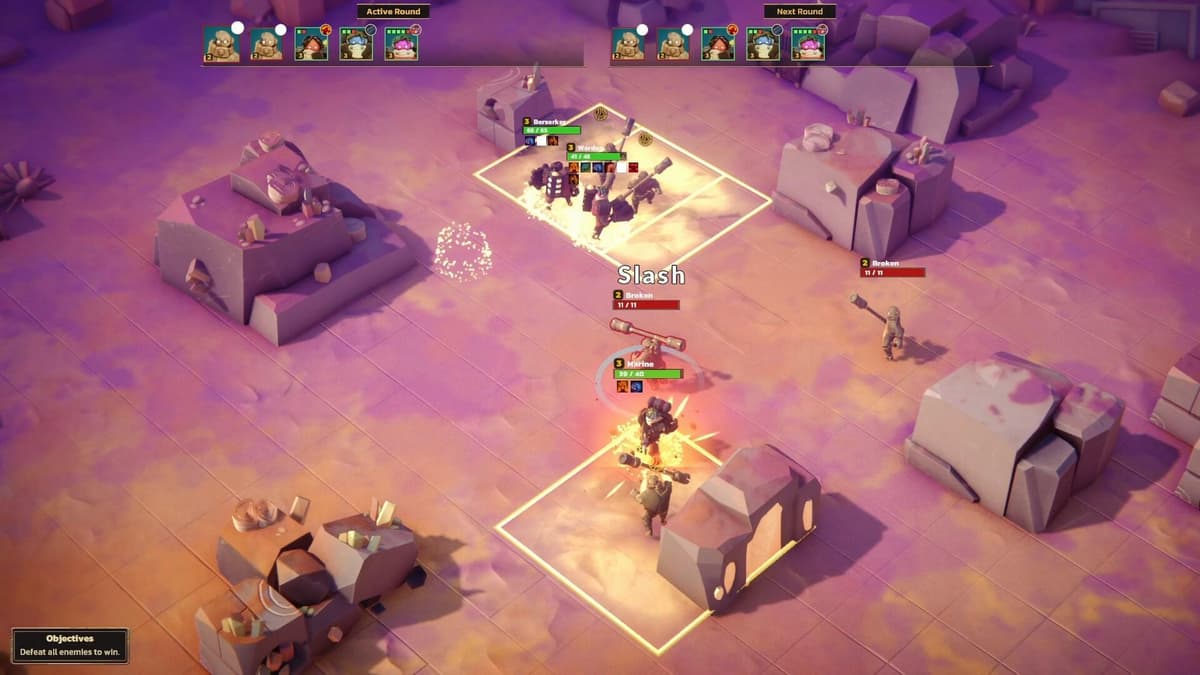
Dunebound Tactics is the essential 2026 pick for players who think tactical RPG maps should be breakable toys rather than fixed boards. This turn-based tactical roguelite lets you destroy and reshape terrain, creating cover, opening routes, and changing the battlefield before an enemy can exploit the original layout. That one hook instantly separates it from a lot of good-but-familiar tactics games. Positioning matters here, but so does your willingness to rewrite the map itself.
Its runs play out on short, high-pressure terms, which suits the system. A bad position is often recoverable through improvisation instead of a full mission restart, because the battlefield is not sacred. If your squad is pinned, the answer may not be better aim or a stronger unit. It may be ripping open a lane, carving safer ground, or forcing the enemy to path through something uglier than they expected. That creates the kind of tactical drama that does not depend on giant campaigns or elaborate narrative framing to stay interesting.
It launched on September 14, 2026 for $14.99, with a 20% launch discount running through September 28, and it feels priced exactly right for what it offers: sharp runs, replayable chaos, and a ruleset that gets to the point. For more games where positioning is the real damage stat, see FinalBoss’s picks like XCOM and the best games like Final Fantasy Tactics. If you want a 2026 tactics game that understands velocity, this is the one.
5. Tactics Ogre: Reborn
Release year: 2022. Platforms: PlayStation 5, PlayStation 4, Nintendo Switch, and PC.
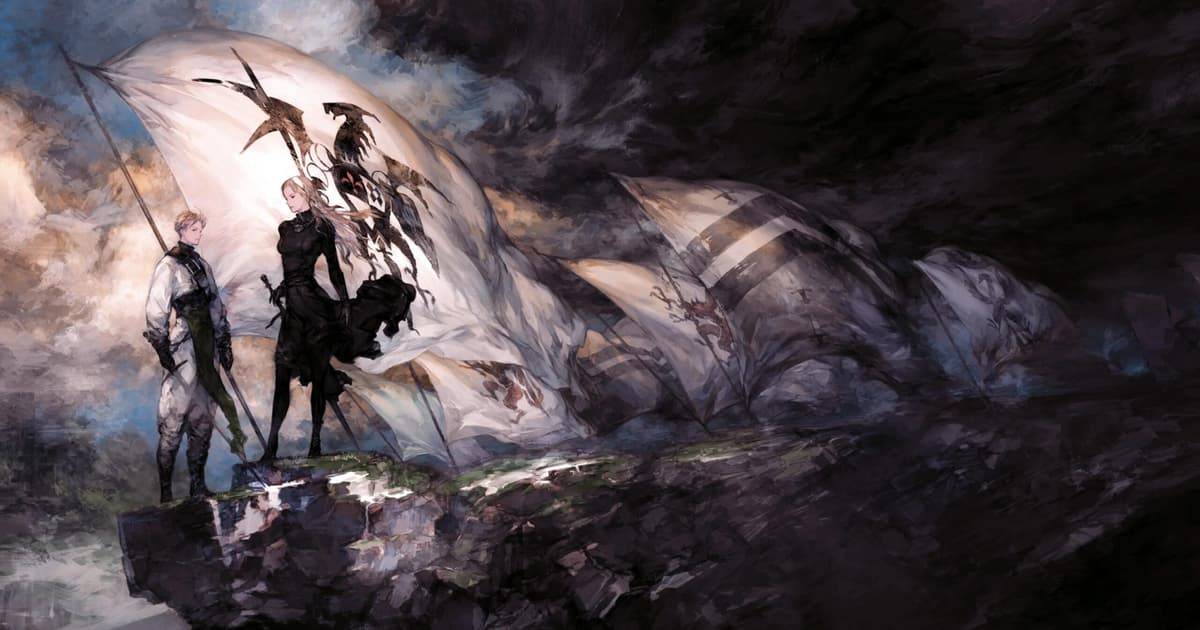
Tactics Ogre: Reborn remains the tactical RPG for players who want choices to leave scars. Its branching story routes are not cosmetic detours or a checkbox for replay value. Political loyalties reshape the campaign, alter recruitment possibilities, and make the player live with decisions after the battle map disappears. Few games make a menu choice feel as consequential as moving a unit into enemy range, because the strategy and the drama are pulling in the same direction.
The maps hold up because the combat does not rely on one trick. Height matters. Chokepoints matter. Spell placement matters. Class composition matters. Even the game’s stricter level structure serves a purpose, because it pushes players back toward the tools the designers actually built instead of letting raw grinding wash the whole thing flat. When a fight goes badly, the usual answer is not “come back later overleveled.” It is “read the battlefield better.” That can feel stern, but stern is exactly what some tactics fans are looking for.
It also helps that Reborn still feels authored rather than procedural. The maps are memorable, the route splits have weight, and victories feel like the result of deliberate play instead of statistical drift. It belongs alongside the genre’s best grid campaigns, and it is a natural next stop after our guide to RPGs like Final Fantasy Tactics. If you want a tactics RPG that trusts the player to deal with consequences instead of sanding them off, this is still the heavyweight recommendation.
6. Another Eden Begins
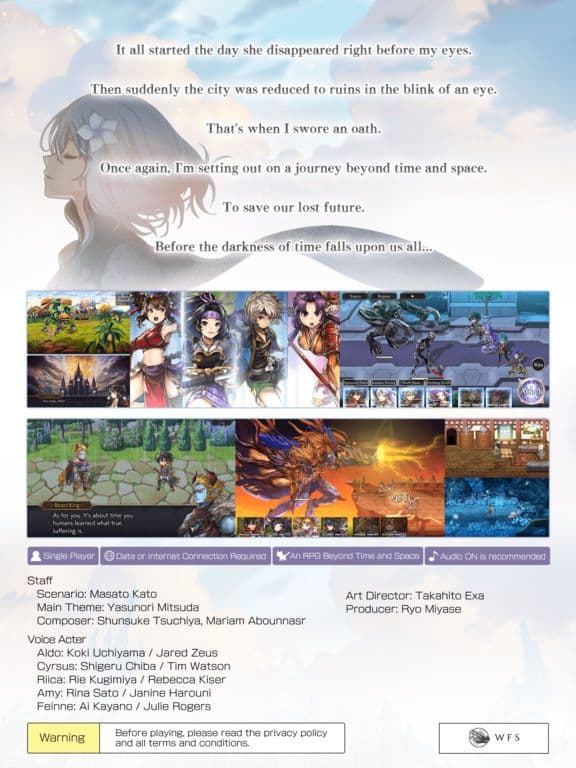
Release year: 2026. Platforms: Nintendo Switch 2, Nintendo Switch, and PC via Steam.
Another Eden Begins has one major advantage over its mobile-era origin: the 2026 version removes gacha mechanics and microtransactions for a single-player offline JRPG. That change matters more than any marketing bullet point. A turn-based RPG lives or dies by whether party growth feels like adventure design or storefront design, and this version chooses the first path. It takes a game with a strong traditional backbone and removes the friction that kept some players at arm’s length.
That makes the recommendation easy to understand. If you like sprawling time-travel stories, party-based battles, and the slow satisfaction of building a capable team over a long campaign, this is the cleanest way to approach the world. It also lands at a useful moment for Nintendo players. Switch and Switch 2 do not exactly suffer from a lack of RPGs, but they always benefit from a fresh, complete, portable-friendly JRPG that is not trying to drag you into daily check-ins or currency management.
More importantly, the offline structure lets the pacing breathe. You can move from story beat to dungeon to party maintenance without every system quietly pointing at a shop. That is a real quality-of-life improvement, not just a philosophical one. For more handheld-friendly choices, the FinalBoss guide to the best Nintendo Switch RPGs is the useful follow-up. But if the specific fantasy is “give me a modern-feeling traditional RPG and leave the live-service habits at the door,” Another Eden Begins is one of 2026’s easiest wins.
7. Baldur’s Gate 3
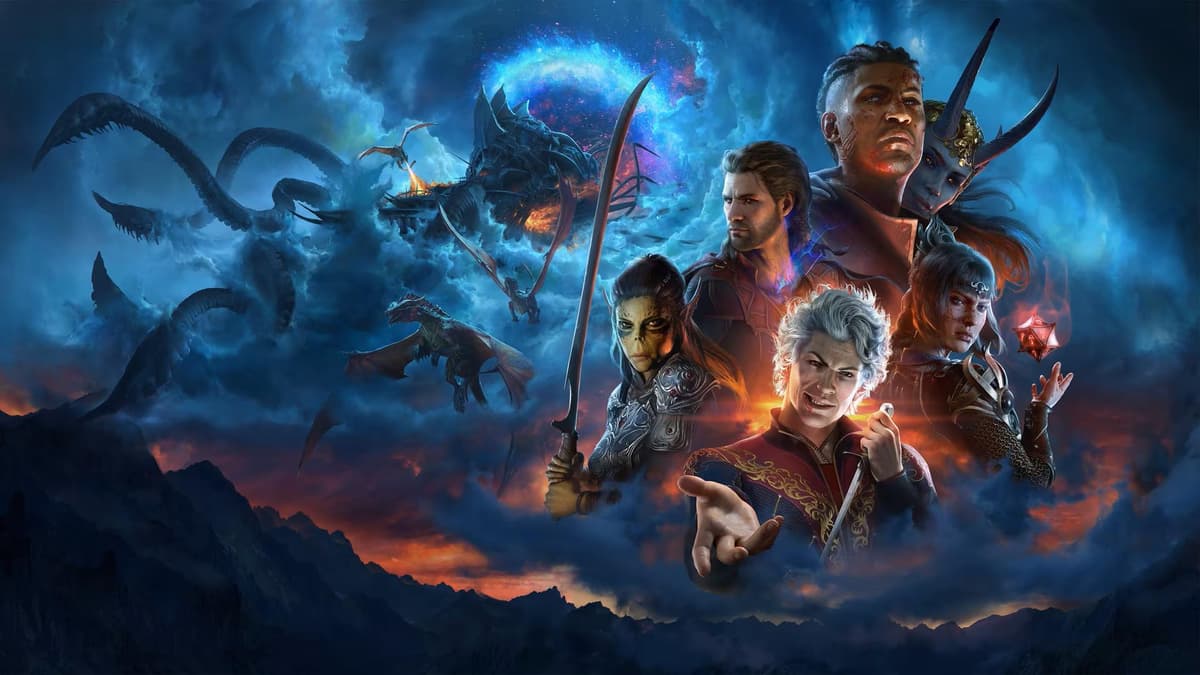
Release year: 2023. Platforms: PlayStation 5, Xbox Series X|S, PC, and macOS.
Baldur’s Gate 3 is still the best answer for anyone who wants turn-based combat to react to absurd plans. Throw a healing potion between allies, shove an enemy into a chasm, soak a floor, electrify the water, break line of sight, or spend a spell slot solving a problem the encounter clearly expected you to fight head-on. The game keeps rewarding lateral thinking because its rules are sturdy enough to support mischief. That is much harder to pull off than it looks.
Its strongest feature is the action economy. Movement, actions, bonus actions, reactions, elevation, and terrain combine into a dense puzzle every round. The smart play is not always the highest-damage play. Sometimes it is getting a fragile caster out of sight. Sometimes it is denying a ladder. Sometimes it is sacrificing one clean turn to set up a devastating next one. That flexibility is what keeps the battles alive deep into a very long campaign. You are not merely executing a build. You are negotiating with the battlefield.
It is also the most convincing gateway for players who usually bounce off CRPGs. The interface is friendlier than the old guard, the production values help the rules go down easier, and the turn-based layer stays readable even when encounters become chaotic. This is a huge game and it can be messy, but the mess is usually productive. Players who want deeper party rules and a more isometric perspective should also browse FinalBoss’s best isometric RPGs. If creative problem-solving is your favorite combat stat, this one remains unavoidable.
8. Trails in the Sky 2nd Chapter
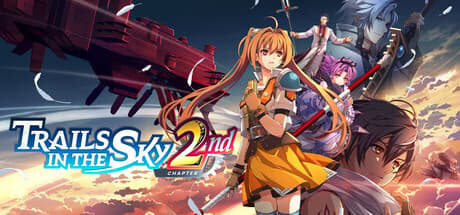
Release year: 2026. Platforms: PC, PlayStation 5, Nintendo Switch, and Nintendo Switch 2.
Trails in the Sky 2nd Chapter earns its place because it understands something a lot of modern RPGs forget: a sequel can be a tremendous advantage when the character work is this focused. The story follows Senior Bracer Estelle Bright as she searches for her adoptive brother Joshua across the kingdom of Liberl. A bracer, for the uninitiated, is essentially a roaming fixer and protector, which gives the journey a natural structure of towns, incidents, and escalating stakes without ever losing the personal core.
That personal core is the real reason to play it in 2026. Plenty of turn-based RPGs offer world-ending threats, giant lore dumps, and teams assembled from convenience. Trails in the Sky 2nd Chapter pushes forward because Estelle’s search gives every stop a clear emotional direction. When the pacing works, it is because the game always seems to know what the party is moving toward. That matters in a genre where forty hours can disappear into side roads if the main thread is not strong enough.
It also gives the 2026 lineup a more character-first option on modern hardware. Not every recommendation has to win on spectacle or system sprawl. Sometimes the right call is the RPG that makes you want to keep going because the people matter. That is why this one belongs in the mix beside newer experiments and bigger-budget productions. If you want a turn-based adventure that sells the next battle by making the next conversation matter first, Estelle’s journey is still one of the better invitations in the genre.
9. Persona 5 Royal
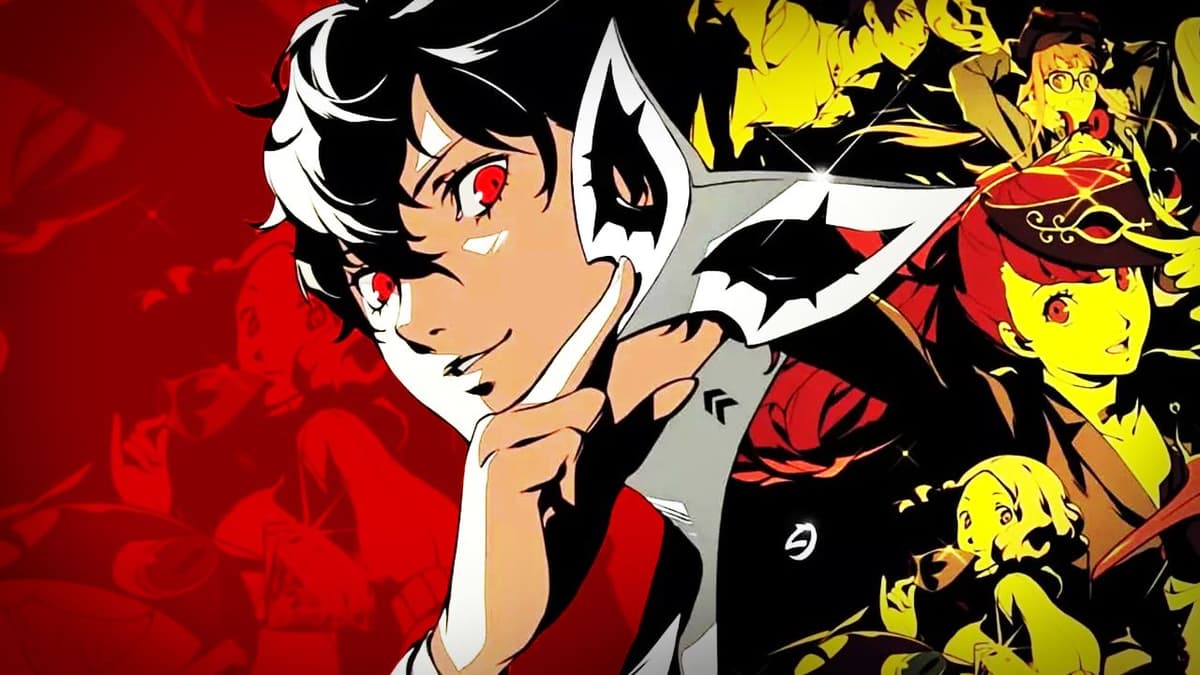
Release year: 2019. Platforms: PlayStation 5, PlayStation 4, Xbox Series X|S, Xbox One, Nintendo Switch, and PC.
Persona 5 Royal turns weakness-hitting into a social game. Find the right element, knock an enemy down, earn another action, then pass that momentum to the teammate best positioned to continue the chain. Eventually that sequence can end in an All-Out Attack, the team-wide finisher that makes correct reads feel stylish as well as efficient. The beauty of the system is that it teaches players to study enemy groups, not simply overpower them. Even normal encounters ask for attention.
Royal also improves the life-sim side of the package in ways that matter. More activities, more character development, and the added semester do not just make the game larger; they give the calendar structure more room to breathe. That school-year loop is still the magic trick. Spending the day on friendships, stats, or side activities changes what your night and your next dungeon run can look like. Combat never fully detaches from the rest of the game, which is why the whole thing feels more cohesive than a lot of imitators.
It is long, stylish, and occasionally far too pleased with its own dialogue, but the core battle loop still snaps into place faster than most of the genre. The result is an easy recommendation for players who want a modern classic with broad platform availability and a combat system that remains readable even at huge length. It is still the safest first Persona for players who value the dungeon turns as much as the daily routine wrapped around them.
10. Quartet
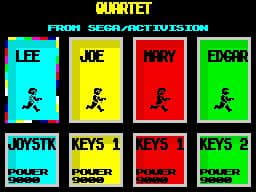
Release year: 2026. Platforms: Nintendo Switch.
Quartet is the 2026 palette cleanser: a focused retro-styled RPG that treats party construction as the main event. Its Switch release arrived on May 12, 2026 for $19.99, making it an easy recommendation for players who want a traditional turn-based adventure without signing away the next eighty hours of their life. In a year full of giant productions and elaborate hybrids, there is real value in a game that announces its scale honestly and then spends that scale well.
The important hook is its four-protagonist structure. Separate character stories gradually form a larger party, which gives recruitment and combat roles more narrative weight than the usual “this person joined because the plot said so” approach. When a party slot opens or a new skill set enters the mix, it feels connected to the story rather than mechanically air-dropped in. That may sound modest beside sprawling social systems or tactical gimmicks, but clarity is part of the appeal. The game knows where its center of gravity is.
Its straightforward presentation is a feature, not a compromise. Put it on the handheld when the mood calls for towns, dungeons, clean commands, and no live-service clutter. Not every great turn-based RPG needs to reinvent the form. Some just need to understand why classic structure worked in the first place and then deliver it without bloat. Quartet fits that role nicely, especially for Switch owners who want something contemporary but not overwhelming.
11. Chrono Trigger
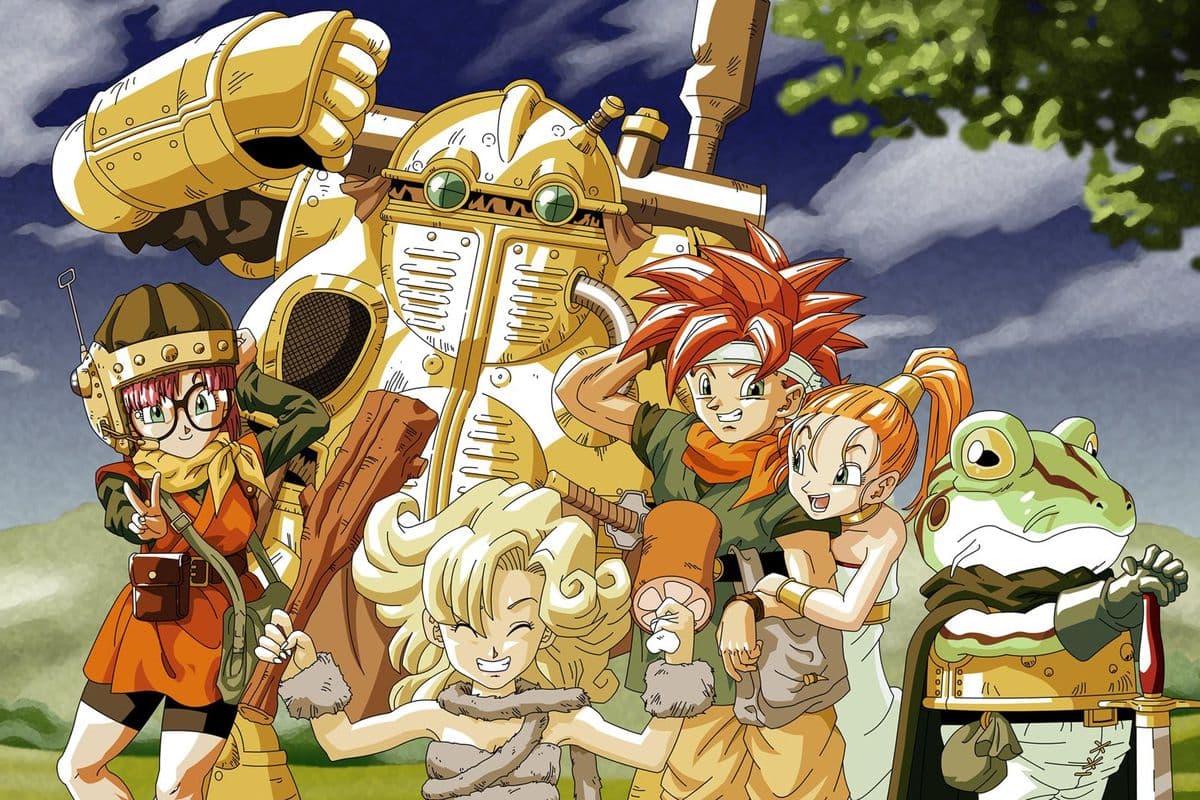
Release year: 1995. Platforms: SNES, PlayStation, Nintendo DS, iOS, Android, and PC.
Chrono Trigger remains one of the best turn-based RPGs because it refuses to waste the player’s time. Its Active Time Battle system, where actions fill on a timer rather than waiting in a perfectly static queue, keeps encounters moving. Enemies are visible in the world instead of hidden behind random interruptions, locations change quickly, and the campaign reaches its ending before the premise wears thin. That discipline is one of the reasons it still feels younger than a lot of much newer games.
Dual and triple techs are the other reason it stays special. Party members are not just stat packages with different costumes. Specific characters can combine abilities into team attacks, which gives party selection a playful strategic identity. You are not only choosing who hits hardest. You are choosing which combinations produce the most useful or entertaining results. It is a compact mechanic with enormous personality, and it still does more to make party chemistry tangible than many RPGs with far more elaborate systems.
The original SNES version remains a landmark, while the DS release is excellent for portable play and the PC version makes access much easier than it used to be. Readers building a retro library should continue with FinalBoss’s guide to the best SNES RPGs. But the bigger point is this: if someone asks why turn-based RPGs endure, Chrono Trigger is still one of the fastest, cleanest, least argumentative answers you can give them.
12. Front Mission 3: Remake
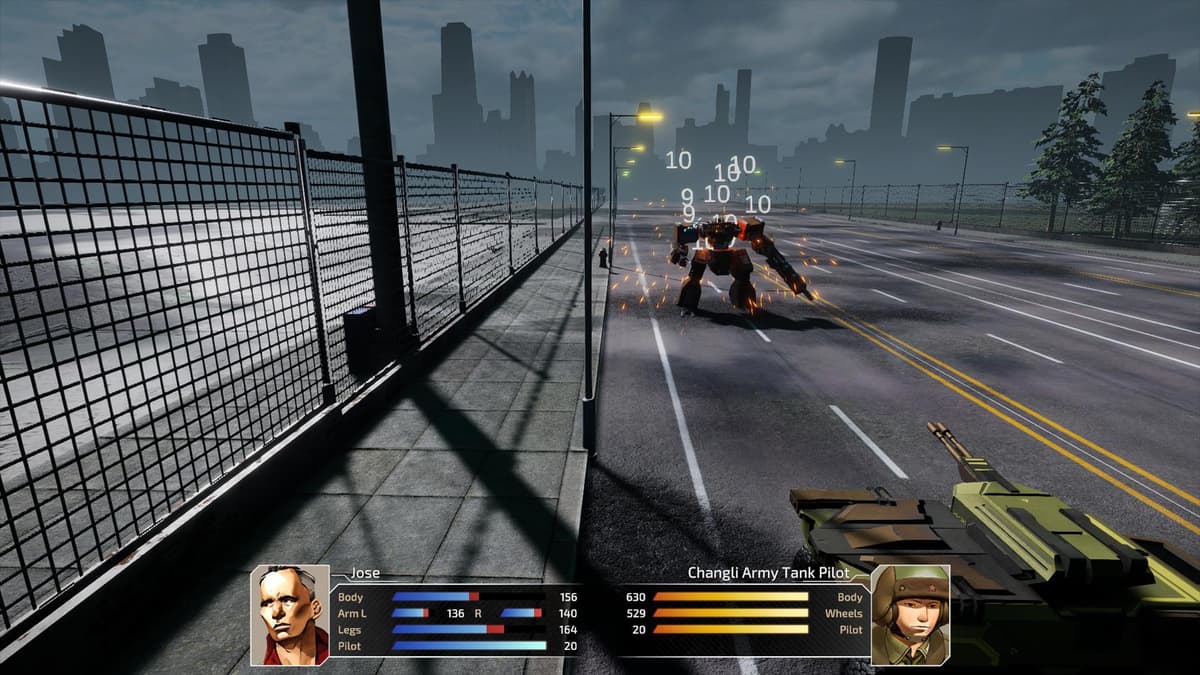
Release year: 2026. Platforms: PC, PlayStation 4, PlayStation 5, Xbox One, and Xbox Series X|S.
Front Mission 3: Remake, released on January 30, 2026, earns its spot on the strength of Wanzer customization. The central pleasure is not simply winning a map. It is deciding whether a unit should become a missile platform, close-range bruiser, evasive specialist, or carefully balanced machine that can survive a bad turn. Mech tactics are often at their best when loadouts feel like convictions, and Front Mission has always understood that better than most.
It also gives every attack a sharper purpose than simple HP reduction. Targeted parts, damaged limbs, and weapon roles turn fights into a process of dismantling a machine rather than merely beating up a health bar. That makes the maps feel mechanical in the best sense of the word. You are studying hard angles, component risk, and build weaknesses, not just fishing for the biggest number. It is slower and more deliberate than fantasy tactics games, but that extra metal-on-metal specificity is precisely why it stands out.
It is also a useful reminder that a remake’s value is not nostalgia alone. Sometimes the old design idea is still excellent; it just needs a cleaner route back to modern hardware. This is a more mechanical, less romantic tactical RPG than Tactics Ogre, and that difference gives the list healthy range. It also belongs on any essential list of PS1 RPGs, where the original made its name. If building a squad feels better to you when it resembles a garage project, this one is still catnip.
13. Dragon Quest XI S: Echoes of an Elusive Age
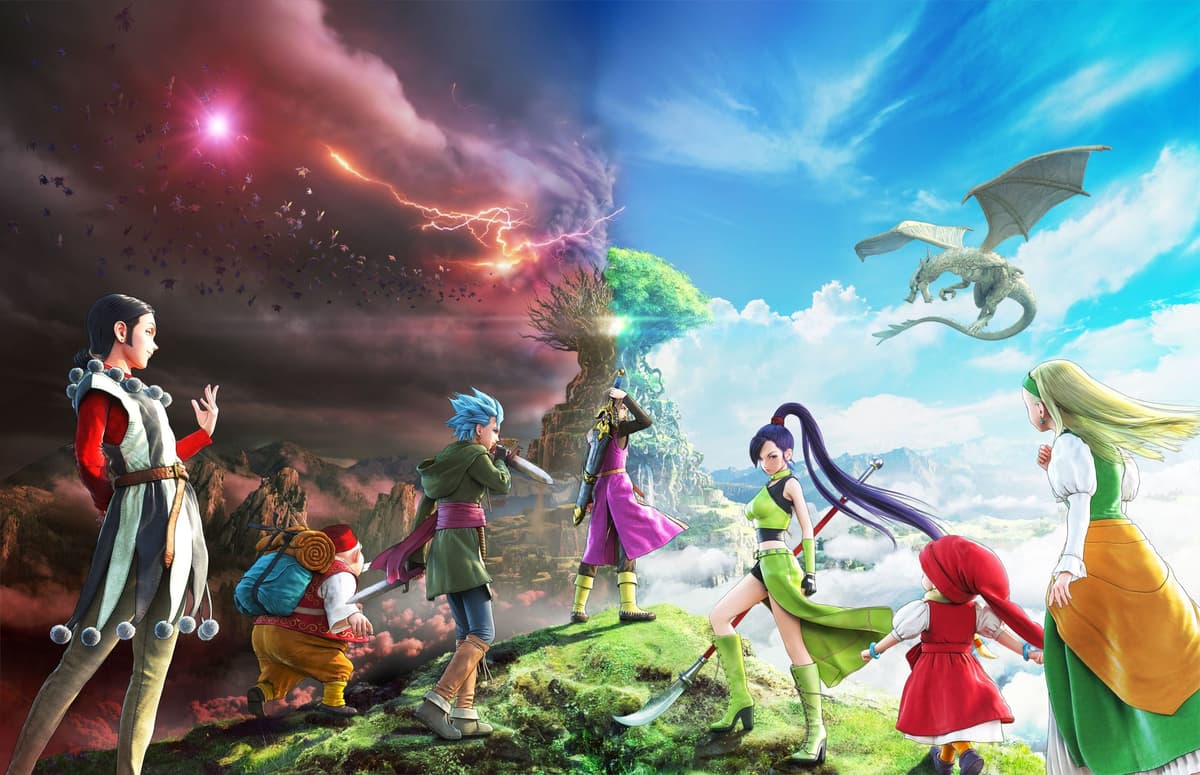
Release year: 2019. Platforms: PlayStation 4, Xbox One, Nintendo Switch, PC, and Xbox Series X|S.
Dragon Quest XI S is the traditionalist pick, and that is a compliment. Its turn-based battles are clear, readable, and built around a party that gradually gains satisfying tools rather than an avalanche of jargon. Buffs, debuffs, pep powers, equipment choices, and enemy group targeting matter, yet the game never makes ordinary encounters feel like paperwork. That clarity is not simplicity in the dismissive sense. It is craft. The systems tell you what matters and then trust you to use it well.
The definitive edition helps by giving players more ways to enjoy that structure. The 2D mode is more than a novelty; it changes the texture of the journey and reinforces how comfortably the underlying design can survive different presentations. The added character material also strengthens a party that was already easy to spend time with. This is one of those rare giant JRPGs that feels welcoming to newcomers while still offering enough friction for veterans who want the monsters to hit back.
That last part matters, because comfort food can still use seasoning. Dragon Quest XI S works so well in 2026 because it remembers that familiar does not have to mean stale. The pacing is kind, the command structure is elegant, and the party keeps gaining just enough texture to stay interesting over the long haul. Start here if the ideal turn-based RPG means reassurance delivered by developers who still care about tempo, charm, and getting the fundamentals exactly right.
14. Shin Megami Tensei V: Vengeance
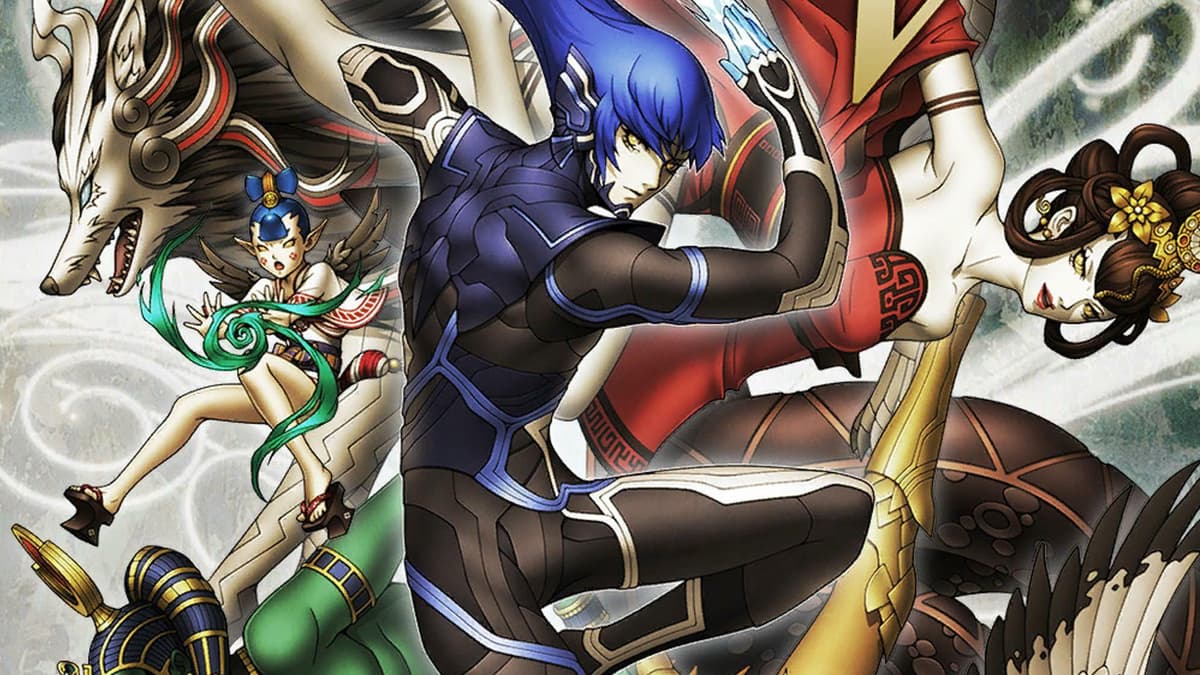
Release year: 2024. Platforms: PlayStation 5, PlayStation 4, Xbox Series X|S, Xbox One, Nintendo Switch, and PC.
Shin Megami Tensei V: Vengeance makes one principle brutally clear: bringing the wrong demons is a tactical mistake, not an aesthetic preference. Hit weaknesses or land critical hits to gain extra Press Turns, the series’ system for extending your side’s action count. Miss, get blocked, or attack into a resistance and that momentum disappears fast. It is a combat model that rewards preparation with almost cruel clarity. When a boss goes badly, the game usually knows exactly why, and soon enough so do you.
That makes demon fusion the real long game. Recruiting a monster is only the beginning. The actual strategy lies in combining skills, affinities, and resistances into a roster built for the next specific problem. It is not about collecting favorites and hoping affection wins out. It is about building answers. That gives the campaign an addicting preparation loop: scout the threat, adjust the roster, test the build, then go back and refine it if the fight still exposes a weak point.
The result is demanding, sometimes gleefully mean, and consistently rewarding for players who enjoy solving encounters before the first command is selected. For darker worlds and similarly unforgiving moods, visit FinalBoss’s best dark fantasy games and horror RPGs. If your favorite turn-based RPGs are the ones that punish lazy party prep and make each victory feel like a specifically engineered answer, Vengeance belongs near the top of the shortlist.
15. Fire Emblem: Three Houses
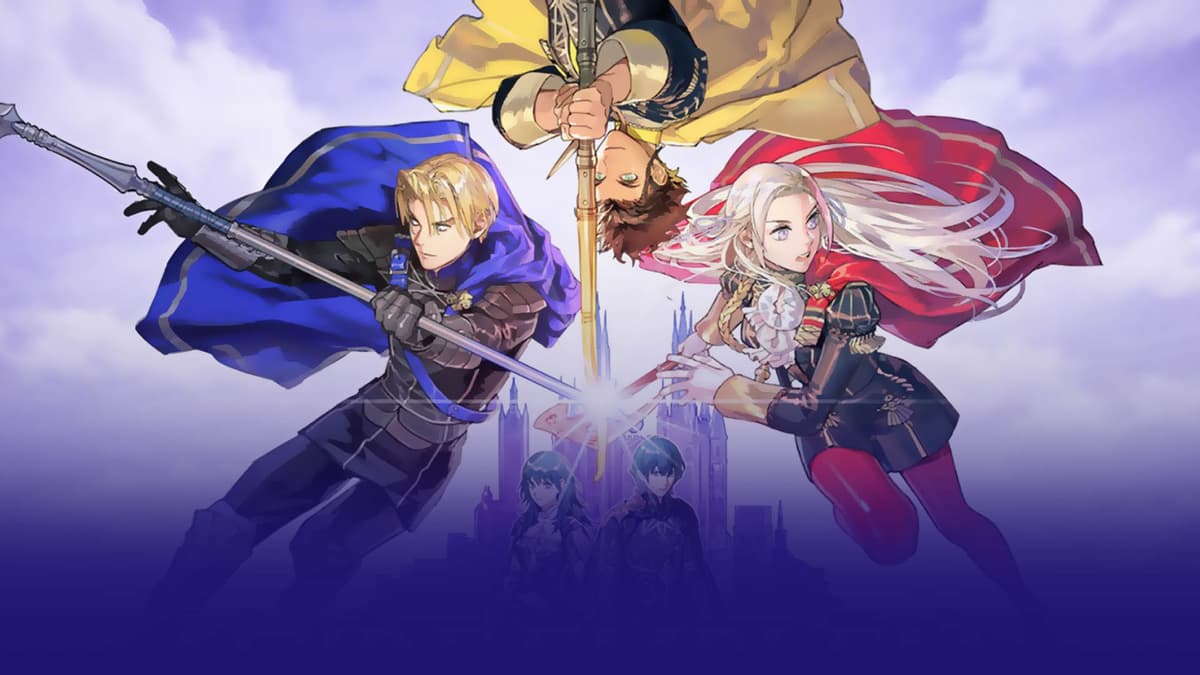
Release year: 2019. Platforms: Nintendo Switch.
Fire Emblem: Three Houses closes the list because its strongest mechanic happens before the battlefield. Teaching students, assigning goals, building support relationships, and choosing certifications turns the army into something the player shaped over dozens of hours. When a unit becomes terrifyingly effective on the map, that power has a visible history behind it. You remember the bad growths, the tutoring choices, the class path, the moments when that character was a liability and not yet a star.
That history gives the tactics extra tension. Weapon durability, battalions, combat arts, gambits, terrain, and permanent death options all matter more because the units matter more. This is not a game where you casually feed a generic soldier into danger and move on. Even when you disable permadeath, the design still nudges you to care about everyone on the field as an individual investment. That emotional bookkeeping is one of the series’ great strengths, and Three Houses leans into it hard.
The maps can be uneven and the monastery routine occasionally outstays its welcome, but the blend of social investment and grid tactics is still difficult to replace. Start with this one if character attachment is as important as tactical precision, or if you want a turn-based strategy RPG where team-building extends far beyond shopping menus and level-up screens. The best campaigns are the ones where every deployment feels personal, and Three Houses is very good at making sure yours does.
The Practical 2026 Pick
Choose Final Fantasy Resonance for the newest full-scale turn-based adventure, Dunebound Tactics for compact tactical replayability, and Another Eden Begins for a fresh offline JRPG on Switch hardware. Trails in the Sky 2nd Chapter is the smartest 2026 pick if what you want most is character-driven momentum rather than raw scale. For a proven classic, Chrono Trigger remains the fastest route to understanding why the genre endures. The best turn-based RPG is the one whose next turn keeps occupying your brain after you put the controller down.
FinalBoss // Gear
Level up your setup
01Best-selling Switch 2 gameson Amazon→02Switch 2 accessorieson Amazon→038BitDo controllerson Amazon→04Discounted game keyson Kinguin→Affiliate links · As an Amazon Associate, FinalBoss earns from qualifying purchases.
Want to Level Up Your Gaming?
Get access to exclusive strategies, hidden tips, and pro-level insights that we don't share publicly.
Ultimate Top Strategy Guide + Weekly Pro Tips