
Generative AI in Games: The shift that actually changes play, not just graphics
Generative AI is no longer a laboratory novelty — in 2025 it’s shipping in playable games you can jump into today. What matters for players isn’t that “AI” is in a game’s marketing copy; it’s whether that AI changes how you play. We’re talking NPCs that improvise, bosses that learn your tactics, and procedurally written mysteries that feel fresh every replay. This look at the current wave of titles — from stalwarts like AI Dungeon to experiments like MIR5 — shows both the promise and the messiness of shipping living systems at scale.
Table of Contents (9)
TL;DR / Key takeaways
- Generative AI is shifting gameplay design — not replacing designers — by enabling reactive NPCs, emergent quests, and personalized narratives.
- Technical maturity varies: narrative-first games are further along than competitive online titles where latency and predictability matter.
- Practical headaches remain: persistence, moderation, hallucinations (when AI invents false facts), and server costs affect player experience.
- Expect early wins in single-player and co‑op narrative spaces; competitive multiplayer will see cautious, conservative integration.
Why this wave is different
Two things shifted in 2024–25 that made this practical. First, large language models (LLMs — AI systems trained to generate text and respond to prompts) and related inference tools became cheaper and faster to run in real time, lowering the barrier for live games. Second, middleware like Nvidia ACE (a suite of AI tools for characters and game systems) and specialized inference stacks started to make low‑latency AI viable for some live titles. Put simply: studios beyond tiny indies can now experiment with AI systems that react during play, not just precompute fancy textures.
How these AIs actually change gameplay
Not every AI feature is the same. Narrative-first titles (text adventures and creation tools) use LLMs to generate dialogue, quests, and even images on the fly. That’s low-friction for players and high-value for replayability: every session can branch into something unique. Creation platforms let players describe a world and have the system generate maps, NPCs, and quests — a potential democratization of game-making if sharing and moderation tools scale.
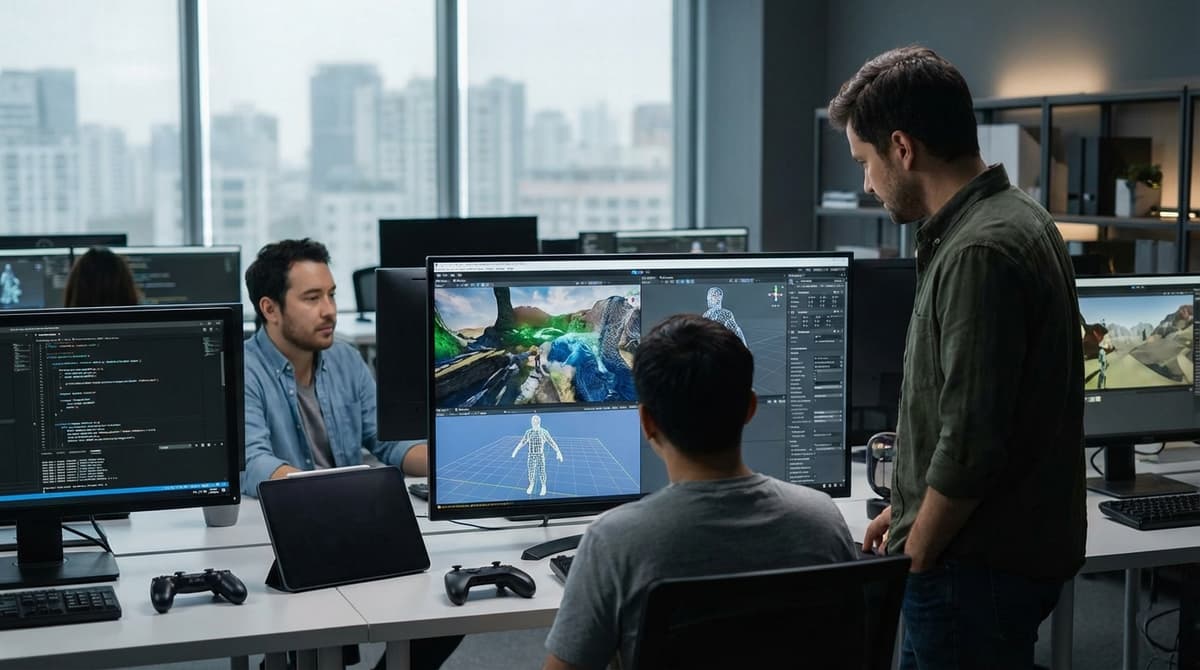
On the other end are live, high-skill environments trying to add adaptive enemies or AI teammates. MMOs like MIR5 are experimenting with learning bosses (reported to use middleware like Nvidia ACE) to reduce predictability in PvE encounters. The payoff can be electrifying — a boss that adapts to your favorite combos feels alive — but it also creates balancing headaches. An adaptive boss can be thrilling when it learns sensible counterplay, or infuriating if it exploits unintended player behaviors.
Real-time interaction experiments
Social-deduction and mystery games have been a fertile testing ground. Titles such as Dead Meat (AI suspects) and Human or Not 2 use LLM-driven dialogue to turn scripted set pieces into improvisational theatre. When it works, you get believable conversations that push a narrative forward; when it fails, the NPCs hallucinate (make up incorrect facts), repeat themselves, or break immersion on edge-case prompts. Moderation and guardrails are often the difference between magic and mess.
What gamers should know before diving in
- Expect inconsistency. The best sessions feel magical; the worst highlight hallucinations, repetition, or nonsensical replies.
- Privacy and moderation matter. If a game sends your chat or prompts to third-party LLMs, look for transparency about data use and moderation policies.
- Multiplayer safety is nontrivial. Shared, persistent generative worlds need robust moderation systems — not every studio has them yet.
- Platform fit matters. Narrative and creation tools shine on PC/web. Ambitious, low-latency AI in competitive console titles remains an engineering challenge.
Practical trade-offs studios are facing
Developers weigh three main constraints: technical cost (running inference at scale), content safety (moderating unpredictable outputs), and design control (keeping gameplay fair). Generative systems can extend a game’s shelf life — new quests, dialogue, or events created by AI reduce the need for a constant DLC pipeline — but they also introduce ongoing server costs and content-moderation burdens. Expect to see hybrid approaches where designers steer AI rather than hand it full control.
Where you’ll see reliable wins
Single-player narrative tools and co‑op story modes are currently the clearest winners. They tolerate some level of unpredictability and gain most from the feeling of personal story. Creation tools that let players build and share worlds with natural-language prompts are also compelling, especially where community curation helps surface the best content.
Looking ahead
Generative AI will iterate fast. Over the next 12–24 months, expect better guardrails against hallucination, improved creator tools for pruning AI output, and more middleware options that reduce latency and cost. The bigger question is economic: will studios gate “AI-powered” content behind subscriptions or fold it into ongoing updates? Gamers should be vigilant — innovation is exciting, but it can also be used to justify extra fees in live-service ecosystems.
Conclusion
2025’s playable generative‑AI games already offer genuinely new experiences, particularly in narrative creation and autonomous NPC behavior. They’re early and uneven: when the tech and design align, the results can feel transformative; when they don’t, problems like hallucinations and moderation gaps become obvious. Try narrative-first titles for the most polished experiences, and treat adaptive bosses and live AI teammates as promising experiments rather than finished features.
FinalBoss // Gear
Level up your setup
01Top-rated gaming headsetson Amazon→02High-refresh gaming monitorson Amazon→03Gaming chairson Amazon→04Discounted game keyson Kinguin→Affiliate links · As an Amazon Associate, FinalBoss earns from qualifying purchases.
Want to Level Up Your Gaming?
Get access to exclusive strategies, hidden tips, and pro-level insights that we don't share publicly.
Ultimate Gaming Strategy Guide + Weekly Pro Tips