
Table of Contents (9)
Key Takeaways
- The ghostly swap mechanic delivers genuine “aha!” platforming moments.
- Stunning, varied worlds and boss fights push beyond typical licensed-tie-in fare.
- Annoying DLC gating, heavy HUD and underused late-game potential hold it back.
My 15 Hours in Bikini Bottom’s Ghost Apocalypse
The moment King Neptune shattered the Krusty Krab roof and turned Bikini Bottom into a sea of specters, I realized Bob l’Éponge : Les Titans des marées wasn’t just more licensed platformer comfort food—it’s comfort food with extra spice. It’s still goofy, collect-’em-all SpongeBob fun, but with smarter level design, genuinely sweaty boss battles, and a side of frustration courtesy of the Tidal Pass DLC.
I tackled this on PC (Steam, controller), my AMD Ryzen 7 5700X/RTX 4060 rig, and even on an Asus ROG Ally X to test its portable chops. By the time I saw the credits and nabbed most collectibles, I’d logged around 15 hours. That’s plenty to see where Purple Lamp pushed SpongeBob’s world forward—and where they still held back.
If past SpongeBob games bored you, this one might surprise you—until you visit the Tidal Pass menu and realize some of its best ideas live behind another paywall.
Story: A Mini-Special That Feels Whole
The narrative kicks off like a classic TV special: Mr. Krabs slashes Krabby Patty prices, the Flying Dutchman crashes in to collect an ancient debt, then King Neptune arrives and literally rips Bikini Bottom apart. Suddenly, half the town’s a spooky mirror of itself, and you swap between playing as ghost-Patrick and living SpongeBob to fight off jellyfish phantoms and save the day.
Once the core cast reunites, you gain the Pâté Flottant hub—a patty-shaped airship that carries you between five major worlds. The plot is linear but feels more cohesive than the usual “villain-of-the-week” setup. It’s paced like a multi-part special episode with charming cutscenes, a solid French voice cast, and enough throwaway NPC lines that genuinely made me chuckle.
The only narrative hiccups are occasional audio stutters that cut dialogue mid-sentence. They’re not game-breaking, but when you’re trying to immerse yourself in a cartoon-perfect wanna-be SpongeBob episode, those rough edits stand out.
Platforming & Combat: Familiar, Occasionally Brilliant
Fans of Battle for Bikini Bottom – Rehydrated and The Cosmic Shake will feel right at home. You’ve got jump, double jump, light karate kicks, bubble gadgets, and environmental puzzles peppered across five themed zones. Combat is simple but sharp: SpongeBob’s kicks and bubbles, Patrick’s digging and ghost-grappling hook—enough tools to keep things lively without overwhelming younger players.
I waited for a big mid-game twist in mechanics that never arrived. By World 3, I’d seen every core idea, and the rest of the campaign just remixes them across new backdrops. Sometimes that remix—like rotating museum platforms while dodging ghost projectiles—shines. Other times it’s the same ghosts with winter hats.
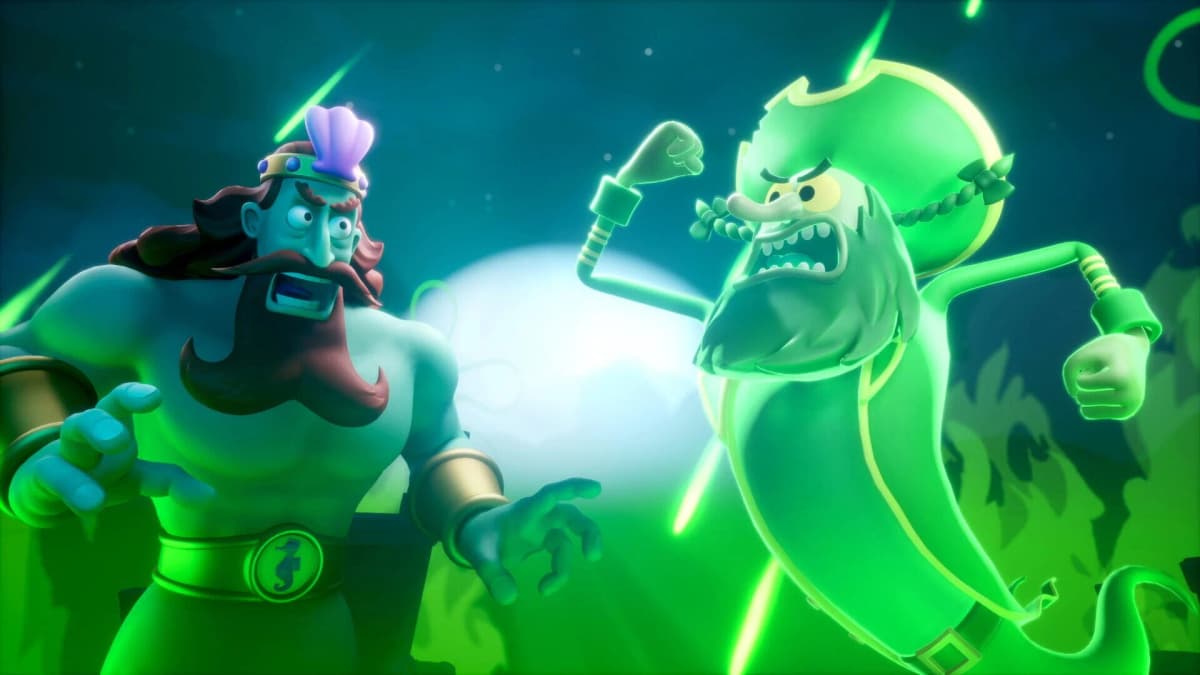
Boss fights, however, are standout. Multi-phase patterns force you to switch between characters and states mid-air. One late-game battle had my palms sweating—the best sign that a platformer is challenging just enough. It’s never as sleek as Mario Odyssey, but it’s the closest SpongeBob’s ever come to that level of finesse.
Living/Ghost Swap: The Best Idea Held in Check
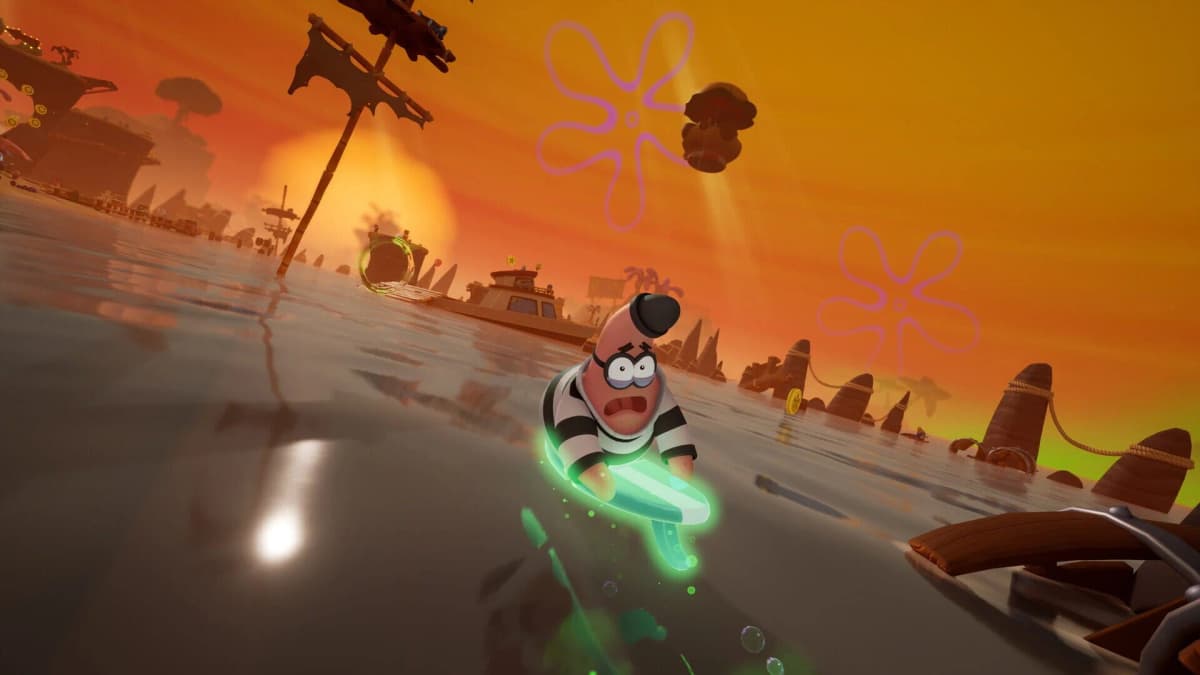
The “best friends forever” ring that flips SpongeBob and Patrick between living and ghostly forms is this game’s core twist. Some platforms and switches exist only in one reality, and you’re constantly timing mid-jump swaps. When it works, it clicks like magic—especially a surfboard chase through a frozen Jellyfish Field where swapping to phase gates and back to hit ramps felt invigorating.
But Purple Lamp doesn’t fully lean into it. The mechanic often feels like a fancy key system—ghost here, alive there—rather than a foundation for layered platforming. I kept expecting a knockout late-game level that went full Guacamelee on dimension-hopping, but we never got that. By the end, swaps felt familiar rather than mind-blowing.
World Design & Collectibles: Ambitious Scope
The five main zones—Red Fish Island, Jellyfish Field frostlands, Neptune’s Palace, a sunken Atlantis city, and the quirky Fry Museum—each boast distinct looks, NPC side quests, and hidden routes. Levels funnel you forward but reward exploration with breakable walls, secret jumps, and puzzles that guard the oh-so-many collectibles.
Costumes (30+), hub decorations (40+), photo-mode filters, health upgrades hidden as underwear quarters—there’s enough kit for dedicated completionists. The return of speedy slide courses adds extra challenge. I spent twenty minutes perfecting a catacomb slide shortcut just to shave seconds off my time—precisely the low-stakes obsession I love from a 3D platformer.
Casual playthrough (story only) clocks in around 10 hours; add side quests and you’re at 15; full completion—18–20 hours. That’s robust value for a family-friendly adventure. My only gripe is the relentless HUD: objective arrows, prompts, health bars. A “minimal HUD” toggle for older players would’ve been a welcome inclusion.
Tidal Pass DLC: A Meaty Dessert That Costs Extra
I can’t skip the Tidal Pass. On paper, it’s extra challenge missions—Plankton’s gauntlets, Davy Jones side quest, Squidward’s nightmare levels. In practice, it’s a chunky, high-difficulty dessert locked behind an additional price or higher-tier edition.
These stages are some of the coolest, most inventive platforming in the game. One timed Plankton gauntlet had me swapping states on the fly under a brutal clock—finally, a level that assumes you’ve mastered the basics. But discovering it’s gated behind DLC, not integrated as late-game optional content, left a sour taste.
To be fair, the base game feels complete. You beat the Flying Dutchman, restore Bikini Bottom, and the credits roll. Younger kids likely won’t notice the missing extra gymnasts of ghostly fun. But as a completion nut, the way Purple Lamp sliced out its trickiest experiments for extra cash veers into cynical territory.
Visuals, Performance & Sound: Finally Cartoon-Perfect
Technically, this is the best-looking SpongeBob game yet. On my PC at Epic settings, textures were crisp, environments dense, and framerate smooth. Even on the Asus ROG Ally X, it held solid performance with minor dips only in the most crowded hub sections.
The art style nails the cartoon aesthetic—bright colors, dynamic lighting, and fluid character animations that feel lifted from the show. Audio-wise, the French voice cast captures the original performances so well you’d swear it’s actual SpongeBob dialogue. Musical cues bounce between goofy and epic to match each world’s vibe, though some sound effects repeat annoyingly in crowded levels.
Conclusion
Bob l’Éponge : Les Titans des marées is Purple Lamp’s most ambitious SpongeBob game yet—smart level design, standout boss fights, and a ghost-swap mechanic that once in a while soars. The Tidal Pass DLC and heavy HUD hold it back from reaching its full potential, but the base adventure feels like a complete, fun-filled SpongeBob special.
- Best features: Engaging boss battles, varied world design, and occasional “swap magic” platforming highs.
- Biggest caveats: DLC gating of premium challenges, underused dimension-swap potential, and an ever-present HUD.
Recommended platform: PC for best visuals and modifiable settings (console and Switch 2 ports are solid but HUD options vary). If you crave a bright, charming 3D platformer and can live without 100% of the tricks, dive in now—just beware the DLC bait.
FinalBoss // Gear
Level up your setup
01Top-rated gaming headsetson Amazon→02High-refresh gaming monitorson Amazon→03Gaming chairson Amazon→04Discounted game keyson Kinguin→
Affiliate links · As an Amazon Associate, FinalBoss earns from qualifying purchases.
Want to Level Up Your Gaming?
Get access to exclusive strategies, hidden tips, and pro-level insights that we don't share publicly.
Ultimate Reviews Strategy Guide + Weekly Pro Tips