

The planned August 25, 2026 Early Access launch for 1666: Amsterdam places an uncomfortable amount of weight on the words “Early Access.” The game has a striking historical city, a strong witchcraft premise, investigation systems, day-and-night progression, and a clear visual identity. Those are meaningful assets. They also do not solve a combat loop that currently sounds thin, a lack of difficulty settings, or a boss failure severe enough to interrupt an entire session.
My position is straightforward: 1666: Amsterdam should be watched, not recommended on day one, unless its launch build demonstrates substantial progress in combat variety and encounter stability. Early Access can accommodate missing content. It can accommodate rough edges. It cannot responsibly ask players to tolerate a core loop that becomes repetitive in its opening stretch while major encounters can break down completely.
Table of Contents (6)
The city is doing the heavy lifting
The positive case for 1666: Amsterdam is easy to understand. Its version of Amsterdam has atmosphere and specificity. The city’s cobblestone streets, blood-red visual palette, witchy supernatural tone, and historical setting give the project an identity that is rare in a market crowded with interchangeable fantasy spaces. Exploration and investigation also appear to be central to the design rather than decorative detours. Clues discovered during the day can shape what happens at night, while the game’s broader progression plans suggest a structure built around revisiting systems with new abilities and choices.
That material is exactly why the game’s weaknesses matter. A beautiful city can sustain curiosity for several hours. It cannot sustain a combat-focused action game indefinitely when each fight asks for roughly the same response. Atmosphere gets players through the opening door. Systems determine whether they keep playing after the novelty wears off.
Combat repetition is a structural warning, not a minor preview complaint
The present concern is not that the combat lacks a little visual polish. The concern is that its foundational vocabulary appears too narrow. Early encounters have been described in terms of one primary attack, one defensive response, a dodge, and wave-like enemy sequences that blur together. Spells such as petrification and levitation arrive later, but later additions do not automatically repair a weak beginning.
Combat systems earn repetition when they create changing decisions. Enemies need distinct behaviors. Defensive tools need different uses. Positioning needs consequences. A player should be choosing between interrupting an attack, controlling space, exploiting an opening, escaping pressure, or taking a calculated risk. If every hostile encounter is solved through the same attack-and-dodge rhythm, then the game is asking the player to repeat an answer rather than learn a system.
That distinction matters more in Early Access than in a finished game. Developers can add weapons, spells, enemy types, and balance passes over time. Players who buy at launch still have to live with the build that exists on day one. They are not purchasing a roadmap. They are purchasing a playable version of the game, and the first several hours need to justify the time spent reaching future improvements.
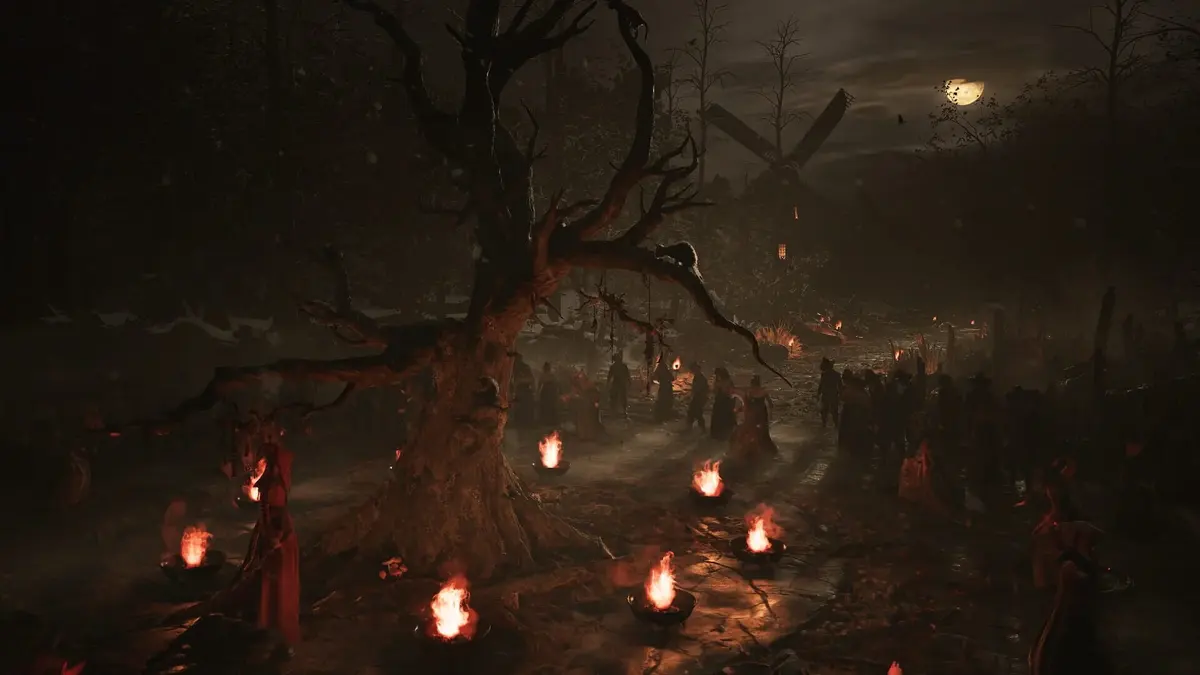
A narrow melee foundation also places enormous pressure on enemy design. If the protagonist has limited offensive and defensive options, opponents must create variety through timing, aggression, range, movement, armor, counters, and crowd-control pressure. Otherwise, combat turns into a corridor between the game’s more interesting ideas: the city, the investigations, the supernatural setting, and the cat-focused traversal sections.
No difficulty settings leaves too much riding on one tuning profile
Difficulty options are still being considered rather than confirmed, which is a bigger problem than it might appear. A single difficulty profile can work when a game’s combat is exceptionally deliberate and well explained. 1666: Amsterdam does not currently have that margin for error. Its combat has been characterized as easy while also being repetitive, and those two complaints reinforce each other.
Easy combat can be satisfying when players are expressing mastery through speed, creativity, precision, or tactical control. Repetitive combat becomes draining when the game does not demand enough from the player to make its limited toolset interesting. The result is a system with low pressure and low variety: encounters take time without creating much tension, adaptation, or satisfaction.
Difficulty options would not magically make the combat deep. They would, however, give the game room to serve different players while its systems develop. A harder mode could make enemy pressure, damage, timing, and resource use more meaningful for players who need a reason to engage with the full toolset. An easier mode could reduce the friction for players primarily invested in the setting, exploration, and story. Leaving everyone locked into one unfinished balance pass is a poor fit for an Early Access game seeking useful feedback from a broad audience.
| Launch threshold | What players should see | Why it matters |
|---|---|---|
| Combat depth | Distinct enemy behaviors, more than one viable defensive answer, and encounters that change beyond simple waves. | The opening hours need to be enjoyable on their own rather than a holding pattern for later abilities. |
| Fail-state integrity | Bosses that remain inside their arenas, reliable traversal prompts, and recoverable failures that preserve player progress. | Players can accept difficulty and defeat. They should not lose a session to broken encounter logic. |
| Difficulty control | Clear options for players who want more challenge or less friction. | A single tuning profile magnifies every balance flaw in a game still under active development. |
| Patch responsiveness | Specific fixes for serious bugs and a visible pattern of quick, targeted updates. | Early Access only earns patience when developers protect player time after problems are found. |
A boss leaving the arena crosses the line from rough to unreliable
The most serious issue is the reported boss encounter that bugged out and exited its arena. A texture glitch, awkward animation, or uneven hit reaction can be filed under normal pre-release roughness. A boss leaving the fight changes the category of the problem. That is an encounter-integrity failure: the game’s required objective stops functioning as designed, and the player’s session can become worthless.
This is the kind of issue that should alter a buying recommendation. Bosses are designed to be punctuation marks. They test what the player has learned, provide escalation, and give a combat system a sense of progress. When one can disappear from the playable space, the game stops testing the player and starts testing their tolerance for restarting, reloading, or waiting for a fix.
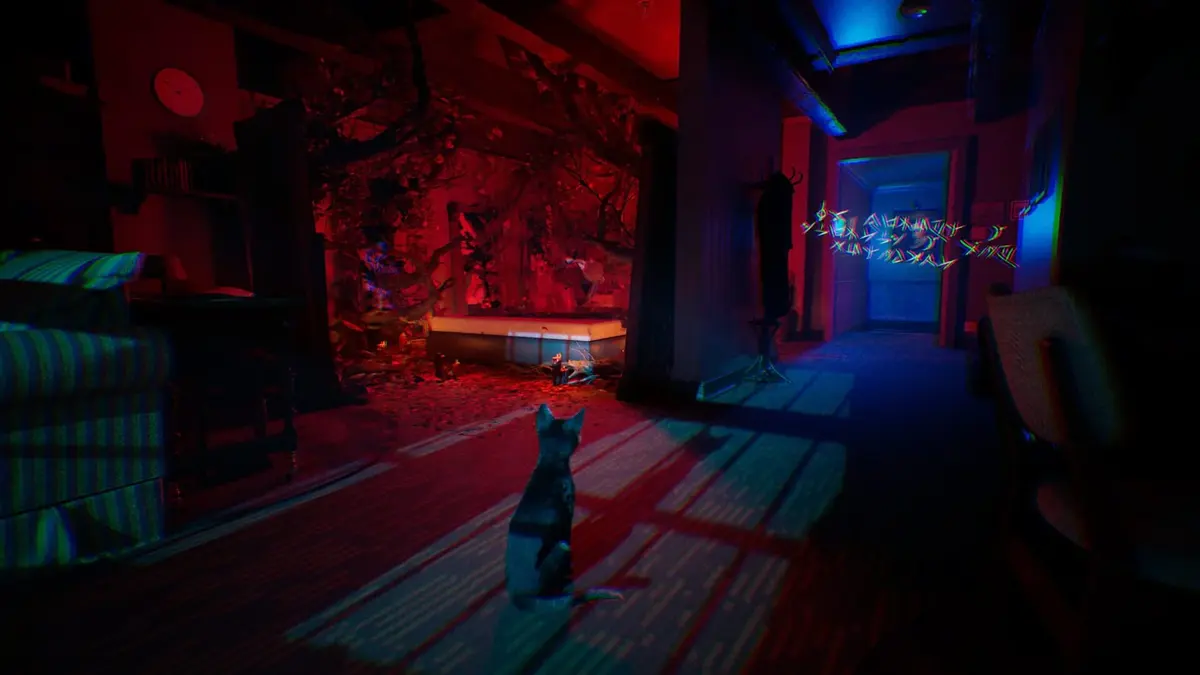
The same standard applies to traversal. Cat movement has been described as rough and occasionally unresponsive, while some platforming interactions appear to require locating an overly precise position before a jump prompt appears. Those problems are less catastrophic than a broken boss, but they point in the same direction: interaction reliability is still inconsistent. A game built around moving through a detailed city cannot afford to make basic movement feel uncertain.
Early Access is not a waiver for unfinished fundamentals
There is a tendency to treat every early build complaint as evidence that players do not understand Early Access. That argument is convenient for developers and useless for buyers. Early Access is a development model, not a blanket exemption from standards. It is reasonable for a game to enter the program with incomplete content, tuning that needs adjustment, and systems still expanding. Core interactions still need to work.
For 1666: Amsterdam, the relevant division is clear. More spells, additional areas, expanded progression, and further narrative material can arrive over time. Combat that already feels one-note, an absent difficulty framework, unreliable traversal, unclear onboarding, inconsistent stealth behavior, and encounter-breaking bugs all touch the part players will be using immediately. Those are not distant roadmap items. They are the floor beneath the entire project.
The game also has a tutorial and onboarding burden because it combines several ideas: investigation, supernatural powers, melee combat, traversal, familiar-based mechanics, and day-and-night progression. An ambitious design needs unusually clear teaching. Players cannot give meaningful feedback on systems they do not properly understand, and confusion creates the false impression that a mechanic has depth when it may simply lack explanation.
What would change the recommendation
I do not need 1666: Amsterdam to launch as a complete, flawless game before it earns interest. I need it to show that its most important weaknesses are being treated as priorities rather than tolerated as part of the Early Access label. The combat should establish meaningful variety early, with enemies that demand different responses and tools that support more than a single routine. Difficulty options should be available or clearly imminent. Boss encounters need to be stable enough that failure belongs to the player’s decisions rather than the game’s scripting.
Patch response will matter immediately after launch. A serious bug discovered in the wild should receive a focused response, especially when it prevents progression or invalidates an encounter. General assurances about long-term improvement will not be sufficient. Players need fixes that address the specific ways their sessions are being disrupted.
1666: Amsterdam has enough visual imagination and enough promising systemic ideas to justify continued attention. Its current state does not justify treating ambition as proof of readiness. Until combat variety, difficulty control, and encounter reliability clear a basic threshold, waiting for the first substantial patch cycle is the disciplined purchase decision.
FinalBoss // Gear
Level up your setup
01Top-rated gaming headsetson Amazon→02High-refresh gaming monitorson Amazon→03Gaming chairson Amazon→04Discounted game keyson Kinguin→
Affiliate links · As an Amazon Associate, FinalBoss earns from qualifying purchases.
Want to Level Up Your Gaming?
Get access to exclusive strategies, hidden tips, and pro-level insights that we don't share publicly.
Ultimate Gaming Strategy Guide + Weekly Pro Tips