
Table of Contents (10)
Coming Back to Britannia When I Thought I Was Done With It
I fell off The Seven Deadly Sins anime a few seasons ago. I loved the early arcs, drifted away when the CG and pacing got rough, and honestly thought I was done with Britannia for good. So when I booted up The Seven Deadly Sins: Origin for this pre-release session, I went in expecting “just another gacha action RPG” with a familiar skin.
About 30 minutes later I was gliding over a valley on a rickety wooden wing, chasing a glowing Warp Point while my stamina bar threatened to dump me into a pack of ogres below… and that’s when I realized Origin had its hooks in me.
Across roughly 20 hours on a pre-release PC build (the game is also headed to mobile and consoles), I pushed through the prologue cavern, roamed around the Kingdom of Liones’ outskirts as Prince Tristan and Tioreh, pulled a handful of characters from the gacha, and cleared a good chunk of early- to mid-game content. What I got was a surprisingly approachable open-world anime RPG that’s genuinely fun to explore and mash through, but also clearly tethered to the usual gacha pitfalls and some technical roughness that’s hard to ignore.
A Beginner-Friendly Doorway Back Into Seven Deadly Sins
Origin doesn’t assume you’ve memorized 40-odd manga volumes and five seasons of TV. The story centers on Prince Tristan of Liones and Tioreh, kids of key legacy characters, stumbling into a suspicious cavern that doubles as a tutorial dungeon. After a reality-warping event, time-space distortions and an oily, purple corruption start bubbling up across Britannia, and you’re sent off to investigate.
As someone who only half-remembers the finer points of the anime, I never felt locked out. The game definitely tosses fans some winks – seeing certain familiar faces step through a distortion portal still landed for me – but the main throughline is easy to follow: weird rifts are opening, nasty goop is spreading, and you and your posse of pretty people need to beat it back while figuring out who’s pulling the strings.
It’s also very clearly paced like a gacha-driven live service: lots of short voiced scenes, plenty of “return to town, talk to NPC, go clear three things over there,” and several obvious hooks for future events, raids, and time-limited banners. Whether that structure will feel satisfying long-term depends heavily on how they tune progression and rewards after launch, and that’s the giant question mark hanging over everything right now.
Exploration Is the Star: Gliders, Pigs, and “Just One More Hill”
Origin is at its best when it just lets you wander. Very early on, you get the full basic toolkit: climbing, swimming, a glider, and eventually Hawk doing double duty as both a mount and an airborne taxi. Within two hours I’d unlocked enough movement options that the map started feeling like a playground instead of a checklist.
There’s a stamina bar tied to climbing, sprinting, and gliding, so you can’t quite scale anything from the jump. I had a very familiar “Breath of the Wild moment” when I tried to brute-force my way up a sheer cliff to reach a glowing chest, misjudged my stamina, and slid all the way back down next to a confused bunny that was busy scratching its ear in perfect looped animation. I swore at the bar, popped some food to buff it, and tried again from a smarter angle using a rock outcropping as a rest point. That kind of light friction is exactly what keeps exploration from turning into autopilot.
Warp Points scattered across the world reveal the map’s topology and double as fast-travel beacons. I fell into a pattern pretty quickly: spot a new Warp Point glowing in the distance, angle my glider or Hawk toward it, weave around (or over) enemy patrols, and grab any chest or resource node along the way. The game absolutely rewards that “clear every question mark before you do the main quest” mindset. I easily lost an entire evening just spiderwebbing out from Liones, ignoring the urgent corruption invading the land because there was a suspicious cave symbol mocking me from the mini-map.
There are also cozy diversions sprinkled between fights. Fishing, cooking, and the occasional environmental puzzle break up the rhythm just enough. None of these systems felt groundbreaking in the hours I played – this is closer to Genshin Impact’s light survival-lite loop than a full-on life sim – but having a reason to hunt down ingredients or stop at a pond on my way to the next dungeon definitely helped the world feel inhabited instead of just being a combat arena between cutscenes.
Flashy, Approachable Combat With Room to Grow
Moment to moment, combat is a real-time action system with a deliberately simple core: light attack string, dodge, dash, plus two special abilities and an Ultimate per character on cooldowns. On controller, it’s very pick-up-and-play; I was doing basic combos and dodge-cancels instinctively by the end of the prologue cavern.
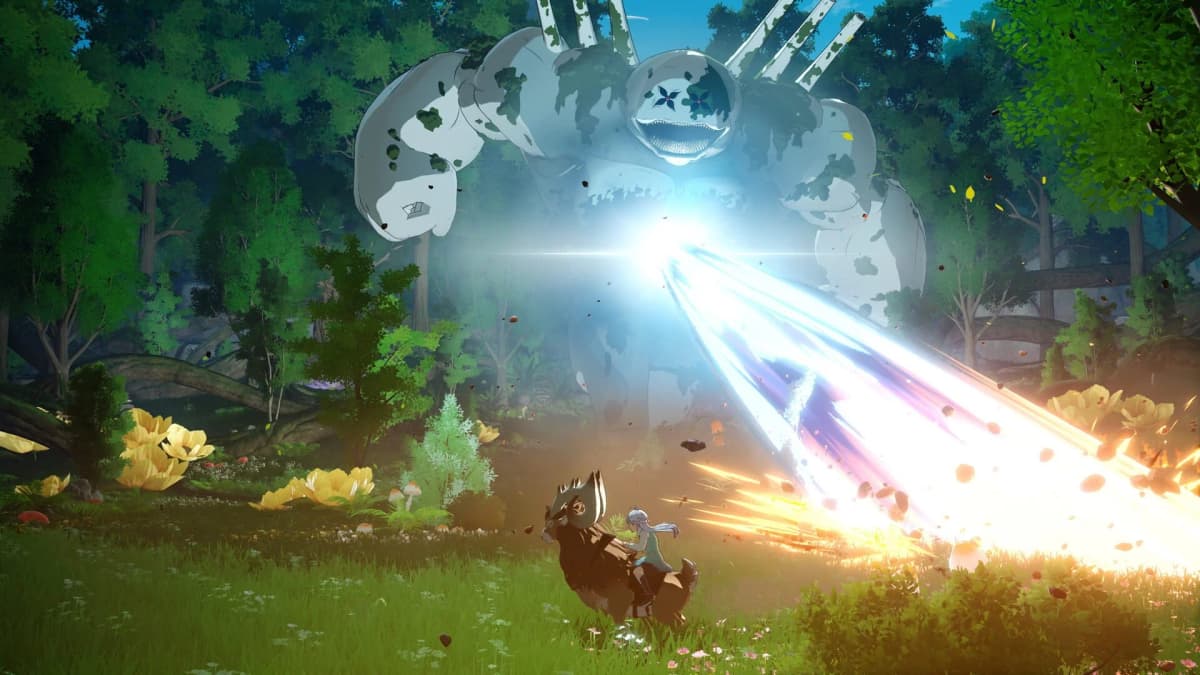
Each character brings their own flair. Tristan, for instance, mixes sword slashes with fire-infused skills that explode in huge, screen-filling arcs. His Ultimate – a volcanic, slow-mo finisher with a lovingly animated cut-in – never stopped being satisfying, even after I’d seen it dozens of times. Tioreh leans a bit more into support and ranged options, flipping in and out to lay down AoE damage while someone hardier keeps aggro.
It’s not a super deep combat system in the early going; if you’re expecting Devil May Cry-level expression, temper those hopes. But there are hints of more nuance later: elemental reactions, enemy part-breaking, tag-team skills that chain characters’ abilities together, and big boss fights built around reading telegraphs and maintaining party HP (which is shared across your squad, an interesting twist that makes reckless swapping less trivial than in other gacha ARPGs).
What I appreciated most is how low the skill floor is. Within a couple of hours, I felt comfortable enough to swap characters mid-fight, juggle mobs with launchers, and use dodges to weave through patterns instead of just panic-rolling away. That’s huge for a game that will likely pull in a lot of players who mostly know this IP from passive anime watching on their phone. The barrier to feeling cool is pretty low; the barrier to mastering every character remains to be seen.
The Biggest Weakness: Enemies That Feel Half Alive
For all the fun I had mashing flashy combos, the enemy AI is, bluntly, a problem right now.
Most foes operate like alarm posts tied to a rigid leash. You step into their cone, they aggro, they chase you a set distance inside their invisible circle, then they either kill you or fall back to their starting pose. In one early area I spent a good five minutes just dancing around a hulking stone golem’s leash boundary, baiting him forward until he snapped back like a rubber band. It felt less like fighting a monster and more like testing pathing in a dev sandbox.
They also don’t really adapt. Smaller mobs will occasionally dodge or charge, but there’s no sense that they’re reacting to your specific moves, your current health, or which character you’re piloting. Coming from games where even trash enemies can surprise you with new patterns, this felt oddly lifeless.
That stiffness feeds into a broader issue with the world simulation. Wildlife moves in eerie synchrony, repeating the same animations in lockstep. Patrols reset in a visible, game-y way if you pull too far. When you’re sprinting from objective to objective and the soundtrack swells, it mostly fades into the background. The second you stop to really soak in a field or a camp, the seams start showing.
That stiffness feeds into a broader issue with the world simulation. Wildlife moves in eerie synchrony, repeating the same animations in lockstep. Patrols reset in a visible, game-y way if you pull too far. When you’re sprinting from objective to objective and the soundtrack swells, it mostly fades into the background. The second you stop to really soak in a field or a camp, the seams start showing.
🎮 Get This Game at the Best Price
Compare prices instantly and save up to 80% on Steam keys with Kinguin — trusted by 15+ million gamers worldwide.
*Affiliate link — supports our independent coverage at no extra cost to you
To be clear: this is a pre-release build, and enemy behavior can absolutely be tuned before or after launch. But if you’re hoping for Monster Hunter-style breakable parts, Souls-like mind games, or even Genshin’s better boss encounters, Origin’s AI – in its current form – just doesn’t get there.
Visual Charm at a Distance, Jank Up Close
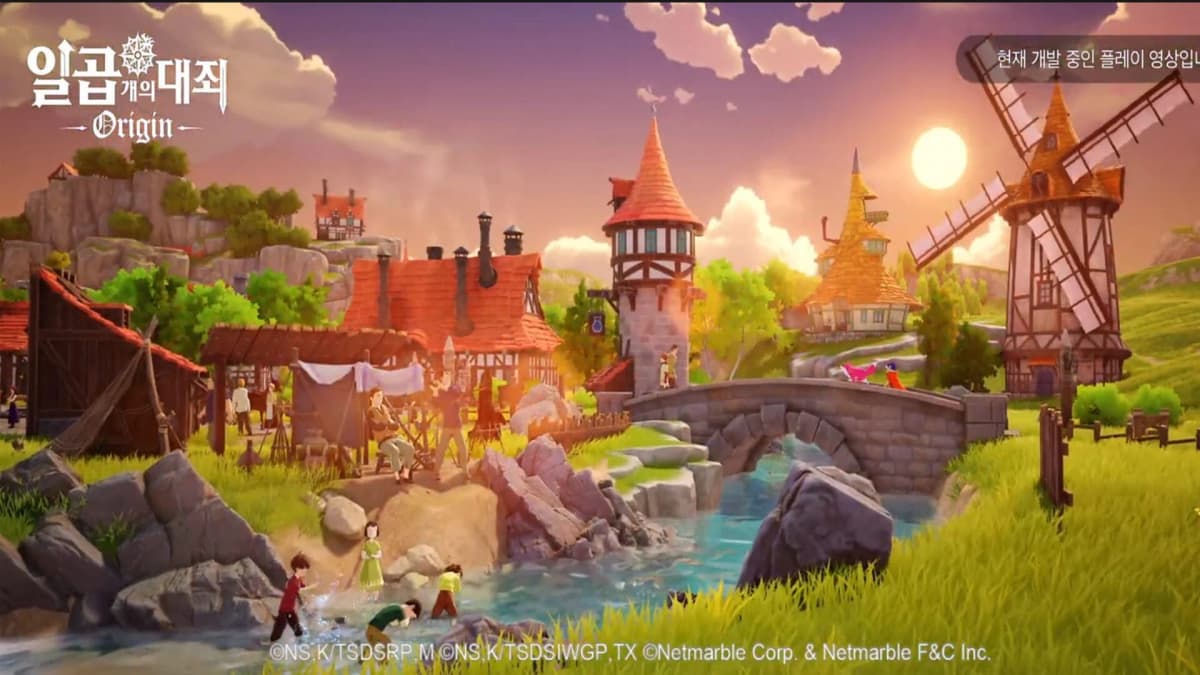
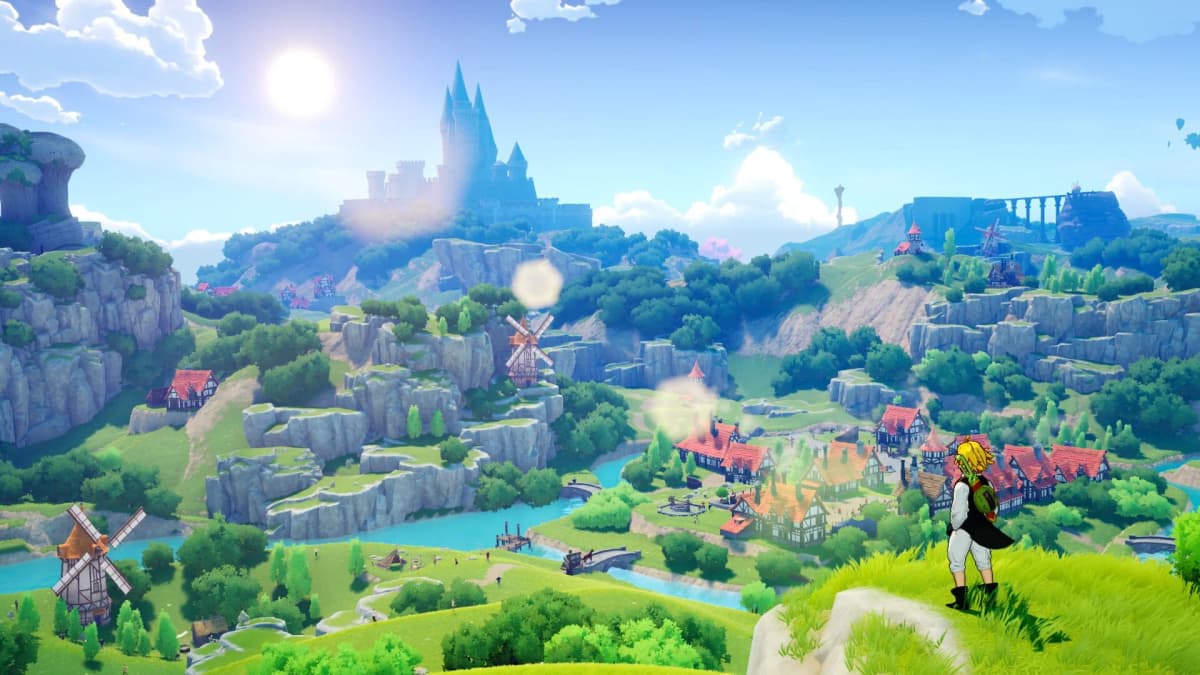
From afar, Britannia is gorgeous in that soft, almost Disney-meets-anime way. Liones’ castle is properly imposing, its white stone popping against bright green fields and saturated skies. Sunlight cuts through forest canopies; the corruption ooze slithers across the ground in nasty purple veins. Screenshots from the right angle look like promo art.
Up close, the illusion cracks. Rock faces can look oddly muddy and low-res, some foliage pops in a little too aggressively as you sprint, and NPCs stand around looping a tiny handful of animations. On my mid-range PC, performance was mostly stable, but I did hit a couple of hitches when gliding into dense, effect-heavy areas or when a particularly over-the-top Ultimate slammed into a crowd.
Again, there’s time to polish, and the build I played isn’t final. But there’s a familiar Netmarble feel here: big, bold art direction and great character models, backed by technically inconsistent environments that look far better in motion and at medium distance than they do when you press your nose against every rock and brick. If you’re the kind of player who notices LOD swaps instantly, be ready for some mild eye-twitching.
Gacha, Star Memory, and the Looming Monetization Wall
Let’s talk about the part everyone side-eyes in a free-to-play gacha: the shop.
As you play, you earn a currency called Star Memory. This is fed into the usual banners to pull new characters and gear. The basic loop feels extremely familiar if you’ve touched any modern gacha: there are “standard” pulls, time-limited banners, pity systems, and several different premium currencies that all ultimately convert into more rolls.
During my 20 hours, the game was very generous. Story quests, chests, and early achievements showered me with enough Star Memory and related goodies to build out a full squad without ever thinking about my wallet. My first 10-pull lined up with a big story moment – the classic gacha fireworks – and I’ll admit I had that brief, shameful hit of dopamine when a purple animation flared and a fan-favorite slid into my roster.
But the second I opened the Shop tab properly, that familiar dread kicked in. Tabs within tabs, limited bundles, previews of future banners, upgrade materials that can also be shortcut with real cash… Origin doesn’t appear to be doing anything unusually predatory compared to its peers, yet it still feels like walking into a casino built around your favorite manga.
The honest truth is: I don’t know yet where the hard wall is. This pre-release build felt siloed and very front-loaded with rewards. I never hit a boss that felt mathematically impossible without a stronger banner unit; I never ran out of stamina (or the equivalent) in a way that stopped my play session cold. The real test will be how things feel 60 hours in, when resources tighten and event content starts demanding specific synergies.
If you’re already allergic to gacha economics, Origin hasn’t shown me anything so radical that I’d recommend it as the one that changes your mind. If you’re comfortable living in that ecosystem and setting your own spending boundaries, this looks like “standard but polished” more than “disastrous,” with the very important caveat that full launch tuning can make or break that impression.
Characters, Co-op Hints, and Living With the Game
The cast so far is likable enough. Tristan and Tioreh have a solid sibling-esque dynamic that carries a lot of early scenes, and the writing – while not groundbreaking – leans more into earnest adventure than the edgy horniness that colored some parts of the anime. Supporting characters do a lot of heavy lifting, and I found myself actually watching most cutscenes instead of hammering the skip button, which is not a given in gacha land.
The game also teases multiplayer and cross-play, though my test time was almost entirely solo. There are hub areas and quest hooks that scream “this will eventually be where you queue for co-op bosses or dungeons,” and I did get a brief taste of playing alongside another tester in a controlled environment. Combat held up fine with more bodies flying around, but I need much more time with real-world matchmaking and netcode before I’d say anything definitive there.
What stood out over a couple of long sessions was how easy it was to treat Origin like a “second screen” game: something to roam and grind in while a podcast plays, occasionally pausing to pay attention during a big cutscene or boss fight. That’s not meant as a dig. For a mobile-first gacha design, being comfortable, cozy, and low-friction is kind of the point. Origin, at least in this slice, nails that vibe better than I expected from yet another anime adaptation.
Who This Is For (Right Now)
After 20 hours, here’s where I land on who should actually keep an eye on The Seven Deadly Sins: Origin:
- Lapsed Seven Deadly Sins fans who want a low-barrier way back into the world will probably have a good time, especially if you like exploration more than hardcore theorycrafting.
- Gacha enjoyers used to games like Genshin Impact or Honkai: Star Rail will find a very familiar structure, with the twist of a more open, movement-driven world and shared-HP party combat.
- Action combat purists who live for tight enemy AI and challenging patterns may bounce off the current mushy opponents unless things are tuned up before or after launch.
- Monetization skeptics should absolutely wait for post-launch impressions before diving in. The systems are standard, but the long-term generosity and progression walls are still complete unknowns.
FinalBoss // Gear
Level up your setup
01Top-rated gaming headsetson Amazon→02High-refresh gaming monitorson Amazon→03Gaming chairson Amazon→04Discounted game keyson Kinguin→
Affiliate links · As an Amazon Associate, FinalBoss earns from qualifying purchases.
Want to Level Up Your Gaming?
Get access to exclusive strategies, hidden tips, and pro-level insights that we don't share publicly.
Ultimate Reviews Strategy Guide + Weekly Pro Tips