
Table of Contents (7)
2015 Was the Year Mobile Finally Chose a Side
Reading the Pocket Gamer 20th anniversary look back at 2015 hit me like a time warp. I remember that year vividly, not because of Clash of Clans’ reign or Candy Crush’s sugar-coated tyranny, but because 2015 is when I realised mobile had basically picked its soul. And it mostly chose freemium.
By then I’d already sunk too many late-night hours into early App Store darlings. I was that idiot refreshing the charts on my iPhone 3G, trying every 69p premium oddity that landed in the top 50. Mobile felt raw and experimental back then – you paid a few quid, you got a weird little game, and that was the transaction.
2015 was different. Looking back through that Pocket Gamer 20th rundown, what jumps out isn’t just the names – Fallout Shelter, Angry Birds 2, Alto’s Adventure, Lara Croft Go, Downwell, Horizon Chase – it’s the split personality. On one side you had freemium absolutely dominating the money charts. On the other, you had some of the most elegant, premium-feeling mobile games ever made quietly existing like an endangered species.
And sitting in the middle, confused and slightly angry, was me – watching a platform I loved turn into a dark pattern laboratory while also serving up games like Lara Croft Go that felt like they belonged on a museum wall, not sandwiched between gacha ads.
Freemium Won in 2015 – Because We Let It
Here’s the uncomfortable part: 2015 didn’t just “happen” to mobile. We all participated. Clash of Clans, Candy Crush, Puzzles & Dragons – they’d already shown the freemium model wasn’t a fad, it was the business plan. By 2015, that stuff had gone from curiosity to infrastructure.
Look at Angry Birds 2. The first Angry Birds blew up as a paid game. You chucked a couple of quid at Rovio, you got the iPhone game. It was clean, simple, honest. By the time the sequel rolled around, that world was dead. Rovio didn’t go freemium because they were bored of money; freemium was the only model that made sense at scale.
I remember downloading Angry Birds 2 on day one. The slingshot was as satisfying as ever, the level design tight, the presentation slick. But it came with that familiar modern mobile itch: energy systems, currencies, little “come back later (or pay)” nudges baked into the design. You could ignore a lot of it, sure, but the message was clear. The game wasn’t just a game; it was a funnel.
This is the year “free” stopped meaning free. Free meant “we’ll data-mine your daily routine, A/B test your pain tolerance, and send some behavioural economist to tweak your reward schedule until your brain hits auto-debit.” Companies like Scopely going on to hit $15 billion in lifetime revenue didn’t come from selling you a nice little £4.99 racing game, let’s be honest.
And yet, 2015 also gave us a bunch of games that felt like dispatches from an alternate timeline where mobile didn’t sell its soul so cheaply. That’s what still gets under my skin: the proof that another path was viable – creatively if not financially – was right there.
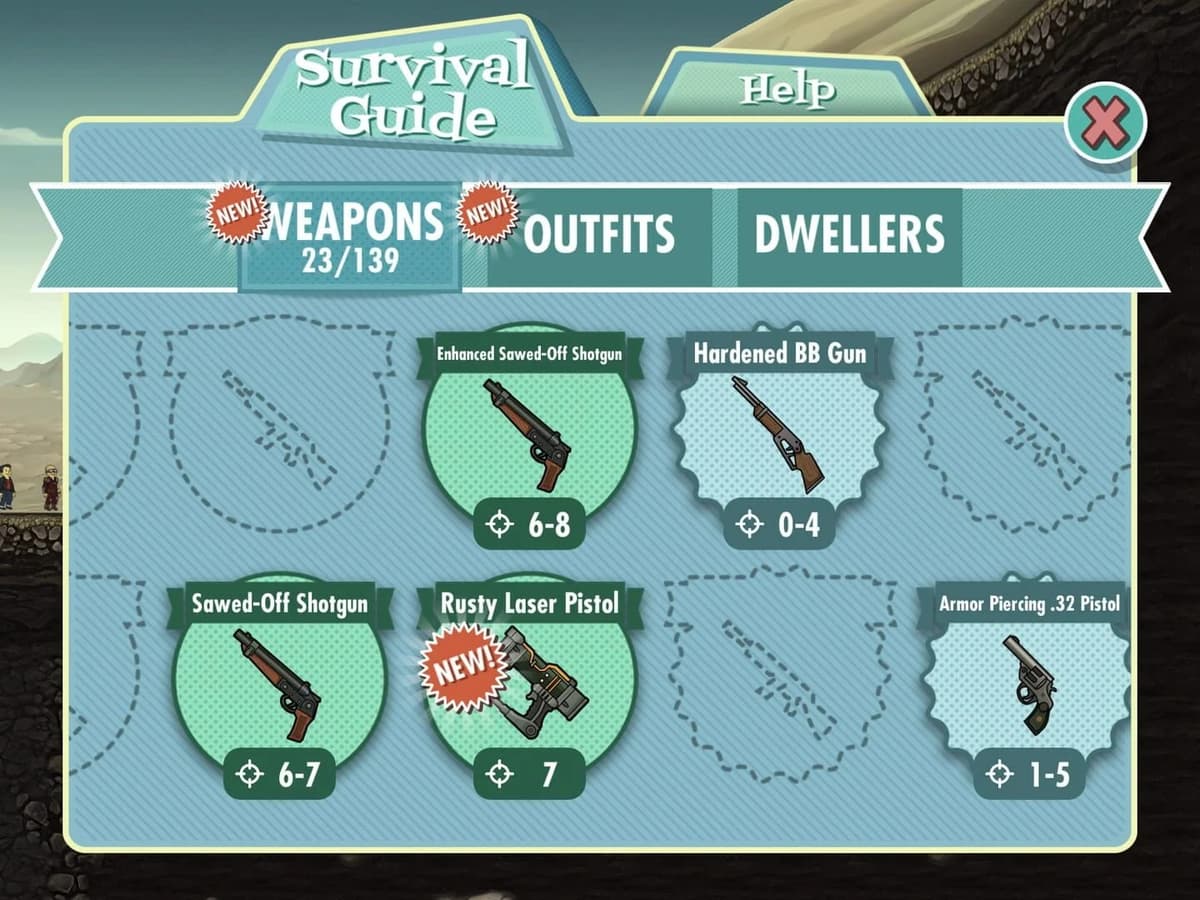
Fallout Shelter: The Cash-Grab Spin-Off That Kind of Respected Me
Fallout Shelter should have been a disaster. Big beloved RPG series goes mobile, revealed on an E3 stage, launching the same day? On paper that’s the perfect recipe for a cynical brand-husk designed to hoover whales.
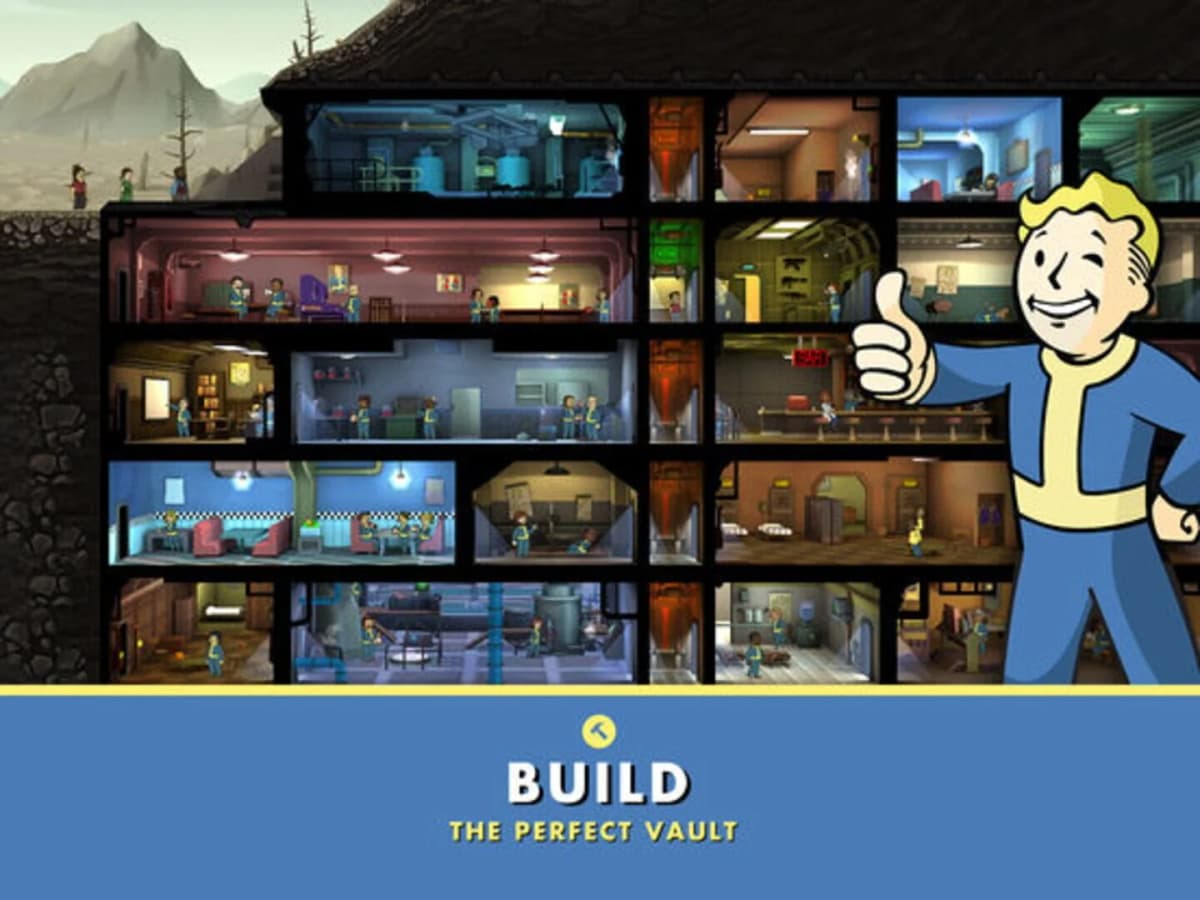
I went in expecting poison. I installed it “just to see how bad it gets” before bed and suddenly it was 3am, my phone too hot to touch, and I’d spent the last few hours desperately trying to keep a bunch of irradiated little idiots alive in my tiny underground ant farm. That’s the thing: the game itself was good. A legit management sim with flavour dripping off every room.
Was it freemium? Of course it was. Lunchboxes, timers, drops – the usual toolkit. But 2015-me was shocked by how often the game just… let me play. Fallout Shelter felt like Bethesda’s first serious attempt at designing for mobile rather than just on mobile. They weren’t trying to paste the console experience onto a touchscreen; they built a side-story that made sense in portrait mode, with taps and swipes.
What really stuck with me, though, was how restrained it felt compared to everything else climbing the revenue charts. The monetisation was there, staring you in the face, but it didn’t feel like the core reason the game existed. It sat awkwardly between two worlds: partially a billboard for Fallout 4, partially a genuine management sim passion project, partially a freemium experiment that never leaned fully into the dark arts.
Looking back from a mobile market that’s now plateauing and squeezing every penny of “engagement” via advanced analytics and, increasingly, AI, Fallout Shelter almost feels naive. Like someone handed Bethesda a freemium rulebook and they only read the first three pages before wandering off to build something mildly wholesome.
Lara Croft Go: Proof Mobile Could Have Been Prestige, Not Just Predatory
Then you’ve got Lara Croft Go, which pretty much embodies everything I wish mobile had become.
I grew up with Lara as the clunky, tank-controlled PS1 icon – the weird half-archaeologist, half-sex-symbol mascot from a time when game marketing still hadn’t figured itself out. By 2015, the reboot series was in full gritty-survival swing on consoles, but what Lara Croft Go did was smarter than just chasing that vibe on a smaller screen.
Instead, it stripped the franchise down to its essence. Not the guns. Not the Hollywood set-pieces. The puzzles.
A turn-based, node-based puzzler that looked like concept art come alive, with each swipe advancing both Lara and every threat on the board – snakes, lizards, blades, boulders. The rules were simple enough to explain in a sentence, but the solutions stuck in my brain for days. It was the kind of design confidence you don’t usually see on a platform obsessed with retention curves.
And crucially: it was a pay-once, premium-feeling game. No energy meter. No “daily login” bribe. No time-limited events designed by a focus group in a windowless room. You bought a complete experience and experienced it. Remember that?
In a way, Lara Croft Go is the ghost that still haunts me when I open the App Store today. Every time I see a beloved IP gutted into some limp auto-battler or gacha treadmill, I think back to Square Enix Montreal in 2015, calmly proving that you could reinterpret a famous character for mobile with taste and restraint and intelligence – and still make something people raved about.
Did it make Clash of Clans or Pokémon Go money? Obviously not. That’s the heart of the problem. The market rewarded cynical stickiness more than crafted brilliance. But the existence of Lara Croft Go blows up the lazy excuse that “mobile players don’t want premium games.” They absolutely did. The platform just didn’t structurally support that kind of success at the same scale.
Alto, Downwell, Horizon Chase: The Beautiful Resistance
If Fallout Shelter and Lara Croft Go were proof that big IP could behave itself on mobile, games like Alto’s Adventure, Downwell, and Horizon Chase were the indie resistance.
Alto’s Adventure is still burned into my retinas. Just a simple endless snowboarder, but with this painterly, soft palette and a soundtrack that felt like snow falling outside your window at 2am. The actual mechanics – tap to jump, hold to backflip, chain tricks – weren’t revolutionary. But the vibe was. It treated your phone screen as a canvas, not a casino.
Downwell went the opposite way aesthetically – stark, crunchy, vertical chaos – but it had the same integrity. Three buttons. Big chunky pixels. Gun boots. A roguelike distilled into pure momentum. Fail, learn, retry, no nagging notification bar trying to drag you into a shop menu every five seconds.
And Horizon Chase scratched the itch I’d had since the OutRun days. A clean, colourful, arcade racer that didn’t care about realism. Just speed, corners, and that hypnotic flow of cars and scenery streaking towards you. Again, a thing that absolutely should work on mobile, because the core arcade loop is perfect for short bursts. No need for battle passes or daily challenges to justify itself.
Those games made me realise something uncomfortable about my own behaviour. When a game asked for a fair upfront price and then left me alone, I’d happily pay and dive in. When a “free” game bombarded me with IAP hooks and FOMO timers, nine times out of ten I’d bounce off out of sheer irritation. And yet, the market data was saying the complete opposite: the stuff I hated was what was making everyone rich.
Fast forward to now, where the mobile market is hitting headwinds, studios like Halfbrick are cutting staff, and user acquisition costs are spiralling, and those 2015 premium-style hits feel even more precious. They were the reference point: proof that good design, not just good manipulation, could still get traction.
From Freemium to “Freemium + AI”: The Next Phase Looks Even Messier
The Pocket Gamer 20th piece frames 2015 as a waypoint: the year freemium cemented itself while premium-flavoured gems snuck through. A decade later, we’re staring at the next shift, and it’s wearing a very familiar mask – just with “AI” scrawled across the forehead in neon marker.
We’re already seeing the outlines. Publishers talking about AI-powered live ops. Dynamic difficulty tuned not just to your skill, but to your spending habits. Personalised offers that don’t just guess what pack you might buy, but when you’re most emotionally vulnerable to buying it. That’s not sci-fi; that’s literally where marketing tech is headed.
Look at the timing: mobile revenue reportedly plateaued around 2025. Big publishers start getting antsy. Projects get reshuffled or killed. While that’s happening, AI tools get cheap and ubiquitous. You don’t need to be an oracle to see which way this converges. If freemium in 2015 was about clumsy retention hacks and brute-force analytics, freemium in 2026+ is going to be about machine-tuned behavioural engineering.
On the optimistic side, AI could be incredible for small teams making the next Alto or Downwell. Smarter tools for animation, procedural levels customised to your skill curve, QA bots catching the kind of bugs that would normally sink a two-person studio. The idea of a solo dev using AI to build something as slick as Lara Croft Go in spirit – if not in IP licensing – is genuinely exciting.
But let’s not kid ourselves. The big money is going to chase frictionless exploitation first, same as it did in 2015. Those Scopely-style billions don’t come from “nice vibes”; they come from ruthlessly optimised funnels. Now imagine those funnels constantly re-writing themselves based on AI predictions of who will churn, who will pay, and who just needs one more nudge.
That’s why I keep circling back to 2015. It was the proof-of-concept year. It showed that you could have:
- Fallout Shelter – a mobile spin-off from a huge IP that didn’t treat its players like complete marks
- Lara Croft Go – a premium puzzle reinterpretation that respected both franchise and player
- Alto’s Adventure, Downwell, Horizon Chase – indie-ish passion projects that treated your time as more valuable than your wallet
- Angry Birds 2 and the freemium mainstays – the beginnings of mobile as a permanent revenue machine
AI is about to supercharge whichever of those paths the industry decides to prioritise. And given how things played out after 2015, I’m not betting on the wholesome option winning by accident.
What 2015 Taught Me About How I Play Mobile Games Now
When I scroll back through that 2015 slate in the context of the Pocket Gamer 20th anniversary, it doesn’t feel like nostalgia for a “simpler time.” It feels like reading the origin story for the mess we’re in now.
On one side, you’ve got what mobile could be: tightly designed puzzle experiences like Lara Croft Go, atmospheric arcaders like Alto’s Adventure, pure action loops like Downwell. Games that respect the fact you have a life outside the app. Pay them once, or don’t. But they don’t stalk you.
On the other, you’ve got the freemium apparatus that went from mildly annoying in 2015 to downright exhausting in 2026. Push notifications as psychological warfare. Time-limited events designed to hijack your schedule. Gacha systems that dance on the line of gambling laws with a wink and a shrug.
So here’s where I’ve landed, personally:
- If a mobile game wants me as a long-term “user,” it’s already lost me. I’m here to be a player, not a KPI.
- I’ll happily pay real money for premium-style experiences – especially from smaller teams – precisely because they’re becoming rarer.
- When a big IP hits mobile, I mentally compare it to Fallout Shelter and Lara Croft Go. If it can’t even clear that decade-old bar of respect, I uninstall without guilt.
- I treat most free-to-play live-service mobile games like fast food: occasional, disposable, and absolutely not the foundation of my gaming diet.
And as AI seeps further into the guts of mobile game design, I’m doubling down on that approach. If an AI-driven system is being used to make enemies smarter, levels more interesting, or accessibility options better, fantastic. If it’s being used to profile my behaviour so it can pick the exact moment to squeeze me for a tenner, I’m out.
2015 didn’t kill premium mobile gaming, but it did put it on life support while the freemium HMO moved in and started charging for oxygen. The fact that we got games as special as Lara Croft Go, Alto’s Adventure, Downwell, and even a surprisingly earnest Fallout Shelter in the middle of that shift is borderline miraculous.
So when the industry now tries to sell “AI-powered engagement” as some bold new era, I think back to that year. The battle lines were already drawn; AI is just sharper ammunition. And I’d rather spend my limited time and money backing the people still making games that feel like 2015’s best – not the ones trying to turn my phone into an ever-smarter slot machine.
If the last decade of mobile has taught me anything, it’s this: the games that age well are the ones that could survive if you ripped all the monetisation scaffolding away and just left the play. In 2015, Lara Croft Go, Alto, Downwell, Horizon Chase, and even Fallout Shelter mostly passed that test. A depressing amount of modern mobile “hits” wouldn’t.
And that’s why 2015 still matters. It’s the reminder that mobile wasn’t doomed to be a freemium hellscape. It made that choice, and we went along with it. As AI rolls in to turbocharge whatever comes next, I’m not making that mistake again.
FinalBoss // Gear
Level up your setup
01Mobile gaming controllerson Amazon→02Top-rated gaming headsetson Amazon→038BitDo controllerson Amazon→Affiliate links · As an Amazon Associate, FinalBoss earns from qualifying purchases.
Want to Level Up Your Gaming?
Get access to exclusive strategies, hidden tips, and pro-level insights that we don't share publicly.
Ultimate Gaming Strategy Guide + Weekly Pro Tips