
Table of Contents (8)
2023 Was the Year My Phone Outplayed My Console
I remember 2023 as the year I spent more time staring at a five-inch screen than my absurdly overpriced 4K TV, and I’m still not sure how I feel about that.
On paper, 2023 belonged to the “serious” platforms. Baldur’s Gate 3 came out swinging with a level of choice and consequence that made most RPGs look like dialogue-flavoured cutscenes. The Resident Evil 4 remake somehow made a stone-cold classic feel sharp again. Marvel’s Spider-Man 2 proved open worlds don’t have to be bloated map chores. And somewhere in that chaos, a cursed little fishing horror game called Dredge quietly became my personal Game of the Year.
But when I look back now, especially with things like the Pocket Gamer 20th anniversary retrospectives dragging 2023 back into the spotlight, the stuff that actually hijacked my day-to-day life wasn’t the big console darlings. It was mobile games like Arena Breakout and Monopoly Go that dug their claws into my routine and refused to let go.
And that’s the uncomfortable truth I keep circling: 2023 might be the best argument yet that mobile gaming is both the most interesting and the most shameless part of the whole industry. Somehow, the platform that gave us extraction shooter stress on the train also gave us cozy bunny collecting and point-and-click daydreams. It was brilliant and grimy at the same time.
Arena Breakout: Tarkov In Your Pocket, Anxiety In Your Soul
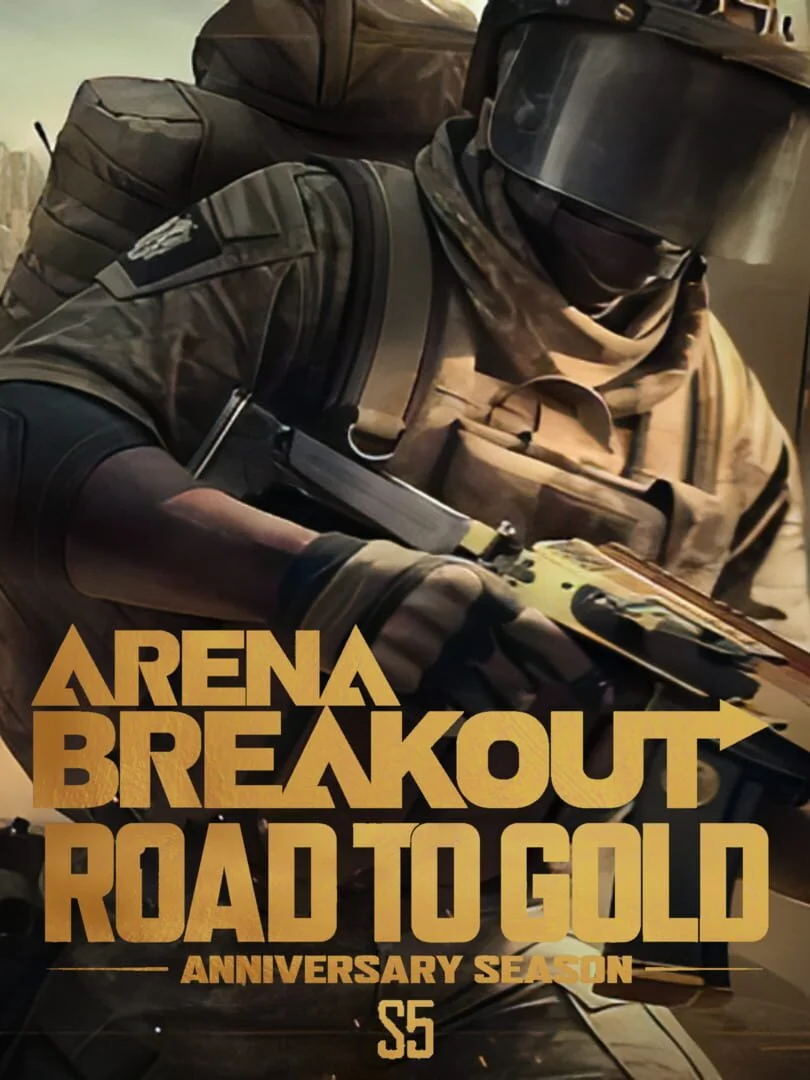
Escape from Tarkov always felt like homework to me. I respect it, but it’s the sort of game that demands a second monitor, spreadsheets, and the patience of a saint. When Tencent rolled out Arena Breakout and basically said, “Yeah, we put that on your phone,” I assumed it’d be a cheap knock-off with auto-aim slapped on top.
I was wrong. Painfully wrong.
Arena Breakout is the first mobile shooter that genuinely made me sit up and think, okay, this isn’t a diet version of anything. The gunplay feels heavier than most console FPS games. The extraction loop – go in, loot, risk everything, get out – works disturbingly well in bite-sized sessions. Suddenly my “quick break” on the sofa turned into, “One more raid, I’m sure I can recover my kit.”
There’s a reason people started calling it the next titan of mobile shooters, and the absurd download numbers back that up. It understood something a lot of mobile devs still miss: you don’t have to treat players like they’ve got the attention span of a goldfish. You can give them systems, tension, and actual loss. Not just a daily login bar to fill.
But here’s the catch – and there’s always a catch. Extraction shooters are already flirting with gambling brain chemistry. You pump time and effort into a run, roll the dice on survival, and maybe you walk out with high-tier loot that makes the next run easier. On mobile, layered with the usual monetization tricks, that thrill gets dangerously close to a behavioural experiment.
Is Arena Breakout a technical and design triumph for mobile? Absolutely. Is it also a sign that we’re more than happy to drag our most compulsive genres into our pockets, to live there next to our banking apps and calendar reminders? Also yes. That duality was 2023 in a nutshell.
Monopoly Go: The Slot Machine You Pretend Is a Board Game
Then there’s Monopoly Go, the game that made me question whether I even know what “playing” means anymore.
When it launched, I bounced off hard. “Where’s the game?” was my first reaction. I was expecting classic Monopoly with a modern twist; what I got felt like a hyperactive casino front-end wearing a cardboard top hat. Tap to roll, watch numbers pop, check some progress bars, hit an event, repeat. It’s Monopoly as interpreted by an overcaffeinated slot machine designer.
And yet, months later, I was still opening it. Daily. That’s the part that bothers me.
Monopoly Go is obscenely slick. The animations are ridiculously good. Dice rolls have weight; big wins explode into showers of banknotes that scratch the same itch as opening an S-tier loot box. Your little token doesn’t just move; it bounces, celebrates, lives. None of that changes the fact that most of what you’re doing is pressing “go” and waiting for the machine to spit out a result – but it feels alive, and that’s enough to keep you hooked.
Call it a game, call it an interactive dopamine dispenser, call it whatever you want. The reality is that in 2023 this thing was a juggernaut. While traditional mobile board game conversions quietly did their thing in the corner, Monopoly Go was out there reframing IP-based games as lifestyle apps. Not “sit down and play for an hour,” but “check in every few hours so you don’t miss the next event.”
And this is where I start calling bullshit on the industry’s favourite excuse: that this is just what players want. No – it’s what happens when you combine obscene polish, a beloved brand, and a design philosophy that treats your time as a resource to be mined. The uncomfortable part is that it works, and 2023 proved it at a terrifying scale.
Honkai: Star Rail and the Gacha That Almost Won Me Back
By 2023, I was firmly in my “I’m done with gacha” era. Genshin Impact had already devoured more of my life than I care to admit, and I was tired of games pretending they weren’t casinos just because the slot machine had anime hair.
Then Honkai: Star Rail showed up and, annoyingly, made a strong case for itself.
Instead of another open-world collectathon, miHoYo went for a big-budget, turn-based RPG built around a space train. On paper it sounded retro, almost quaint. In practice, it looked and felt like a prestige console JRPG that just happened to live on mobile. The combat had genuine tactical depth; the writing was sharper than it had any right to be; the production values were disgusting in the best possible way.
It reminded me that gacha isn’t inherently the problem. The problem is when gacha is an excuse to do the bare minimum everywhere else. Honkai: Star Rail didn’t do that. It felt like a complete game first and an aggressive monetization scheme second, which sadly already made it one of the more respectful gacha titles by default.
But I couldn’t shake the thought that for all its quality, it still lived and died by its banners and pity timers. Even as 2023 gave us this beautifully crafted RPG, it also reminded me that the smartest, most talented teams in mobile are often shackled to a revenue model that reduces their work to “how many pulls can we wring out of you this month?”
The Quiet Heroes: Lost in Play, Usagi Shima, and Par for the Dungeon
Thankfully, 2023 wasn’t just extraction stress and gacha economies. Some of my favourite mobile memories from that year came from games that just wanted to be bought once and loved, or at least didn’t feel like psychological experiments.
Lost in Play hit me right in the Shenmue-coated part of my brain that still believes games can just be about wandering through a feeling. It’s a point-and-click adventure about childhood imagination – no timers, no login streaks, no “buy 1,000 crystals for £8.99.” It worked beautifully on touchscreens, because of course it did; this is the genre mobile was built for. It felt like stepping into a cartoon daydream, solving puzzles at my own pace without a battle pass nagging me from the corner.
Then there’s Usagi Shima, a game that basically says, “Collect cute rabbits,” and somehow that’s enough. It’s the sort of cozy, low-pressure sim that mobile should be swimming in. Not everything needs to be a grind. Not every collection needs a gacha wheel attached. Sometimes you just want to check in, see a new bunny, and feel your blood pressure dip a few notches.
Par for the Dungeon takes the opposite route: chaotic, inventive, and wonderfully stupid in the best possible way. It turns golf into a physics-driven, puzzle-combat hybrid where you’re a sentient golf ball with a bow. That’s the kind of pitch that would die in most corporate meetings, but on mobile it feels right at home. It’s proof you can do weird, smart, self-contained ideas on phones without turning them into content mills.
These games didn’t dominate revenue charts in 2023, but they did something more important for me: they reminded me why I fell in love with portable gaming in the first place. Not because it could emulate PC or console experiences, but because it could deliver small, strange, laser-focused ones.
Meanwhile on the Big Screens: Baldur’s Gate 3, Spider-Man 2, and a Cursed Fishing Trip
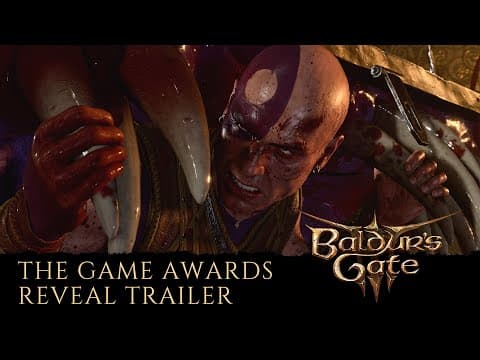
None of this is to say PC and console were slacking in 2023. If anything, they were on a tear. Baldur’s Gate 3 dropped like a meteor, instantly making half the RPGs on my shelf feel ancient. Its systemic depth, the sheer number of outcomes, the way it respected player choice – it was the anti-mobile, in the best way. No stamina bars, no “come back in three hours,” just a massive, finished game that you could drown in.
The Resident Evil 4 remake managed the impossible trick of modernizing a beloved classic without sanding off its personality. Marvel’s Spider-Man 2 showed that yes, open worlds can be tight, focused, and actually fun if you don’t treat them like checkbox generators. It was a strong year to be sat in front of a TV.
But the game that lodged itself into my skull was Dredge. A moody little fishing sim that slowly mutates into something warped and horrifying, it was my 2023 obsession. It’s exactly the kind of mid-sized, weird-idea game that I wish we got more of on every platform. When I later saw it sail onto mobile, alongside ports like TMNT: Shredder’s Revenge and Coromon, it felt like the cross-pollination 2023 had been hinting at all along.
Big-screen epics, indie fever dreams, and mobile experiments weren’t living in separate worlds anymore. They were bleeding into each other. That’s exciting – and it also exposes who actually respects players and who just wants to strip-mine them.
Pocket Gamer’s 20th Anniversary Made 2023 Look Almost… Normal
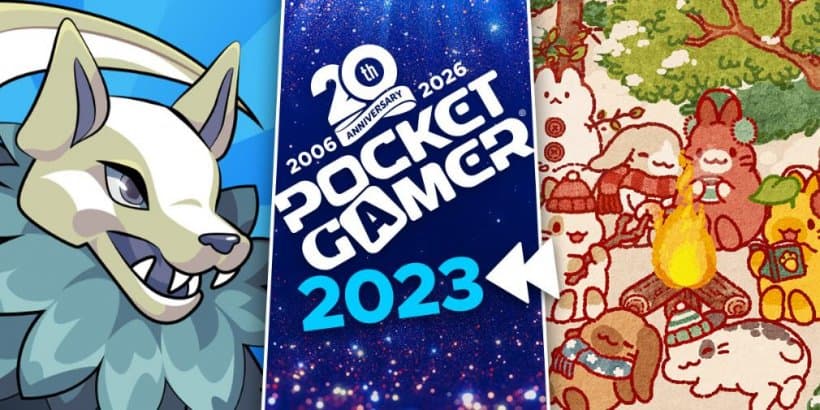
Looking back through the lens of the Pocket Gamer 20th anniversary features, 2023 almost reads like a victory lap. You get this neat highlight reel: Arena Breakout pushing mobile shooters forward, Honkai: Star Rail flexing production values, Monopoly Go printing money, cozy sims like Usagi Shima and inventive oddballs like Par for the Dungeon rounding things out.
It’s a good story. But underneath that celebratory tone, the year was messier. On the business side, the industry was already creaking – studios tightening belts, live-service games being quietly killed off if they didn’t hit impossible targets. The gulf between “what players actually love” and “what executives demand” felt wider than ever.
That’s what makes 2023 such a strange snapshot. On one hand, you’ve got standout Pocket Gamer 20th game picks that show how vibrant mobile can be when it leans into creativity. On the other, you have titles built entirely around retention metrics and monetization funnels, dressed up as harmless board game nostalgia or flashy shooters.
As someone who cares about this stuff maybe more than is healthy, I can’t just clap for the successes without side-eyeing the systems that produced them. 2023 was full of games I loved, but it was also packed with design choices that made me wonder how much further this can stretch before something snaps – and the layoffs and studio closures we’ve seen since suggest we’re already testing that limit.
2023’s Big Question: Did We Win, Or Did the Machines?
When I zoom out on 2023 now, it feels like a trial run for the future we’re currently stuck in. Extraction shooters like Arena Breakout proving that hardcore systems can thrive on mobile. Gacha RPGs like Honkai: Star Rail showing how far production values can go when monetization is treated as gospel. Juggernauts like Monopoly Go blurring the line between game and casino app, and getting rewarded for it.
At the same time, you’ve got indie darlings like Dredge, tender adventures like Lost in Play, and cozy collectors like Usagi Shima quietly reminding everyone that you don’t need a battle pass to be memorable. They don’t shout as loudly, but they linger longer.
For me personally, 2023 forced a choice. I started asking myself not “Is this fun right now?” but “Do I like the kind of player this game wants me to be?” It’s why I can pour hours into a doomed fishing trip in Dredge and feel great, then spend ten minutes in Monopoly Go and come away weirdly hollow despite the fireworks and confetti.
And that’s the tension I still haven’t resolved. 2023 showed that mobile can absolutely go toe-to-toe with PC and console in depth, polish, and ambition. It also proved that the same platform is perfectly willing to turn my downtime into a monetized behavioural loop. The same year that gave me Arena Breakout’s white-knuckle raids and Par for the Dungeon’s joyous nonsense also normalized board games as disguised gacha-lite dopamine feeds.
Maybe that’s just what modern gaming is: brilliant, exploitative, heartfelt, and cynical all at once. When I think of 2023 now, I don’t see a clean win or loss for players. I see a warning shot wrapped inside one of the strongest lineups we’ve had in years, and I’m still not sure whether we’re supposed to be celebrating it or learning from it before the next wave hits.
FinalBoss // Gear
Level up your setup
01Mobile gaming controllerson Amazon→02Top-rated gaming headsetson Amazon→038BitDo controllerson Amazon→Affiliate links · As an Amazon Associate, FinalBoss earns from qualifying purchases.
Want to Level Up Your Gaming?
Get access to exclusive strategies, hidden tips, and pro-level insights that we don't share publicly.
Ultimate Gaming Strategy Guide + Weekly Pro Tips