
Table of Contents (11)
From a broken cult classic to a second shot at greatness
I still remember installing Elemental: War of Magic back in 2010, playing an hour, and watching it implode under its own ambition and 32‑bit jank. It had this wild pitch-fantasy Civilization with dynasties, RPG heroes, and world-shaping magic-but the tech just couldn’t cope. Fallen Enchantress and Sorcerer King salvaged parts of that dream, yet the series always felt like three halves of the same game.
Elemental Reforged is Stardock taking another swing at that original idea: merging the best bits of War of Magic, Fallen Enchantress, and Sorcerer King into one modern 64‑bit package with refreshed 3D graphics, three full campaigns, a new dynasty system, deeper crafting, hundreds of quests and dungeons, and full Steam Workshop mod support. It launched at 19,99 € on Steam (with a discount on top when I grabbed it), so I went in expecting “quirky budget remaster” and not much more.
Twenty‑five hours later, I’ve lost entire evenings to “just one more turn” and have a notepad full of build ideas, mod tweaks, and dumb city names. Elemental Reforged is still old-school, occasionally clunky, and not remotely as slick as your average AAA 4X. But it finally feels like that original vision actually works. If you’ve ever wanted Civilization fused with a chunky tactical RPG, this is dangerously easy to sink into.
Character creation hooked me before I even saw the map
The first 30 minutes set the tone for the whole experience. Before my sovereign even steps onto the map, I’m picking race, faction, magical affinities, profession, talents, and starting kit. It’s not just flavor; the game is ruthless enough that these decisions absolutely define your run.
The world is split between “Kingdoms” and “Empires”-life and light vs death and shadow. Within those you get around a dozen premade civs, each wired with its own quirks. My first serious run was with the Iron Ears of Gilden, basically fantasy dwarves: defensive fanatics who can unlock light plate armor early, craft powerful hammers, and eventually field golems. They’re born turtlers, and the tech tree plus city bonuses really lean into that identity.
I did experiment with creating a custom faction from scratch, and immediately noticed something: the point budget is much tighter than what premade factions enjoy. It’s the game’s way of pushing you to learn with the defaults before you start theorycrafting monsters, and I think that’s fair. On my second night I went back to the faction editor with actual knowledge and suddenly that point limit felt like an interesting puzzle instead of a nerf.
Magic books and professions might be the single most impactful layer. Grabbing at least one rank in Earth magic is borderline mandatory; it unlocks an early enchantment that adds flat production to your capital, and that snowballs hard. For my sovereign I went with the Blacksmith profession (global +25% defense to trained units) and stacked it with talents like Cautious—lets your army retreat with survivors—and Hardy, which gives extra hit points per level plus poison immunity. Those picks ended up saving entire campaigns that otherwise would’ve collapsed.
Once you press start, the camera pulls back and you’re looking at a hex map that’s equal parts Civilization and Heroes of Might & Magic. Resource nodes, roaming monsters, quest markers, hidden dungeons. It’s not the prettiest 4X around, but it’s readable and, more importantly, absolutely loaded with things to poke at.
City management is basically its own strategy game
Elemental Reforged does something sneaky: it makes your choice of starting location genuinely dramatic. Every possible city site has a “Radiance” value—think of it as how much magical infrastructure it can support. Radiance governs how many city-wide enchantments you can maintain there. Higher Radiance equals more buffs and more flexibility.
My best start so far was a tile with 2 Radiance, adjacent wild grain for food and a crystal crag for arcane gear. With an early production enchantment plus a mana-boosting spell slotted into those Radiance slots, that city exploded into a powerhouse. In the run before that, I stubbornly settled on a mediocre 1 Radiance tile with no special resources. Ten turns later I was mired in low output, starving for mana, and I understood why so many veterans recommend restarting bad maps instead of trying to salvage them. The game doesn’t pity slow openings.
Every city levels up over time and then you’re forced to specialize: Fortress, Conclave, or Town. Fortresses buff trained units and unlock better military infrastructure; Conclaves focus on magic, research, and shard output; Towns are your gold and population engines. With my Iron Ears, going heavy on Fortresses made sense—I wanted elite, heavily-armored stacks and walls that turned sieges into meat grinders. On a later run as a more magic-focused faction, I tried three early Conclaves instead, and the whole tempo of the campaign changed. Suddenly spells were my real army.
Then there’s unrest. Taxes, distance from your capital, and sheer number of cities all pile up into a malus that slaps your production. You can quell it by stationing your sovereign in a city, but that means they’re not out exploring, leveling, and grabbing loot. I had one memorable moment where cranking taxes to “High” for five turns to rush a wonder nearly caused a civil meltdown across my empire. Watching my queues crawl to a halt because my people hated me was a good reminder: in this game, greed is extremely visible on the map.
City-building never becomes pure routine. Placement of buildings, choice of specialization, where you spend your Radiance slots, when to risk another settlement at the cost of higher unrest—it all feels like a grounded tug-of-war between snowballing and overreaching.
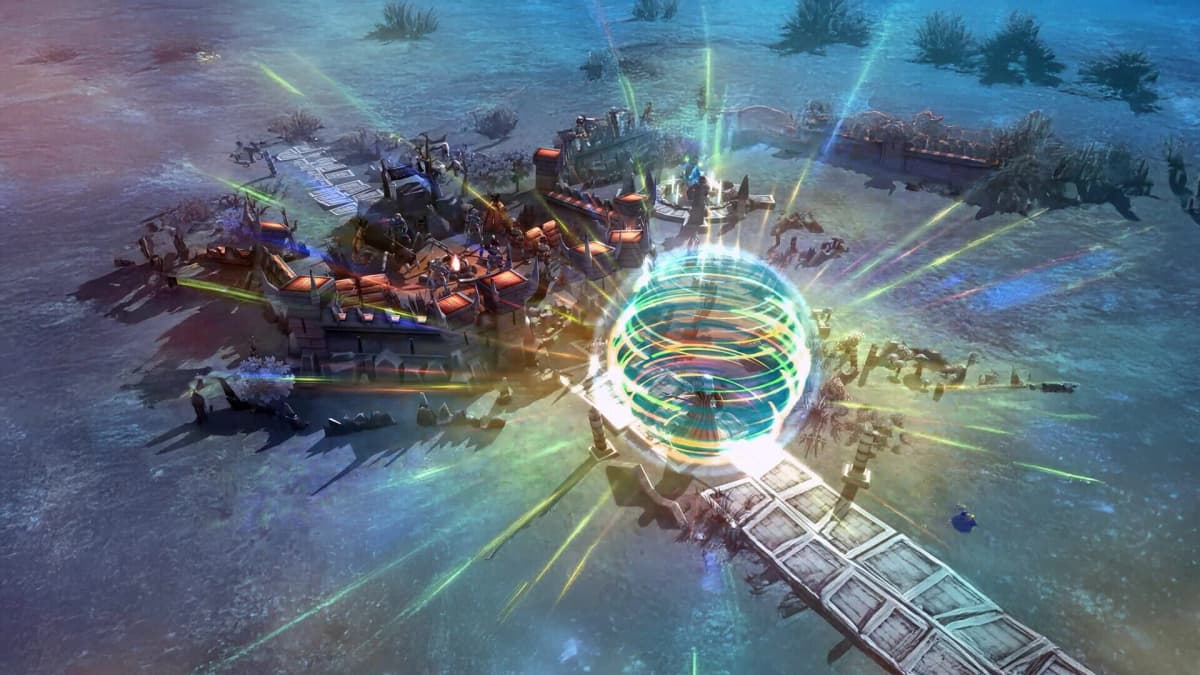
Turn-based battles: simple presentation, quietly tricky decisions
Once armies clash, the camera drops into a grid-based, turn-based tactics layer. It’s not as complex as something like XCOM or Fell Seal, but there’s enough nuance that I stopped auto-resolving pretty fast.
The whole system revolves around initiative. Units with higher initiative act sooner and more often across a round, which makes light, quick troops frightening if you underestimate them. Weapons matter more than I expected too. A simple sword unlocks retaliatory counterattacks if you end your turn in a defensive stance; enemies that hit you eat damage back. Swapping that sword for a heavy hammer gave my sovereign huge burst damage but removed the free counter hits. My entire frontline strategy changed when I did that.
My typical opening pattern on higher difficulties became: move melee forward into partial cover, defend to stack armor and enable counters, use archers and casters to soften priority targets, then let enemies kill themselves rushing my wall of shields. When it goes right, you end battles with more health than you had any right to keep.
The enemy roster has more personality than the visuals suggest. Reavers—dagger-wielding raiders with poisoned blades—do bonus damage against male heroes, move fast, and have their own retaliation. Three of them jumping my lone champion on a forest map turned into a dance of kiting, terrain abuse, and desperate potion chugging. Lurks are another nasty type: demonic bruisers with huge defense, immunity or resistance to poison, and a weakness to lightning. The first time I fought them with a poison-specced party I might as well have been tickling them; swapping to lightning magic on my next attempt completely reversed the matchup.
It’s not a cinematic system—animations are basic, attacks don’t have the punch of a modern tactics game—but the rules underneath are solid. Line-of-sight, initiative loops, weapon effects, unit traits, and hero spells layer into engagements that can be surprisingly tense, especially when a champion death means losing gear and levels you’ve invested hours into.
Dynasties, quests and campaigns: the RPG heart of Elemental
Where Elemental Reforged really separates itself from more traditional 4X games is how personal everything becomes. Your sovereign isn’t just a leader portrait; they have a bloodline. Through the new dynasty system, they can marry, have children, and pass traits down into future heirs.
In my longest sandbox game, my starting queen married a rival champion I’d hired, and their first child inherited her Earth magic and his insane initiative bonus. By the midgame, that kid was leading a cavalry stack that moved before almost anything else on the field. Watching that bloodline evolve over 150+ turns gave the campaign a sense of continuity I rarely feel in this genre. When my original queen finally died, handing the crown to her hyper-agile daughter felt like a genuine story beat, not a menu change.
The world backs that up with content. Reforged pulls from all three Elemental-era games, so the map is littered with points of interest: ruins to delve, shrines to cleanse, wandering monsters to tame or slay, recruitable champions, story vignettes. There are hundreds of quests and over 250 monster types, and even if you only see a fraction in one run, the density keeps exploration rewarding.
On top of the sandbox, you get three story-driven campaigns: a prelude-era tale, the Fallen Sorceress arc, and the Legendary Heroes story. I played through the first one entirely and dipped into the others. They’re not Bioware-level narratives, but they do a solid job of framing the world’s history and teaching mechanics via bespoke scenarios. One mission that stuck with me forced me to play aggressively with a fragile early shard network, teaching me how vulnerable overextended magic economies can be when a rival starts shattering your nodes.
On top of the sandbox, you get three story-driven campaigns: a prelude-era tale, the Fallen Sorceress arc, and the Legendary Heroes story. I played through the first one entirely and dipped into the others. They’re not Bioware-level narratives, but they do a solid job of framing the world’s history and teaching mechanics via bespoke scenarios. One mission that stuck with me forced me to play aggressively with a fragile early shard network, teaching me how vulnerable overextended magic economies can be when a rival starts shattering your nodes.
🎮 Get This Game at the Best Price
Compare prices instantly and save up to 80% on Steam keys with Kinguin — trusted by 15+ million gamers worldwide.
*Affiliate link — supports our independent coverage at no extra cost to you
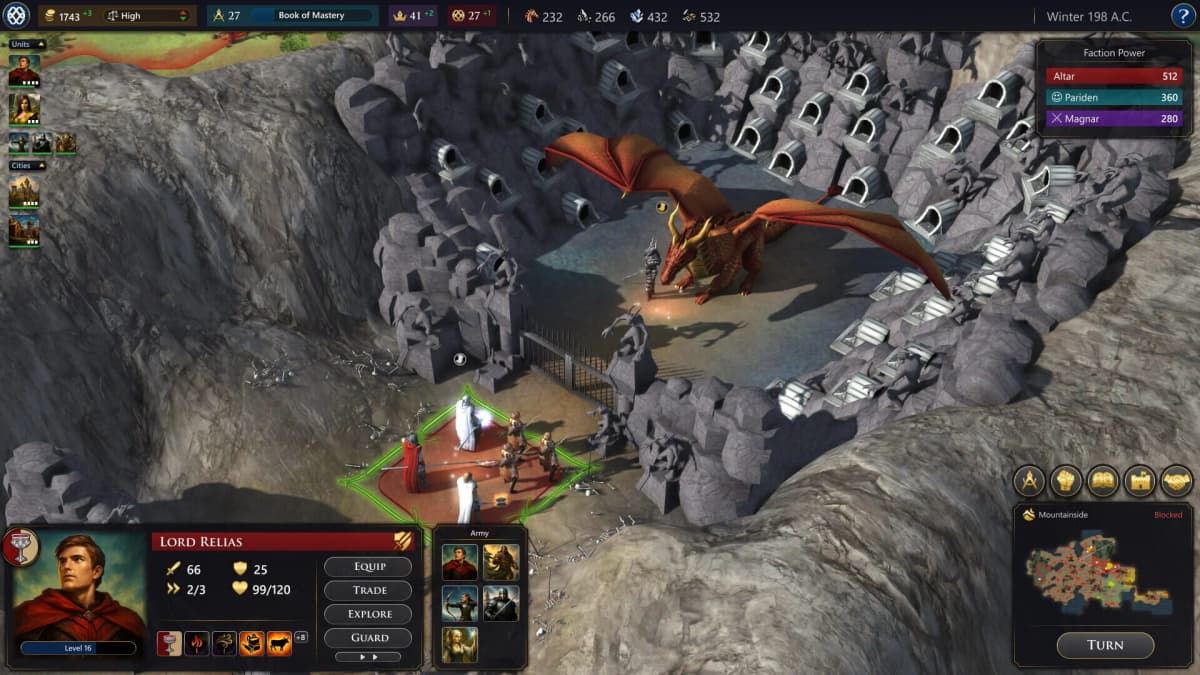
If you’re the kind of 4X player who usually ignores campaign modes, these are better than they look. They feel more like big Heroes of Might & Magic scenarios than stiff tutorials, sprinkled with unique maps, scripted events, and handcrafted fights.
Crafting, loot, and that “just one more dungeon” spiral
Loot and crafting are where the Sorcerer King DNA really shines through. Almost every fight and dungeon crawl spits out ingredients: wolf pelts, demon horns, murky rubies, obscure herbs. At first they’ll just clutter your inventory, but research the right technologies—Leatherworking, Advanced Smithing, Arcane Forging—and suddenly that junk turns into potions, armor sets, and enchanted blades.
It’s not a hyper-complex crafting system with branching trees and unique models for everything, yet it hits the right psychological notes. Finding a crystal vein near one of my cities and then watching my blacksmith’s menu expand into magical gear felt significant. Equipping my sovereign with a self-forged lightning greatsword and sending her back into a dungeon that had previously wrecked my party is one of those satisfying 4X-RPG crossover moments this series was always chasing.
Because the tactical battles are relatively quick, it’s dangerously easy to fall into a loop of “I’ll just clear that one lair for materials,” then “well, there’s a ruin right next to it,” and before you know it, your city queues have finished three buildings and it’s 2 AM. Explorers and heroes aren’t just scouts; they’re your crafting pipeline and your path to relics that fundamentally change what your faction can do.
Terraforming, shards, and the feeling of reshaping the world
One of the most satisfying systems ties directly into the game’s name: elemental shards. These are scattered across the map and aligned with elements like Earth, Fire, Air, and Water. Control them, and your magic schools get stronger. But they’re not just passive buffs; they tie into newfound terraforming spells.
In one campaign, a chunk of the map between me and a rival empire was a corrupted wasteland. Settling there meant miserable growth and awful yields, yet strategically I needed a forward base. After pushing my shard network and research for a while, I unlocked the ability to cleanse and reshape that terrain. Watching sickly tiles shift into lush farmland and productive ground over several turns gave my expansion actual visual weight. The world isn’t just a backdrop; your spellbook can literally redraw it.
This isn’t as granular as a full terraforming sim—you’re not sculpting every hex by hand—but when combined with city placement and shard hunting, it makes the strategic layer feel more alive than the typical “numbers on tiles” approach.
Modding, 64‑bit stability, and performance on PC
One of my biggest fears, given the history of War of Magic, was stability. So far, Elemental Reforged has behaved far better than I expected. The shift to a 64‑bit engine means campaigns with big maps and lots of factions don’t buckle in the late game like the older titles tended to do.
I played on a mid-range PC (Ryzen 5, 16 GB RAM, RTX 3060 at 1440p). On medium-high settings, the game sits between 90-140 fps on standard maps and only dips a bit in huge 20-faction sandboxes when the AI is crunching turns. Load times are snappy once assets are cached. I had a couple of minor UI glitches—a quest marker not clearing until I reloaded, a tooltip mentioning an old item name—but no crashes.
The real star here, though, is mod support. Everything under the hood is exposed via XML files in a “Game Core” folder, and there’s Steam Workshop integration on top. Within my first weekend I had subscribed to a balance mod that tweaks some of the more absurd early-game monsters, and I’d hacked together my own custom armor set by copy-pasting and adjusting stats in the XML. If you ever dabbled in modding Fallen Enchantress, this feels like the grown-up, more accessible version of that toolkit.
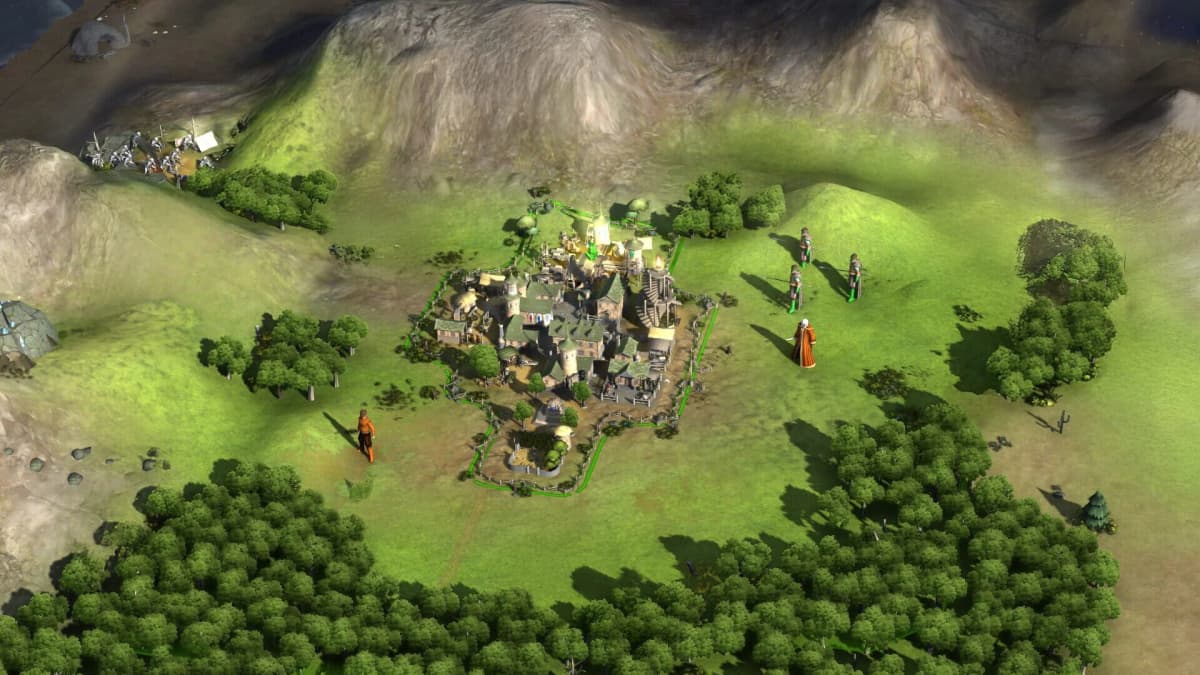
The one caveat: 3D assets are still on the old pipeline, so adding completely new models is not newbie-friendly. But for rules tweaks, new traits, spells, factions, items, or total conversions based on reproportioned existing art, the game is wide open. Combined with the sturdier engine, it feels like a long-term platform, not just a one-off remaster.
Where Elemental Reforged still stumbles
For all its improvements, this isn’t some clean, fully modern reboot. You can feel the 2010s DNA in a few places, sometimes charming, sometimes less so.
The onboarding is only okay. There are tooltips and hints, but big concepts like Radiance, dynasty optimization, or the true cost of overexpanding aren’t explained as clearly as in something like Civilization VI or Endless Legend. My first couple of runs were half learning, half flailing. If you don’t enjoy digging through wikis and experimenting, the early hours may feel overwhelming.
Visually, it’s very much a “remastered” game rather than a new showpiece. The new 3D engine cleans things up nicely compared to the old Elemental titles: models are sharper, lighting is better, and the higher resolution assets make units and terrain readable. But if you stack it against recent 4X games, it looks dated. This is the kind of game you alt‑tab from, not one you screenshot to flex your GPU.
The UI gets the job done but still has a bit of that Stardock spreadsheet vibe. Lots of numbers, sometimes tiny icons, context menus that take a moment to parse. After a few hours my brain adjusted and I was cruising, yet I can see less patient players bouncing off the interface before they hit that comfort point.
There are also some loose threads. Certain text strings clearly reference older item or material names, and a couple of campaign missions feel like they could use another pass on pacing. Stardock has talked about ongoing support, and given their history of patching their strategy games for years, I buy that—but you’re still buying into something that’s actively evolving.
Who this game is really for
After living with Elemental Reforged for several long sessions, I wouldn’t recommend it to absolutely everyone, even though I’m pretty taken with it.
- If you love classic 4X games like Civilization, Master of Magic, or Age of Wonders and don’t mind a bit of roughness in exchange for depth and weirdness, this is almost tailor-made for you.
- If the idea of designing a bloodline, min-maxing hero builds, crawling dungeons for materials, and editing XML files for your own balance tweaks sounds fun, you’ll sink a scary number of hours here.
- If you’re completely new to the genre and want something sleek and welcoming, or you need modern AAA presentation to stay engaged, this probably isn’t the right starting point.
- If you bounced off the original Elemental games because they were unstable or half-baked, Reforged is the first time I’d say it’s worth giving the concept another chance.
FinalBoss // Gear
Level up your setup
01Top-rated gaming headsetson Amazon→02High-refresh gaming monitorson Amazon→03Gaming chairson Amazon→04Discounted game keyson Kinguin→Affiliate links · As an Amazon Associate, FinalBoss earns from qualifying purchases.
Want to Level Up Your Gaming?
Get access to exclusive strategies, hidden tips, and pro-level insights that we don't share publicly.
Ultimate Reviews Strategy Guide + Weekly Pro Tips