
39 Years Later, a Mario Speedrunner Unearthed 20 “New” Lost Levels — Here’s Why That’s Wild
Game intel
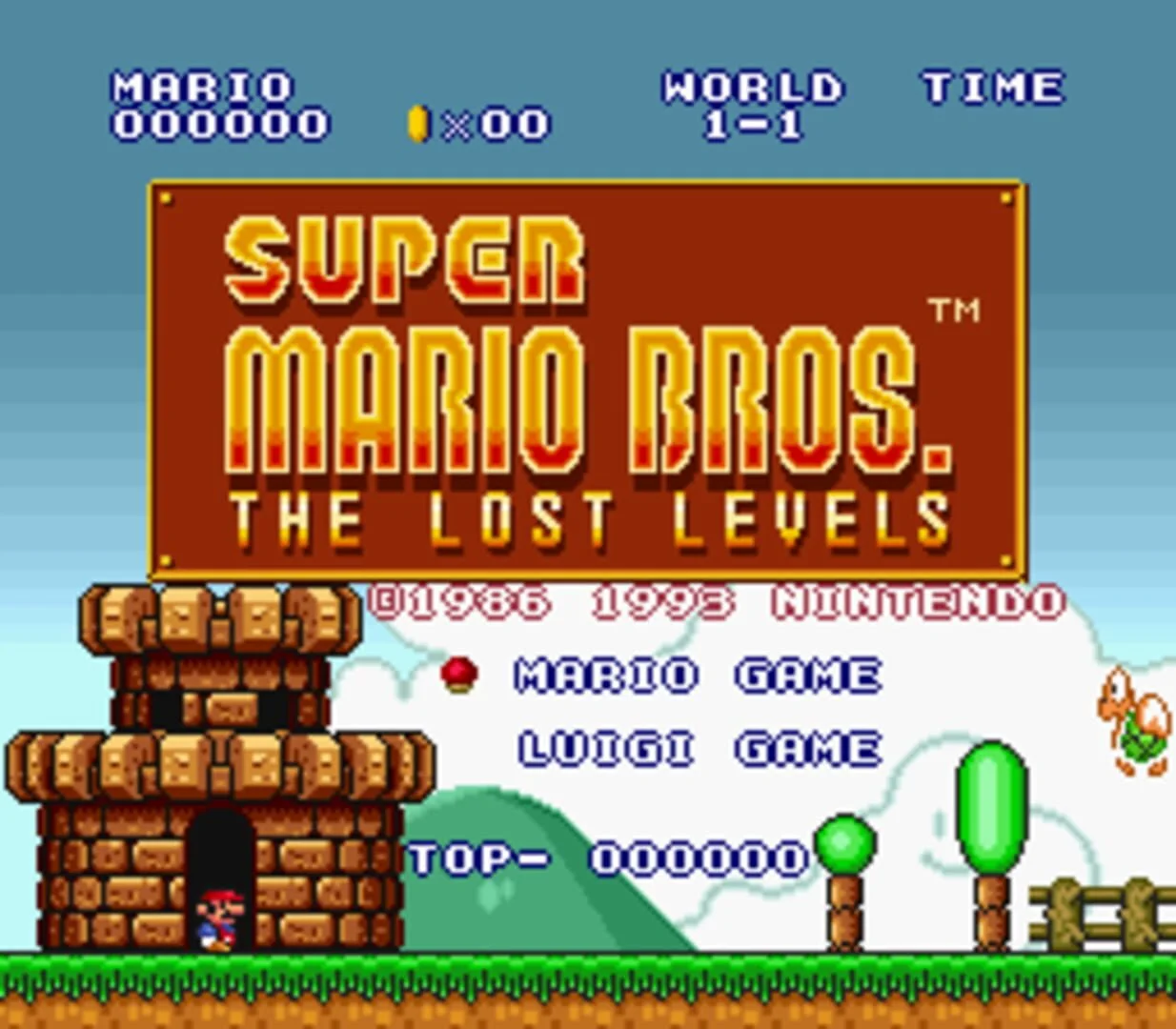
Super Mario Bros.: The Lost Levels
A remaster of the original Super Mario Bros. 2 (previously only released in Japan), released exclusively as part of the Super Mario All-Stars bundle.
Why this discovery actually matters
This caught my attention because I grew up chasing warp pipes in Super Mario All-Stars and thought the Minus World mystery was as weird as Mario got. Turns out, not even close. Veteran speedrunner Kosmic just dug up around 20 hidden “levels” in Super Mario Bros.: The Lost Levels by abusing pipe transitions in the All-Stars version. These aren’t developer-made secret stages-they’re the kind of glitchy limbo that only appears when you push 8-bit logic into 16-bit territory and win. And it rules.
- Kosmic used ultra-precise inputs while entering pipes to force the game to load unintended stage data in All-Stars’ port of The Lost Levels.
- He surfaced a string of areas labeled B-4 through B-8, then B-A through B-E, and beyond-some playable variants, others full-on corrupted zones.
- One area trapped him in a literal brick prison; the run eventually crashed after ~20 discoveries.
- This likely won’t upend mainstream speedrun categories, but it’s a big deal for glitch history, TAS work, and Mario archaeology.
Breaking down the announcement
Super Mario Bros.: The Lost Levels is the “real” Japanese Super Mario Bros. 2, infamous for its brutal difficulty. Its All-Stars version on SNES gave the game a spit-shine and some under-the-hood tweaks. The original Super Mario Bros. had the legendary Minus World-an endlessly looping underwater purgatory accessed via a wall-clip pipe trick. The Lost Levels mostly patched that method, but as Kosmic shows, the All-Stars port still has a crack in the armor if you mess with the pipe entry at just the right sub-pixel and frame timing.
By nudging Mario inside the pipe as the next area is still handshaking into existence, you can desync what the engine thinks it should load. The result? Odd room indexes, mis-pointed tilemaps, and stage headers the game interprets as worlds like B-4, B-5, B-6, B-7, B-8, then B-A through B-E, and beyond. Most of these “new” spaces are stitched together from existing chunks—playable enough to move through but clearly not authored. Others are broken to the point of comedy: invisible solids, wrong gravity, and the aforementioned brick-cell that marooned Kosmic until he engineered an escape.
He ultimately chained roughly 20 of these areas before All-Stars gave up the ghost and crashed. That capstone feels perfect: you’re not supposed to be there, and the game finally notices.
Why did it take 39 years?
The short version: almost nobody plays The Lost Levels like this, and the method is viciously precise. The long version: the All-Stars port behaves differently from the Famicom Disk System/NES originals, the inputs require frame-perfect control of Mario’s position while inside a pipe, and speedrunners have historically focused on the original SMB for glitch fame. Lost Levels just has a smaller, masochistic fanbase. As Kosmic put it, “Fewer people have played Lost Levels. The inputs are complex and it only works in the All-Stars version—this gets technical. But the main reason? It’s just very, very hard.”
That tracks with the broader pattern we’ve seen across classic platformers: the bigger the community, the sooner the low-hanging glitches get picked clean. It took a thriving ecosystem to standardize tricks like SMB1’s wall clips or Super Mario 64’s BLJs. Lost Levels never had that same scale—yet it still had rabbits in the hat, waiting for someone patient (and stubborn) enough to coax them out.

What this changes for players and speedrunners
For most players, this is gaming archaeology—cool to watch, not something you’ll replicate between dinner and bedtime. If you’ve got Super Mario All-Stars on the Switch Online SNES app or original hardware, you can try, but input timing on emulation and modern controllers may make this even nastier. Don’t expect a new casual route or a secret world tour; these rooms are more museum exhibit than playground.
For speedrunners, the impact is nuanced. Mainline Any% and Warpless categories typically ban or segregate hard-crash and wrong-warp tech that trivializes the game or hinges on hardware quirks. Still, discoveries like this often spark new side categories, TAS experiments, and deeper reverse-engineering. At minimum, it documents that All-Stars’ room-loading logic can be bent in ways we didn’t fully map. That alone will send a few analysts diving into disassemblies and RAM watch.
And let’s be honest: Mario glitches are part of the culture. The Minus World became playground mythology for a reason. These B- worlds feel like the sequel—a reminder that even the most picked-over classics can surprise us if someone keeps pushing.

The real story: persistence beats “finished” games
This isn’t Nintendo stealth-dropping content. It’s the community proving, again, that “finished” is a myth in retro game engines. When players iterate for decades, new pathways appear—sometimes literally. Whether you’re here for the technical wizardry, the history, or just the joy of seeing Mario clip into forbidden zones, Kosmic’s find is a win for the curious.
TL;DR
Speedrunner Kosmic forced Super Mario All-Stars: The Lost Levels to cough up roughly 20 glitched “B-” stages via hyper-precise pipe-entry manipulation. Most are corrupted variants or unplayable limbo, but the discovery is a big moment for Mario glitch lore—even if it won’t overhaul standard speedrun categories.