
Cozy games work best when the map feels like an invitation rather than a to-do list. That is why flight matters: it cuts out tedious backtracking, turns distant landmarks into reachable ideas, and lets players set the pace. Two picks here are pure birds-in-the-sky freedom, one turns cape-powered gliding into a genuine exploration tool, and the fourth, Promise Mascot Agency, earns its place by proving that a bizarre little truck can create the same liberated feeling from the ground.
This ranking values movement that makes wandering fun, whether that means banking over a coastline, gliding between peaks, or launching a kei truck off a mountain switchback because a collectible looks temptingly close. Purely decorative wings and fast-travel menus need not apply. What matters is whether traversal changes the mood of the whole game. If movement makes curiosity easier to follow, the game gets a serious boost in the cozy department.
Table of Contents (8)
Cozy here means freedom, not a chore list in softer lighting
“Cozy” is one of those words that can mean almost anything in games, which is both useful and slightly annoying. For some players it means farming, decorating, and making soup with suspiciously photogenic vegetables. For others it means low stakes, no timer breathing down their neck, and enough room to poke around without being punished for getting distracted. This list leans hard into that second definition.
The throughline here is freedom. In a life sim, that freedom might come from building at your own pace. In a puzzle game, it might mean freedom from strict time pressure. In an exploration game, it often comes from movement itself. The less a game treats travel like dead air between the interesting bits, the more likely I am to settle into it. Flying helps because it collapses friction. A cliff stops being a problem. A distant tower stops being a commute. A weird shape on the horizon stops being something to mark for later and becomes something you can go inspect right now.
That is also why this is not a list of games with wings as decoration. A nice double-jump with feathers on it is not flight. A fast-travel screen that skips the map altogether is definitely not flight. I wanted games where airborne movement or flight-forward traversal is part of the pleasure loop: the thing you do because it feels good, not just because the quest marker told you to head northeast.
There is one intentional rule-breaker. Promise Mascot Agency does not offer true free-flight at all, and pretending otherwise would be nonsense. It is here because its traversal still captures the same emotional payoff: low-pressure movement, playful route-making, and the joy of deciding that the long way around suddenly looks like the better idea. If cozy exploration is about making the world feel available, then a tiny truck with a boost thruster absolutely deserves an argument.
Not every airborne game solves the same itch
Another useful distinction: “flying” is not one single fantasy. Sometimes it means complete freedom from the first minute, with no upgrade gate between you and a good swoop. Sometimes it means momentum, altitude control, and that lovely moment where you pull out of a dive at the last second and feel smarter than gravity. Sometimes it is closer to gliding, where airtime depends on energy, currents, or clever route planning rather than unlimited hovering. All of those can work for cozy exploration if they reduce friction and reward curiosity.
That is why this list is arranged less like a purity test and more like a recommendation shelf. Feather is the clearest “go be a bird and stop checking menus” answer. Fugl adds more physicality and a little more chaos to the act of roaming. Sky: Children of the Light sits closer to the gliding end of the spectrum, but its cape-powered movement still makes the sky central to exploration. Then there is Promise Mascot Agency, which swaps real flight for a road-rocket kei truck and somehow lands in the same emotional postcode anyway.
If that sounds like a broad church, good. Cozy players are not all chasing the same vibe. Some want silence and lift. Some want a toybox. Some want a social world that feels gentle rather than demanding. Some want to launch a truck off a hill because a collectible is sitting there like it knows exactly what it is doing. Respectfully, all valid.
1. Promise Mascot Agency

Promise Mascot Agency is the detour, and it is too weirdly confident to leave off the list. Kaizen Game Works’ open-world management adventure launched on 10 April 2025 for Steam, PlayStation 5, Xbox Series X|S, Nintendo Switch, and Epic Games Store. Its $24.99 price on Steam, Xbox, and PlayStation as of September 2026 buys mascot jobs, visual-novel storytelling, simplified card-battle support during assignments, and Kaso-Machi island’s most ridiculous mode of transport: an upgradeable kei truck.
To be clear, the truck is not true flight. That distinction matters, especially in a roundup built around airborne movement. Promise Mascot Agency is here as the grounded exception. What makes it fit is how gleefully it blurs the line between driving and accidental aviation. The truck’s boost thruster can gain altitude, and the handling lets players bank into turns, so traversal becomes a series of bad ideas with excellent outcomes. Launching off a switchback into a nose dive to land directly on a collectible is exactly the kind of story this game is built to generate.
That is the key. The map does not feel like a route to optimize. It feels like a dare. You roam between mascot jobs, upgrades, and errands, but the act of getting there keeps stealing the spotlight. A hill is not scenery; it is a runway. A shortcut is not a line on the minimap; it is something you discover by deciding that guardrails are more of a suggestion. That gives the whole island a buoyant, low-pressure energy even when you are technically doing management work.
The cozy appeal comes from freedom, not soft colors. Run a mascot agency, wander the island, upgrade the truck, then take the long way because Kaso-Machi looks more interesting from the next hill. There is a demo available if you want to test the tone first. Players chasing literal wings should treat this as the wildcard it is. Players who want an open world with personality, momentum, and a very strong “what if I tried this?” impulse should not dismiss it just because the soaring happens in short, chaotic bursts instead of clean aerial arcs.
2. Feather
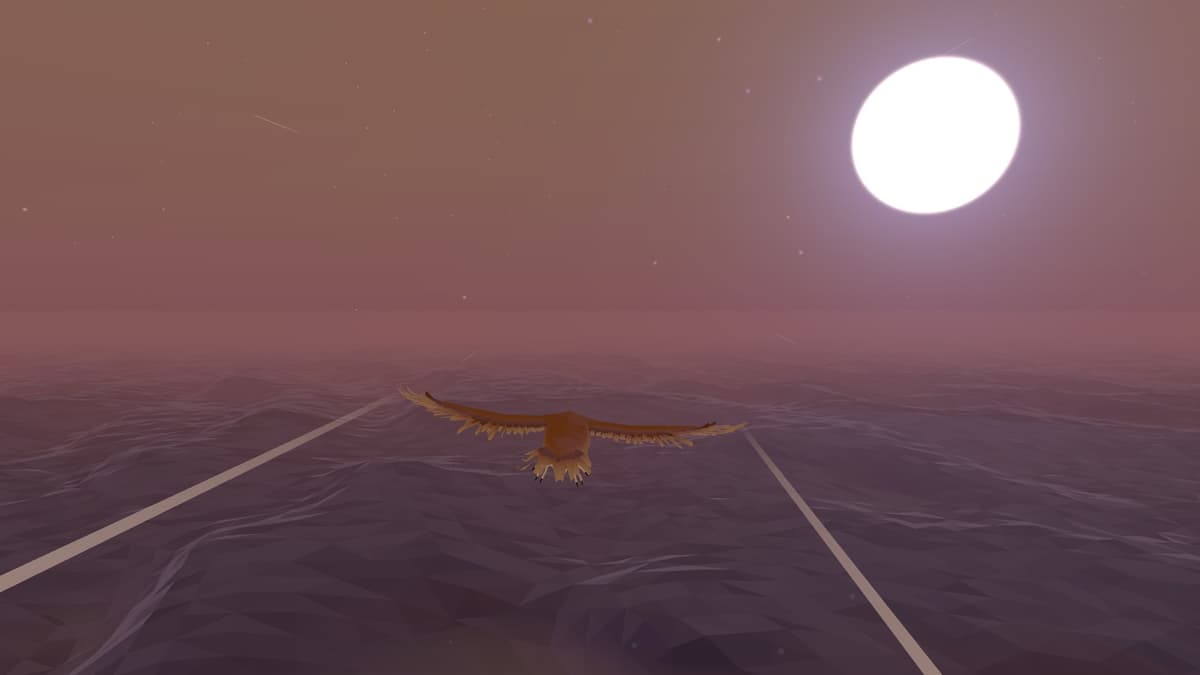
Feather understands a truth too many exploration games miss: flying feels better without somebody barking an objective at the top of the screen. You are a bird in a broad island landscape, free to take off whenever you like, settle on a cliff, skim above water, and follow whatever catches the eye. That immediate access matters. There is no sense of earning the fun later. The movement is the point from the moment you start.
That is what makes it one of the cleanest recommendations for anyone who wants cozy exploration without extra scaffolding. The controls are the game’s real conversation with the player. Climb for a better view, dip low over a shoreline, wheel back toward a ridge because the light looks good from there, then land for a second and launch again. It is not asking you to prove yourself first. It simply hands you the sky and trusts you to find your own rhythm inside it.
The shared online space adds a quiet spark of life without turning the whole thing into a social obligation. Spot another bird circling a ridge, join for a minute, then disappear over the horizon. Perfect. That tiny possibility of encounter helps the world feel inhabited, but it never overpowers the solitary pleasure of movement. You are still free to treat the whole thing like a private wandering session with occasional passing silhouettes.
This is the recommendation for players who want the act of flying itself, stripped of combat pressure and busywork. Feather does not need a giant map or elaborate progression to feel expansive. A good climb, a clean glide line, and the freedom to change direction for no reason are enough. If your version of cozy means minimal friction and maximum drift, this is the purest answer on the list.
3. Fugl
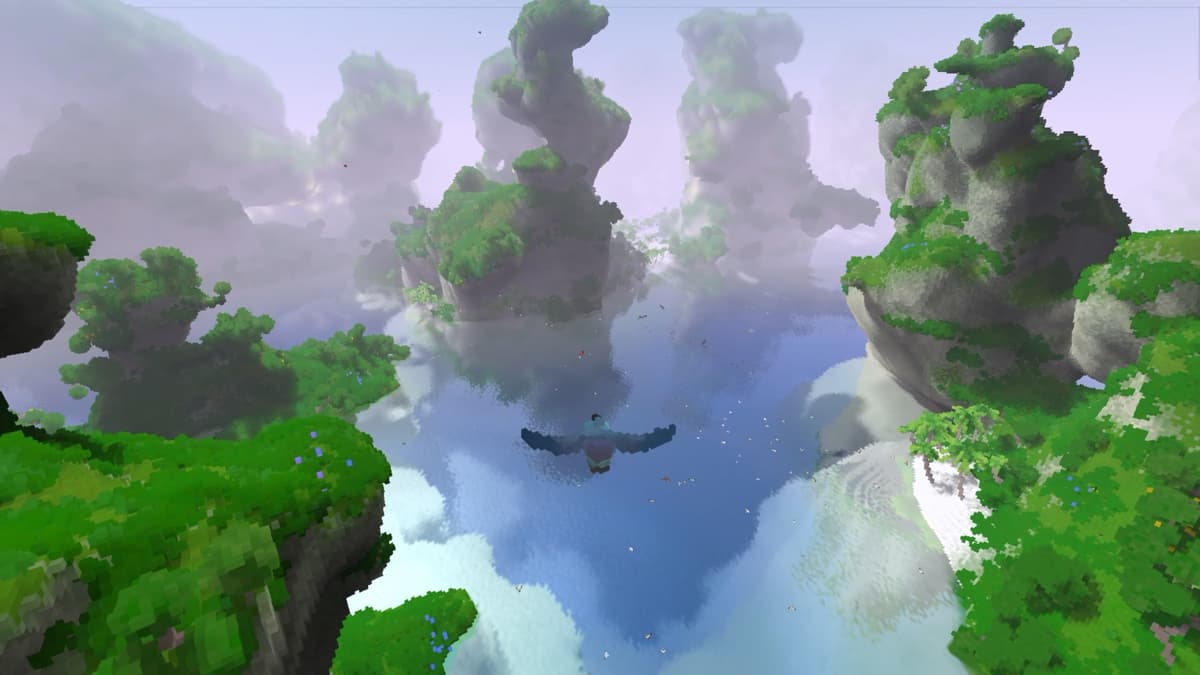
Fugl is the most openly playful entry here. Its bird-flight sandbox gives exploration a physical edge: take off, dive, pull up at the last second, and carve across wide landscapes with the satisfying sensation that momentum matters. That one quality does a lot of heavy lifting. The world stops feeling like a passive backdrop and starts acting like something you can really move through, test, and toy with.
Plenty of relaxed exploration games are happy to give you a pretty place and then keep your movement strangely timid. Fugl is more generous than that. Flying is not a reward saved for the final stretch; it is the baseline. That changes the mood completely. A mountain is no longer a barrier with a prescribed route around it. It is a launch point, a perch, a near miss, or something to thread past at speed because you felt like seeing whether the angle would work.
That slight increase in physicality is why Fugl earns a spot alongside gentler favorites rather than getting filed under “toy for chaos gremlins only.” Yes, it has more bite than Feather. Yes, it invites a little showing off. But the coziness comes from the same place: the game lets wandering stay interesting without converting it into admin. You are not grinding for permission to enjoy the map. You are already enjoying it, and the systems mostly exist to give that freedom shape.
Fugl suits anyone whose ideal cozy session involves a little velocity. It is less meditative than Feather, but that extra energy is exactly why it belongs above many prettier, more restrictive chill-out games. Some players want serenity. Others want serenity with a dangerously late pull-up. Both are respectable tastes, but only one of them points directly here.
4. Sky: Children of the Light
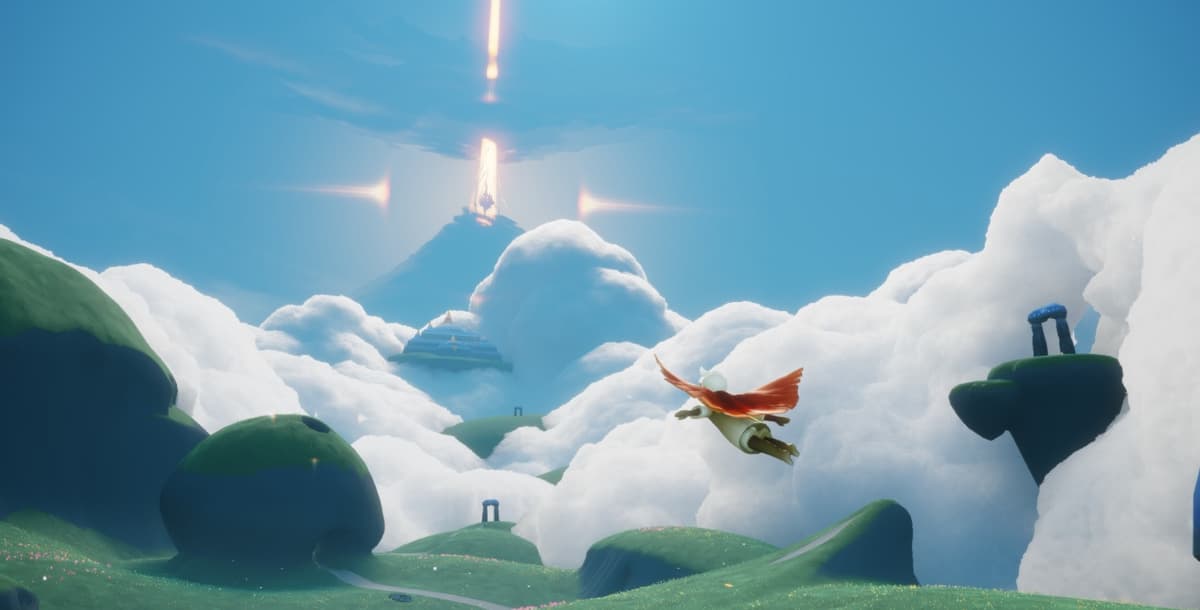
Sky: Children of the Light is the closest this list gets to the gliding side of the spectrum, and that is worth saying plainly. Its cape-powered movement is not the same fantasy as being a bird in open air with no strings attached. Even so, it absolutely belongs in a cozy exploration conversation because the sky is still where much of the game’s magic happens. Players climb into the air, glide through cloud-filled spaces, and use height to uncover routes that would be invisible from the ground.
The best stretches turn traversal into a small piece of choreography: flap for altitude, catch a current, then aim for the next distant structure. That sequence is simple, but it gives movement a lovely sense of intention. You are not merely crossing empty space. You are reading the environment, managing your line, and treating verticality as part of the world’s language. In a good area, reaching the next place feels less like commuting and more like participating in the scenery.
There is more friction here than in the three games above, and that is part of the trade. Flight relies on wing energy, so airtime has limits. The game’s seasonal structure can also create a faint itch to keep up if you let it. The trick is not to let it. Approached on its own terms, Sky remains wonderfully low-pressure: explore at a relaxed pace, help another player through a difficult section, and treat the air as a place to inhabit rather than a route to optimize.
This is the best fit for players who want their peaceful movement to carry a little emotional weight. It is less about unrestricted free-flight than Feather or Fugl, but its cape-powered gliding creates some of the most memorable shared traversal on this list. The silence between destinations does a lot of the work, and Sky is smart enough to leave room for it.
How these four split the cozy-traversal fantasy
What I like about this group is that all four games answer the same question differently: how do you make getting from one place to another feel like the reward instead of the tax? None of them solve it through raw map size or collectible overload. They solve it through feel.
Feather is the cleanest expression of pure release. It is for the player who wants to boot something up and be in motion almost immediately, with as little friction as possible between curiosity and action. You see a ridge, you head toward it. You spot water, you sweep low over it. That minimalism is not emptiness. It is restraint, and it lets flight carry the whole experience.
Fugl targets a slightly different temperament. It still values freedom, but it adds enough physical punch that roaming feels mischievous rather than purely serene. If Feather is about surrendering to the landscape, Fugl is about testing what the landscape can do for your momentum. Cozy, in that context, does not mean stillness. It means permission to play without pressure.
Sky: Children of the Light uses movement more ceremonially. Because wing energy and cape-powered gliding shape how long you can stay airborne, the routes themselves become part of the atmosphere. You are not only deciding where to go; you are deciding how to hold altitude, where to angle next, and when to trust the environment to carry you. That slight constraint gives its exploration a different flavor from the instant freedom of the bird games. Less sandbox, more flow state.
Promise Mascot Agency, meanwhile, wins on sheer personality. It is the reminder that “cozy exploration” does not have to look delicate. Sometimes it looks like doing agency errands in a very small truck that has no business behaving like that. Its movement is not elegant, but it is deeply freeing because it turns the world into a playground of impulses. Go there. Try that hill. Maybe this stupid jump works. The answer is often entertaining even when it is technically no.
That range matters because cozy is often flattened into a visual style when it should really be treated as a relationship between player and pressure. A game can be bright, cute, and exhausting. It can also be odd, scrappy, and incredibly relaxing because it lets you move at your own speed. All four picks understand that in one way or another. The air, or in one case the almost-air, does the heavy lifting.
Which one should you play first?
If you are standing in front of this list wanting a practical answer rather than a philosophy lecture, here is the fast version.
- Start with Feather if you want the least resistance between you and the core fantasy. It is immediate, airy, and refreshingly uninterested in turning your downtime into homework.
- Pick Fugl if “cozy” for you still leaves room for speed, dives, and a bit of sandbox swagger. It is the one that feels happiest when you treat flight like a toy.
- Choose Sky: Children of the Light if shared exploration, atmosphere, and emotionally weighted traversal sound better than total mechanical freedom. It asks a bit more from you, but it gives a lot back in mood.
- Grab Promise Mascot Agency if what you really want is exploratory freedom with a bizarre sense of humor. It is not a flight game, but it scratches the same itch in a delightfully sideways way.
There is also a useful split here between players who want progression and players who do not. Feather is great when you want the fantasy upfront. Fugl also gets to the good part quickly, but its extra physicality makes it feel more like a system to poke at. Sky asks you to engage with the structure a bit more, which some players will find meaningful and others will find mildly fussy. Promise Mascot Agency ties wandering to jobs and upgrades, yet still makes the travel itself weird enough that the structure rarely feels like a burden.
And then there is the mood question. Do you want silence? Go Feather. Do you want playful kinetic energy? Go Fugl. Do you want scenic gliding with a social pulse? Go Sky. Do you want to spend your evening wondering why a mascot-management game on Kaso-Machi island suddenly made you care this much about truck trajectory? You already know the answer.
The verdict: Start with Feather for the purest no-pressure flying, pick Fugl when you want a sandbox with more edge, and choose Sky: Children of the Light for a social, scenic journey built around cape-powered gliding rather than unrestricted free-flight. But Promise Mascot Agency is the sharpest wildcard: it has no real flight, yet its boost-happy kei truck makes exploration feel just as free — and considerably stranger.
FinalBoss // Gear
Level up your setup
01Top-rated gaming headsetson Amazon→02High-refresh gaming monitorson Amazon→03Gaming chairson Amazon→04Discounted game keyson Kinguin→Affiliate links · As an Amazon Associate, FinalBoss earns from qualifying purchases.
Want to Level Up Your Gaming?
Get access to exclusive strategies, hidden tips, and pro-level insights that we don't share publicly.
Ultimate Top Strategy Guide + Weekly Pro Tips