
Table of Contents (12)
My first hour with Kirby Air Riders: confusion, a drift click, and a goofy grin
I came into Kirby Air Riders expecting a softer, pinker Mario Kart detour. Within the first thirty minutes, it became obvious I was thinking about it the wrong way. This isn’t a game about holding throttle and reacting; it’s about manufacturing speed. Every corner, every enemy bump, every ring in midair is a chance to build a little more momentum and stash it, then release it at the exact moment your gut says “go.” I fumbled that timing for a while. I came out of early bends either too late (drift held too long, speed bleeding away) or too early (kick out too timid, rival stars zipping by me). Then I nailed one. I held the main button through a downhill S-curve, listened to the audio pitch climb like a taut string, and popped the boost right as the exit straightened. Kirby cannoned forward. The line felt perfect. My grin was dumb and immediate.
There’s a particular satisfaction to the controls that hooked me. You point with the stick, hold to drift, let go to convert inertia into a boost, and use a second button for powers-fireballs, a sword swipe, a crown of thorns that punishes tailgaters. That’s pretty much it. Simple on paper, but the rhythm of it-press, angle, release, repeat-quickly becomes a loop you can feel in your hands. Mid-air, a small stick correction lets you line up a clean landing for bonus speed, so even jumping isn’t a break. Everything is about staying in flow without snapping the line.
Speed as a resource: the moment it really clicked
About two hours in, on a short Air Ride circuit that kept taunting me with a high ramp and two rings back-to-back, I finally understood what Kirby Air Riders is asking. Speed isn’t given. You forge it by playing the track like a perpetual motion riddle. I stopped fighting the drift and started sculpting it. I aimed my approach so I’d clip an enemy without crashing (micro-boost), hit the first ring (micro-boost), tipped the nose mid-air to snag the second ring (another jolt), then stuck the landing straight into a held drift and a release. It felt less like a “kart racer” and more like riding a wave where every little nudge you make changes the size of the next one. The powers, too, aren’t “throw item, cause chaos.” They’re more like little stabs of rhythm—press at the right timing and you get an extra surge without breaking form.
If you’ve played Kirby Air Ride on GameCube, the DNA is obvious, but this take is more explicit about the idea that “speed is a currency.” You earn it with good habits and spend it with intent. That philosophy bleeds into every mode, and it makes Kirby Air Riders feel like a party game that’s quietly teaching you fundamentals of racing lines and momentum without ever getting preachy or technical.
Road Trip: great on-ramp, not much of a road
I blitzed through Road Trip—Kirby Air Riders’ solo campaign—in a few sittings. It’s basically a sequence of bite-sized challenges with branching nodes. Each junction lets you pick a flavor of lesson: a sprint to lock in clean drift/boost timing, a jump-focused test, an arena scuffle, or a technical trial. Beat one, your machine gets a stat bump, and you keep moving. It’s exactly the kind of smart onboarding I like: low stress, short bursts, and specific drills that make your next multiplayer session immediately better. I came out of Road Trip with snappier releases and more confidence landing with my nose in the right place.
The flip side is it feels more like a tutorial hub than a proper solo journey. There’s a hint of story that’s basically a smile and a nod, and even with some neat branch reconfigurations (paths shifting slightly based on your choice), it runs out of spice quickly. I kept wishing the game had old-school Grand Prix ladders for Air Ride and Top Ride—something to sink into offline, with higher difficulty tiers, where I could grind track mastery. As it stands, Road Trip is a smooth on-ramp, but it doesn’t lead to a meaty highway for solo players.
City Trial: five minutes of prep, one minute of panic, and repeat
City Trial is the heart—maybe the mischief—of Kirby Air Riders. You drop into Skaïa, a colorful, compact city space, with a timer and a mission: scavenge upgrades, powers, and parts that beef up your machine before a randomized finale. Sometimes that finale is a straight race. Sometimes it’s a laser-dodging gauntlet. Sometimes you’re all tossed into an arena or a boss fight. Those five minutes of prep are where the game comes alive in a living room. My friends and I immediately split: one of us bee-lined for the rooftop rings, another hunted crates, and I took to the tunnels to dodge scuffles and hoard handling upgrades in peace.
Events occasionally herd everyone together—supply crate drops, a boss appearing—and things get deliciously messy. I’ve had runs where I built this perfect speed demon, only to get punted off my star in a mid-city scrum and end up on foot, waddling for dear life toward the nearest ride like a sitcom chase. Being dismounted is almost always a death sentence for the final, and that sense of jeopardy gives City Trial an edge. You can sabotage, body-check, even steal the momentum someone else spent minutes crafting.
Over multiple nights, though, I felt the loop’s seams. The prep window is always short, and while the final challenge pool is varied, the cadence of play doesn’t change enough solo. With a group, it’s a pre-game heist followed by a clutch payoff. Alone, it can feel more arcade and less demanding—fun, but not sticky. The CPU difficulty slider goes to a familiar “9,” a little wink to Smash Bros., but even at the top end, AI riders didn’t push me hard. The real competition is online and on the couch.
Air Ride and Top Ride: the labs where your hands get smarter
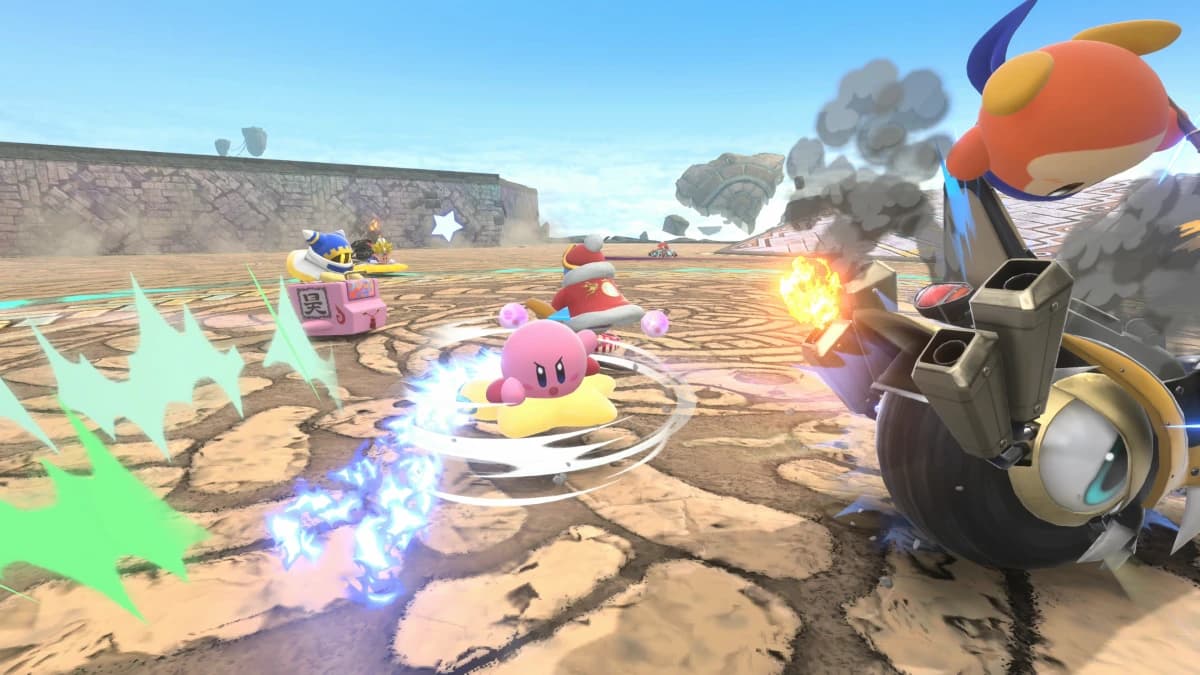
Air Ride is where you internalize the grammar of drifting, releasing, and stringing micro-boosts into one long exhale. Tracks are short, punchy, and dotted with toys—tremplins to ping off, rings that dare you to thread the needle, enemies to skim. It’s pure practice that doesn’t feel like practice. Top Ride flips the camera to a top-down view and shrinks everything into ultra-fast laps. It’s like a metronome for your thumbs. After ten minutes there, my releases got tighter without me thinking about it. When people say “accessible,” this is what they should mean: two buttons and a stick, and the game quietly coaching you towards mastery by letting you feel the difference between clumsy and clean.
Sakurai’s fingerprints: menus that make sense, unlocks that tickle, sound that slaps
If you’ve played a Smash Bros. in the last decade, you’ll recognize the vibe in seconds. The UI is orderly and brisk, information is where you expect, and the game showers you with little incentives through challenge boards. Clearing a task to reveal a new toy or side activity feels like flipping over a tile on a big, tempting grid. It’s that particular Sakurai flavor where even the menus feel crafted for momentum—no drag, no clutter, just quick decisions that get you back into a round.
The art direction embraces clear silhouettes and saturated colors so you can parse what matters at speed. It mostly works. On handheld, I had a couple of moments in Air Ride and City Trial where stacked effects—power bursts, speed trails, explosions—blurred my read on where my nose would land. I wished for an option to dial down effect density. If it exists, it’s buried; I couldn’t find it. Still, it speaks to how fast and flashy things become when four people push at once.
The soundtrack is a love letter to Kirby energy. “Gourmet Race” and “Green Greens” come in hot, remixed to match the game’s focus on rhythm and acceleration. There’s a real push-pull between the music’s bounce and the moment you release a perfect drift, like the track is clapping when you do it right. It’s predictable in places—you know the hits—but that’s part of the buzz during a crowded living room sprint.
Performance on Switch 2: mostly smooth, a wobble in split-screen City Trial
I played primarily docked on a big TV with two friends, plus a handful of handheld sessions to chew through Road Trip. Technically, it’s tidy. Races in Air Ride and Top Ride felt smooth, inputs crisp, and load times snappy enough that we never lost the “one more” rhythm. The only hiccups I noticed were in City Trial when we ran local split-screen: the stability got choppy during busy moments—crate drops, everyone converging on a hotspot, a power pile-up. It never broke a session, but you feel it when the game’s whole pitch is flow.
Kirby Air Riders vs. Mario Kart World: different sports, same stadium
Stacking it against Mario Kart World is inevitable, but also a little unfair, because they’re tuned for different thrills. Mario Kart World is long-form tension: longer tracks, broader track lists, the classic item drama that reshuffles the deck. Mastery is in knowing when to risk and when to recover, how to position through chaos. Kirby Air Riders asks for a different mindset. It’s mini-projects, short sprints, and preparation—especially in City Trial—where your build matters as much as your line.
Kirby’s iceberg is bigger than it looks. During one City Trial, I spent all five minutes crafting a kite that lived for air: jump bonuses, ring paths, powers that didn’t derail my trajectory. The final rolled “arena brawl.” Brutal. I paid for building the wrong tool for the job. Another night, knowing the roulette might call a laser dodge, I aimed for handling and survivability, and suddenly I felt clairvoyant when the finale matched my prep. That hazard—building into uncertainty—is the fun. In Mario Kart World, you live inside the race. In Kirby, you live before it, then sprint to prove you weren’t lying to yourself.
Where Kirby loses ground to Mario is solo endurance. Mario Kart World’s single-player arc, with its longer tracks and sturdier structure, holds attention on nights you’re playing alone. Kirby’s Road Trip is too slight to fill that role, and AI rivals rarely scratch the competitive itch. But as a couch-first multiplayer, Kirby Air Riders can muscle onto the shelf right next to Mario and not feel redundant. They complement more than they compete: Mario for those evenings when you want a proper championship; Kirby for five-minute plans and one-minute payoffs.
Hands-on anecdotes: the highs, the headaches, the “oh wow” moments
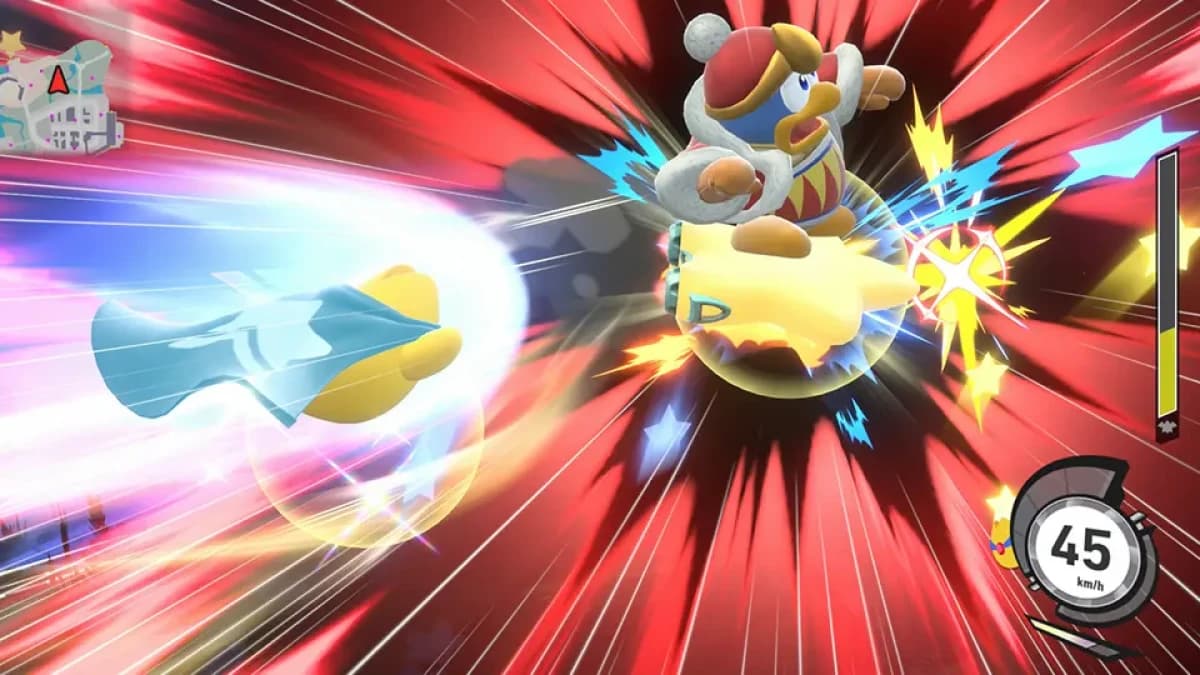
After about 20 hours, a few memories stick. There was the City Trial where an event lured us all to the same crossroads; I had a crown of thorns queued and watched two friends fall into my trap as I held my drift through them and popped the release, pinballing out with stolen momentum. I was cackling. There was the Air Ride time attack where I kept cutting my release early out of fear, then finally trusted the line and shaved a second off because I dared to hold the button two beats longer. And there was the handheld session on a train where a pile of overlapping speed trails and glittery bursts made me miss a landing three times in a row and mutter “okay, that’s too much glitter for a Tuesday.”
I also hit the ceiling on CPU difficulty pretty fast. By the end of night two, level 9 wasn’t threatening unless I tuned my build wrong or tried weird machines on purpose. Online duels and couch rivals supplied the drama I wanted—especially the ego-sting of getting knocked off my ride during prep and waddling helplessly. Getting back on a star just in time for the final feels like snatching your shoes before a sprint gun. When it works, it’s beautiful comedy.
Accessibility that actually means something
Kirby’s always had a reputation for being welcoming, and Air Riders holds that line without flattening the ceiling. I handed the controller to a friend who hates racing games because “walls make me panic,” and watched them settle after ten minutes because the game’s drift doesn’t punish you with a slam and a dead stop. You can overcook a corner and still recover with a well-timed release and a clean landing. There are only two main buttons to think about, and the powers don’t disrupt the language you’ve been building—they slot into it. That’s the best kind of accessibility: simple inputs, deep feedback.
What works, what doesn’t (for me)
What works: the feel of turning speed into something you earn, the giddy couch tension of City Trial, the way Top Ride drills your hands until they act before your head does. The Sakurai-ness of the UI and unlocks makes everything feel considered. The soundtrack is a sugar rush in the best way, particularly during finales when you can hear the music pushing against your release timing.
What doesn’t: Road Trip’s brevity and its missed chance to offer meatier offline circuits. The occasional readability mess when multiple effects stack, especially in handheld. And AI that caps out too low. Those aren’t deal-breakers in a party-first racer, but they do limit how often I’d pick this up alone.
Who should play Kirby Air Riders
- If your living room sees regular multiplayer nights and you want a fresh rhythm that isn’t just “new tracks, same items.”
- If you bounce off traditional kart racers but love the idea of making speed through clean lines and timing.
- If you enjoy prepping builds and rolling the dice on a finale you can influence but never fully predict.
- If you have fond memories of Kirby Air Ride’s City Trial and want a modern, fuller take on that idea.
- Skip or wait for a sale if you’re mostly a solo player looking for a long campaign or deep AI challenge.
- Be cautious if you’re sensitive to visual clutter; the effects can crowd the screen in frantic moments.
FinalBoss // Gear
Level up your setup
01Racing wheels (PC & PS5)on Amazon→02High-refresh gaming monitorson Amazon→03Gaming chairson Amazon→04Discounted game keyson Kinguin→Affiliate links · As an Amazon Associate, FinalBoss earns from qualifying purchases.
Want to Level Up Your Gaming?
Get access to exclusive strategies, hidden tips, and pro-level insights that we don't share publicly.
Ultimate Reviews Strategy Guide + Weekly Pro Tips