
Table of Contents (11)
A grumpy goblin, three giant maps, and a lot of mixed feelings
Stealth games that actually want you to stay hidden are an endangered species. Hitman turned into a sandbox murder toybox, Assassin’s Creed barely pretends to be stealth anymore, and Dishonored is… well, just memories at this point. That’s why the Styx series, with its stubborn commitment to “you were seen, you died, deal with it,” has always had a weird little corner of my heart – jank, rough edges and all.
Styx: Blades of Greed doesn’t try to reinvent that formula so much as stretch it across three absolutely huge regions. The old mission-based structure is gone, co-op has been quietly tossed in a ditch, and in its place you get a solo stealth campaign wandering through interconnected open areas full of guards, loot, and a depressing number of bottomless falls.
After a bit over 20 hours creeping through those regions, my feelings are split right down the middle. When the game locks into its pure stealth groove, it’s the best the series has ever felt. But the same old movement issues, clumsy combat, repetitive objectives, and some nasty performance problems are still stubbornly along for the ride.
Key takeaways
- Pure single-player stealth: no co-op, no distractions, just you, shadows, and lots of throats to cut.
- Three enormous open regions replace discrete missions, with Metroidvania-style progression and plenty of backtracking.
- Stealth itself is excellent: new gadgets and powers add fun options without breaking the tension.
- Movement is finicky and unreliable, and combat is still a clumsy “you messed up” tax.
- Story and characters feel like an afterthought, mostly there to justify more quartz hunting.
- Performance and technical bugs drag down long sessions, especially in busy areas.
First hours back in Styx’s boots: familiar, focused, a bit creaky
The first hour of Blades of Greed felt like slipping on an old, slightly tattered leather glove. You’re back as Styx: elderly, foul-mouthed, perpetually annoyed, and absolutely lethal as long as nobody knows you’re there. Within minutes I was hugging walls, watching patrol routes, and mentally calculating how far I could get on a single invisibility cast before the timer ran out.
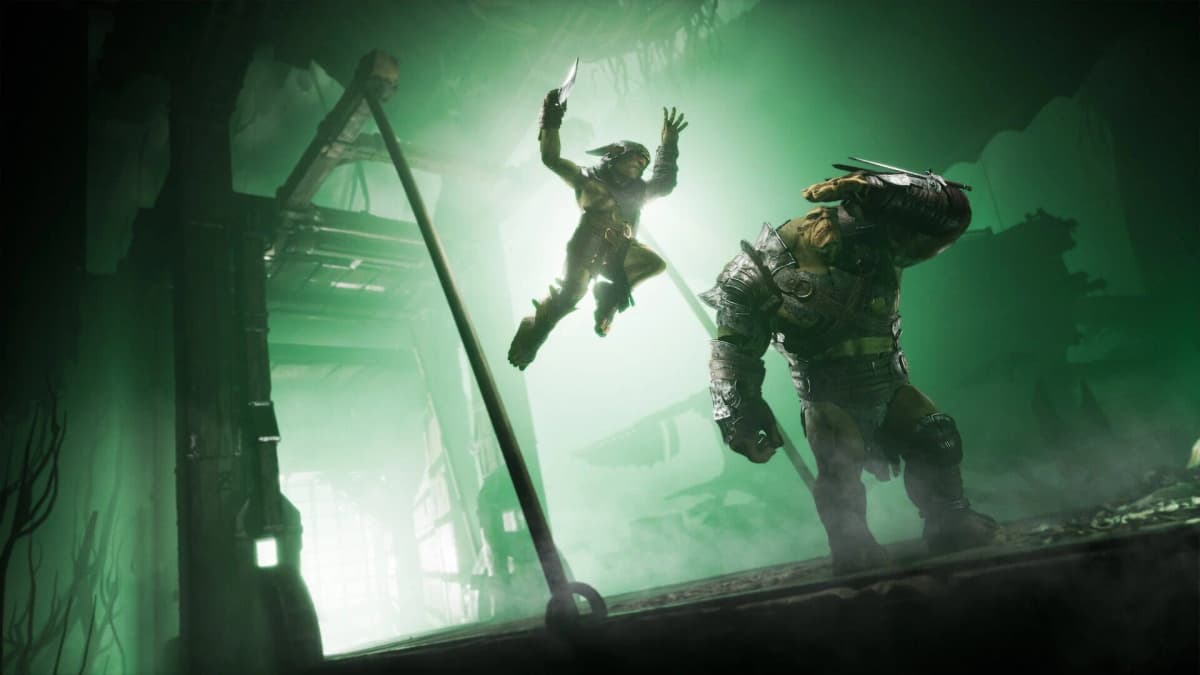
The opening area doubles as a refresher course in Styx design philosophy. You’re not meant to fight; you’re meant to disappear. Guards kill you in seconds if they corner you. Loud surfaces are the enemy. Light is dangerous. The game practically begs you to play like a paranoid goblin ninja, clearing rooms one patient knockout at a time, cleaning up corpses, and obsessively saving before every risky move.
It didn’t take long, though, for old problems to peek out from the shadows. Landing on ledges felt imprecise. Sometimes Styx would snap cleanly onto a pipe; other times he’d just sort of shrug and plummet. Trying to mantle out of a hiding spot onto the edge above occasionally resulted in him hopping uselessly in place. That stuff was very “yep, this is a Styx game alright” – nostalgic in one sense, aggravating in another.
Stealth and gadgets: when it works, it really works
The good news is that the core sneaking is still absolutely the point of the game, and it’s mostly great. Blades of Greed gives you a satisfying toolbox to play with, and the new toys slot in nicely without turning things into a power fantasy.
You’ve still got the classics: short bursts of invisibility, throwing knives, poison, the ability to cram your wrinkly goblin frame into barrels, wardrobes, and tiny holes in the masonry. Line up a patrol, distract one guard, backstab his buddy, drag the body somewhere dark, and slip away before anyone notices – that loop still hits as hard as ever if you’re a stealth sicko like me.
The new quartz-fueled abilities are where things get genuinely fun. Mind control lets you puppet guards at range, steering them away from your path or walking them straight into a fatal “accident.” I had a great moment in The Wall where I used it to march a guard over to a rickety ledge, drop the spell, and watch him panic and topple into the abyss. It’s simple stuff mechanically, but it adds a layer of dark slapstick the series was already flirting with.
The grappling hook is the other big addition. It doesn’t turn Styx into Spider-Man – this is very much a contextual “if there’s a grapple point, you can use it” tool – but in these taller, more sprawling spaces it’s a lifesaver. Being able to zip up to a balcony, bypass a whole floor of patrols, or bail out of a bad approach feels great, provided the hook actually latches onto the thing you’re clearly aiming at. When it misfires, though, you will swear loudly.
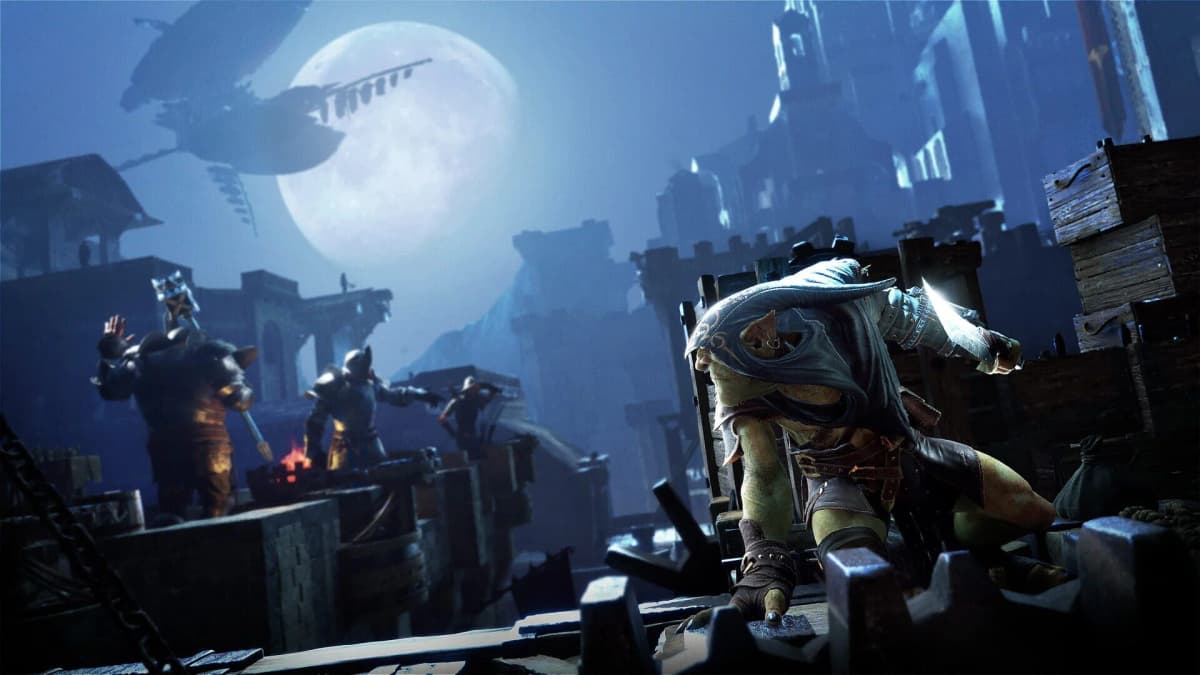
Where games like Dishonored or Hitman are all about elaborate, interconnected systems, Styx sticks to a more straightforward stealth-as-puzzle approach. You’re not rewiring half the level; you’re reading the space and threading yourself through it. On that front, Blades of Greed succeeds. The AI isn’t groundbreaking, but guards react predictably to sound and line of sight, and they’re deadly enough that you never feel encouraged to just run through them.
From missions to massive regions: freedom with a side of fatigue
The biggest structural change is the move away from discrete missions. Instead of picking a level, playing it, and moving on, Blades of Greed gives you three enormous, semi-open regions that you revisit over and over as the campaign goes on: The Wall, Turquoise Dawn, and the Akenash Ruins.
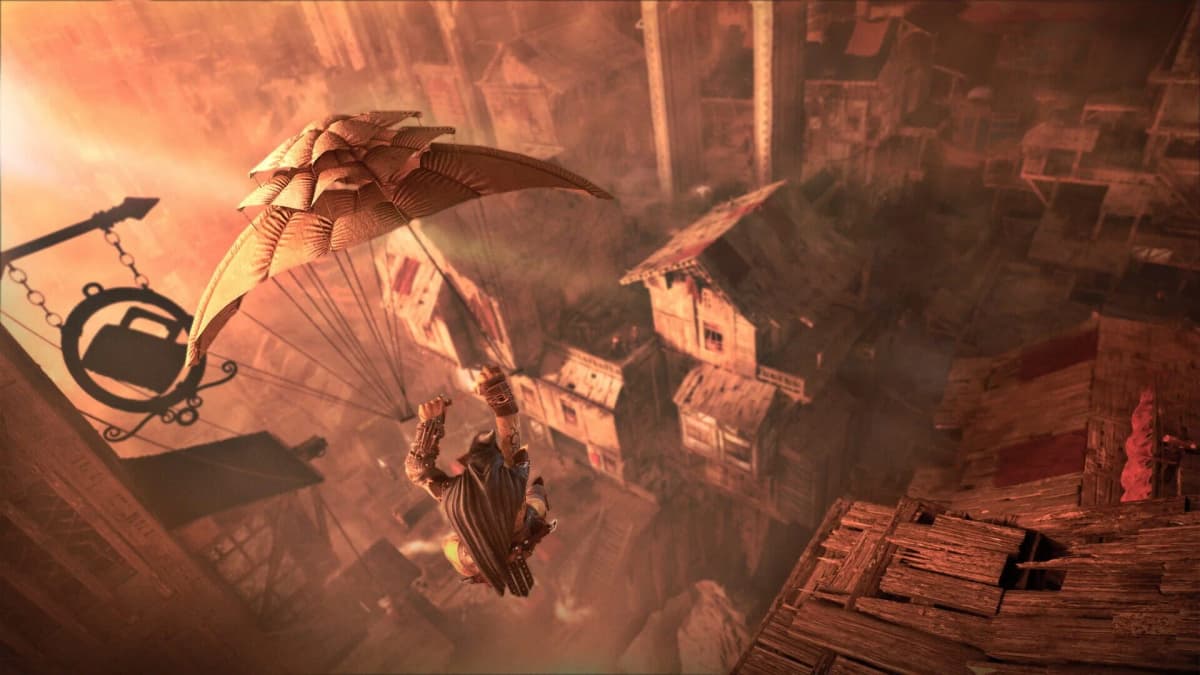
The Wall is a towering maze of stone fortresses and stacked shanties, all vertical choke points and terrifying drops. Turquoise Dawn is a swampy, overgrown nightmare where the shadows are full of giant bugs that absolutely will ruin your day if you blunder into them. Akenash Ruins goes full weird fantasy: broken architecture hanging in mid-air, strange creatures patrolling impossible bridges, like a stealth game wandered into somebody’s Elden Ring concept art.
Each of these regions gradually opens up as you progress and unlock new routes or abilities. A blocked path in The Wall might become viable later once you’ve grabbed an upgrade that extends your climb or gives you a new infiltration option. It’s not full-on Metroidvania, but you can feel that influence: “I’ll come back when I’m stronger or smarter.”
Exploring these spaces is easily one of the game’s highlights. Standing at the base of some absurdly tall tower, plotting a vertical route that threads through patrols, shadowed balconies, and half-collapsed staircases – that’s peak Styx. I lost long chunks of time just freelancing, picking off guards and stealing whatever wasn’t nailed down while my actual objective marker sat patiently in the corner.
But there’s a downside to this new structure: a lot of dead air between the good parts. Objectives themselves are usually tiny – swipe a key, sabotage a machine, grab a specific chunk of crystal – yet they can be hundreds of meters away, separated by a long stretch of relatively low-stakes sneaking. You’re still crouched and careful, but nothing particularly interesting is happening moment to moment until you hit the “real” target area again.
I spent more time than I’d like simply figuring out how to reach the next objective. Not solving some fiendish infiltration puzzle – just trying to spot the one climbable edge that gets me around a gate, or the one tunnel that links two halves of the map. When the game’s at its best, navigation and stealth are the same problem. Too often here, they get separated: travel first, then stealth.
The backtracking doesn’t help. Because these regions are reused for multiple missions, you’ll retread entire routes you’ve already painstakingly picked clean. Sometimes new enemy types or patrol layouts remix things enough to keep it fresh; other times it just feels like déjà vu with more busywork. If you’re the type who gets bored replaying the same choke points, be ready for some eye-rolling.
Movement and combat: still the weakest links
Styx has always been a series where getting spotted feels like a failure, not an invitation to improvise. Blades of Greed keeps that tradition very much alive – partly by design, partly because the combat still isn’t fun.
When a guard does catch you, you’re funneled into simple, sluggish confrontations that boil down to a basic timing game. You can survive a one-on-one if you nail the counter windows, but if anyone else shows up, it’s basically over. The point is crystal clear: you weren’t supposed to let this happen. The problem is that the system feels so crude and weightless it becomes something you endure, not something you ever choose.
Movement is the bigger frustration, though, especially in levels built around verticality. Climbing, jumping, and mantling just aren’t as reliable as they need to be. I had repeated situations where I’d line up a jump to a ledge I’d used three times already, hit the button, and watch Styx simply miss and ragdoll into the abyss. Other times he’d decide a nearby railing was a better target and vault over it directly into someone’s line of sight.
In a game where a single bad step can mean a reload, this lack of precision gets exhausting. You’re not only planning your routes around enemy vision cones; you’re also quietly asking yourself, “Is the engine actually going to let me land this?” It’s the kind of thing you eventually learn to work around, but it never stops feeling like you’re wrestling the controls as much as the level design.
Story, tone, and the quartz addiction nobody will remember
If you’ve played previous Styx games, you probably aren’t showing up for the narrative, and Blades of Greed isn’t about to convert you. The broad strokes: Styx gets hooked on the magical juice granted by quartz crystals and spends most of the game chasing more of them. The structure mirrors that obsession a little too well – mission after mission boils down to “go here, get more quartz, repeat.”
There are supporting characters – a dwarf tinkerer obsessed with gadgets, an orc with a more spiritual angle on Styx’s addiction – but they feel like sketches. They pop in to dump exposition, push you towards the next area, and vanish again. No real arcs, no surprising turns, just a functional conveyor belt to move your goblin from one playground to the next.
Styx himself is still the most entertaining thing about the story. His grumbling commentary, self-serving attitude, and total lack of respect for anyone else give cutscenes a bit of bite. Even then, the script leans on the same tricks so often that it starts to blur together. I finished the campaign and could barely recall a single specific plot beat beyond “more quartz, bigger problems.”
Technical issues: jank that overstays its welcome
Styx games have always been a little scruffy technically, but Blades of Greed pushes that reputation uncomfortably far at times. Over long sessions, performance took noticeable hits, especially in the busier stretches of those massive regions. After a couple of hours without rebooting, framerate drops became frequent enough that I started making a habit of quitting to desktop between major objectives just to reset things.
On top of that, there’s a layer of general jank: NPCs turning invisible mid-conversation, animations snapping as enemies pivot from patrol to alert, occasional audio stutters, odd collision when you’re trying to hug close to geometry. None of this is game-breaking in isolation, but it adds up, especially when combined with the already-finicky movement. You’re constantly reminded that you’re playing something built on a creaky foundation.
For a series that’s now several entries deep, it’s a little disappointing how many long-standing issues feel untouched. The maps are bigger, the powers are cooler, but under the hood this still feels like the same old machine, just pushed harder than it really wants to go.
Who Styx: Blades of Greed is actually for
If you’re a stealth tragic who still replays Thief, silently judges every modern game that encourages you to “go loud,” and can tolerate a generous helping of rough edges, Blades of Greed is pretty much aimed straight at you. It’s one of the few remaining series where the design clearly assumes you’ll try to ghost everything, reload on detection, and squeeze every drop of tension out of the shadows.
On the other hand, if you bounced off earlier Styx games because the movement felt imprecise, the presentation was rough, or the story never grabbed you, this isn’t a reinvention. The new open-region structure emphasizes everything the series already was – the good and the bad. Bigger levels mean cooler routes and more freedom, but also more backtracking, more travel downtime, and more chances for the engine to hiccup.
Bottom line and final score
After finishing Styx: Blades of Greed and mopping up a handful of side objectives, I kept coming back to the same thought: this is the best and worst of Styx, amplified. The stealth is sharp, demanding, and deeply satisfying when you’re in the zone. The three big regions are some of the most interesting spaces the series has ever given you to infiltrate. The new gadgets and quartz powers add flavor without turning you into an untouchable superhero.
But the series’ old demons are still here: unreliable movement in a game that absolutely needs precision, combat that feels more like a punishment than a system, a story that barely earns your attention, and technical issues that chip away at your patience over long sessions. The shift to sprawling regions magnifies both the highs and the lows, making every brilliant infiltration and every stupid fall off a ledge feel bigger than ever.
I’m glad Blades of Greed exists. Pure-stealth games this committed to their niche are rare, and when it clicks, it scratches an itch few other modern titles even try to reach. Just don’t come in expecting the polish or systemic depth of bigger-budget stealth sandboxes. Come for the goblin, the shadows, and the thrill of barely slipping past a patrol – and be ready to wrestle the engine and reload a lot when it inevitably misbehaves.
TL;DR
- Pure single-player stealth that rewards patience and planning above all else.
- Three huge, interconnected regions with cool vertical design and strong atmosphere.
- New gadgets and quartz powers add fun options without breaking the stealth focus.
- Movement and climbing are unreliable, which is brutal in a one-mistake-kills-you game.
- Combat is shallow and unsatisfying, reinforcing that you should avoid it whenever possible.
- Story and characters are thin, mostly serving as excuses to send you after more quartz.
- Technical issues and performance drops are persistent, especially in longer sessions.
- Great if you’re desperate for hardcore stealth and can live with jank; easy to skip if you need polish.
FinalBoss // Gear
Level up your setup
01Top-rated gaming headsetson Amazon→02High-refresh gaming monitorson Amazon→03Gaming chairson Amazon→04Discounted game keyson Kinguin→Affiliate links · As an Amazon Associate, FinalBoss earns from qualifying purchases.
Want to Level Up Your Gaming?
Get access to exclusive strategies, hidden tips, and pro-level insights that we don't share publicly.
Ultimate Reviews Strategy Guide + Weekly Pro Tips