
Table of Contents (7)
Reus 2 Turned Me From Chill God to Obsessive Min-Maxer
My first 30 minutes with Reus 2 were almost too cozy. Gentle music, big friendly giants stomping around a tiny planet, pastel forests popping into existence with a click. I half-expected a super-light god game where I’d just plant some trees, watch villages grow, and zone out after a long day.
About ten hours later, I had a spreadsheet open on my second monitor, a town stuck 6 Science short of its ambition, and I was desperately shuffling animals and trees around like a deranged cosmic landscape architect. That’s when it clicked: Reus 2 isn’t really a city-builder. It’s a massive, multi-layered puzzle that just happens to wear a very cozy village-builder costume.
I played on PC with mouse and keyboard over roughly 30 hours, across a dozen planets and way too many “just one more tweak” late nights. Here’s how the game slowly reeled me in, where it drove me up the wall, and why I can’t quite stop thinking about it.
Learning to Think Like a Planet-Sized Puzzle Solver
The core loop is simple on paper: you control a set of giants, each tied to a biome, and you sprinkle “biotica” (plants, animals, minerals) around your planet. Those tiles generate three global resources shared across all your towns: Population, Wealth, and Science. Your goal is to make the planet as prosperous as possible, measured in stars and profile level.
On my first planet, I treated it like a loose sandbox. I plopped a forest here, a swamp there, proudly watched my first town appear, then lazily filled the area with whatever the game suggested. I hit the early quests without thinking too hard and thought, “Okay, this is pleasant.”
Then the game started asking more of me. Towns develop ambitions (“Reach X Wealth”, “Reach Y Science”, that sort of thing). Era quests push you toward specific builds and resource thresholds. And because there’s no harsh global timer breathing down your neck, you’re expected to actually optimize rather than just let the clock run out. That’s when Reus 2 reveals its true self: every tile placement matters a lot more than it first appears.
What really shifted my mindset was the moment I realized that Population, Wealth, and Science are pooled for the whole planet. I was obsessing over one struggling desert town that couldn’t hit its Wealth target, only to notice a rich mountain town on the opposite side was carrying the global Wealth pool. Suddenly I wasn’t playing “fix this town”, I was playing “orchestrate the entire planet’s eco-economy”.
Once that sank in, every run started feeling like solving a gigantic, very pretty Sudoku: not hard in the moment-to-moment controls, but mentally dense if you chase high prosperity goals.
Giants, Biomes, and the Joy of Overthinking Every Tile
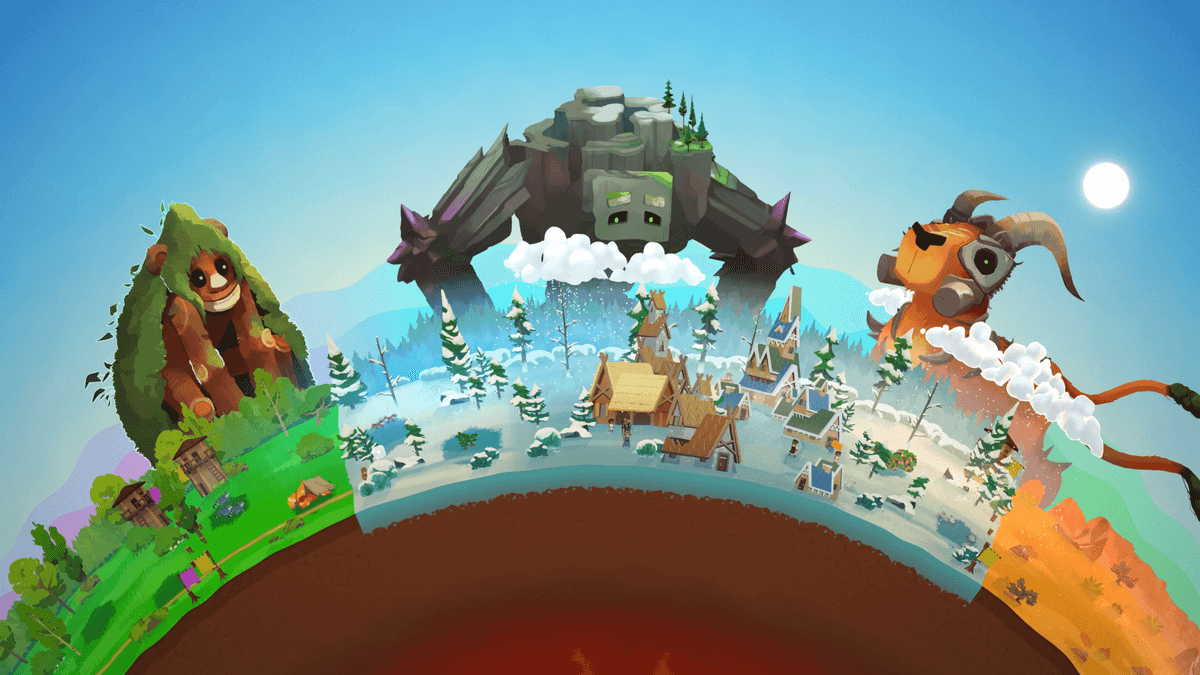
The giants are the heart of Reus 2, and also where the game quietly teaches you to be ruthless. Each one owns a different slice of the planet’s toolkit:
- Swamp Giant shapes Rainforest and is your Science specialist.
- Mountain Giant creates Mountains and leans hard into Wealth.
- Ocean/Animal Giant is your Population and animal-focused workhorse.
- Forest Giant gives you flexible Forests with a balanced resource mix.
- Desert Giant makes Desert biomes that feel more like advanced puzzles than starter areas.
On my second planet, I tried to role-play: Swamp Giant makes lush jungles for scholars, Forest Giant builds calm villages, Mountain Giant runs the mines. Very thematic, very inefficient. By planet four, that fantasy was dead. I was treating them like specialized tools in a puzzle box, not cute gods with personalities.
The twist that takes this from “light strategy” to “brain burner” is biotica tags and Micros. Every tree, plant, or animal has tags that determine what they generate (Population/Wealth/Science) and how they synergize with neighbors. Then you get Micros – little mod items you can slap onto biotica to change or stack tags.
A very real moment from my run: I had a forest town that needed a chunk of extra Science to finish its ambition. I’d already upgraded the obvious science plants. Then I noticed one sad little tree on the edge with mainly Population tags. I dropped a Micro that added Science tags, suddenly unlocking adjacency bonuses from nearby plants I hadn’t been paying attention to. That single tweak triggered a chain reaction and pushed the town over the threshold.
Those tiny “aha” moments are where Reus 2 shines. Swapping two tiles, adding one Micro, or moving a giant a few spaces can completely change the math of a biome. The game never forces you to go that deep, but if your brain enjoys pulling at these threads, it’s incredibly satisfying.
The flip side is that this can also become exhausting. Late in my playtime, I found myself hovering over tiles for minutes at a time, counting icons and trying to visualize how adding a Micro would affect adjacent biotica three steps away. When you’re in the mood, that’s glorious. When you’re tired, it feels like homework wrapped in pretty art.
Eras, Quests, and the Slow Burn of Meta-Progression
Each planet you play through is broken into eras. Think of them as chapters with their own quests, rewards, and escalating expectations. You complete ambitions, hit prosperity milestones, and earn stars. Those stars feed into your global Profile Level, which unlocks new biotica, Micros, and sometimes even new wrinkles to the era structure.
For the first few hours, this meta-progression kept me hooked. I’d finish a planet, see a handful of new cards unlock, and immediately boot up the next run to try that weird new plant that promised some outrageous Wealth combo if I could figure it out.
By around 15 hours, the relationship got more complicated. Some of the more interesting toys are locked behind specific quest conditions, which nudges you into playing “to the checklist” rather than naturally building the planet you want. I had one run where I was clearly on track for a high-prosperity planet, but the era quests were pulling me toward awkward biome splits that didn’t fit my layout. I ended up sabotaging a layout I liked, just to tick a box and grab the star reward.
If you enjoy that roguelite sense of “do strange things now so future runs are cooler”, this system works. If you’re the kind of player who wants all the toys up front and hates meta-gating, Reus 2 might test your patience.
That said, I appreciated that there’s no hard time limit pushing you through eras. Once an era opens up, you can sit there, stare at your planet, and methodically push your numbers as high as you want. It turns Reus 2 into this slow, meditative optimization exercise rather than a race against the clock like the original Reus. I’d often spend 10-15 minutes in near-silence, nudging the last few tiles to eke out another bit of Wealth or Science.
Cozy Vibes, Brain-Melting Decisions
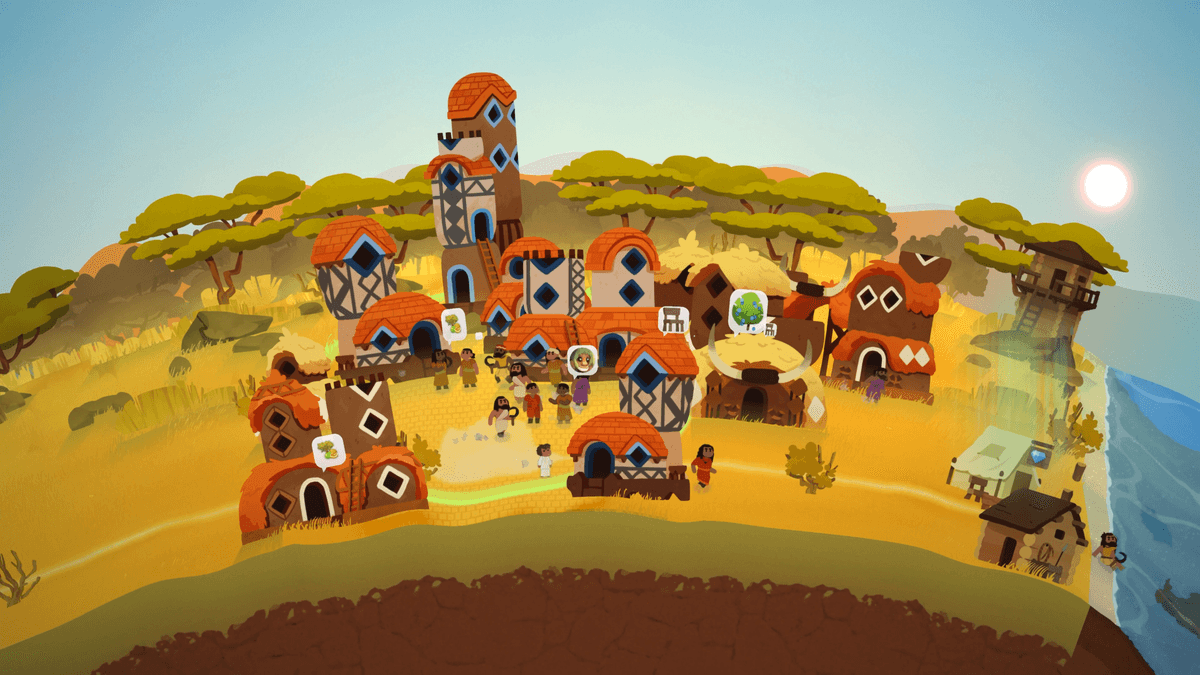
Visually, Reus 2 nails a very specific mood: storybook planet diorama. The 2.5D style gives the giants and towns a chunky, toy-like look, and every biome is distinct at a glance. Forests feel lush and layered, swamps are hazy and damp-looking, deserts have that bleached, brittle dryness that still somehow looks inviting.
The animations are simple in a deliberate way. Giants don’t have a huge range of motion, but the weight of their steps and the way the planet slightly flexes under them goes a long way. I never felt the need for more cinematic flair; in fact, the relative simplicity kept the focus on the puzzle rather than visual noise.
The sound carries a lot of the game’s charm. Each biome has its own ambient layer-forest birds and wind, ocean surf, the gentle hum of swamps-that folds under a mellow soundtrack. More than once, I found myself just rotating the planet and listening while I thought about my next move. It’s chill in a way that makes the underlying complexity feel almost sneaky.
On the technical side, running the game on a mid-range PC (RTX 3060 at 1440p) was smooth. I didn’t hit any major performance dips, even with a dense planet late in an era. The only real rough spot is UI clarity. The icons for tags, synergies, and Micros do their job, but if you’re new, the screen can look like an infographic exploded.
The game tries to help with tooltips and filters, but I still had moments where I thought, “Why is this tile suddenly so good?” and had to dig through multiple layers of UI to track down the chain of bonuses. It’s not broken – just busy. If you love numbers and don’t mind swimming in icons, you’ll be fine. If you’re more of a vibes-over-math player, this might be where you bounce off.
When Reus 2 Gets in Its Own Way
For all the things I enjoyed, Reus 2 has a few habits that made me grind my teeth.
- Information overload comes fast. By your third or fourth planet, you’ll have a decent roster of biotica and Micros, and the number of potential interactions ramps up hard. The game doesn’t really teach advanced synergies; it just sort of trusts you’ll stumble your way into them. I ended up learning a lot by brute-force trial and error.
- Some ambitions and quests feel oddly specific. I had towns demand combinations of resources that pushed me into weird, lopsided builds that didn’t feel satisfying, even when I succeeded. When that lines up with a star quest, it’s great. When it doesn’t, it can feel like busywork.
- Micros are powerful but fiddly. They’re one of the coolest systems in the game, but managing them late-run can feel like rearranging deck chairs on a very tiny, very complex Titanic. I kept wishing for better sorting or a clearer “if you place this here, you’ll net +X of Y” preview.
I also hit that classic strategy-game wall: runs that were clearly “won” long before they were over. Once your prosperity is snowballing and your profile goals are secured, the last stretch of an era can turn into autopilot. The no-time-limit structure is a blessing for optimization, but sometimes I caught myself thinking, “Okay, I’m done, just let me bank this win and move on.”
The good news is that the developers seem committed to long-term support. Even in my time with the game, a meaty free update (the much-discussed Keuger update) had already landed, layering in more content and tuning. Reus 2 feels like the kind of game that will quietly get better and deeper over time if the team keeps listening to the community.
Who Reus 2 Is Actually For
Reus 2 is going to absolutely sing for a very specific type of player:
- If you love games like Against the Storm or Dorfromantik, where the real joy comes from squeezing every drop of value out of limited space, this will hit hard.
- If you played the original Reus and wished it were less about racing a timer and more about long-form planning, this is that wish granted, with more layers.
- If your favorite part of strategy games is that point where you start seeing the systems instead of the pretty graphics, you’ll feel right at home.
On the flip side, I wouldn’t recommend Reus 2 if:
- You want a sandbox god game where you mostly vibe and watch stuff grow without thinking too hard.
- You hate meta-progression and just want the full toybox unlocked from minute one.
- Dense UIs and stacks of tiny icons make your eyes glaze over.
You can play Reus 2 casually, ignoring deep synergies and just placing what feels right. The early profile levels are forgiving. But the design is clearly aimed at people who will, sooner or later, turn into cosmic accountants and proudly admit it.
FinalBoss // Gear
Level up your setup
01Top-rated gaming headsetson Amazon→02High-refresh gaming monitorson Amazon→03Gaming chairson Amazon→04Discounted game keyson Kinguin→Affiliate links · As an Amazon Associate, FinalBoss earns from qualifying purchases.
Want to Level Up Your Gaming?
Get access to exclusive strategies, hidden tips, and pro-level insights that we don't share publicly.
Ultimate Reviews Strategy Guide + Weekly Pro Tips