
Table of Contents (12)
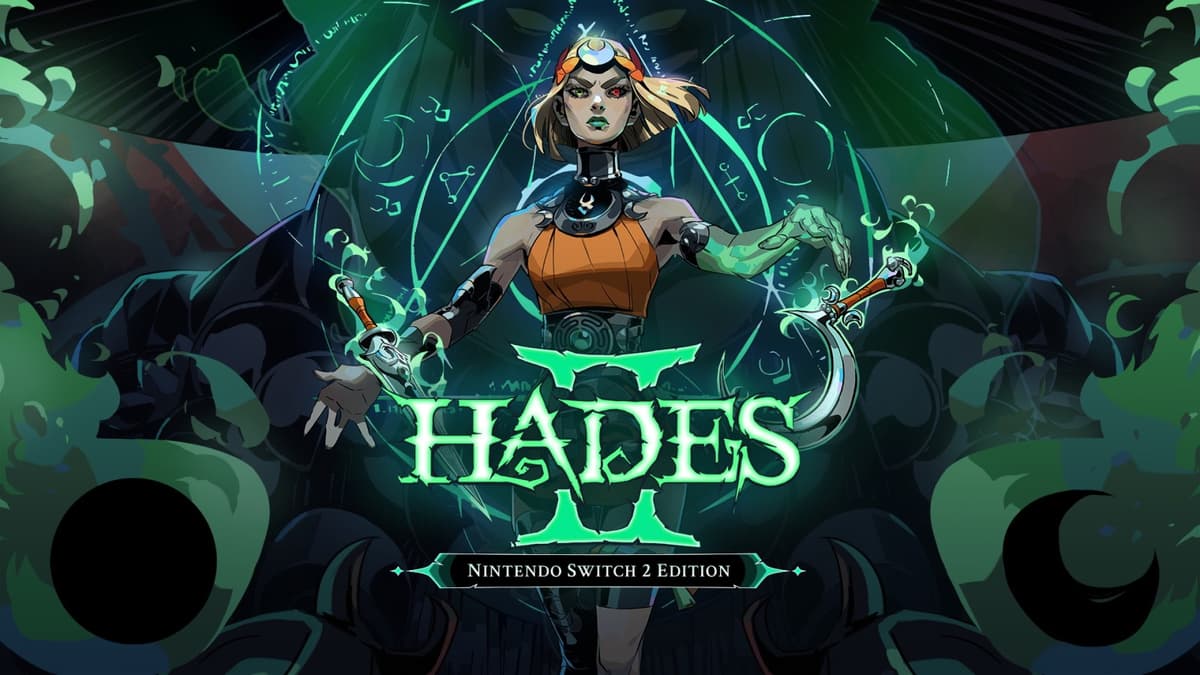
My first night with Hades II felt less like a sequel and more like a reunion
The first 30 minutes of Hades II were all muscle memory and tiny shocks of newness. I fired it up on PC, headphones on, and Darren Korb’s strings hit like a familiar scent you didn’t realize you missed. Then Melinoë took her first steps, and everything felt just slightly different-heavier with intent. The staff flicked forward with a little end weight, the dash had a sorcerer’s glide, and there was a new blue bar under my health I didn’t fully understand. Ten minutes later, Hecate taught me the word I’d be whispering for the next 50 hours: Omega.
Hades II opens like a patient correction from a master coach. It reminds you of what made the first game sing-snappy combat, flirtatious gods, that reward-laced failure loop-then points you at a cauldron, an altar, a tangle of systems, and says, “Go on, witch.” My first attempt ended in one of Hecate’s glowing circles. I dashed too early, got clipped by a delayed arcane swipe, and laughed out loud when she dunked on me for being sloppy. That tone—stern, affectionate, theatrical—matches the game’s rhythm perfectly.
From “more Hades” to “new obsession”: how my opinion changed after 60 runs
Honest admission: I thought I wanted “more Hades.” A safe sequel, same structure, new boss. The early hours fooled me into thinking that’s what I’d gotten. And then the systems started touching each other. The first time I held attack for an Omega swipe and watched my blue Magick bar drain, I shrugged. The fifth time I built around Omega moves—pumping Arcana cards to boost Magick regen, picking boons that supercharge the big holds, timing the build-up during boss invulnerability windows—I realized Hades II wasn’t just handing me new verbs, it was teaching me to play at a different cadence.
There’s also more “life” between runs than I expected. The House of Hades has been replaced by the Crossroads, which immediately feels cozier and stranger. Hecate is your mentor and sparring partner. Mora (doom in a robe) sulks like he owns the night. Nemesis flirts and threatens in equal measure. Dora deadpans from the corner, somehow stealing scenes from literal gods. I’d run, get wrecked, and then linger just to see who had something barbed or sweet to say to me. It’s honestly the secret weapon of Hades II: I wanted to fail just to come home.
By the 10-hour mark I was juggling a ridiculous checklist—Incantations at the cauldron to unlock routes or quality-of-life perks, Arcana cards at the Altar of Ashes to warp Melinoë’s kit, and the Tools of the Unseen which let me fish, mine, and forage mid-run. Early on it felt like too much. Then it clicked that Supergiant wants you to sculpt your run before it begins. You lay down the tarot-like Arcana, decide how greedy you’ll be with gathering, choose your familiar, pick a keepsake, and only then start improvising. If Hades was jazz, Hades II is jazz with a setlist.
Combat sings because Omega moves force patience—and then reward chaos
Hades II’s combat respects your time, but it punishes your impatience. That blue Magick bar isn’t optional. With the right boons and Arcana, your Omega attack or special turns rooms into blender zones. I fell in love with the twin blades once I learned the rhythm: dash in, light cuts to bank Magick, then hold special for a swirling Omega that shreds anything foolish enough to stand in its eye. If I got greedy and whiffed my Omega, I’d limp to the next room. If I timed it—dropping the big move as an elite wound up—I’d come out flush with resources and confidence.
The “boon draft” is still the heartbeat. The familiar gods return—Zeus and his bouncing lightning, Poseidon’s satisfying knockback, Demeter’s chill, Artemis’s crits—alongside newer faces like Apollo. Apollo’s boons tilted me toward ranged plays and precision, which felt perfect with the skull launcher weapon. On one memorable run, I rolled Apollo on my cast, then Artemis on my attack, then found a Moon Hex on a long cooldown that slowed everything for a few precious seconds. I played like a sniper with a pocket nuke.
My first Chronos clear happened by leaning into this patience-first meta. I built around the staff that favors casting, grabbed boons that refunded Magick when I hit Omega abilities, selected Arcana that buffed my big holds, and saved the Hex for when Chronos started his nonsense. He loves to bait you into rolling early by bending time around his attack tells. Waiting until that last shimmer, then committing to a charged Omega cast while the Hex muted his chaos felt like solving a puzzle with a fist pump at the end.
It’s not just about numbers and synergies either. The arenas have more personality. Some rooms have narrow kill funnels begging for Poseidon shoves. Others are open arenas where you absolutely need a dash boon or you’ll get chewed up by projectiles. And the enemy designs are tuned to the Omega economy: shielded mages that dare you to waste a big move, skittering pests that punish slow commitments. The result is a combat loop that constantly asks, “Do you spend now and breeze the next minute, or save and bank for the unknown?”
The build that taught me Hades II’s soul
There’s always one run that brands itself into your spine. Mine was a late-night Oceanus sprint where everything clicked. I started with the skull launcher because my wrists were cooked and I wanted range. Apollo handed me a cast that behaved like a small sun—slow, bright, and dangerous if you were dumb enough to get near it. Demeter showed up next with a chill that turned that sun into a slow field. I pulled an Arcana card back at the Crossroads that boosted Magick regeneration when I landed cast hits, and another that dropped my death-defy penalty if I kept my Magick high.
Somewhere in there, Selene’s moonlit Hex appeared. It sat on a long timer, basically a panic button that slowed the world and juiced damage. I saved it for the Oceanus boss—the trio who turn the battlefield into a concert—and timed it through the last chorus. The crowd went quiet, in-game and in my head, and the whole fight snapped into focus. When the applause (and loot) landed, I realized I wasn’t here for “one more run.” I was here to rehearse, to perform, and yeah, to put on a show.
Arcana, Incantations, and the Cauldron: the meta that actually matters
If you bounced off the first Hades because the Mirror of Night felt too straightforward, Hades II’s Altar of Ashes is your cure. Arcana are tarot-like cards that slot into a loadout governed by “Grasp.” You use one currency to unlock cards, another to expand your Grasp, and the combinatorics create surprising identities. Maybe you’re the glass dagger with crit spikes and brittle Magick, or the tanky witch with regen and panic safety nets. I wish the game explained a couple of these terms better in the first hour, but once you play with the deck a few times, the logic flows.
The Cauldron is where the world breathes. You’ll toss materials into it (mined, fished, or foraged with the Tools of the Unseen) to cast Incantations—everything from unlocking new paths and vendors to reducing a surface penalty that used to crush my morale. Those tools are a simple stroke of genius. They ask you to decide if you’re the kind of player who pauses a fight to harvest ore while three skulls chase you across the room. For me, the pickaxe became a compulsion. Pro tip: don’t get greedy in Oceanus. Water plus mines plus greed equals humiliation.
Familiars deserve a shout, too. The frog is my ride-or-die; his little interventions saved me more than once when a boss was about to scoop me. Keepsakes return, still excellent for nudging a build in a direction—“I want Hermes early,” “Please, for the love of everything, give me Demeter by room three.” Together, these systems stop the game from feeling like pure dice rolling. You can prep the dice, sand the corners, maybe weight them just a hair.
The Crossroads is a place worth failing to see
I was surprised by how attached I became to Hecate. She’s not your dad; she’s your coach. Every sparring match and verbal jab is a trust fall. Nemesis radiates that razor-edged rivalry energy. Dora’s shrugging delivery made me snort-laugh more than once, a perfect deadpan that cut between melodrama and sincerity. Odysseus, always the tactician, grounds the Crossroads with advice that actually helped me route better through runs.
The writing is targeted, layered, and often funny in a way that feels unforced. You’ll hand out gifts, build relationships, and unlock little story threads that make the Greek myth soap opera bounce between tragic and playful. It’s a bigger cast than the first game, but I never felt like I was drowning in text. Instead, characters punctuated my sessions. My favorite pattern became: clutch win, stumble home, gossip with gods, then fiddle with the Arcana until midnight.
Boss highlights: the concert and the clock
Two fights stick out after the credits rolled off the screen and I kept playing anyway. The Oceanus band—if you know, you know—turns the arena into a stage. It’s playful, it’s noisy, and the best trick is learning to “target the rhythm” instead of just the damage dealers. Later, Chronos is the opposite vibe: austere, cruel, precise. His moves tempt early dodges, punish late ones, and twist time to throw off your Omega timing. I wouldn’t call it unfair, but it does demand you unlearn some Hades I habits. When I finally beat him, it wasn’t clean. It was gritty, and it felt right.
Performance notes: PC sings, Switch 2 mostly holds, OG Switch makes trade-offs
I played the bulk of my hours on PC (Ryzen 5 5600X, RTX 3070, 16GB RAM) at 1440p. It’s super smooth—well above 60 most of the time, with only a few dips during the busiest spell-and-projectile soups. Load times were almost instant, and I adored the control feel on a standard Xbox-style pad. On a borrowed Nintendo Switch 2 in docked mode, it felt solid at 60 in most rooms, with occasional dips during big set pieces. Handheld was crisp, and gyro-aim with the skull launcher worked better than I expected.
I also tested on an older vanilla Switch. It’s perfectly playable at a lower framerate—you definitely feel the reduced responsiveness in clutch moments, and the downscaling introduces a bit of blur during chaotic scenes. UI readability is helped by the text scaling option, but I still found myself pausing to read boon text in handheld. If you’re sensitive to frame rate, the newer hardware is the way. If you’re not, Hades II still feels at home on a train ride.

What didn’t work for me (and how I worked around it)
– The early avalanche of systems can smother you. My first few hours were “uh, what is Psyche again?” I started treating the Crossroads like a pre-run ritual. Five minutes of Arcana tweaks and Incantations before a session calmed my brain and sharpened my builds.
– Gathering mid-fight is brilliant but dangerous. I cannot count the times I got smacked mining silver while lured by that sparkle. The fix: decide before entering a room if you’re gathering. If combat starts spicy, just leave the node alone. You’ll live longer and your runs will last.
– Some boons overshadow weak choices. A couple of the early Apollo picks didn’t feel great on melee weapons, and a few defensive boons felt too timid. That said, once I unlocked more keepsakes and Arcana, those awkward edges sanded down because I was steering my RNG more effectively.
– The surface penalty pre-incantation is harsh. I get the thematic intent, but it initially pushed me away from exploring topside routes. The moment I brewed the right Incantation, those paths became some of my favorites. It’s a rare case where a mid-game unlock flips a frustration into a highlight.
Who should play Hades II
- If you adored Hades: It’s familiar in rhythm but deeper in pre-run planning, with smarter bosses and richer downtime.
- If you bounced off roguelikes: The story carrots are constant, and the Arcana system lets you tune difficulty and playstyle meaningfully.
- If you love buildcraft: Arcana plus boons plus Hexes create delicious decision trees every single run.
- If you’re here for the vibes: Jen Zee’s art and Darren Korb’s soundtrack go from smolder to thunder. The concert fight alone is a mic drop.
- If you’re a Switch commuter: It’s strong on Switch 2 and workable on the older model—you’ll trade some fluidity for portability.
The bottom line: a sequel that earns its existence
Hades II didn’t win me over because it’s bigger. It won because it’s braver. It asks you to slow down in a game that’s about going fast. It asks you to make decisions before you even pick your first boon. It builds a world that makes failure feel like a reunion with friends instead of a slapped wrist. I came in hungry for comfort food and left with a new favorite meal.
After 50+ hours across PC and Nintendo’s handhelds, a Chronos kill, a dozen humiliations, and more conversations with Nemesis than are strictly healthy, I’m comfortable saying this: Hades II isn’t just “more Hades.” It’s Hades with a different heart—older, witchier, more patient—and it might be the best thing I played in 2025.
TL;DR
- Omega moves and the Magick economy reshape combat from pure aggression to smart bursts of power.
- Arcana (Altar of Ashes) and Incantations (the Cauldron) give you real control over your build and routes.
- The Crossroads cast—Hecate, Nemesis, Dora, Odysseus—makes failing feel like coming home.
- Boss design shines, especially the Oceanus “concert” and Chronos’s time-twisting duel.
- PC runs beautifully; Switch 2 is strong; OG Switch trades some fluidity for portability.
- Minor gripes: early system overload, a few underwhelming boons, and a harsh surface penalty before the right Incantation.
- Verdict: A confident, generous sequel that earns your time and your affection. 9.5/10.
FinalBoss // Gear
Level up your setup
01Top-rated gaming headsetson Amazon→02High-refresh gaming monitorson Amazon→03Gaming chairson Amazon→04Discounted game keyson Kinguin→Affiliate links · As an Amazon Associate, FinalBoss earns from qualifying purchases.
Want to Level Up Your Gaming?
Get access to exclusive strategies, hidden tips, and pro-level insights that we don't share publicly.
Ultimate Reviews Strategy Guide + Weekly Pro Tips