
Table of Contents (8)
Marching with Bone: First Contact with the New Battletome
The first thing that hit me cracking open the new Warhammer: Age of Sigmar Ossiarch Bonereapers Battletome wasn’t a rule, it was a mood. Page after page of art and lore about columns of bone automata grinding across the Mortal Realms, Katakros staring down the living like they’re already accounting errors. It sets a tone: this isn’t scrappy undead hordes, it’s a military occupation that just happens to be made of skulls.
I’ve always hovered around the Bonereapers but never fully committed. They looked cool, sure, but on the table they used to feel like a slightly stodgy brick of elite infantry and walkers that either steamrolled or crumpled depending on whether you’d memorized their Relentless Discipline puzzles. This new book, plus the four fresh units up for preorder, is the first time the army has really clicked for me as its own thing: a control-obsessed, synergy-heavy faction that plays Age of Sigmar like a cold, methodical resource game.
Over my first few games poring through the rules and trying out list ideas, what stood out wasn’t raw damage numbers (though there’s plenty of pain on offer), but how many little levers you suddenly get to pull. The new Liege-Mortek, Mortis Reapers, Mortek Triaxes, and Liege-Kavalos on War Chariot don’t just add more warscrolls; they push the army’s identity firmly into “bone bureaucracy meets battlefield control.”
Immortal Elite: Relentless Discipline That Finally Feels… Well, Relentless
The core of the army is still the same: Ossiarch Bonereapers use Relentless Discipline points instead of standard command points. The Battletome’s key Battle Trait, Immortal Elite, gives you a pool of these points based on your heroes, and you spend them on bespoke command-like abilities that only your bone legions get to use.
What I appreciate about this iteration is that the text actually nudges the way you think about tempo. Many of the baseline abilities you buy with Relentless Discipline are not flashy, but they’re huge when layered:
- Spending a point to add 3″ to a unit’s movement turns your supposedly trundling infantry into a sudden mid-board threat.
- Letting a unit that retreated also charge opens up disengage-and-smash lines you don’t normally get in Death armies.
- Handing a key unit a 5+ Ward for the turn lets you weather alpha strikes or grind for just one more battle round.
On paper, those are just bullet points. On the table, combined with the new units, they start to feel like a proper toolkit instead of a quirky tax you pay for playing Ossiarchs. I found myself banking points early to unleash a “perfect turn” later: Mortis Reapers slip in, Triaxes reposition their tokens, a Liege hands out a bonus attack, and suddenly the board is stitched up in invisible bone tithes.
The rest of the rules scaffolding is familiar but fleshed out: Heroic Traits to give your linchpin characters some personality, rare relics to lean into durability or offense, and spell lore that amps weapons, drains life, and throws out nasty debuffs. None of that reinvents the army on its own, but it supports what the new warscrolls are trying to do: reward patient, pre-planned cruelty.
Commanders Who Actually Command: Liege-Mortek & Liege-Kavalos
The biggest change in “feel” for me came from how the new mounted heroes behave. Old Ossiarch lists often leaned on Katakros or a big Mortarch to “be the army” while generic heroes were mostly taxis for Relentless Discipline and buffs. The new Liege-Mortek and Liege-Kavalos on War Chariot are still support pieces, but the way they hand out actions makes them feel like proper battlefield officers rather than walking spreadsheets.
The Liege-Mortek’s profile is solid – a Commander’s Weapon swinging with 5 attacks on 3+/4/−1/2 – but that’s not the interesting part. What changes games is Clinical Efficiency. After the Liege-Mortek fights, you pick a friendly Mortek Guard, Mortek Triaxes, or Mortek Crawler unit that hasn’t used an Attack ability yet. That unit immediately fights or shoots, and for the rest of the turn it adds +1 to its attacks characteristic.
In practice, this reads like “activate two units at once and juice one of them.” Even in small games, it does a couple of important things:
- It lets you front-load your damage. Swinging with the Liege into a key threat, then immediately unleashing a buffed Mortek Guard block, can delete something that thought it was safe after the first combat step.
- It punishes opponents who try to dance around your “slow” infantry. Those Mortek Guard or Triaxes can sit just behind the line, then surge in off the Liege’s activation at the precise moment you need them.
- It gives your shooting (Triaxes or Crawlers) a quasi-“double tap” feel on the pivotal turn.
There’s a really nice bit of flavor there too. The officer charges in, carves a path, then barks a command and an entire block of bone soldiers snaps forward with mechanical precision. This is exactly the sort of rule that makes an army’s fiction match the actual table experience.
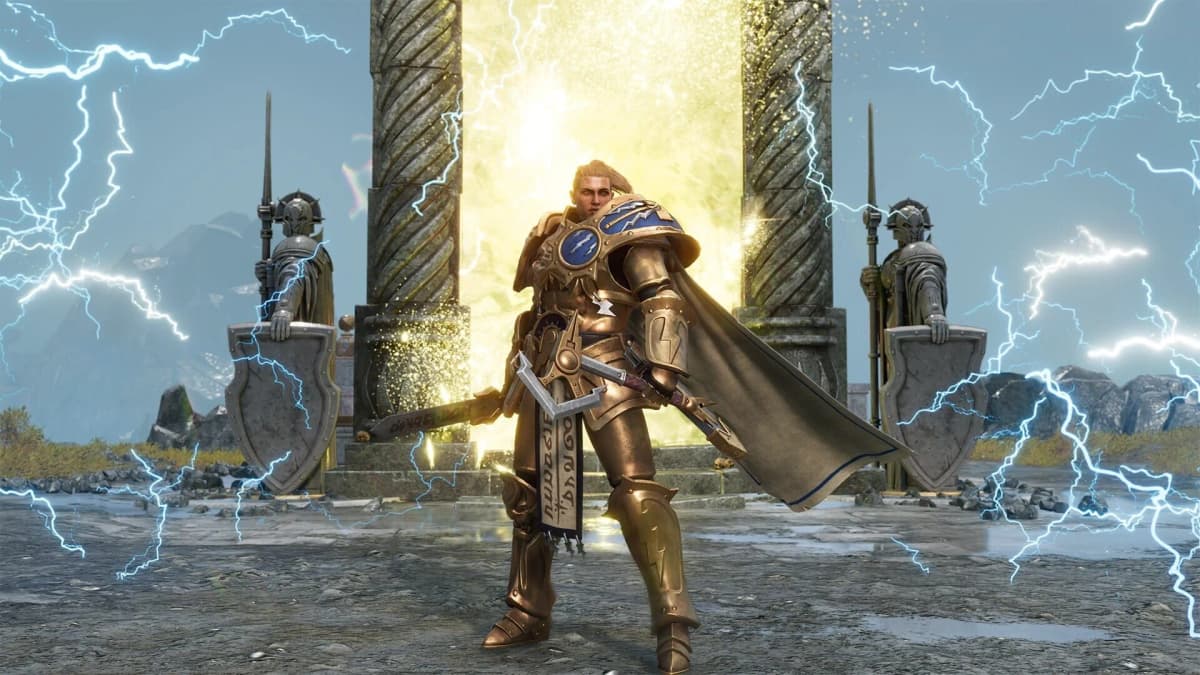
The Liege-Kavalos on War Chariot, meanwhile, is your hammer. His Commander’s Blade throws out 5 attacks on 3+/4+/−1/2, pushing to Damage 3 on the charge thanks to a simple but nasty Charge modifier. The star attractions, though, are his two abilities:
- Grind Them To Dust: Once per turn in your army phase, he and up to two friendly Kavalos War Chariots wholly within 12″ get a free pile-in. After piling in, you pick an enemy unit in combat and roll a D3; on a 2+, that unit just eats that many mortal wounds.
- Masterful Charioteer: He and up to two nearby Kavalos War Chariots get a 5+ Ward for the rest of the turn.
This pair of rules turns the chariot wing into a mini-army. The free pile-in means you’re not always relying on the charge phase to reposition those big bases; you can grind sideways into support characters or wrap around units you only tagged on the edge. The Ward bubble keeps your investment alive long enough to matter, which is crucial because lone alpha-strike chariots often end their glorious turn standing in front of an entire enemy army with a giant “shoot me” sign attached.
In my head, the ideal Ossiarch front now is a spine of Mortek Guard with a Liege-Mortek orchestrating their swings, and a flanking battle group of Kavalos chariots bullying edges and punishing overextensions. Both heroes feel like they’re participating in that plan rather than just twiddling dials from the backline.
Control Freaks with Scythes: Mortis Reapers on the Hunt
The unit that most surprised me is Mortis Reapers. On first glance they read like “fast creepy elites,” but the way their rules are written pushes them into a very specific, very nasty role: hero hunters and disruption specialists.
They attack with Reaper’s Blades (3 attacks, 3+ to hit, 4+ to wound, Rend −1, 1 damage) and carry an Anti-Hero rider that bumps their Rend by 1 against Heroes. Left alone, that’s fine but not spectacular. Then you hit their abilities.
Necrocaches is the standout. At the end of any turn, you roll a D3 for each enemy unit they’re in combat with. On a 2+, that enemy takes that many mortal wounds, and then the Mortis Reapers make a free 6″ move that can even pass through enemy combat ranges, as long as they don’t end engaged.
That sounds minor, but it opens up some deliciously evil lines:
- They dive into the backline, tag a hero and a supporting unit, chip out mortals on both, then slip out of reach to stand on an objective or behind your front.
- They harass something that doesn’t want to be touched (artillery, fragile wizards), then vanish 6″ away to force your opponent to spend a turn re-positioning instead of advancing.
- They chain from combat to combat across multiple turns, always threatening those end-of-turn mortals while rarely being stuck where the opponent actually wants to fight them.
Layer that with their teleport-adjacent rule, No Escaping the Tithe: if there are no enemy units within 6″, they can pick a terrain feature within 3″, remove themselves from the battlefield, and reappear wholly within 3″ of that feature and 9″ away from any enemy units.
This doesn’t just make them mobile, it makes them a persistent psychological threat. Any unguarded flank piece, any isolated hero, any late-game objective near a ruin suddenly lives in fear of bone assassins phasing in from the scenery. Combined with the army’s access to extra movement via Relentless Discipline, Mortis Reapers feel like a scalpel in a faction that used to swing mostly hammers and shields.
Objective Denial at 18″: Mortek Triaxes and the Balefire Game
If Mortis Reapers are the knife, Mortek Triaxes are the accountant’s red pen. They give Ossiarch Bonereapers something the army didn’t really have before: serious, interactive objective control from range.
Their Osseous Bow profile is perfectly respectable for a mid-board support unit – 18″ range, 2 attacks, 3+ to hit, 4+ to wound, Rend −1, 1 damage. You’re not erasing units with that, but you’re softening targets and stripping screens. The real spice is in Atavistic Nightmares, which lets them mess with Balefire Brazier tokens.
Those Braziers, once placed, do two huge things to any enemy unit in their shadow: they reduce that unit’s control score by 3, and they prevent healing or the return of slain models. The Triaxes’ ability to move those tokens around the table effectively turns them into remote-control hexes.
This is an enormous deal in the current Age of Sigmar landscape, where “sticky” units that heal or resurrect models are everywhere. Pinning a deathstar in place is one thing; pinning it in place while also saying “no heals, no models back, and you count for less on the point” is something else entirely.
In play, they push you to think like a negative space painter. You’re not always trying to kill what’s on an objective; you’re trying to make it functionally irrelevant while your own infantry or cavalry strolls in. I really enjoyed the mini-game of shuffling Braziers so that any path the opponent chose involved stepping into zones of withering bone magic.
That kind of ranged control support is rare in AoS, and it fits the Bonereapers perfectly. They’re not wild necromancers hurling curses at random; they’re taxmen marking off segments of the battlefield where failure to pay is punishable by non-existence.
Beyond Warscrolls: Spearhead, Path to Glory, and Army Identity
Outside the flashy new units, the rest of the Battletome is exactly what you’d want from a modern Age of Sigmar book. There’s a chunky lore section — over forty pages digging into the nature of the bone-tithe, the rise and campaigns of Orpheon Katakros, and the internal structure of this undead empire. It makes the Bonereapers feel less like “Nagash’s latest weird project” and more like a terrifyingly functional civilization.
The rules coverage is complete without feeling bloated. Every Ossiarch unit gets its warscroll, from the God of Death himself down to the lowly foot sloggers, and then you get the extra layers: Spearhead rules for smaller, tight games; Path to Glory for long-form narrative campaigns; and both Armies of Renown and Regiments of Renown to twist the base faction into themed variants.
What impressed me is how consistent the army’s personality stays across all those modes. Whether you’re playing a small Spearhead clash or a full-size matched play game, you’re still making choices about resource management, battlefield zoning, and grim efficiency. The new units just mean you can express that identity in more ways: surgical strikes, ranged denial, hyper-mobile chariot charges, or a good old-fashioned wall of shield and spear.
Miniatures and Table Presence: From Static Wall to Creeping Tide
Even without holding the plastic in hand, the visual evolution comes through strongly in these new kits. Older Ossiarch mainstays like the Mortek Guard lean heavily into regimented rank-and-file poses — effective on the table, but a bit stiff. The new models push the range toward something stranger and more dynamic.
Mortis Reapers are all sweeping motion and implied momentum, like they’re mid-pounce at the moment of sculpting. Mortek Triaxes, with those extended bows and eerie Balefire paraphernalia, sell the idea of thinking predators picking targets across the battlefield rather than anonymous archers firing in volleys. The Liege-Mortek and chariot-mounted Liege-Kavalos both scream “officer” in different ways — one as the implacable line commander, the other as the brutal shock leader riding the crest of a charge.
On the table, that translates into a much richer silhouette language. You can read your army at a glance: the bone phalanx anchoring the centre, the weird skirmishers lurking just beyond, ranged overseers perched on elevated ground, and thundering chariot columns ready to crash in. It stops Ossiarchs from feeling like a pile of similar-looking bone dudes and starts making them look like a functioning war machine built from the remains of a thousand conquered peoples.
Who This Battletome Really Serves
There’s a clear type of player this book is speaking to. If you enjoy:
- Planning two or three turns ahead,
- Managing a unique resource (Relentless Discipline) instead of standard command points,
- Winning by strangling your opponent’s options rather than simply erasing their models,
- And fielding an army with a very strong, consistent identity,
then Ossiarch Bonereapers, in this new incarnation, are in a really good place. The new Battletome and units widen the army’s options without splintering what makes them special. You can lean into infantry bricks, fast harassment, ranged control, or chariot shock tactics, but all of it still feels like parts of the same bone empire grinding inexorably forward.
If you’re after pure simplicity or plug-and-play melee brawlers, this probably isn’t the book that will convert you. There are still a lot of dials to turn, a lot of timing windows to internalize, and you will feel it when you spend your Discipline points or key abilities in the wrong place. The flipside is that when a game comes together — when the Mortis Reapers blink out of a terrain piece to finish a wounded hero, while Triaxes pin a deathstar’s control score into the dirt and a Liege-Kavalos carves through the frontline under a Ward bubble — it feels less like luck and more like executing a well-laid campaign.
FinalBoss // Gear
Level up your setup
01Top-rated gaming headsetson Amazon→02High-refresh gaming monitorson Amazon→03Gaming chairson Amazon→04Discounted game keyson Kinguin→Affiliate links · As an Amazon Associate, FinalBoss earns from qualifying purchases.
Want to Level Up Your Gaming?
Get access to exclusive strategies, hidden tips, and pro-level insights that we don't share publicly.
Ultimate Reviews Strategy Guide + Weekly Pro Tips