
Table of Contents (9)
From “Capcom’s black sheep” to “oh, this actually slaps”
I went into Pragmata half-expecting to watch Capcom finally trip over its own hot streak. Six years of silence, delays, and vague trailers is usually how you summon a junkyard of cut ideas and last-minute compromises, not a confident new IP.
Instead, after a couple of hours with an advanced build (plus the earlier public-style demo), I walked away with that annoying feeling of “damn, now I actually want to keep playing this.” Pragmata isn’t just “Capcom does sci-fi shooter.” It’s a strange, nostalgic third-person action game that welds real-time hacking, arcade shooting and light RPG builds into something that feels old-school and new at the same time.
For context: I played this build on PS5 Pro, then went back to my notes from the Switch 2 demo from a while ago. Between both, I’m sitting at roughly four hours of hands-on time. This is not a full finished-campaign review, so take the score at the end as provisional, but I’ve seen enough systems and structure to get a good sense of what Capcom is really going for here.
The setup: lunar disaster, magic fiber, and a not-so-helpless “little girl”
The section I played drops you into a later chunk of the game, once the premise has already settled in: in a distant future, humanity discovers on the Moon a weird fiber-like material capable of replicating basically anything. Think an infinite 3D printer that got way out of hand. A colony blossoms around it, tech goes wild… and then, obviously, everything goes horribly wrong.
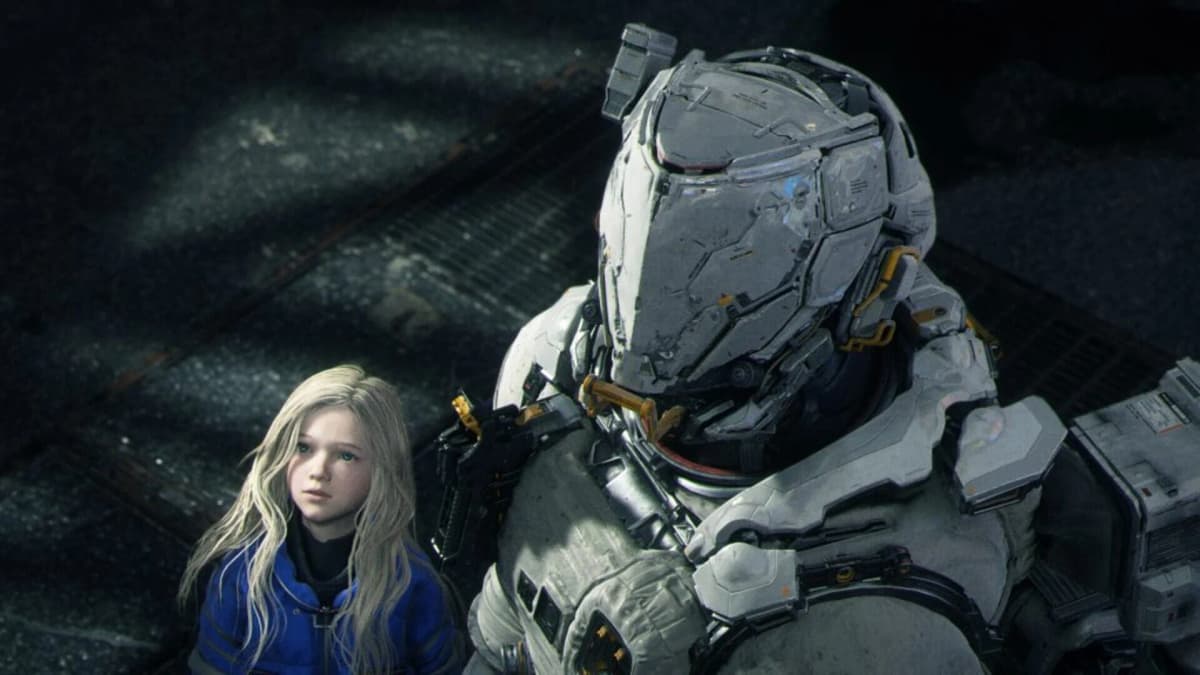
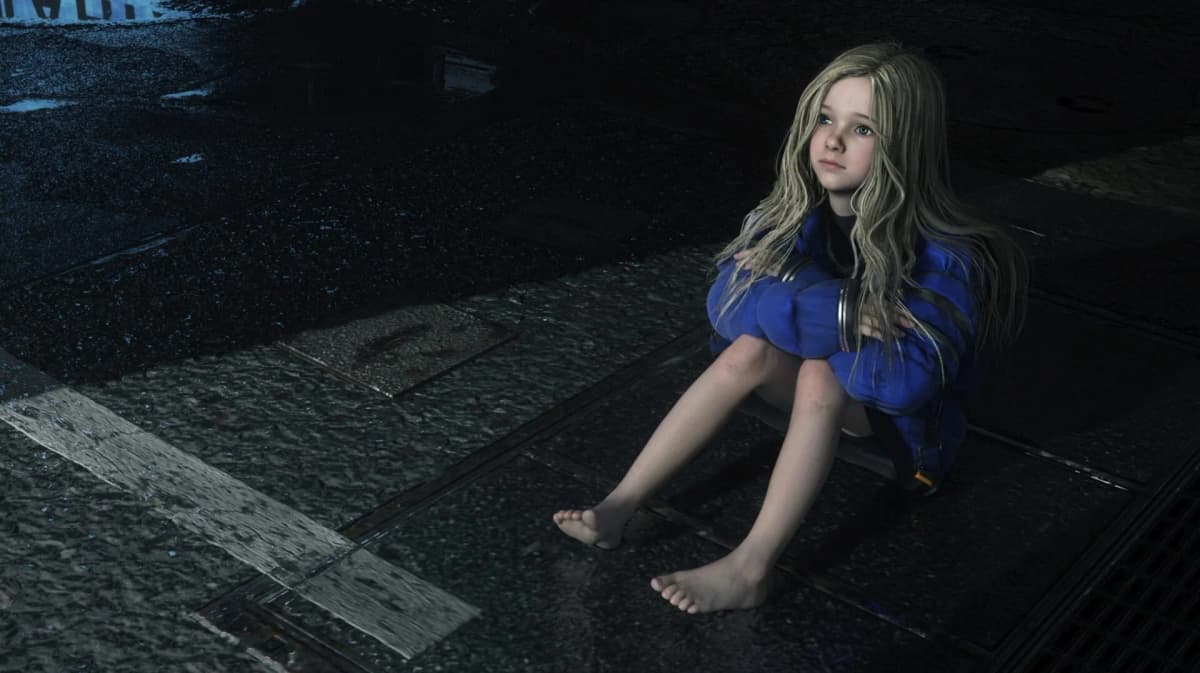
You play as Hugh, a human astronaut in a chunky, almost retro-futurist suit, partnered with Diana, an android known as a “Pragmata” who looks and acts like a curious kid. Their job is to figure out what broke the colony and how to stop the disaster spiraling out further.
On paper, Hugh-and-Diana screams “we’ve already done the gruff guardian & innocent child thing.” We’ve all played The Last of Us, God of War, and every other “sad dad” game. What saved Pragmata for me is that Diana is not written or designed as dead weight. She’s an android packed with technical knowledge, she moves around the environments on her own terms, and crucially, she’s your hacking interface in combat. Cute, yes. But also deadly and genuinely useful.
In the slice I played, their relationship doesn’t reinvent storytelling, but the rhythm feels right. Quiet, slightly awkward conversations at the base, small bits of curiosity from Diana about human habits, then back into chaos. The European Spanish voice acting is surprisingly strong; Hugh has that calm-but-pushed edge, and Diana’s delivery lands on “synthetic innocence” rather than annoying mascot. It’s the kind of duo that could actually carry the game if Capcom sticks the landing later on.
Combat: a satisfying mess of bullets and brainwork
The thing that really flipped the switch for me was how Hugh and Diana connect in actual gameplay. Pragmata is, at its core, a third-person shooter where you’re constantly juggling two layers: your regular gunplay as Hugh and a fast-paced hacking mini-game driven by Diana.
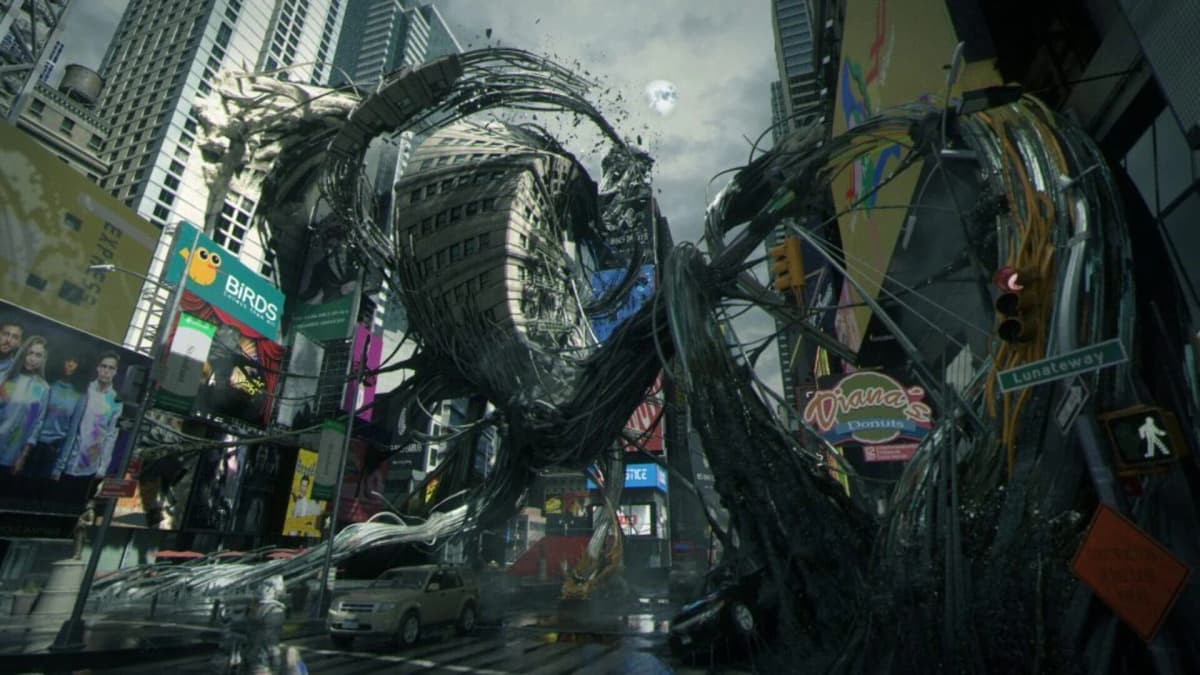
Picture this: you sprint into a lunar Times Square that’s been 3D-printed into existence by that alien fiber. Neon signs float above you, fake skyscraper facades loom around a low-gravity plaza. Drones and mechs swarm in, some with shields that shrug off your bullets, others launching missiles from distant platforms. If you just stand there and shoot, you get shredded.
So you dip in and out of cover, pop a few weak enemies, then tap into Diana’s hacking. The game shifts into a quick, abstract grid where you have to draw a path through tiles in a couple of seconds. The trick is the “nodes” you’ve slotted into that grid beforehand at the base. Run your path through one node, and the target gets massively debuffed. Hit another, and an area-of-effect blast ripples out, wrecking nearby bots. Another might arm a powerful follow-up shot or a little cinematic finisher.
Early on, it felt like trying to pat my head and rub my belly at the same time: aim, shoot, dodge, then suddenly I’m thinking about routes on a hacking grid under a timer. But after maybe 20-30 minutes, something in my brain clicked. I started pre-planning hacks in my head based on enemy types, lining up shots so I could instantly dive into the right pattern, pop back out and capitalize while everything was stunned.
The most telling moment for me: a mid-combat wave where two heavily shielded units were pinning me down from a balcony while smaller drones harassed from the sides. First attempt, I tried to out-shoot them and got flattened. Second try, I reconfigured my hacking nodes at the prior checkpoint, came back in, and this time I opened with a big debuff hack on the balcony mob, chained into an AoE that fried the drones, and suddenly the whole encounter felt completely different, without the game having to spawn anything new.
Diana also picks up extra tricks the deeper you get. In this build, she could hijack incoming missiles and send them back at their owners, which led to a couple of very satisfying “no, you eat this” moments. There’s also a stylish “second chance” script where, just before a heavy hit connects, time slows and you get a brief, high-stakes hacking QTE that lets you flip the situation if you nail it. The first time I pulled that off, Hugh turned what should’ve been a lethal slam into a counter that stunned the enemy and opened it up for a brutal follow-up. Very Capcom, very cool.
It’s not perfect. When a fight throws a lot of similar enemies at you, the hacking mini-game risks feeling a bit like you’re solving the same puzzle over and over. The enemy variety in this slice helped, but I can see those grids becoming a little repetitive if later levels lean too hard on them without enough twists. The customization of nodes (we’ll get there next) seems designed to fight that fatigue, though, and so far it mostly works.
The base: where Pragmata quietly turns into an RPG-lite
The part I totally underestimated from the early demo is the base. Functionally, it’s your hub, accessed through “save point” beacons scattered along the levels. Emotionally, it’s somewhere between a Monster Hunter camp and a tiny Mass Effect Normandy – just enough space and interaction to make it feel like a place, not a menu.
Every time I warped back, I could tinker with Hugh’s loadout: upgrade and mod weapons, swap armor-style pieces, and, crucially, reconfigure my hacking modules. There are four basic weapon archetypes available in this build – think reliable rifle, heavier option, faster sidearm, utility piece – and each has its own stats and upgrade paths. On my first visit, staring at all these trees and slots, I felt that little “oh no, this is going to be a spreadsheet game” anxiety.
By the second visit, the layout had clicked. The game does a smart job of nudging you: it seeds just enough upgrade materials in the level that you can afford meaningful changes right away, and the UI groups hacking and combat upgrades in a way that mirrors how they interact in the field. Upgrade a rifle’s stagger output, then slot a node that amplifies damage against staggered enemies, and you can immediately feel that synergy in the next encounter.
The hacking node board is where the light RPG brain really wakes up. You can bring a limited set of nodes into missions, and each node has a distinct effect. In this build I played with three main types: a raw damage amplifier, an AoE blast, and a sort of “ultimate shot” trigger that unlocked a powerful follow-up if used at the end of a path. Where you place these in the grid matters because you have to physically route through them under pressure during hacks.
I spent an embarrassing amount of time before one difficult stretch just rearranging nodes to accommodate how I draw patterns under pressure. Once I accepted that I always start top-left and swirl clockwise (apparently my brain is weird), I placed my key nodes accordingly and my success rate shot up. That’s the kind of small, personal connection to a system I love – it’s not just stats going up; it’s the game quietly adapting to my quirks.
Back at the base, you can also chat with Diana and Cabin, a very endearing robot who serves as both comic relief and exposition machine. I only saw a couple of short scenes, but they broke up the loop nicely and made the hub feel lived in. If Capcom seeds more meaningful storytelling here, this could be where the emotional side of Pragmata breathes between set pieces.
Back at the base, you can also chat with Diana and Cabin, a very endearing robot who serves as both comic relief and exposition machine. I only saw a couple of short scenes, but they broke up the loop nicely and made the hub feel lived in. If Capcom seeds more meaningful storytelling here, this could be where the emotional side of Pragmata breathes between set pieces.
🎮 Get This Game at the Best Price
Compare prices instantly and save up to 80% on Steam keys with Kinguin — trusted by 15+ million gamers worldwide.
*Affiliate link — supports our independent coverage at no extra cost to you
Level design and bosses: nostalgic structure with sharp execution
The section I played was set in that lunar Times Square – a relatively linear chunk, but layered vertically and split into distinct combat arenas. Hugh’s suit comes with short burst thrusters, so you’re not just running corridors; you’re chaining jumps, boosting to platforms, and poking into side paths.
Those side routes usually hid resources, collectibles, or little interactive objects for Diana. At one point I veered off the main path to a balcony just because it looked like “the wrong way,” and my reward was a small, optional scene where Diana tried to mimic an ancient Earth commercial looping on a half-broken screen. Mechanically it just gave me a few bits of upgrade material, but it’s exactly the kind of micro-moment that makes exploration feel worth it.
The macro objective of the level, though? Classic. Hit a series of stations spread around the map to lower a massive barrier blocking the exit. It’s “collect the three keys to open the big door” dressed up in lunar sci-fi clothing. Structurally, it’s nothing fresh, but the encounters layered on top save it from feeling like busywork.
Capcom flexes properly at the end-of-section boss. Without spoiling the exact design, it’s a towering machine with multiple weak points and several attack phases. The first time it swept the arena with a massive beam, forcing me to chain jumps with perfectly timed hacks to disable its guard modules, I felt that old-school Capcom boss rush kick in — a bit of Monster Hunter pacing, a bit of Resident Evil spectacle, a pinch of Lost Planet nostalgia.
What I appreciated is that the boss didn’t just have more HP; it leaned hard on the hacking system. Some attacks are realistically undodgeable unless you nail the pre-emptive hack, and its different phases essentially force you to re-evaluate your node layout and weapon choice. After dying twice, I actually warped back to base, retooled for more aggressive debuffs and a sturdier main weapon, and the third attempt suddenly felt fair rather than cheap. Again, that synergy between combat and progression is where Pragmata really clicks.
Story & tone: 2010s Japanese sci-fi in the best (and worst) ways
The tone of Pragmata is going to divide people, and I say that as a compliment. It feels like a time capsule from the early 2010s era of Japanese sci-fi — that mix of earnest melodrama, slightly clunky exposition, and weirdly specific techno-mysticism. Think a halfway point between something like Vanquish, Binary Domain, and a toned-down Nier: Automata.
In the slice I played, the writing mostly does its job: it establishes the stakes, hints at bigger conspiracies around the fiber material, and uses Diana’s outsider perspective to prod at what humanity did wrong here. There are already a few beats where the game leans into sentimentality — quiet elevator rides, a brief scene where Diana struggles to understand why simulated crowds feel “wrong” — but it never tipped into full cheese for me, partly because she’s not helpless. Knowing she can fry a mech’s brain while also asking naive questions about human food gives her a nice duality.
Will it all hold up over a full campaign? That’s the big unknown. There’s a risk the familiar “protect the special child” structure drifts into predictability. But based on this build, Capcom seems self-aware enough to let Diana be more than cargo and to pace quiet and noisy moments in a way that kept me leaning forward rather than rolling my eyes.
Graphics, performance and platforms: RE Engine flexes again
Technically, Pragmata is exactly what you’d expect from a late-cycle RE Engine game: sharp, clean, and surprisingly detailed, without chasing ultra-realism. On PS5 Pro, the lunar Times Square was dense with holograms, signage, and little simulation glitches that sold the idea of a replicated city fraying at the edges. Particle effects from hacks and explosions were busy but readable, which matters a lot in fights where you’re already mentally juggling grids and bullets.
The earlier slice I played on Switch 2 obviously didn’t look quite as slick, but it held its own. Resolution and effects dialed down, sure, yet the art direction survived the downgrade, and more importantly, the combat rhythm stayed intact. That’s promising if you’re planning to play this handheld; the last thing this game can afford is input mush during fast hacks.
I didn’t get to tinker with full graphics mode options or a PC build, so I can’t definitively talk about performance modes, but in my sessions the frame rate felt stable enough that I forgot about it — which, honestly, is exactly what you want in a game this reactive. The only real technical gripe I had was a couple of slightly clumsy camera angles when the action got too vertical, but those were edge cases rather than constant annoyances.
Who is Pragmata actually for?
After these hours, I don’t think Pragmata is trying to chase the live-service crowd or the ultra-hardcore character-action niche. It sits in that middle ground Capcom used to occupy a lot in the PS3/360 era: punchy, self-contained action games with just enough systems to chew on without turning into homework.
If you like:
- Third-person shooters that aren’t pure cover-based snoozefests
- Real-time combat that forces you to think a couple of steps ahead
- Light build-crafting and hub tinkering between missions
- Japanese sci-fi that’s earnest and a bit weird, not grimdark “serious”
…then Pragmata should absolutely be on your radar. If, on the other hand, hacking mini-games instantly make your eyes glaze over, or you want a fully open-world sandbox, this is probably not going to convert you. The campaign structure feels more like curated stages strung together with a central hub than a sprawling explorable moon.
Also, a quick note on difficulty: this build had a couple of genuine difficulty spikes, especially when I tried to brute-force fights without visiting the base to adjust my setup. Once I leaned into the progression layer, things felt fair, but don’t expect a pure popcorn shooter where you can coast on aim alone.
FinalBoss // Gear
Level up your setup
01Top-rated gaming headsetson Amazon→02High-refresh gaming monitorson Amazon→03Gaming chairson Amazon→04Discounted game keyson Kinguin→
Affiliate links · As an Amazon Associate, FinalBoss earns from qualifying purchases.
Want to Level Up Your Gaming?
Get access to exclusive strategies, hidden tips, and pro-level insights that we don't share publicly.
Ultimate Reviews Strategy Guide + Weekly Pro Tips