
Table of Contents (7)
Let’s Be Real: You Can’t Synthesize a Cannon Dropped in a Pool
I’ve played enough games with stock audio to know the exact moment a developer reached into the same tired library everyone else uses. It’s that specific wood-creak. That identical door slam. The generic pistol crack that’s been echoing through shooters since 2009. So when Erik-Jon Evangelista, the director of sound on Assassin’s Creed Black Flag Resynced, says his team is still out there recording “artisanal” audio-actual microphones, actual fieldwork, actual gunshots fired into actual pools-I’m inclined to believe him. More than that, I’m inclined to care.
Evangelista isn’t some Luddite screaming into the void about technology. He frames generative AI as potentially usable as a tool, full stop. But he draws a hard line when it comes to the raw, physical texture of foley work. Sound libraries and scraped internet audio can’t replicate the micro-variations of a rope snapping under tropical humidity, or the way a cannonball’s splash in saltwater differs from chlorinated pool water when you’re trying to nail the perfect naval combat thud. These are the details that separate a remake from a remaster. These are the details that make Edward Kenway’s world feel like a place you can smell.
What Foley Captures That Libraries and Algorithms Miss
Here’s the testable claim at the heart of this debate: foley captures physicality that synthesis consistently flattens. When a foley artist drags a heavy chain across a wooden deck, you’re not just hearing metal and timber. You’re hearing the dust in the cracks, the slight give of the planks, the micro-rattle of individual links settling at different rates. A library sample gives you the idea of a chain. A foley recording gives you that specific chain, on that specific deck, in that specific room tone.
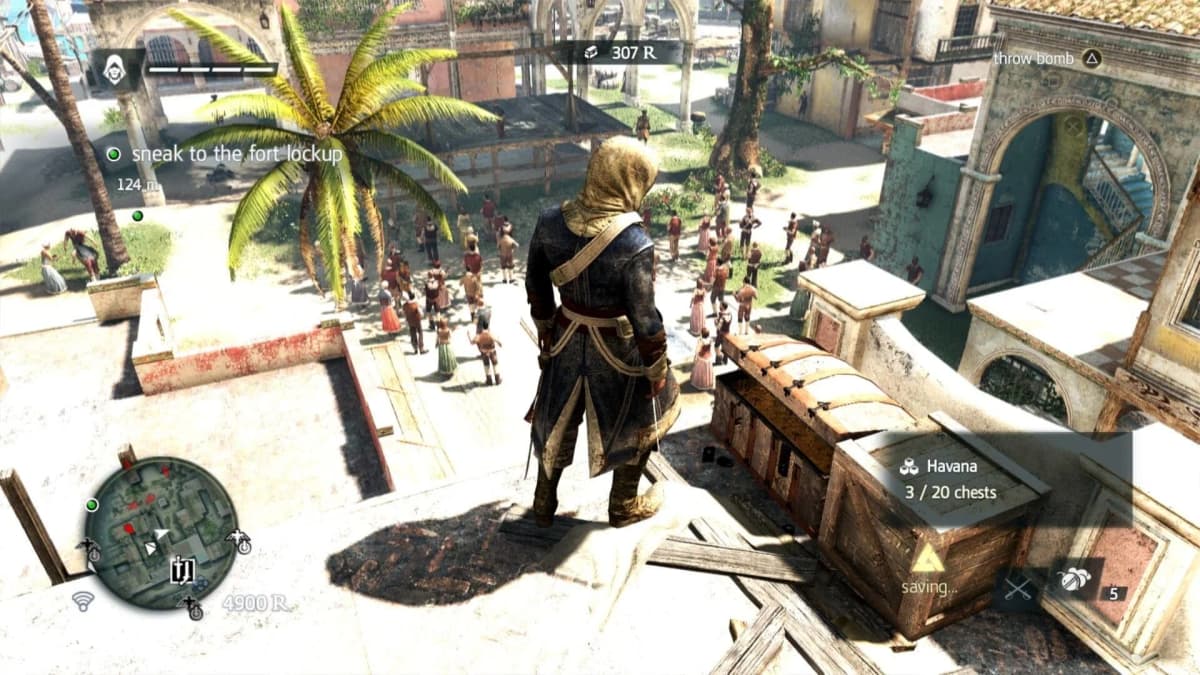
In Black Flag Resynced, this matters more than most remakes because the original’s identity is so deeply rooted in its acoustic footprint. The creak of the Jackdaw. The snap of canvas in a wind shift. The directional slap of Caribbean waves against a hull that’s listing because you just took a broadside. These aren’t ambient flourishes-they’re gameplay information. You read the weather through your ears as much as your eyes. A generic “ocean loop” doesn’t tell you squat about the state of your ship. A handcrafted soundscape does.
Generative AI, for all its brute-force pattern matching, struggles with intentionality. It can approximate a cannon shot, but can it vary that shot based on the powder charge, the barrel length, the humidity of the air, and the specific stress of the wood frame absorbing the recoil? Can it generate the accidental splash of bilge water across the deck in the same take? Those happy accidents—the unplanned texture that sells a recording as real—are exactly what get smoothed away when an algorithm trains on averages. The average cannon shot is boring. The specific one, recorded on a Tuesday afternoon with a microphone dangling over a pool’s edge, is not.
The Library Problem: When Every Pirate Game Sounds the Same
I’ve noticed a creeping homogenization in modern game audio, especially in anything relying on open-source libraries or bulk licensing. You play a pirate game, then a medieval RPG, then a post-apocalyptic shooter, and somewhere around hour three you realize the same chest-lid creak is following you across genres. It’s audio deja vu, and it’s the fastest way to kill immersion. Evangelista’s argument that internet audio and pre-built libraries don’t cover the necessary detail isn’t just boutique pride—it’s a survival tactic for identity.
Black Flag already had one of the most distinctive sonic personalities in the franchise. The original didn’t just sound like “pirates”; it sounded like this crew, this ship, this particular blend of violence and salt. If Resynced is a true ground-up remake running on the Anvil Engine with faster combat, improved stealth, and modern visuals, the audio can’t be the one department phoning it in with a subscription to Generic Ocean Sounds Dot Com. The graphics will be sharper, the load times shorter, the animations smoother. If the audio doesn’t match that specificity, the dissonance will be brutal.
AI Isn’t Useless—It’s Just a Different Kind of Tool
Now, let’s not pretend generative AI is just a boogeyman for nervous artists. Evangelista himself frames AI as potentially usable as a tool, and there are places where it genuinely belongs in the pipeline. Noise reduction is the obvious one—cleaning up field recordings saves hours of mind-numbing manual editing. Format conversion without loss is another tedious task AI can chew through while humans focus on creative decisions. And metadata tagging? If an algorithm can sort a thousand raw assets, tagging cannon shots, ship wood, and water slaps so a sound designer can find them in seconds instead of hours, that’s not replacing craft. That’s removing friction.
Where AI gets genuinely interesting is in prototyping and iteration speed. Need to test whether a guttural shout or a high-pitched crack works better for a new boarding axe? Generate a temp asset, drop it in, hear it in context, make the call. The key word is temp. It’s a sketch, not the final painting. The danger isn’t that studios will use AI to prototype; it’s that executives looking at spreadsheet lines will see “functional audio” and decide the sketch is good enough to ship. That’s the tension Evangelista is pushing back against, and it’s a tension every working creative in this industry should recognize.
The Player’s Ear: How to Test This Yourself
So how do you, as a player, actually verify whether foley craft is winning this fight? Start with consistency checks across states. In Black Flag Resynced, listen to the Jackdaw’s rigging. Does it sound identical in a storm as it does in calm seas, just louder? Or does the physical stress actually change the timbre—the pitch of the creaks, the rattle of the pulleys, the way the wind interacts with the sails? If it’s the former, you’re probably hearing loops or generated averages. If it’s the latter, someone put a microphone in a bad situation on purpose.
Replay with intent. Boot up a naval combat sequence and focus purely on the percussion of the cannons. Do the shots vary? Not just in volume based on distance, but in character? A loaded long gun sounds different from a chase gun. A shot across the bow has a different acoustic envelope than a shot tearing through your own hull. Real foley work, informed by real physics, captures that variance because the world itself is variable. Synthesis often converges on a mean, and the mean is dull.
And then there’s the happy accidents. The stuff that can’t be planned. A seagull screeching during a take. The weird slap-back echo off a concrete pool wall that makes a splash sound cavernous and alien. A generator humming in the distance of a field recording that adds unintentional menace. These are the fingerprints of human presence. AI doesn’t accidentally capture poetry. It captures exactly what you asked for, which is almost never as interesting as what you didn’t know you needed.
Why Black Flag Resynced Can’t Afford to Get This Wrong
This isn’t just an abstract debate about workflow. Assassin’s Creed Black Flag Resynced is positioned as a ground-up remake, not a lazy up-res. Ubisoft is promising modern graphics, faster combat, improved stealth, and drastically reduced loading screens. That level of technical overhaul raises the bar for everything else. If the audio team were to coast on libraries or generative shortcuts, the gap between what you see and what you hear would be cavernous. You’d have a photorealistic Edward Kenway climbing a mast that sounds like it’s made of royalty-free plywood.
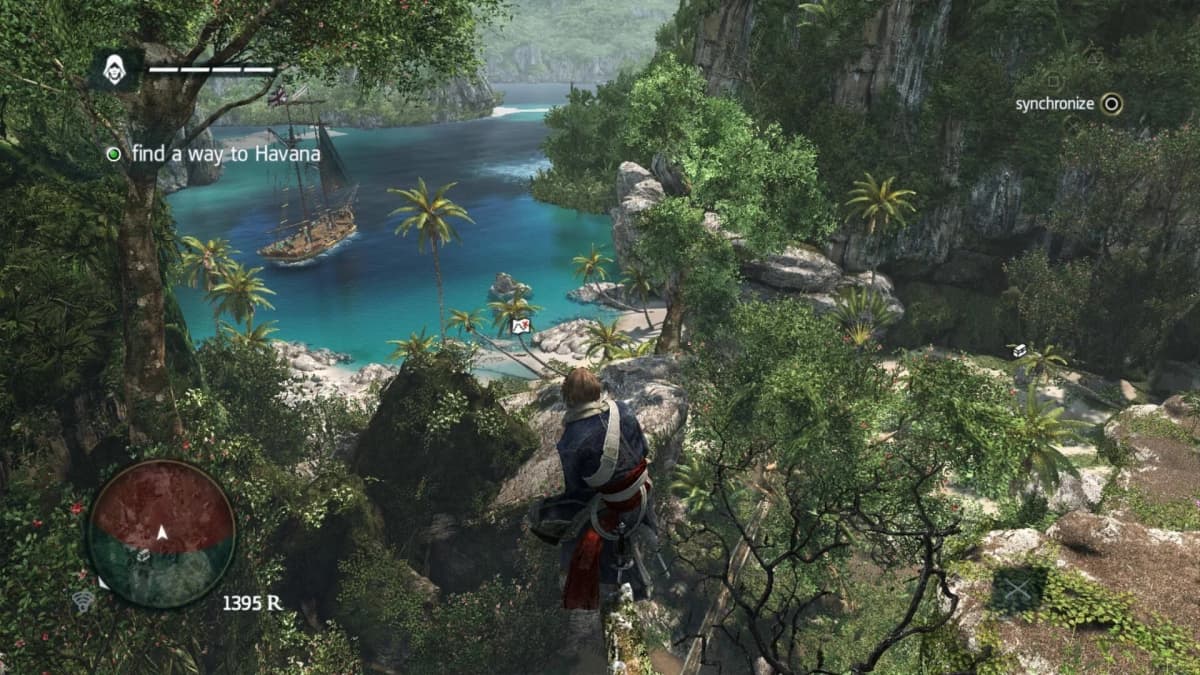
The naval gameplay is the soul of Black Flag. It’s what separated the game from every other Assassin’s Creed entry before or since. And naval gameplay lives or dies on its acoustic feedback. The groan of the hull as you heel into a turn. The percussive punctuation of a successful broadside. The visceral, wet crunch of ramming a schooner. These moments need weight. They need specificity. They need someone standing in a room with a microphone, a pool, and a reckless disregard for their own safety recording gunshots. If Resynced delivers anything less, it’s not a remake—it’s a visual mod with a retail price.
The Real Enemy Is “Good Enough”
Here’s where I land, and it’s probably harsher than some expect. Evangelista is right to defend foley, but the real threat isn’t generative AI as a technology. The real threat is the corporate impulse to confuse “tool” with “replacement.” AI can tag metadata. AI can clean noise. AI can even generate a placeholder cannon blast at 3 a.m. when the audio lead needs a proof of concept by morning. But when the directive shifts from “use this to move faster” to “use this so we don’t have to pay for a recording studio,” the work suffers. And players notice, even if they can’t articulate why a game feels hollow.
We’ve already seen what happens when other departments get gutted by the “good enough” philosophy. Procedural worlds that feel like copy-paste dioramas. Motion-capped cutscenes with dead eyes. Dialogue written by committee. Audio is the last line of defense for physical presence in a medium increasingly obsessed with virtual abstraction. If we let that line break, games will start feeling like they’re generated entirely—visuals, sound, design—by systems that have never touched water, wood, or gunpowder.
FinalBoss // Gear
Level up your setup
01Top-rated gaming headsetson Amazon→02High-refresh gaming monitorson Amazon→03Gaming chairson Amazon→04Discounted game keyson Kinguin→
Affiliate links · As an Amazon Associate, FinalBoss earns from qualifying purchases.
Want to Level Up Your Gaming?
Get access to exclusive strategies, hidden tips, and pro-level insights that we don't share publicly.
Ultimate Gaming Strategy Guide + Weekly Pro Tips