
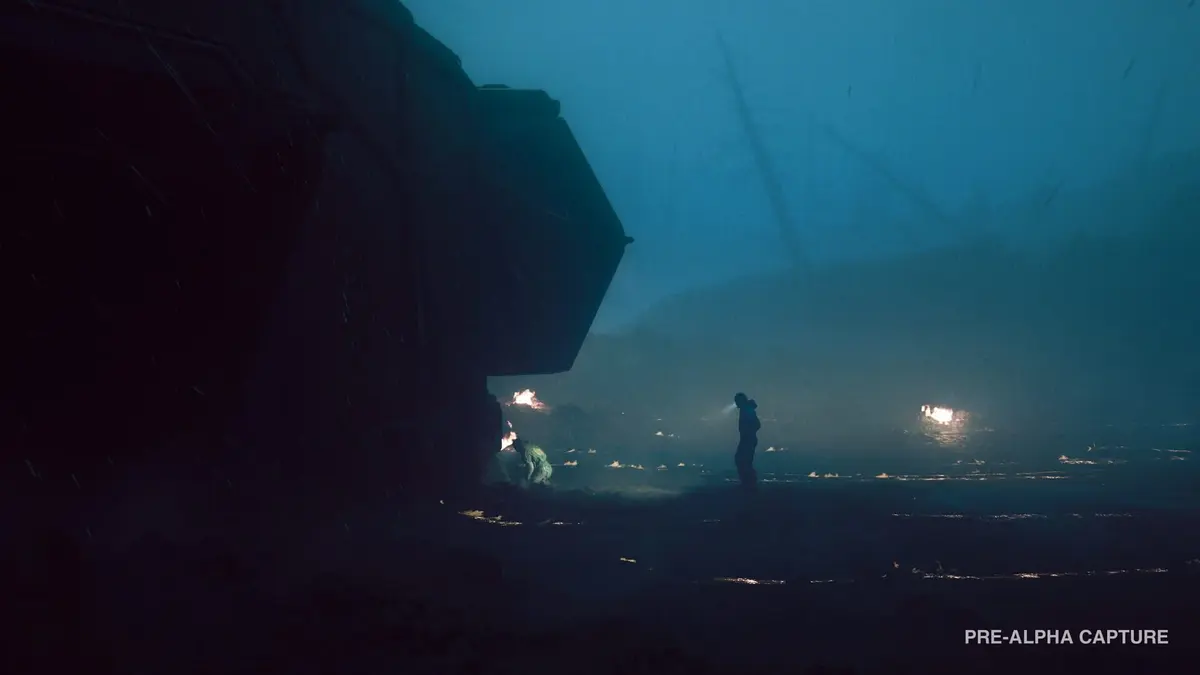
Alien: Isolation 2 has the right priority: make the player feel hunted before trying to make the sequel feel bigger. Its Gamescom 2026 prologue puts Blake in a tight laboratory on LV-921, with a Xenomorph loose, a weak flashlight, manual doors, scarce breathing room, and a motion tracker that remains as useful as it is psychologically cruel. Twelve years after Creative Assembly turned a space station into the industry’s most stressful workplace, the studio has remembered that the Alien works best when it owns the room.
The sequel’s first public European hands-on, held in Hall 7 at Koelnmesse in Cologne, is deliberately narrow. SEGA presented a playable prologue rather than a grand systems showcase, and that restraint helps. Blake, part of a Weyland-Yutani research team, investigates a crashed vessel near the Kurosaki colony and releases the creature being held inside. Weyland-Yutani once again demonstrates its unmatched ability to turn basic workplace safety into science fiction.
Table of Contents (4)
The lab is doing Sevastopol’s job without copying Sevastopol
Sevastopol Station was destroyed at the end of 2014’s Alien: Isolation, but its debris and a Sevastopol module have found their way to LV-921. That gives the sequel a direct thread back to Amanda Ripley’s story while letting Creative Assembly move the action to a colony planet and place Blake at the center of the immediate danger.
The Gamescom build’s lab corridors carry the old game’s strongest quality: every route feels compromised. Players can slip into vents, duck under desks, throw a bottle to pull the Xenomorph away, or make a run for it when the plan collapses. The flashlight battery limits how freely Blake can light the way, even though it can recharge. The motion tracker offers information, but information is rarely comfort when the dot is getting closer.
Crucially, hiding is no longer framed as a foolproof answer. Creative Assembly is pushing players toward movement, timing, noise management, and bad decisions made under pressure. That is the correct direction. The original game’s Alien became less frightening whenever players found a reliable locker routine; a sequel needs to punish habit without turning every encounter into a scripted ambush.

DualSense haptics could be more than the usual controller garnish
On PS5, vibration and trigger effects are supported, while the Gamescom demo used a far more specific trick: the Alien’s footsteps thud through the DualSense even when it has moved beyond the player’s immediate room. That matters because it turns the controller into an extra threat sensor with deliberately imperfect information. You may know the creature is nearby; you still do not know whether it is above you, around the corner, or about to make your hiding place a liability.
That is a better use of haptics than the standard “gun feels heavy” routine. Horror benefits from signals that raise dread without resolving it. The practical test for the final PS5 version is simple: the rumble needs to preserve positional ambiguity and keep working across long pursuit sequences. If it merely fires on canned scares, it will become background noise fast.
The outdoor gamble is where the sequel can either evolve or lose its nerve
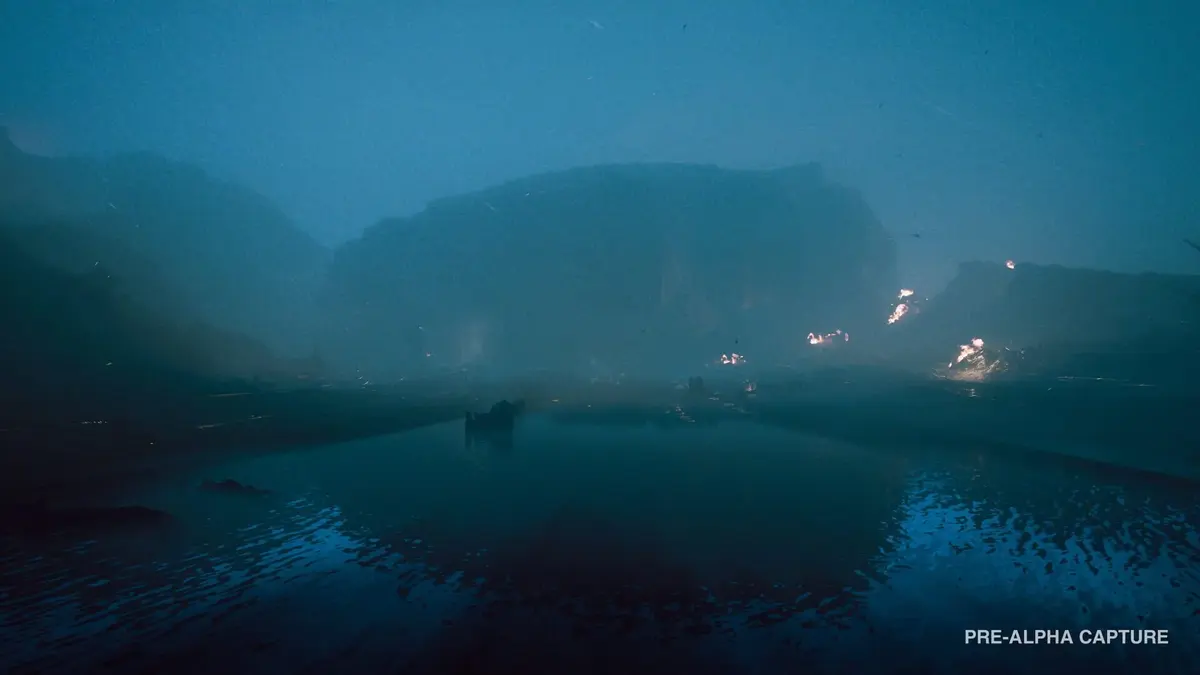
Creative Assembly is taking Alien: Isolation 2 outside. LV-921 includes planet-surface sections hit by wind, rain, and fog, with visibility falling to roughly two metres when the weather closes in. Art director Anna Soikicova has tied those conditions directly to survival: sound and visibility change, and the Alien must hunt through those changing conditions too.
That is the one genuinely risky part of this pitch. Wide outdoor areas can give players options, but Alien horror has always fed on compression: narrow routes, bad sightlines, machinery screaming loud enough to cover approaching footsteps. A storm can recreate that helplessness by stripping vision and drowning sound. It can also become a fog machine with a larger map attached.
The prologue does not settle the issue. Its lab setting proves Creative Assembly can still build the close-range cat-and-mouse loop. It does not prove that the loop survives when the game opens into colony spaces, supports multiple approaches, and gives players more room to disengage. Nor does the demo establish how adaptive the final Xenomorph AI will be across the full campaign rather than this tightly authored opening slice.
What needs to hold up before launch
- Outdoor weather must restrict player confidence, not merely reduce visibility for effect.
- The Xenomorph needs to counter repeated hiding tactics without becoming an arbitrary teleporting punishment machine.
- Manual doors, saves, and limited light need to sustain pressure beyond the prologue rather than serving as a polished vertical-slice routine.
- Creative Assembly needs to show how Amanda Ripley’s presence and Sevastopol’s wreckage matter to the story, beyond franchise continuity bait.
Alien: Isolation 2 is planned for PC, PlayStation 5, Xbox Series X|S, and Nintendo Switch 2. There is no release date, price, or retail edition information yet. The next footage worth paying attention to is a longer uncut mission outside the lab, where the weather, traversal space, and hunter behavior have to work together without Sevastopol-style corridors doing all the heavy lifting.
Verdict: the Gamescom demo earns cautious excitement because it understands the original game’s central rule: the Alien should make every small action feel expensive. If Creative Assembly can carry that tension into LV-921’s stormy exterior spaces, this sequel has a real reason to exist. If those spaces dilute the pressure, it will be another horror follow-up that mistook square footage for escalation.
FinalBoss // Gear
Level up your setup
01Top-rated gaming headsetson Amazon→02High-refresh gaming monitorson Amazon→03Gaming chairson Amazon→04Discounted game keyson Kinguin→
Affiliate links · As an Amazon Associate, FinalBoss earns from qualifying purchases.
Want to Level Up Your Gaming?
Get access to exclusive strategies, hidden tips, and pro-level insights that we don't share publicly.
Ultimate Gaming Strategy Guide + Weekly Pro Tips