
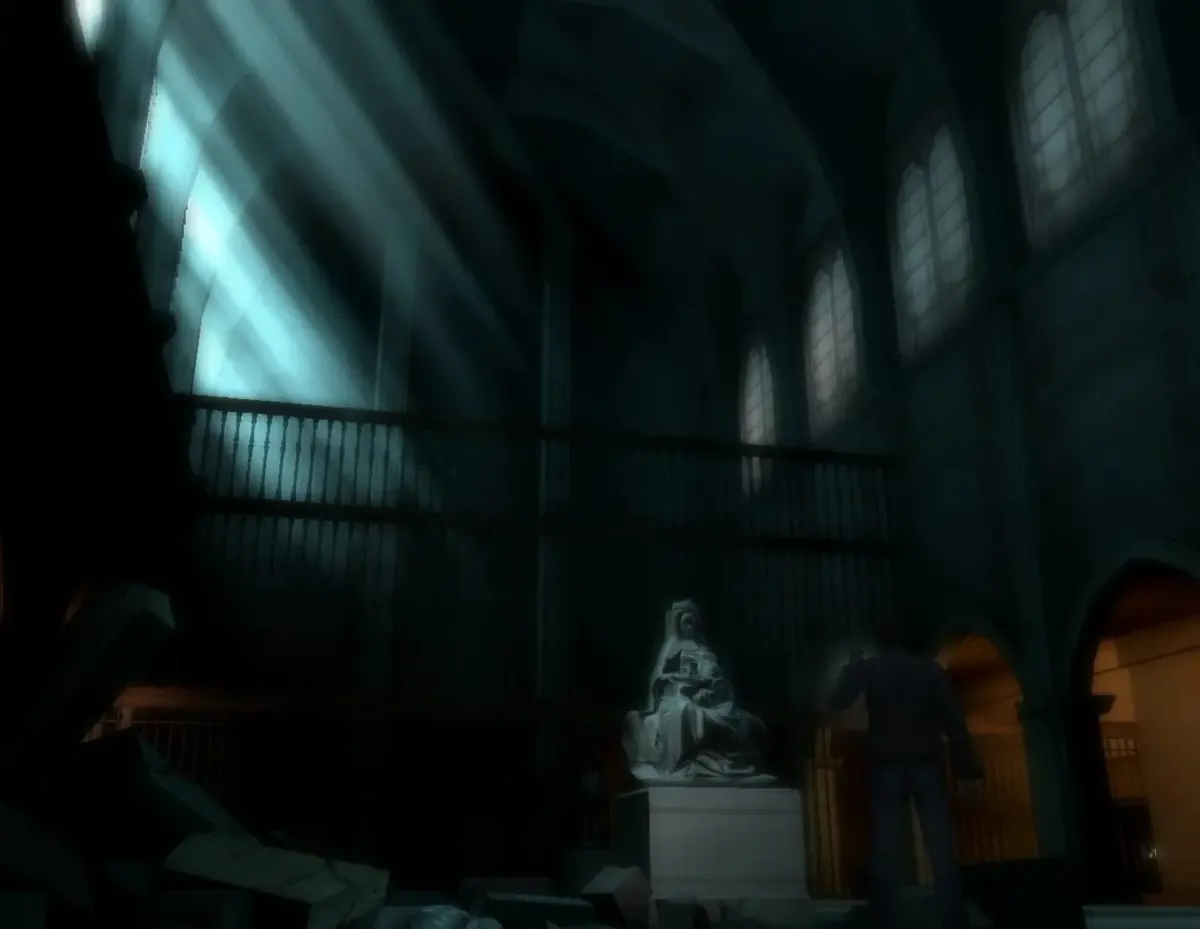
A room could become threatening before anything entered it. In the original Alone in the Dark, fixed camera views gave doorways, corners and apparently empty space a dramatic weight that a freely controlled camera would change. The player could move through the room, but the game chose how much of that room the player could see.
That division of control remains the part of its horror design I value most. An enemy has a visible shape and position once it appears. Before that appearance, an excluded corner can support several possibilities at once. The room becomes something to interpret, and moving through it becomes a commitment.
My position is straightforward: unseen danger works best when players have evidence to think with. A restricted view, a disturbing document or a broken pattern can make that evidence incomplete. Concealment becomes cheap when the game also removes the information needed to make a sensible choice. Alone in the Dark gives us a useful way to examine that boundary through its camera, its writing and creator Frédérick Raynal’s approach to threatening spaces.
Table of Contents (6)
The fixed camera makes empty space worth watching
At The Tenth Mosaic, fixed camera angles in Alone in the Dark were discussed as something comparable to cuts in film, with the environment placed at the center. That comparison explains their power, but interactive movement adds a complication: the player has to act inside the composition.
A doorway near the edge of the image receives a different emphasis from one positioned in the middle. A staircase that disappears beyond the frame offers less information than a fully visible route. Crossing into another camera view changes the player’s knowledge of the space. The previous shot may have felt manageable; the next one can expose a blind spot that was there all along.
I like the pressure this puts on movement. The camera can make a few steps feel consequential without requiring a creature to perform for the player. It also gives sound a particularly useful territory: everything outside the image. An audible movement beyond the visible area can make an otherwise empty composition feel occupied. The image supplies the boundary; the sound suggests something across it.
There is a real tradeoff here. A third-person camera following behind a character offers a stronger sense of entering the space directly and lets players investigate by changing their view. A fixed camera gives the designer tighter control over composition. I favor the fixed view when that control makes the environment expressive, but its restrictions still need to leave movement intelligible.
If a camera transition prevents players from understanding an escape route, conceals a necessary interaction or makes an attack effectively unavoidable, the composition has become an obstacle to playing. My standard is simple: the player can remain unsure about what occupies a blind spot while still understanding the available routes around it.
Books and notes let the threat exceed the graphics
In Alone in the Dark, books and notes supplemented what the graphics could not show. That practical relationship matters. Writing could introduce a history, consequence or possibility that the visible room could only partially express.
The strongest use of that technique changes the player’s relationship with the location immediately. A document suggesting that danger has occurred in a place makes the player reassess the place they are standing in. The walls have not moved, but the interpretation has. The next doorway now carries information that its appearance alone could not provide.
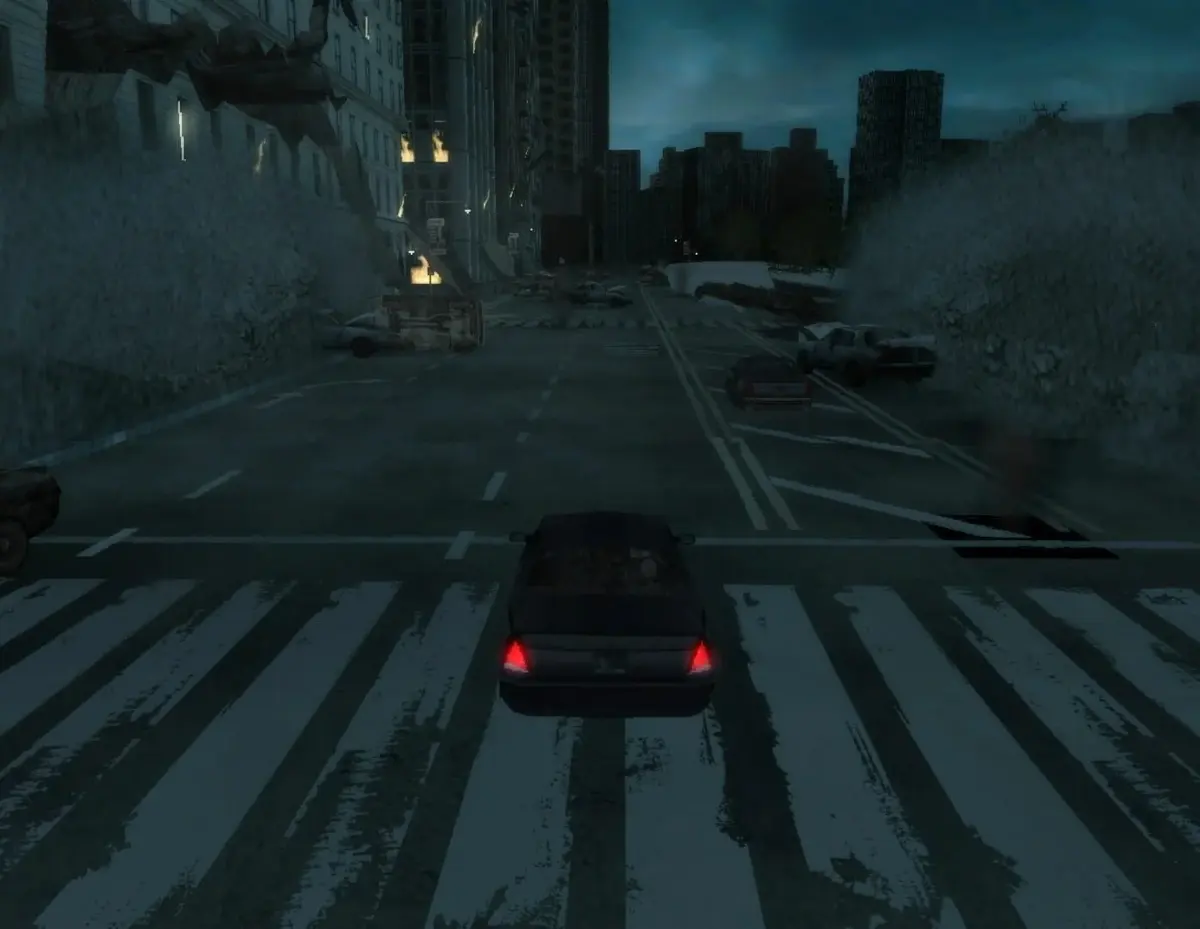
This is where I want horror writing to spend its effort. Describing a creature exhaustively gives it boundaries. Describing the consequences of an encounter leaves room to reconstruct what caused them. A book can make an unseen presence feel substantial through its effects without delivering a complete visual specification.
Ambiguity needs something solid underneath it, though. A note should give the player a concrete fact, a meaningful warning or a contradiction worth remembering. If every passage offers only ominous vagueness, reading becomes an exercise in collecting atmosphere. The original game’s use of text points toward a more valuable purpose: expanding the player’s understanding of the space beyond the limits of the image.
Raynal’s most effective weapon is a broken expectation
Raynal described disrupting the safe patterns players build: a floor collapsing after a long quiet period, or an enemy appearing immediately behind an opened door. These examples reveal why familiarity can become such useful material for horror. A player learns a routine, begins to trust it, and then encounters a reason to reconsider.
The quiet period does real work. It establishes an expectation that continued movement will remain uneventful. The collapse then reaches backward, changing how the player interprets that earlier calm. Likewise, an enemy behind a door makes the act of opening the next door carry the memory of the previous one.
I find that more interesting than filling every room with an obvious threat. Constant danger gives players a stable instruction: remain on guard. A disrupted routine makes them decide when to trust their own experience. The familiar environment acquires uncertainty without needing a complete visual transformation.
Raynal also chose an ordinary person as the protagonist rather than a superhero. That choice gives these spatial disruptions greater force. The character’s vulnerability makes a doorway, a damaged floor or a poorly understood room matter. The setting has leverage over someone who cannot simply dominate it.
There is a limit to breaking expectations. If every apparent rule is disposable, players eventually stop forming expectations at all. They may inch forward mechanically, treating each step as a potential punishment. For me, a strong reversal changes one assumption sharply enough to linger. Repeated arbitrary reversals turn caution into tedious procedure.
A living setting needs recognizable habits
Raynal’s view that the setting should be treated as a living character connects the camera, the documents and the sudden disruptions. The environment has to develop a recognizable identity before a change in its behavior can register.
Fixed views help establish that identity. Returning to a familiar composition gives the player a reference point. Written material adds meaning to the location. An interruption then tests what the player thought they understood. These techniques become more powerful together because each supplies something the others need.
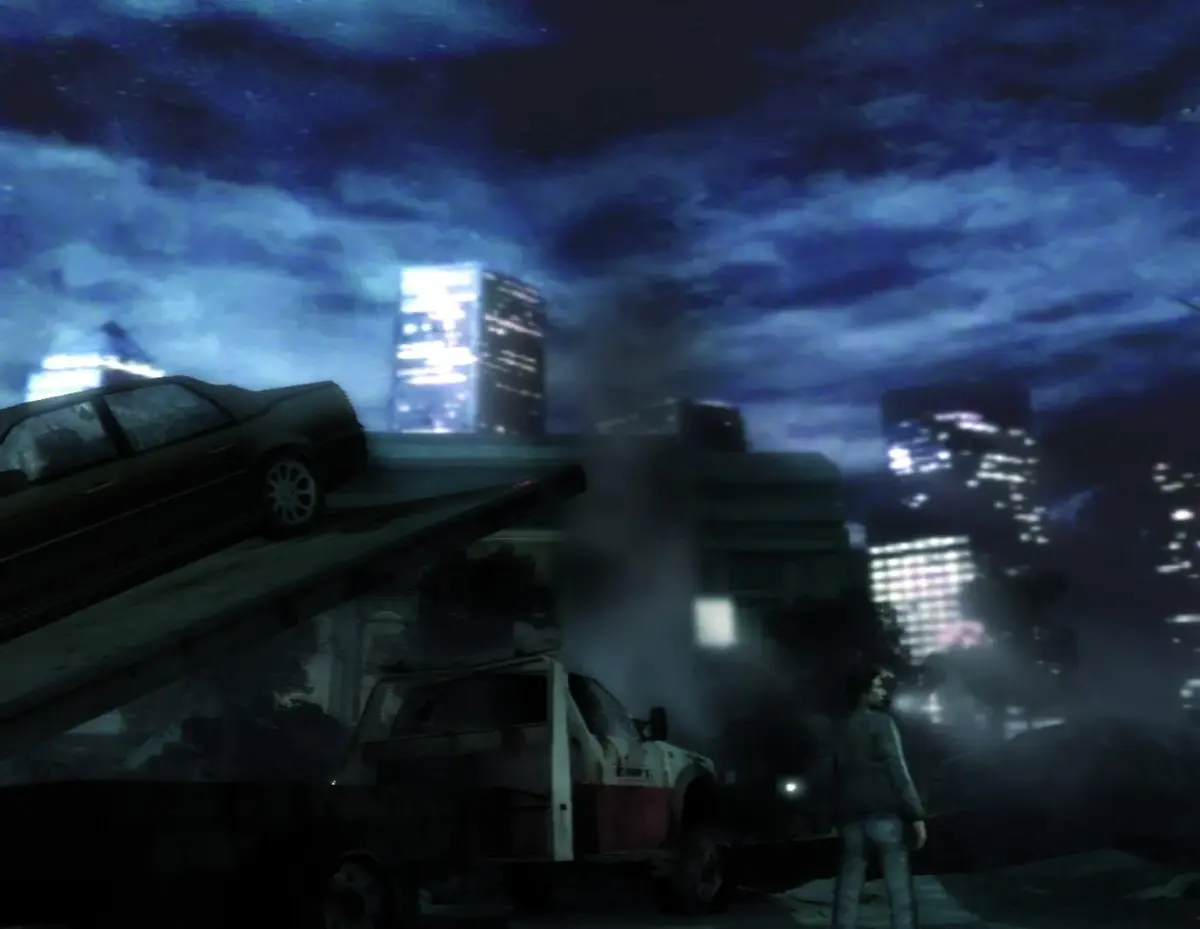
That has a second-order consequence I appreciate: sparse enemy appearances can still affect a large amount of play. After a threatening encounter, the player carries its possibility into rooms where nothing happens. An empty room can benefit from the memory of an occupied one. The game does not need to repeat the encounter immediately to preserve its influence.
The danger is overextending that influence. A setting that continually promises activity without delivering any meaningful change can become inert. Suggestion needs occasional substance. The player needs enough experience of the threat to understand why its absence matters.
Showing the threat gives concealment something to work with
The strongest objection to celebrating unseen horror is that a frightening enemy can be worth looking at. I agree with that objection. A visible encounter can establish scale, behavior and consequences more effectively than another vague noise or unreadable warning.
That encounter can also improve the next period of uncertainty. Once players have seen what a threat can do, an obstructed view carries a more specific risk. They have material for their imagination. Concealment then becomes a change in available knowledge, rather than an indefinite promise that something interesting might eventually happen.
I would therefore resist turning Alone in the Dark’s methods into a rule that horror should always show less. Its more useful lesson concerns sequencing: establish a space, suggest danger, let the player encounter enough to understand the stakes, then allow incomplete information to exert pressure again. The quality of that rhythm matters more than the total amount of darkness.
What to notice when revisiting Alone in the Dark
When revisiting the original game, give each new camera composition a moment of attention before committing to movement. Identify the visible exits and the parts of the room that extend beyond the frame. Keep the previous view in mind: a cut can reveal how little one angle told you about the space.
Read books and notes against their surroundings. Consider what the text changes about the location, rather than treating every document as detached background. After a quiet stretch, pay attention to how strongly familiarity has begun to influence your decisions. That growing confidence is precisely what Raynal’s disruptions target.
And judge the restrictions firmly. A concealed threat earns its place when its clues make movement, reading or opening a door feel consequential. A restriction that makes those actions incomprehensible deserves criticism. I want horror to make me hesitate over a decision I understand. That is the standard worth carrying forward from Alone in the Dark.
FinalBoss // Gear
Level up your setup
01Top-rated gaming headsetson Amazon→02High-refresh gaming monitorson Amazon→03Gaming chairson Amazon→04Discounted game keyson Kinguin→Affiliate links · As an Amazon Associate, FinalBoss earns from qualifying purchases.
Want to Level Up Your Gaming?
Get access to exclusive strategies, hidden tips, and pro-level insights that we don't share publicly.
Ultimate Gaming Strategy Guide + Weekly Pro Tips