
Table of Contents (14)
Thirty-nine hours as a Roman governor: how Anno 117 won me over (and where it stumbled)
I clocked 39 hours in Anno 117: Pax Romana across a preview build and version 1.1 with the day-one patch. I played on an AORUS 17H BXF laptop (i7-13700H, RTX 4080 Laptop, 16 GB DDR5) at 1080p with DLSS set to Balanced and ray tracing off, normal difficulty. I finished Marcia’s campaign, dabbled in Markus’ opening, then spent the bulk of my time in the Infinite mode tinkering with trade routes and city layouts. I didn’t touch co-op or multiplayer; my experience is firmly single-player, governor brain on, coffee in hand.
I’m a long-time city-builder tragic-Frostpunk for the pain, Banished for the vibe, Tropico for the grin-but I never went all-in on Anno until now. I sampled 2070 ages ago and bounced off. Anno 117 finally clicked. It’s dense, it’s fussy in the right ways, and it rewards the kind of planning that looks like procrastination but somehow prints money by hour ten. When it’s humming, it feels like orchestrating a Roman machine with hundreds of tiny levers. When it’s not, you’re staring at a map wondering why no one has soap and why the fish gods are mad at you.
First impressions: a Roman mood board that actually plays great
The period shift is the first hook. Ubisoft Mainz leaves the smokestacks of 1800 for terracotta roofs, marble quarries, and provincial politics. I didn’t expect the setting to change how I play, but it does: roads feel like arteries rather than decorative grid lines, temples anchor neighborhoods because festivals matter, and social strata aren’t just “tier two houses,” they’re Liberti, Plebeians, Equites, Mercators, and eventually Nobles with increasingly finicky appetites. It’s a tone piece that, for once, supports mechanics instead of just painting them.
By the end of my first session (about five hours), I’d cycled through the classic Anno “oh no I’ve overbuilt” moment twice. The early game nudges you to plop down housing, a few basic producers, and suddenly your denarii are evaporating. Every building has a construction and maintenance cost, almost everything prefers road access, warehouse proximity matters, and many structures radiate little halos of good or bad influence. I had an “aha” moment when I stopped chasing needs one building at a time and started drawing neighborhoods around warehouse nodes, with services and production chains orbiting them. The city stopped coughing and started breathing.
The campaign is a sturdy on-ramp that ends just when it finds a gear
Campaign-wise, you choose to play as Marcia Tertia or Markus Naukratius. Both get summoned by Emperor Lucius and told to make something of Juliana-a baby city on an island carved by an old eruption—before moving to Albion for Act II. There’s a clean, TV-episode rhythm: set up, escalate, resolve, with a bit of authorial voice in the quest prompts and a light touch in cutscenes. The French voice acting is genuinely solid; I played with French audio and English subtitles, and the dignified snark between siblings sells the premise more than I expected.
My time-to-credits was just under nine hours on Marcia’s path. Decisions exist—who to appease, which favor to cash, whether to push trade or steel—but they’re nudges more than branches. You can keep playing the save after credits, which is nice, but as a campaign, it’s an extended tutorial. I don’t mean that pejoratively; it taught me enough to stop flailing. Still, the story stops right as the economy hits middle-game complexity. The net emotion: “Oh, that’s it?” If you only want a narrative run, budget a weekend, not a month.
If you play one route, pick Marcia. Her objectives feel a hair tighter and the scenario beats land cleaner. Markus’ opening hours retread similar ground with slightly different flavor, and by then I wanted the leash off anyway.
Early game: Liberti, Tourbiers, and the joy of planning around warehouses
The opening loop is a proper puzzle. Attract base-tier residents—Liberti in Latium or Tourbiers in Albion—by building housing and supplying basic goods. Some needs are one-step (gather, consume), others require chains: resource A into workshop B into finished good C. Nothing is truly free: every building costs money, workers, and space, and many have those aura effects that turn one placement into a win and another into a slow bleed.
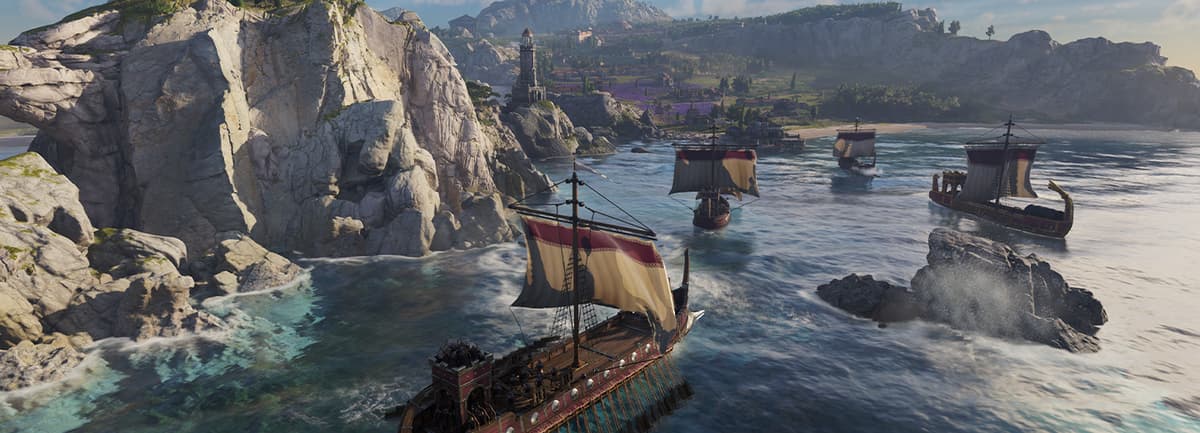
My first city taught me a lesson in negative space. I crammed production buildings shoulder to shoulder and then realized my fire coverage was a joke and diseases were simmering. I tore half of it down to slot in wells, clinics, and shrines, and watched my budget squeal. The second time, I built radial neighborhoods: housing around a plaza, services one ring out, production beyond, with road spokes back to a warehouse. That rhythm alone stabilized my early economy and made later upgrades less like surgery and more like a seasonal refresh.
Social strata and the slow creep of complexity
Convincing basic folk to move in is the easy part. The moment you open the door to Plébéiens, Equites, Mercators, and eventually Nobles, the entire city realigns. Every promotion asks for more types of goods, more services, and more attention to safety. Ignore too much and your happiness tanks, your festivals sputter, crime and fires spike, and neighborhoods decay. It’s the kind of spiraling failure that’s fair because you saw the warning signs—you just thought you’d get away with it this time.
This is where Anno 117’s flavor systems snap into focus. Assigning Specialists to your villa and officia gives stats bumps that actually matter: faster production here, reduced maintenance there, a smarter workforce where you need it most. Meanwhile, devotion to a deity isn’t just theme. When I leaned into Ceres, I could trigger festivals that soothed city-wide discontent and gave me a precious window to retool my agricultural chain. Later, testing Mercury-Lug paid off with trade perks that shaved denarii off recurring pain points. It feels like small knobs, but over hours those knobs add up to a city that reflects your priorities.
Colonization and the logistics brainworm
Eventually, your starter island can’t feed the beast. Each island’s geography isn’t just cosmetic—soil fertility, rivers, marshes, ore nodes, forests—all of it dictates what’s efficient to place where. Expansion costs denarii and usually an imperial fee, and nothing you extract on Island A magically shows up on Island B. It all has to move.
Intra-province shipping is straightforward: assign a ship, choose a route, set quantities, protect it from raiders. My first convoy got pincered by raiders in a channel I assumed was safe. I rebuilt the ship, added a warship escort, and posted a defensive tower near the narrow. The next hour was pure satisfaction: production caught up, stockpiles fattened, and I finally had the breathing room to upgrade housing without tanking supply.
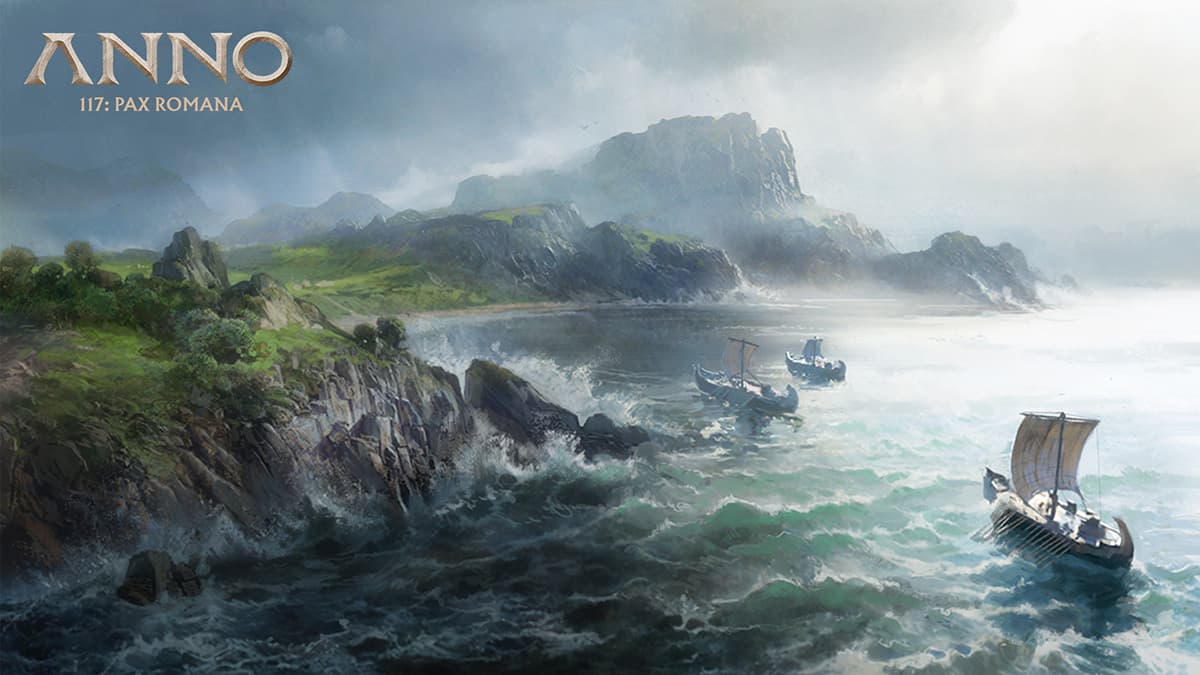
Inter-province trade, between Latium and Albion, is the one system that tested my patience. The trade route interface wants a lot from you—specific cargo rules, toggles that interact in opaque ways, a flow that punishes one sloppy dropdown. The tooltip text improved slightly with the day-one patch, but the cognitive load never went away. Maybe there’s a hidden shortcut I missed, but I spent too much time rechecking that iron wasn’t getting siphoned by an unintended stop or that a route wasn’t doing a full stupid loop. In a game that sings when logistics is invisible, this one screen kept yanking me out of the groove.
Diplomacy: clean, readable, and a bit shallow
AI governors share the map, and you’ll eye their islands the way they eye yours. There’s a clean loop to diplomacy: gifts and contracts to bump favor, narrative choices that angle reputation, and, if you’re diligent, trade treaties, defensive pacts, maybe even an alliance. It looks good on the surface and it moves predictably, which I appreciate, but it never evolves. There’s no big emergent web; it’s a set of levers you pull to unlock commerce and, occasionally, avert annoyance.
One night I tried to bully my way to a marble node. I spun up an army, built walls and towers, and went to town. Military play here is more hands-on than diplomacy and has its own research tree, which feels satisfying to fill in. I was halfway through starving the enemy island when the Emperor stepped in and called time. War over; everyone go home. It was perfectly thematic—Pax Romana, after all—but it left me with a maintenance bill and nothing to show but a bruised ego. After that, I leaned harder into trade. It pays.
When the systems align, it’s bliss
My favorite stretch landed around hour 22. I had three islands spanning both provinces, Ceres devotion pulsing on a sensible cooldown, a specialist boosting my pottery chain, and a web of warehouses that finally made sense. I watched a festival fireworks bloom over tiled roofs while a convoy slid out of harbor and thought, “Yeah, this is why I play these.” The game is generous with those moments if you put in the planning upfront. It’s never idle-clicker easy, but it’s not sadistic either; it respects attention and rewards iteration.
Frustrations: the fiddly trade UI and a campaign that bows out early
Two things consistently dragged. First, the inter-province trade route builder. It’s not broken—my goods moved—but it’s busier than it needs to be and never melts into the background. If there’s a refinement pass to be made post-launch, I’d start here: fewer redundant toggles, clearer defaults, one-click sanity checks for “don’t cross the map because of one empty slot.”
Second, the campaign’s scope. Eight to ten hours is fine for an introduction, but the narrative scaffolding promises more than it delivers. There are decisions and variants, sure, yet replaying the campaign didn’t feel enticing. The Infinite mode is where this game really lives, and that’s okay, but I wanted at least one thorny campaign scenario that forced my hand into weird, memorable solutions.
Performance and quality-of-life on PC
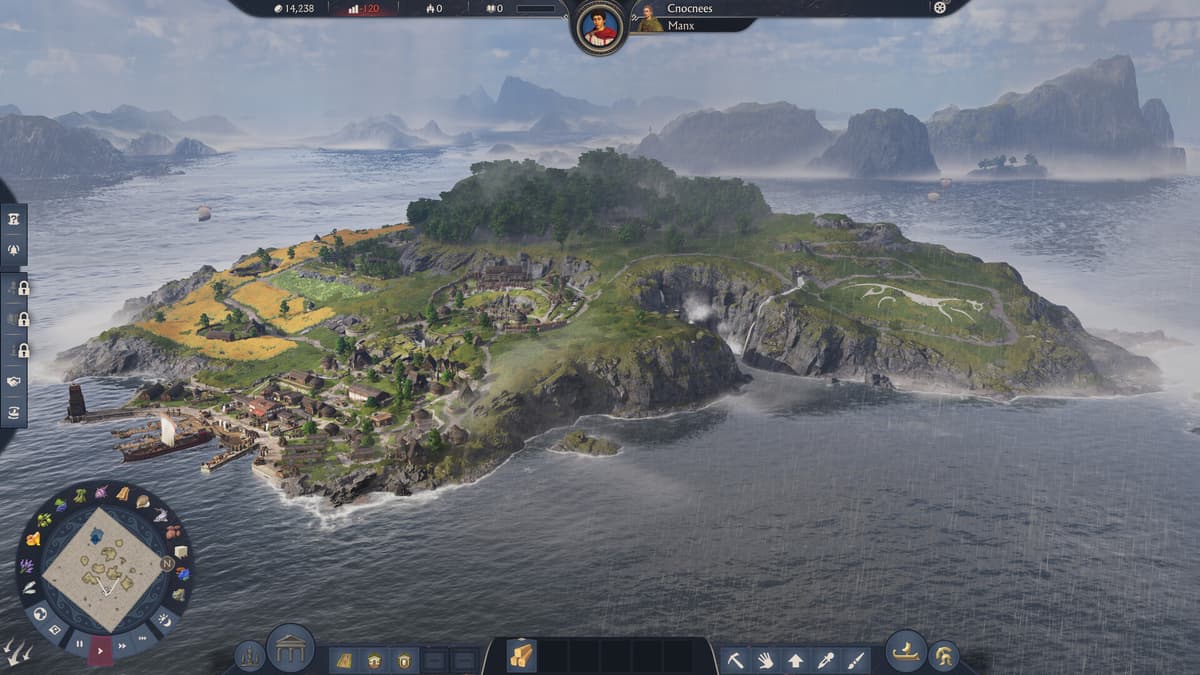
On my RTX 4080 Laptop at 1080p with DLSS Balanced, the game ran smoothly—high settings, ray tracing off—with frame rates that felt north of 90 in busy scenes and much higher when zoomed out. I had a few micro-stutters when first opening the trade interface or hopping between provinces, but nothing that lingered. The UI scales cleanly on a 17-inch screen, tooltips are genuinely useful (especially for chain recipes), and the soundscape leans warm: wood and stone clacks, distant harbor bells, flutes and drums that don’t overstay their welcome.
I bumped into one oddity where production buildings didn’t update their “within range of warehouse” icon fast enough after a road tweak, but saving and reloading corrected it. Autosave timings are sensible. The day-one patch didn’t transform the experience but sanded a couple of rough edges (and I didn’t have a single crash across my 39 hours).
Who it’s for, and who should pass
If you like your city-builders chewy—more levers than decorations, more logistics than vibes—Anno 117 is your next time sink. It’s approachable enough that the campaign onboards you without humiliation, but the real joy is in the Infinite mode where you can tune settings and push at your own pace. If you demand rich diplomatic intrigue or a sprawling, endlessly replayable story campaign, you’ll bounce. And if you’re allergic to fiddly UIs, the province-spanning trade routes might test your patience.
Little lessons I learned the hard way
- Build around warehouses, not the other way around. Services in the first ring, production beyond. Your road network will thank you.
- Set stock limits early. It’s too easy to accidentally starve a production chain because you “sold” your buffer to a trade route.
- Trigger festivals with intent. Ceres when you’re retooling farms, Neptune before you expand fishing or expect naval trouble, Mercury-Lug to prep for a big trade pivot.
- Escort province-bridging shipments until you know your raider spawns. One warship can save hours of save-scumming.
- Accept that some buildings are temporary. Decommissioning low-tier production to centralize elsewhere is part of the mid-game rhythm.
What works for me
- The Roman theme aligns with mechanics—devotion, festivals, social classes—rather than wallpapering them.
- Production chains are clear, satisfying, and invite long-term planning instead of whack-a-mole fixes.
- Specialists and research trees give meaningful, city-defining buffs without turning the game into a spreadsheet sim.
- Military is a fun side path with just enough bite, and imperial intervention makes war feel thematically constrained.
- Stable launch performance on PC with sensible settings and clean UI scaling.
What tripped me up
- The inter-province trade route interface is too fussy, with options that feel redundant and defaults that cause busywork.
- The campaign hits credits before the systems can really sing, with limited replay appeal between character routes.
- Diplomacy is readable but shallow; it’s a key, not a playground.
FinalBoss // Gear
Level up your setup
01Top-rated gaming headsetson Amazon→02High-refresh gaming monitorson Amazon→03Gaming chairson Amazon→04Discounted game keyson Kinguin→Affiliate links · As an Amazon Associate, FinalBoss earns from qualifying purchases.
Want to Level Up Your Gaming?
Get access to exclusive strategies, hidden tips, and pro-level insights that we don't share publicly.
Ultimate Reviews Strategy Guide + Weekly Pro Tips