
Table of Contents (10)
The night my marriage hinged on a warehouse in Anno 1800
“Why did you put the warehouse there?”
Not exactly the sentence you expect to threaten domestic harmony, but there we were: midnight, two monitors, one marriage, and an island full of very angry farmers in Anno 1800. I’d dropped a warehouse in a spot that “ruined the production flow,” according to my wife. I thought she was joking.
She wasn’t.
I’d gone into Anno 1800 as a total series newbie. The editorial brief was simple: test the game, including its mountain of DLC, from a beginner’s perspective. I installed the “complete” package, launched it, and watched my screen explode with icons, regions, bonus content and cosmetic packs. It felt like being handed the keys to a cargo ship when I’d only ever driven a bicycle.
Three evenings later, overwhelmed but hooked, I did the only sensible thing: I called in my secret weapon – my wife, a dangerously patient Civilization addict who reads tooltips like other people read novels. What started as “hey, can you help me figure this production chain out?” turned into a co-op experiment that taught me two things:
- Anno 1800 is quietly one of the best entry points into complex city-builders if you respect its pace and ignore the DLC siren song at first.
- Playing it together will tell you a lot about your relationship – maybe more than is strictly comfortable.
I’m genuinely torn about which of those surprised me more.
drowning in DLC as a newbie – and why Anno 1800 didn’t lose me
Let me be blunt: throwing a brand-new player into Anno 1800 with every DLC enabled is borderline sadistic. You start in the Old World and the game is already juggling farmers, fish, timber and schnapps. Then suddenly there are icons for Enbesa, airships, tourism, palace mechanics, New World expansions… it’s like being given a PhD syllabus when you’ve just learned the alphabet.
And yet – I didn’t bounce off it.
The reason is the part nobody screams about on trailers: Anno 1800 actually respects beginners more than most “hardcore” strategy games I’ve played. The campaign doubles as an extended tutorial, but it doesn’t feel like one of those insultingly shallow “click here to build a house” chores. It gives you:
- Layered objectives that slowly introduce new mechanics.
- Optional tip pop-ups you can leave on or off depending on how lost you feel.
- Tooltips that are dense but clear – they show production chains, timings, and inputs at a glance.
- Enough breathing room on easy settings that you’re rarely punished instantly for experimenting.
I’ve played builders that proudly drop you in the deep end with a smug “figure it out” attitude. Anno 1800 isn’t that. It’s more like a slightly stern teacher: it will explain things, it will show its workings, but it won’t stop you from making a complete financial disaster if you’re stubborn.
Ask me how I know.
how I almost bankrupted my first island in the name of “planning”
My first island was textbook beginner stupidity.
I fell in love with a picturesque little map that had a cozy bay and beautiful coastline. I started laying down perfectly straight road grids like I was auditioning for a city-planning YouTube channel. I built way too many bridges because they “looked nice.” I spammed marketplaces and fire stations to get rid of the red warning icons.
Then I realized three things, courtesy of a rude series of notifications:
- My starting capital was almost gone and I hadn’t actually expanded production.
- The island was short on buildable space, and I’d wasted half of it on pretty symmetry.
- Worst of all, the fertility was garbage: no potatoes, limited grain, awkward clay distribution.
In theory, the game had warned me. The island selection screen clearly lists fertility, deposits, and size. I just didn’t yet understand why potatoes and clay matter more than my obsession with even road grids. That’s the first big lesson Anno quietly teaches beginners: screw aesthetics, think logistics.
After restarting (twice), I settled on a very unsexy-looking island with:
- Multiple clay deposits.
- Potato and grain fertility.
- A big chunk of flat, boring land for farmer housing.
Suddenly my early game went from “permanent deficit” to “barely scraping by.” It wasn’t glamorous, but I could keep my farmers drunk and my brick kilns running – which, in Anno 1800, is about as close as you get to happiness.
Still, there was a ceiling to how much brain I wanted to pour into supply chains after work. That’s when I realised the most powerful beginner-friendly feature in Anno 1800 isn’t in any settings menu. It’s on my couch.
enter the Civ veteran: turning Anno into a co-op relationship experiment
My wife has spent more hours in Civilization than I’ve spent sleeping. She will happily reload a turn ten times to shave a single turn off a wonder. She reads patch notes for fun. She is, in short, the kind of terrifyingly detail-obsessed person Anno was built for.
So I pitched it as a couples thing: “Let’s build a Victorian empire together. You handle the city; I handle the ships.” To my surprise, she agreed – on one condition: she wanted to start fresh, with the campaign, and on the easiest difficulty.
That decision alone is why I think Anno 1800 can absolutely work as a beginner’s game: co-op lets you slice this beast into human-sized chunks.
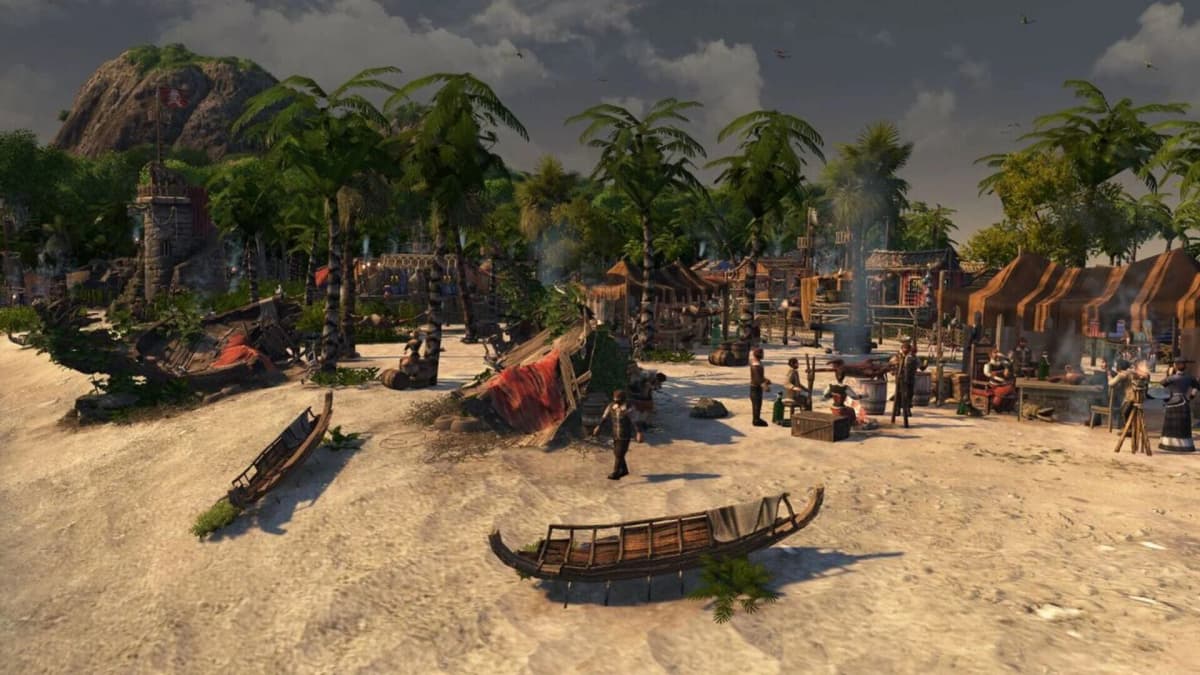
Very quickly, roles emerged:
- She took over layouts, production chains, and reading every single tooltip and quest text.
- I managed expansion, diplomacy, naval trade routes, and yelling when pirates showed up.
She’d pause the game, zoom into the industrial district, and calmly say things like, “We need another brick kiln, but the clay pit is almost exhausted. Maybe claim that island to the north with three deposits before Beryl does?”
I’d be on the world map, eyes darting between AI borders, thinking, “If we don’t stake that island now, the 1-star AI will take it eventually, and then we’re screwed for late-game construction.”
The result was a weirdly honest mirror of our real-life dynamic:
- I’m the reckless expansionist, happy to grab every opportunity and figure out the details later.
- She’s the methodical optimizer, unwilling to commit until the numbers add up.
That clash came to a head over island claiming. I wanted to drop trading posts everywhere as placeholders, even if we couldn’t afford to develop them yet. She wanted to stabilize our main city first.
“If we don’t grab that island now, the AI will,” I argued. “Trading posts are cheap, and we can always dismantle later.”
“If we go negative again because you’re hoarding islands like a Victorian goblin, I’m turning the game off,” she replied, only half joking.
“If we go negative again because you’re hoarding islands like a Victorian goblin, I’m turning the game off,” she replied, only half joking.
🎮 Get This Game at the Best Price
Compare prices instantly and save up to 80% on Steam keys with Kinguin — trusted by 15+ million gamers worldwide.
*Affiliate link — supports our independent coverage at no extra cost to you
In the end, Anno 1800 quietly vindicated me. The moment we got complacent, one of the neutral-looking AI barons slapped a trading post on “our” future breadbasket. From then on, every brick and steel beam we needed to import was a reminder that, yes, early island claiming really matters – and that sometimes the aggressive partner has a point.
the simple beginner rules Anno 1800 doesn’t shout, but co-op made obvious
After a dozen hours of arguing over road layouts and trade routes, a few ground rules solidified that I wish the game telegraphed more clearly to new players. They’re not min-max secrets; they’re sanity savers:
- Pick islands for resources, not vibes. Clay deposits and potato/grain fertility beat pretty bays every single time. You need bricks and booze more than postcard views.
- Resist the road spam. Every extra road and bridge is wasted money early on. Connect what you must, keep it ugly, beautify later.
- Claim empty islands early. Even if you just drop a trading post and leave, blocking AI expansion buys you room for mistakes.
- Play on baby settings first. Easiest difficulty, 1-star AI, neutral traders, and no pirates. You’re learning logistics, not auditioning for esports.
- Ignore extra regions and big DLC at the start. The Old World plus New World is more than enough to fry a beginner’s brain. Enbesa and the fancy late expansions can wait.
What co-op added was accountability. Alone, I might have stubbornly rebuilt the same mistake three times. With another human looking at the same mess, we had to articulate why we were doing something. “I want this island because it has hops and more clay” is a lot more convincing when you’ve said it out loud instead of just auto-piloting.
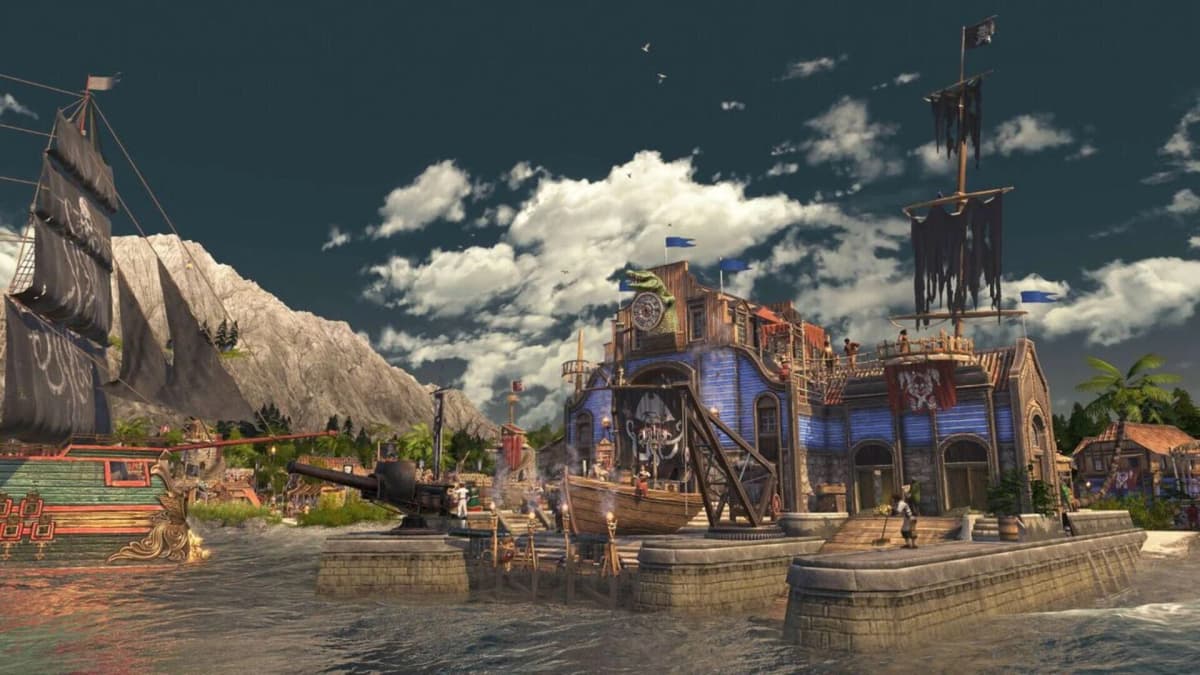
the DLC problem: brilliant systems, terrible onboarding
Here’s where my verdict on Anno 1800 gets messy.
The base game alone offers a ridiculous amount of depth. You can easily spend 20, 30, 40 hours just mastering the Old and New World, building clean production chains, and learning how to keep your population happy. For a newcomer, that’s more than enough.
But the way Anno 1800 is sold in 2026 is as a bloated “complete edition” monstrosity where every season pass, region, and feature is presented like a default part of the game. Mechanically, many of those DLCs are excellent – I’m not questioning their quality.
Land of Lions adds a gorgeous region and irrigation mechanics that completely rewire how you think about fertility and space. New World Rising and the later expansions pile on airships, tourism, and late-game economic layers that make the world feel huge. If you already understand the core loop, these are brilliant. If you’re still wrestling with fish and schnapps, they’re a migraine.
The problem is the on-ramp. The game lets you toggle regions and DLC, but nothing in the launcher or main menu tells a true beginner: “Hey, maybe just start with the base map and campaign for your first 20 hours.” If anything, the marketing does the opposite. It screams, “Look at all these regions and systems! Don’t you want it all?”
Playing with my wife made that friction obvious. Every time a DLC questline popped up mid-session – “build this special building for a feature you’ve never seen before” – she’d sigh, pause the game, and start decoding another small rulebook. We had the luxury of two people sharing that mental load. A solo beginner doesn’t.
So here’s my hot take: Anno 1800 is a fantastic beginner city-builder hiding under a layer of Ubisoft-style FOMO packaging. The smart move, if you’re new, is almost rebellious: buy the complete thing if it’s cheaper, sure, but disable everything you can. Treat the campaign and core sandbox as the actual game, and the DLC as future expansions for when you’re already in love.
is Anno 1800 really a good starter city-builder? yes… and maybe no
After all this, do I think Anno 1800 is a good entry point for someone who’s only flirted with SimCity or dipped into a bit of Cities: Skylines? Strangely, my answer is both “absolutely” and “it depends how stubborn you are.”
On the “absolutely” side:
- The campaign actually teaches, instead of just masquerading as a tutorial.
- The UI surfaces a lot of deep information without shoving spreadsheets in your face.
- Combat is naval-only, which massively simplifies the usual RTS land-war headache.
- Pause-and-plan gameplay lets you think through logistics instead of rewarding twitch reflexes.
On the “maybe not” side:
- Multi-region play and trade routes demand a level of long-term planning some players just don’t enjoy.
- The DLC-first presentation can easily overwhelm and confuse brand-new players.
- The game never fully hides its inner math; if you hate numbers, you’ll feel that friction.
Compared to older entries like Anno 1404, which some fans swear is a cleaner, single-map starting point, 1800 is undeniably more complex. But it also feels more honest about what modern city-builders are now: sprawling, interconnected, and happy to eat an entire weekend if you give them an inch.
The real make-or-break, from what I’ve seen, isn’t whether you’re “good” at strategy games. It’s whether you’re willing to learn in public – ideally in front of someone you live with who will absolutely roast your warehouse placement.
what Anno 1800 taught me about my relationship (and myself)
Somewhere between our third island and our first real war, it hit me how much this silly Victorian trade simulator had turned into a relationship mirror.
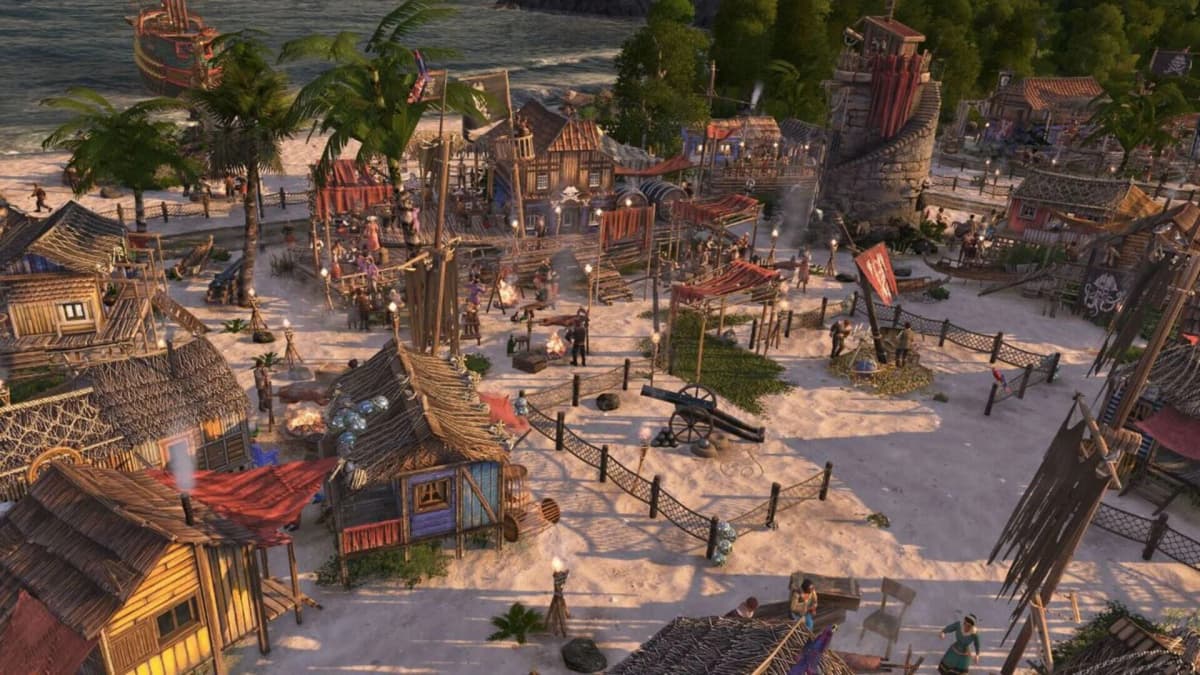
We realised:
- She’s happiest when the camera is zoomed all the way in, tweaking production ratios and road access.
- I’m happiest on the world map, drawing absurdly long trade routes and picking diplomatic fights we’re not ready for.
- Every time I hammered the fast-forward button, she quietly seethed as her carefully balanced chains fell apart.
- Every time she paused to count timber before placing a single building, I felt trapped in economic purgatory.
That tension is real – and honestly, healthy. Co-op builders like Anno 1800 force you to articulate priorities: stability vs. growth, aesthetics vs. efficiency, risk vs. security. If you’ve ever argued about savings accounts or holiday plans, you already know the script.
We also discovered the line where “helpful” becomes “backseating.” When one of us grabbed the mouse to “just fix this one thing,” the other’s patience thinned fast. Anno doesn’t care who moved the sawmill, but the human does. The compromise was simple but crucial: talk first, click second. That was less about game literacy and more about basic respect.
Did Anno 1800 improve our relationship? That’s too cheesy, even for me. But it did make certain patterns impossible to ignore. She saw, in real time, how quickly I’ll overextend because I’m convinced “future me” will clean up the mess. I saw how her demand for perfect information can delay good-enough decisions until windows close.
And the game was the perfect, low-stakes sandbox to argue about that without dragging in real-world baggage. It’s a lot easier to laugh about losing an iron deposit than about losing a mortgage negotiation.
so where does that leave Anno 1800 for beginners – and for us?
I went into Anno 1800 expecting a dense, slightly joyless spreadsheet in Victorian cosplay. I came out of it with a new respect for how accessible deep strategy can be when it’s structured well – and a slightly unsettling awareness of just how much a virtual supply chain can say about two people sharing a life.
If you’re a beginner thinking about diving in, my honest advice is this:
- Start with the campaign on the easiest settings.
- Turn off as many DLC regions and features as the game will let you.
- Treat your first 20 hours as learning the “language” of Anno, not racing to the endgame.
- If you can, play co-op with someone whose brain works differently than yours.
Will Anno 1800 be the perfect starter city-builder for everyone? No. Some people will hit that wall of production chains and quietly uninstall. Others will get hooked, then overwhelmed when the DLC floodgates open. I’m not convinced Ubisoft’s current “everything, everywhere, all at once” packaging is doing newcomers any favors.
As for my wife and me, Anno 1800 is now sitting in that strange category of “games we love in theory, fear in practice.” Every time we think about launching our save, we remember the half-finished trade routes, the unclaimed islands, the expansions we haven’t touched yet. We also remember the late-night arguments about warehouses and the quiet satisfaction of watching a perfectly tuned production loop hum along.
Maybe that’s the most honest thing I can say about Anno 1800 as a beginner game and a couples experiment: it’s brilliant, it’s exhausting, it’s generous, it’s overwhelming. It showed me a strategy experience that actually wants to teach you – and a version of our relationship that’s both comforting and a little bit uncomfortable to look at.
Whether we’ll keep expanding our empire or let it sit as a perfectly imperfect snapshot of who we were at that moment… that’s a decision we’re still quietly negotiating, somewhere between the sawmills and the schnapps.
FinalBoss // Gear
Level up your setup
01Top-rated gaming headsetson Amazon→02High-refresh gaming monitorson Amazon→03Gaming chairson Amazon→04Discounted game keyson Kinguin→Affiliate links · As an Amazon Associate, FinalBoss earns from qualifying purchases.
Want to Level Up Your Gaming?
Get access to exclusive strategies, hidden tips, and pro-level insights that we don't share publicly.
Ultimate Gaming Strategy Guide + Weekly Pro Tips