
Can Apex’s Season 27 Finally Fix Ranked Frustrations?
Game intel
Apex Legends
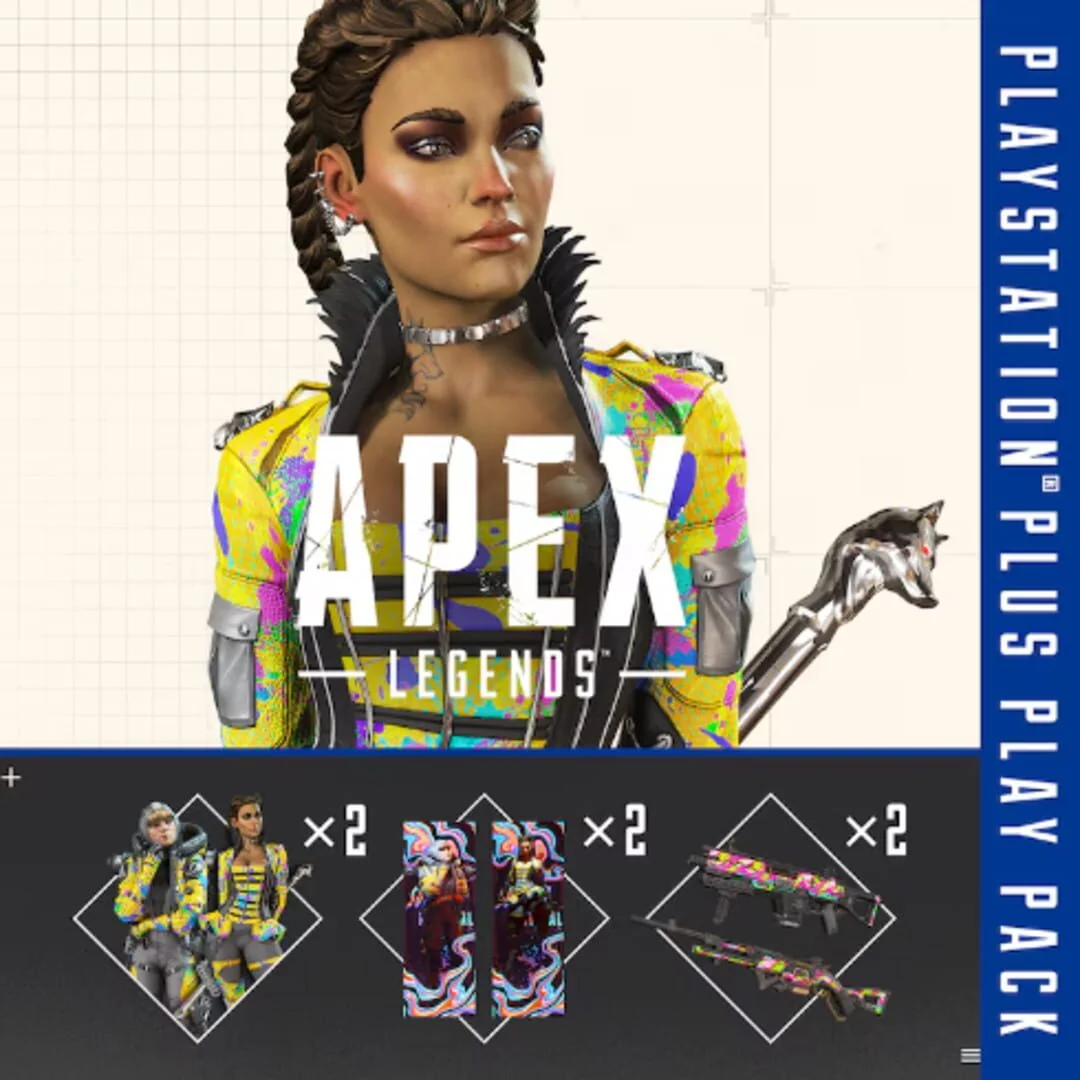
Join the Apex Games ready for battle with the PlayStationPlus Play Pack. This collection of content will trick out specific weapons and Legends in special gear…
Apex Finally Targets Ranked’s Two Biggest Pain Points
This caught my attention because Respawn isn’t just slapping on new skins—they’re tackling the ranked grind’s core headaches. In Season 27 “Amped,” we’re getting three major changes: fairer loot spreads across POIs, a reset of RP formula to favor kills over placement farming, and a much-needed “requeue as team” button for solo players who click with randoms. If the tuning hits the mark, ranked pace should pick up and solo queue might feel less punishing.
After dozens of mid-season grinds, the pain points are obvious: you can’t control where you land and hope for decent loot, and once you hit mid-game, chasing placement RP often feels safer than hunting kills. Plus, if you randomly end up with teammates who gel, inviting and requeueing is a chore. Season 27 aims to fix all three.
- Loot variance between POIs is tightened—no more “dead drop” woes.
- Kill participation (KP) and kills earn more RP; pure placement rewards shrink.
- New post-match “stay as team” button lets solos lock in squads instantly.
- Patch note details (KP curve, loot tiers) will confirm the tuning philosophy: play to fight.
Breaking Down the Announcement
Loot normalization: Guided drop zones replaced the old free-for-all dropship, but each POI still felt wildly inconsistent. Land at Artillery and you’re decked in purples by Ring 1; hit Gardens and you’re scrounging with white armor and a Mozambique. Season 27 flattens those peaks and valleys—same total loot but tighter tiers so you rarely leave a drop zone empty-handed.
RP reshuffle: In Season 26, placements rewarded so heavily that mid-games often turned into methodical circling. Fights were postponed in favor of safe edge camping. Season 27 reassigns RP weights—kills and assists get a bigger slice of the pie while placement carries less. Respawn promises a middle ground between Season 25’s “pop off or die” energy and Season 26’s spreadsheeted caution.
Requeue as team: Overwatch, Fortnite, even Halo have one-click “stay with your squad” buttons. Apex made you send friend requests, wait for acceptances, then rebuild lobbies. No more. After a match, hit “Stay as Team” and you queue up again together. Simple, overdue, and a boon for solo grinders.
Deep Dive: Hypothetical RP Math in Season 27
Until Respawn publishes exact numbers (Patch 27.01, 27.02…), here’s a sample curve to illustrate how kill-weighted RP could look:
- Victory: 60 RP (down from 100)
- Top 5 placement: 30 RP (down from 40)
- Each Kill: 15 RP (up from 6)
- Assist: 5 RP (up from 3)
- Kill Participation Bonus: +10 RP at three participations
Example scenario: In Season 26, a squad that rat-farmed to a Top 3 finish with zero kills earned 100 + 40 = 140 RP. In Season 27’s model above, that same play nets just 60 + 30 = 90 RP. A squad that wins with three kills and two assists now gets 60 + (3×15) + (2×5) + 10 = 130 RP—putting aggression nearly on par with placement plays.
That shift means early-game fraggers can snowball their RP gains by converting knockdowns into finishes, rather than nervously rotating for a Top 5. It also discourages pure ratting: if you skip fights, you’ll miss high-value KP payouts. Once Respawn confirms the “KP cap” (max KP RP per match) and assist window (how long after damage deals you still get RP), we’ll know exactly how feasting compares to floating.

Mid-Game Scenario: Third-Party Dynamics Reimagined
Picture Professor’s Canyon, Ring 2. Squad A fights Squad B at Highlands. Squad C hears the exchange and third-parties, dropping on the third-party ping. With higher kill RP, Squad C stands to earn: two kills (2×15 = 30 RP), two assists (2×5 = 10 RP), plus a participation bonus (10 RP) = 50 RP. If they wipe both teams, that could vault them ahead of the surviving Squad D edge-rotator who bagged a Top 5 for 30 RP placement credit.
In Season 26, Squad C might skimp on the third-party because the placement drop from participating in multiple fights could undercut the marginal kill RP. Now the math flips: 50 RP from an aggressive push beats the 30 RP from a safe rotation. Expect tempo ramps: fights cascade and momentum compounds. But watch out—if the assist window runs too long or KP caps are high, one squad could steamroll entire lobbies purely on kill RP, shrinking counterplay options.
Solo Queue’s Quiet Revolution
Solo queue players have long struggled with consistency. A winning trio nets way more RP than a Top 5 finish with two randoms who don’t call rotations. With “Stay as Team,” imagine stacking a string of five matches with the same three good randos. Instead of one clutch game followed by four trolls, you get sustained synergy—shared rotations, coordinated hot drops, reliable comms.

This feature lowers the social friction: no more spam-adding in the lobby or juggling invites between matches. The psychological lift is huge—each time you end a match on a high note, you can instantly chase that feeling again. Over a session, that consistency could translate to multiple rank divisions gained, simply because you’re playing with teammates who understand your pace and mindset.
What to Watch in Patch Notes
- Exact KP curve: How many RP per kill and assist, plus KP caps.
- Placement payouts: New RP values for Top 10, Top 5, and victory.
- Loot tier spread: Variance percentages between High-Tier, Mid-Tier, and Low-Tier drops.
- Assist window: Time limit after damage for earning assist RP.
- Requeue cooldown: Any delay between matches for the “Stay as Team” button.
- Matchmaking tweaks: Hidden MMR integration, masters/bracket adjustments.
Practical Takeaways for Season 27 Ranked Grinders
- Early aggression pays off: contest POIs with confidence—loot swings are smaller.
- Prioritize kills and assists: hunt for skirmishes, third-parties, and finish knockdowns.
- Use “Stay as Team” after every great match: lock in your best randoms for streaks.
- Watch patch KP/placement ratios: adjust aggression thresholds if kill RP caps appear.
- Communicate lane-wide: sharing callouts on drop-zones keeps high-rollers from stealing your spot.
Healthy Skepticism, Real Potential
It’s promising to see Respawn shifting the philosophy from “play it safe” back to “play to fight.” But the devil will be in the tuning. Will loot normalization make every POI feel vanilla? Will kill RP snowball become so strong that edge-rotators have zero counterplay? And how smoothly will hidden MMR and anti-cheat shape high-tier feels? I’m cautiously optimistic, but I’ll reserve final judgment until those patch numbers land.
Conclusion
Season 27 “Amped” aims squarely at ranked’s pain points: kill-weighted RP reignites early fights, loot normalization shrinks the dead-zone lottery, and a solo-queue requeue button nurtures session consistency. The philosophy is clear—play fight, not placement. Whether this is Apex’s best ranked reset in years depends on Respawn’s exact KP curve, placement trims, and matchmaking finesse. But if the numbers match the intent, ladder pushers and solo grinders alike could find Season 27 the most satisfying ranked experience yet. See you in the drop ship—hope your POI isn’t a dud.