
Table of Contents (9)
Why this caught my attention – and what actually changed for players
I track live-service shooters closely, and Arc Raiders’ AI text-to-speech (TTS) controversy isn’t just another PR squabble – it’s a real-world example of how generative tools are slipping into AAA game workflows without clear guidelines. Embark Studios insists TTS accelerates content delivery, but for players, immersion and ethical labor practices matter just as much. That tension is the beating heart of this debate.
In October 2025, Arc Raiders was riding high on Metacritic’s top spot and praise for its extraction-shooter mechanics. Fast forward to November, a single review and community uproar knocked it down, all over AI-generated NPC chatter. Now the bigger question looms: can generative tech and human artistry coexist in blockbuster games?
- Key Takeaways: Even AAA studios lean on TTS for background lines, but recorded actors still handle major dialogue.
- Ethical stakes: Consent, royalties and transparency on AI voice use remain murky and demand scrutiny.
- Gameplay impact: AI-driven events and enemy patterns genuinely improved after Patch 1.3 – the audio glitches are incidental, not core flaws.
Breaking down the controversy: a timeline
The AI debate hit a fever pitch on November 10, 2025, when Eurogamer published its 2/5 review of Arc Raiders. While the core gameplay loop earned praise, the critic slammed “robotic background chatter” created through generative TTS – a tool trained on actor recordings to spit out thousands of incidental lines without scheduling new studio sessions.[1] Within hours, players piled onto Metacritic, dragging the score down and sparking threads about immersion and respect for voice talent.
Just weeks later, Arc Raiders was notably absent from The Game Awards 2025 nominations in Audio and Action categories. Twitch star xQc tweeted, “Feels like a punishment for using AI voices. A weird message for developers and actors alike.” While no official Game Awards statement linked the snub to AI use, the perception stuck – and forums lit up with “jury bias” theories.
By December, Embark Studios CEO Alex Throttle had done multiple interviews defending AI integration. “We use generative tools for ambient banter only,” he told Gamasutra. “Key mission briefings and emotional scenes are always performed and fully recorded by actors who opted into this process.” Soon after, Embark added a “Legacy Voice Mode” toggle in Patch 1.2, letting players disable TTS-driven chatter entirely.
A quick history of generative audio in games
Generative audio tools aren’t brand-new. Indie developers experimented with procedural voice mods five years ago to handle multiple languages or simulate NPC crowds. But until recently, big studios steered clear, fearing uncanny-valley backlash and union disputes. Arc Raiders is among the first AAA games to lean heavily on AI for everyday dialogue.

In early 2024, several mobile titles quietly tested TTS for tutorial prompts and dynamic quest lines, but most players never noticed. The tech sounded serviceable – but swapping background chatter in a high-tension extract-and-escape shooter? That spotlight exposed every robotic inflection. It’s a reminder: what works for casual mobile experiences can fracture immersion in a AAA environment.
What actually changed in gameplay – the good and the bad
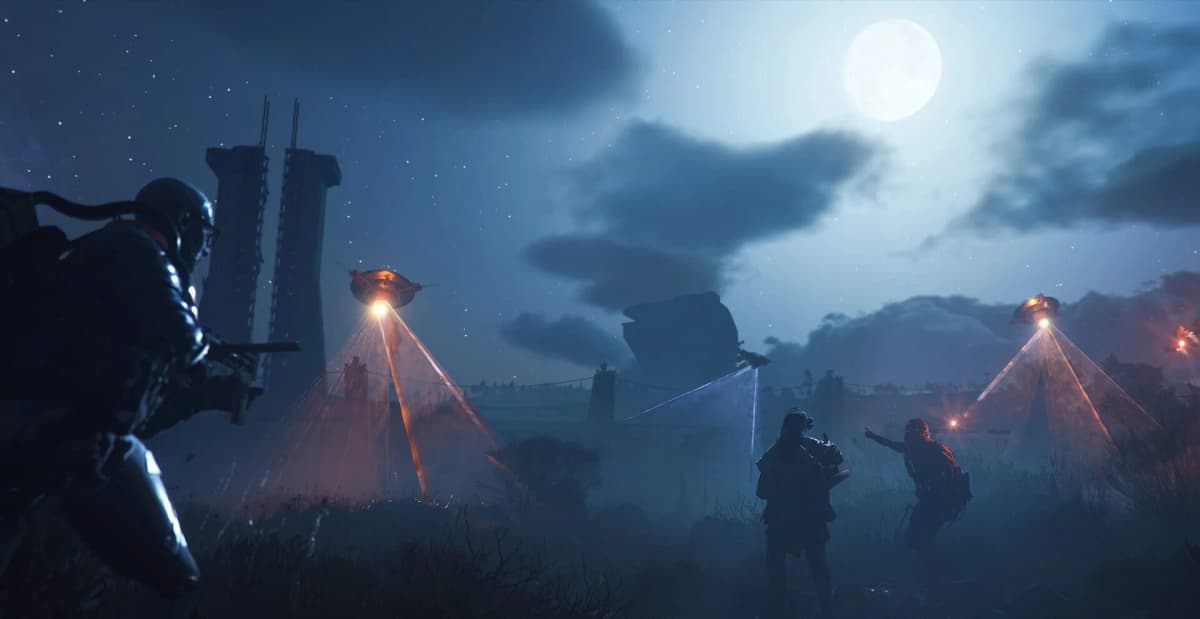
Beyond voices, Embark leaned on AI to refine gameplay. Their systems tuned recoil patterns on the XR-7 Railgun, optimized drone flanking algorithms, and seeded weekly “Neon Surge” events procedurally. After Patch 1.3 rolled out in January 2026, players reported “drones genuinely outsmarting us” and “fresh event objectives every run.” That procedural depth keeps Arc Raiders feeling alive even six months after launch.
On audio, the shift is subtler but still noticeable. Pre-1.2, background NPC lines repeated eerily or cut off mid-sentence. After player reports, Embark doubled down on human-recorded lines for high-traffic zones and tweaked volume mixing so robot voices recede under ambient sounds. It helped, but in tense extractions – when a soldier warns “Hostiles incoming!” – AI artifacts still surface for some.
I chatted with streamer GlitchBunker, who said, “I love the new procedural fights, but every now and then a bot NPC yells ‘Tire fire… tire fire!’ in this monotone drone voice. It just throws you out of the moment.” Those micro-breaks matter when you’re one shot away from extraction.
The developer case – and why I remain skeptical
Embark’s pitch is straightforward: generative audio cuts down on scheduling crunch, lets smaller teams compete, and speeds up content drops. They also claim all voice actors gave informed consent and receive royalties based on usage metrics. In theory, that sounds fair – but we haven’t seen the numbers.
Throttle’s public statements are laudable, yet vague. We don’t know how much actors are paid per generated line, which models were trained on which performances, or how many opted out altogether. Without third-party oversight or published royalty statements, studio assurances feel like promises in a vacuum. Developers pushing generative tech need to set clear industry standards on transparency if they hope to earn trust.
Practical guide: Getting the best Arc Raiders experience in 2026
If you want pure gameplay and minimal AI politics, here are my top tips for Season 2 (Patch 1.3 meta):
- Enable Legacy Voice Mode (Options ▶ Audio) to swap out most synthetic lines.
- Loadout Picks: XR-7 Railgun with suppressor is rock solid at range thanks to AI-tuned ballistics; Vektra SMG Mk4 shines in close quarters with its AI-balanced recoil.
- Extraction Tactics: Drop south for fewer heavy bots, snag Quantum Cores (blue glow) first, and call extraction early if you see PvP pings.
- Event Farming: Neon Surge multiplies core drops – run it daily for fast progression, especially if you’re chasing cosmetic earnables.
- Community Mods: Grab volunteer voice packs on Steam Workshop—players are recording fresh lines to replace glitchy chatter.
Community moves and the bigger picture
Across Discord servers and Reddit threads, fans are uniting to push for better AI-voice practices. Volunteer packs, mod tools, and petition drives are calling on Embark to publish a “Generative Audio Transparency Report” each quarter. Voice actor unions have started informal talks with the studio too, exploring collective bargaining for royalty rates.
These efforts are a blueprint for future games. If generative audio is going to scale up, studios must offer toggles, clear consent documentation, and a royalty framework that fairly compensates creative talent. Without it, every new title will face the same backlash Arc Raiders did.
Conclusion
Arc Raiders proves generative AI can supercharge both gameplay systems and narrative scale – but it also exposes ethical and immersion pitfalls when studios skimp on transparency. The procedural events and smarter enemies are welcome upgrades, yet robot voices still jar at critical moments.
For players: enjoy the refined mechanics, toggle back to human voices if needed, and support community voice mods. For developers: commit to open reporting on AI usage and royalties, and collaborate with actors on fair consent agreements. That balance will define the next era of immersive, ethically grounded AAA games.
TL;DR
Arc Raiders’ AI tools boosted procedural gameplay and content drops, but TTS-driven NPC chatter sparked immersion and ethics debates. Patch 1.3 tunes recoil and events, while Legacy Voice Mode and community voice packs help players. Studios must now prove they can use generative audio responsibly—with full transparency and fair compensation.
FinalBoss // Gear
Level up your setup
01Top-rated gaming headsetson Amazon→02High-refresh gaming monitorson Amazon→03Gaming chairson Amazon→04Discounted game keyson Kinguin→Affiliate links · As an Amazon Associate, FinalBoss earns from qualifying purchases.
Want to Level Up Your Gaming?
Get access to exclusive strategies, hidden tips, and pro-level insights that we don't share publicly.
Ultimate Gaming Strategy Guide + Weekly Pro Tips