
Games set in libraries have an unfair advantage with me. The idea of wandering through endless shelves, pulling worlds out of books, has been a weakness of mine since the PS2 era. So a side-scrolling action game where a magical librarian dives into cursed tomes to restore lost magic sounds, on paper, exactly like my thing.
Ariana and the Elder Codex leans hard into that fantasy. You’re anchored in a library hub, paging into elemental “codices” that each act as compact, self-contained levels. Inside those books, you’re jumping through platforms, flinging spells, repairing tears in reality, and taking on big screen-filling bosses. Outside them, you’re reading through long VN-style scenes full of lore, character banter, and slow-burn worldbuilding.
The result is a genuine hybrid: roughly half action-platformer, half visual novel. That’s not an exaggeration. If you’re expecting a snappy combat-driven Metroidvania with a bit of story on the side, the balance here will surprise you.
Table of Contents (11)
A magical library hub with a great hook
The premise is simple but effective. Magic in this world flows from special books-codices-that have all been sealed by a mysterious curse. Ariana, a librarian with the rare ability to literally enter these volumes, is tasked with diving into each one, fixing “tears” in their pages, and reconnecting them to the library’s magical network.
Functionally, that means the library serves as a hub. You talk to supporting characters, read new story scenes, craft spells and items, and then choose which codex to enter next. Each codex has a specific elemental theme: classic fire, water, earth, air, as well as more unusual fusions of science and sorcery later on. The framing is stylish: you don’t just pick a level from a bland menu; you quite literally select a book and step into its world.
Inside a codex, the basic loop is always the same. You move through 2D stages, fighting enemies and hunting down glowing “tears” that represent the damage done to that book’s reality. Some tears sit in plain sight; others only appear after you’ve cleared an arena of foes. Your goal isn’t just to reach the boss at the end, but to repair enough of these tears to stabilize the codex and, ideally, to uncover all the optional ones for extra rewards.
On paper, this adds a light search-action feel. The levels are compact rather than sprawling, with some side paths, hidden nooks, and short detours that reward curiosity with materials, passive upgrades, or extra story bits. It’s not a full-blown Metroidvania with one huge interconnected map; it’s more a series of self-contained books that occasionally loop back on themselves.
What stands out early on is how much the elemental themes influence the level dressing. Fire codices are all jagged reds and molten machinery; water codices lean into cool blues, flowing platforms, and bubbly effects; later books mix arcane geometry with lab equipment. The library framing gives all of this a coherent, cozy vibe that’s easy to like.
Spell-slinging platforming that feels good… until it doesn’t
Combat is where Ariana and the Elder Codex initially feels most confident. Even Ariana’s basic melee swings are treated as spells, and your entire moveset is built from magical abilities rather than traditional sword attacks. You can equip up to six spells at once, creating a personal “loadout” that mixes straightforward projectiles, bigger area attacks, defensive tools, and movement-based magic.
Mechanically, it’s a simple but satisfying setup. You’re dodging projectiles, kiting mobs around the screen, and chaining spells in quick succession. There’s a pleasantly snappy responsiveness to it: fire off a quick standard magic shot, drop a lingering AoE spell in front of an oncoming wave, then dash through them before volleying something heavier from a safe distance. It’s easy to pick up and immediately understandable.
The game clearly wants you to experiment. New spell recipes and upgrades are drip-fed through chests, tear rewards, and crafting back at the library. There are elemental synergies to discover, and the six-slot loadout gives plenty of room to mix crowd control, single-target burst, and utility skills. On top of that, Ariana learns new passive abilities as she progresses-extra dashes, a double jump, more elaborate air control—that subtly reshape the feel of combat and movement.
Loadouts that beg to be broken
In practice, though, the spell system ends up being more shallow than it first appears, and that’s mostly down to enemy design. The game is full of variations on “rushes you” and “shoots a simple projectile.” There are a few late-game enemies that force you to rethink spacing or jump timing, but for most of the runtime, almost anything can be melted by a small set of highly efficient spells.
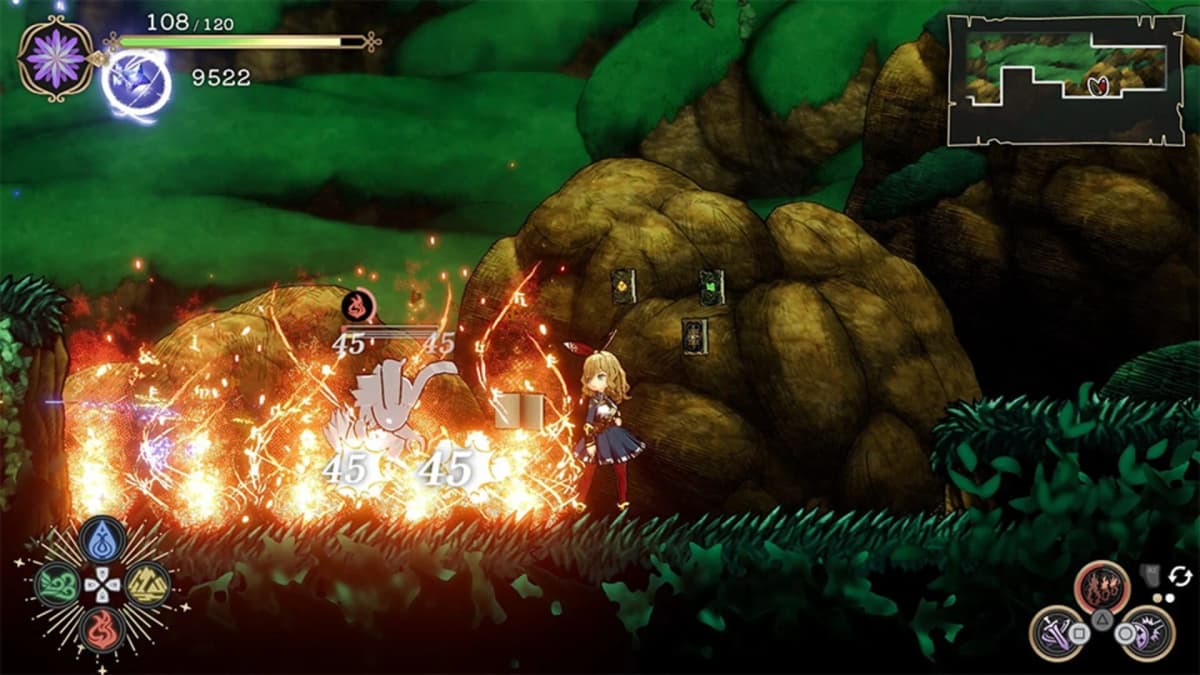
For example, a basic water bubble spell coupled with standard magic covers such a wide range of situations that it can comfortably carry you through a huge portion of the codices. Add a strong multi-hit burst spell on top and you’re shredding most encounters in seconds. When a handful of tools are that universally effective, the incentive to swap spells and tinker with your build just evaporates.
Instead of asking “what loadout best matches this codex or enemy type?”, the game frequently boils down to “which of my already overpowered options do I feel like spamming today?”. That’s a shame, because the framework is there for something closer to a puzzle-box approach to combat, where elemental matchups and positioning matter more than raw damage numbers.
Bosses with flare, but uneven teeth
Boss fights are more interesting, at least conceptually. Each codex culminates in a big, visually striking encounter that leans into the book’s theme. Bosses tend to have clear, readable patterns that escalate across multiple phases, and you can see the developers trying to nudge you away from mindless spell spam by introducing more movement checks and AoE hazards.
The issue is balance. If you’ve leaned into strong spells, many of these bosses fold surprisingly quickly, even while you’re still learning their patterns. For large swaths of the game, bosses feel more like slightly fancier damage sponges than genuine tests of your build and reflexes. Then there’s a sharp late-game difficulty spike that exposes how much you’ve been coasting. The final encounter suddenly punishes sloppy positioning and tunnel vision in a way that the rest of the game mostly doesn’t.
On one hand, it’s refreshing that the last boss finally pushes back. On the other, it highlights a larger problem: the combat sandbox never really trains you to use its full toolkit, so when the game expects more of you, the jump feels abrupt rather than satisfying.
Exploration that teases Metroidvania but settles for checklists
The movement upgrades—dashes, double jumps, new mobility passives—immediately give off Metroidvania vibes. You acquire new abilities in later codices, revisit earlier books with your expanded kit, and can finally reach those suspicious ledges or side rooms you clocked the first time through. On the surface, it’s scratching that familiar itch of “I’ll come back here once I can jump higher or move faster.”
In reality, it’s a much lighter, more constrained version of that formula. Because each codex is a discrete level rather than part of one giant map, backtracking rarely feels like an organic rediscovery of spaces. It feels like re-running a stage to sweep up missed tears and collectibles for completion’s sake.
In reality, it’s a much lighter, more constrained version of that formula. Because each codex is a discrete level rather than part of one giant map, backtracking rarely feels like an organic rediscovery of spaces. It feels like re-running a stage to sweep up missed tears and collectibles for completion’s sake.
🎮 Get This Game at the Best Price
Compare prices instantly and save up to 80% on Steam keys with Kinguin — trusted by 15+ million gamers worldwide.
*Affiliate link — supports our independent coverage at no extra cost to you
That wouldn’t be so bad if those returns were spaced out well and folded naturally into the story pacing, but the game leans on them just as the plot is trying to ramp up. When the narrative is clearly heading toward its climax, being nudged to go tidy up codices you’ve already mostly cleared can feel like padding rather than payoff. Enemies in earlier books pose almost no threat by this stage, turning some of these revisits into perfunctory clean-up operations.
It’s a missed opportunity. The toolkit Ariana gains over the course of the game is actually quite fun to use moment-to-moment. A more intentionally Metroidvania structure—with genuinely hidden shortcuts, cleverly gated late-game sections, and unique enemy or environmental twists in revisited areas—could have turned that movement into a stronger pillar, rather than a light garnish on top of linear stages.
The visual-novel half: cozy, wordy, and eventually exhausting
The other half of Ariana and the Elder Codex is unapologetically talky. Between codices you’ll spend long stretches in the library, chatting with colleagues, dissecting the implications of the sealed books, and diving into character backstories and codex lore. Sometimes these VN-style segments also interrupt the action inside a book, dropping in mid-level conversations or lore drops when you trigger specific events.
There’s a lot to like in principle. The central concept—books as living worlds whose stories have gone wrong—is fertile ground, and some codex-specific vignettes land emotionally. A few side characters have endearing quirks, and the game makes an effort to tie each codex’s micro-story back into the larger mystery of the magical curse.
The problem is volume and pacing. This is a game that has a lot to say, and it rarely knows when to let a scene breathe or when to cut away. Banter that should be snappy lingers several lines too long. Exposition that could have been implied through visuals or level design instead gets spelled out in full. Major revelations are buried in dialogue sequences that feel structurally identical to half a dozen earlier conversations.
None of it is disastrously written; it’s just relentless. Even as someone who genuinely enjoys VN-heavy games—13 Sentinels, AI: The Somnium Files, and similar hybrids—there’s a point here where the sheer density of chatter starts to smother the momentum. The more you feel the combat and exploration becoming routine, the more those extended story segments start to feel like speed bumps instead of rewards.
If you adore lore for its own sake and don’t mind spending minutes at a time clicking through text between short bursts of action, you may well be more tolerant of this structure. But if you’re coming in primarily for the platforming and spellcasting, the 50/50 split between play and reading will test your patience.
Bright comic-book art doing a lot of heavy lifting
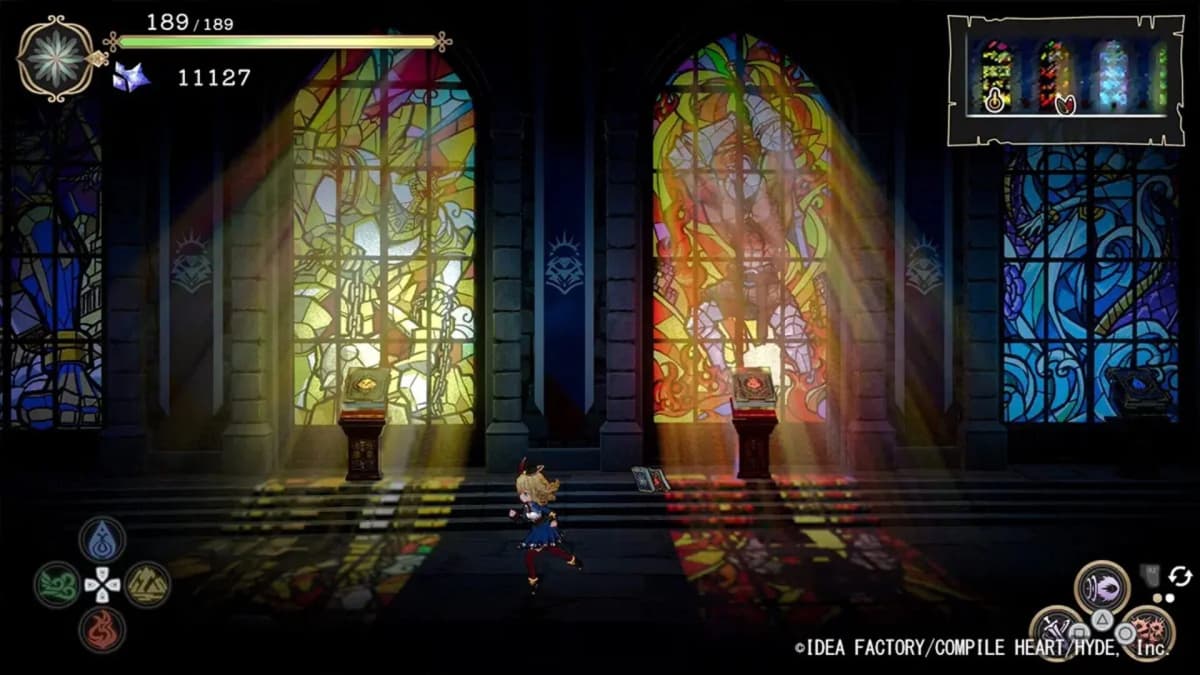
What never really falters is the presentation. Ariana and the Elder Codex uses a bright, comic-book-inspired art style that leans into bold outlines, strong color contrasts, and expressive character portraits. The whole thing reads like a cross between a magical-girl manga and an indie Metroidvania, and that’s a pretty pleasant space to exist in.
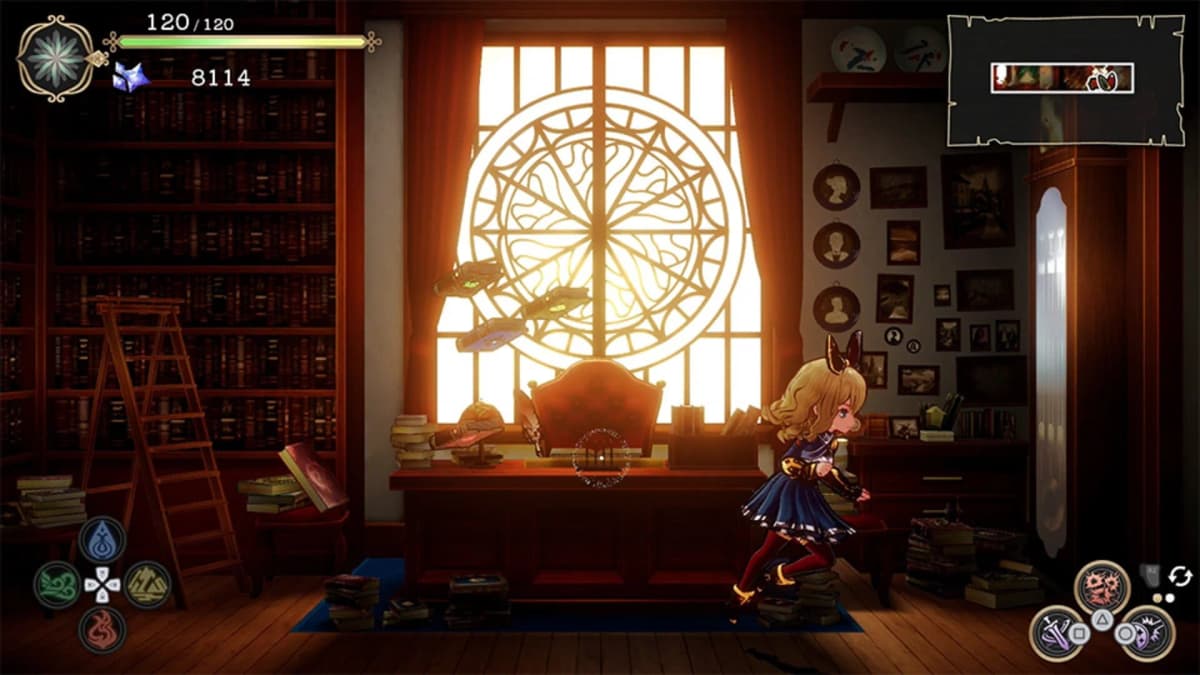
The library hub oozes cozy energy, with stacked shelves, floating magical glyphs, and warm lighting that makes it feel like somewhere you’d actually want to hang out. Each codex, despite relying heavily on its elemental gimmick, manages to carve out a distinct identity through palette choices and set dressing. Fire stages glow hot and dangerous; water levels feel cool and fluid; later books play more with fantastical machinery and surreal scenery.
Spell effects are satisfyingly over-the-top. Even when the underlying combat is starting to blur together, there’s a basic pleasure in watching the screen explode with colorful magical circles, numbers popping off enemy health bars, and chunky hit flashes. For a good stretch, that audiovisual feedback is enough to make you feel like a powerhouse, even if you’re repeating the same rotation of spells yet again.
Enemy designs, unfortunately, don’t keep pace. There are some standout boss designs that make good use of the elemental themes, but rank-and-file mobs blend into each other, both visually and mechanically. When you’re fighting this many battles, that lack of variety becomes impossible to ignore.
On PC, the overall technical side is solid. The side-scrolling levels and 2D art aren’t demanding, loading is snappy, and there’s nothing in the core presentation that gets in the way of enjoying the game’s aesthetic strengths.
Who is Ariana and the Elder Codex actually for?
Despite its issues, there’s a clear audience for this game. If you want a pure, mechanics-first action-platformer, this isn’t it. If you want a traditional, slow-paced visual novel with the occasional minigame, this also isn’t quite that. It lives in the middle, asking you to be okay with long stretches of reading punctuated by reasonably slick but ultimately repetitive combat.
Where it lands best is for players who genuinely like both sides of that equation and don’t mind that neither reaches genre-defining heights. If the thought of a magical library hub, elemental spellbooks as levels, and a cast of chatty mages sounds charming enough that you can forgive uneven pacing and repetition, Ariana and the Elder Codex will likely be a pleasant, if imperfect, ride.
If, on the other hand, you bounce quickly off boilerplate enemy encounters, or you already know that your tolerance for VN-style dialogue is low, this is a harder sell. The game leans into its structure so thoroughly that there’s no real way to “just enjoy the combat” or “just enjoy the story” without accepting a fair bit of friction from the other half.
Bottom line: a lovely spellbook with too many repeated pages
Ariana and the Elder Codex is one of those games where the pitch is stronger than the execution. The magical library hub, the idea of diving into elemental books, the spell-centric combat system, the comic-book art—they all suggest a potential cult favorite.
Instead, what’s here is a solid but noticeably uneven hybrid. The action side feels good in your hands but doesn’t evolve enough to stay fresh. The narrative side has charm and some genuinely nice moments, but it buries them under an avalanche of dialogue and slow pacing. The movement upgrades hint at Metroidvania depth but are ultimately used in service of fairly straightforward, sometimes padded level design.
If you’re drawn in by the aesthetic and prepared for a game that’s as much about reading as it is about running and gunning, there’s still a worthwhile adventure inside this spellbook. Just be ready to flip through a few too many familiar pages along the way.
TL;DR
- Hybrid structure: Roughly half action-platformer, half visual novel, with a library hub and elemental codices acting as self-contained levels.
- Fun core combat, shallow depth: Spell-focused loadouts and responsive controls feel good, but limited enemy variety and over-effective spells make fights repetitive.
- Light exploration: Movement upgrades like dashes and double jumps tease Metroidvania ideas, but backtracking mostly serves checklist-style completion.
- Very text-heavy: Long dialogue scenes and lore dumps slow pacing; writing is fine, but the volume of chatter can feel exhausting.
- Great presentation: Bright comic-book art, flashy spell effects, and a cozy library hub are clear highlights, even if regular enemies blur together.
- Best for: Players who enjoy both action and VN storytelling and can live with repetition for the sake of a charming magical-book premise.
- Overall: A stylish, imaginative spellbook adventure held back by padded dialogue and copy-paste combat, landing at a respectable but flawed 6/10.
FinalBoss // Gear
Level up your setup
01Top-rated gaming headsetson Amazon→02High-refresh gaming monitorson Amazon→03Gaming chairson Amazon→04Discounted game keyson Kinguin→Affiliate links · As an Amazon Associate, FinalBoss earns from qualifying purchases.
Want to Level Up Your Gaming?
Get access to exclusive strategies, hidden tips, and pro-level insights that we don't share publicly.
Ultimate Reviews Strategy Guide + Weekly Pro Tips