
Ariokan Funded in 24 Hours: A CCG That Lets Players Design the Meta—Bold, Brilliant, or a Balance
Game intel
Ariokan
Ariokan is an online card game in which the meta (= the most frequently played decks) is continuously evolving because players can create their own cards. This…
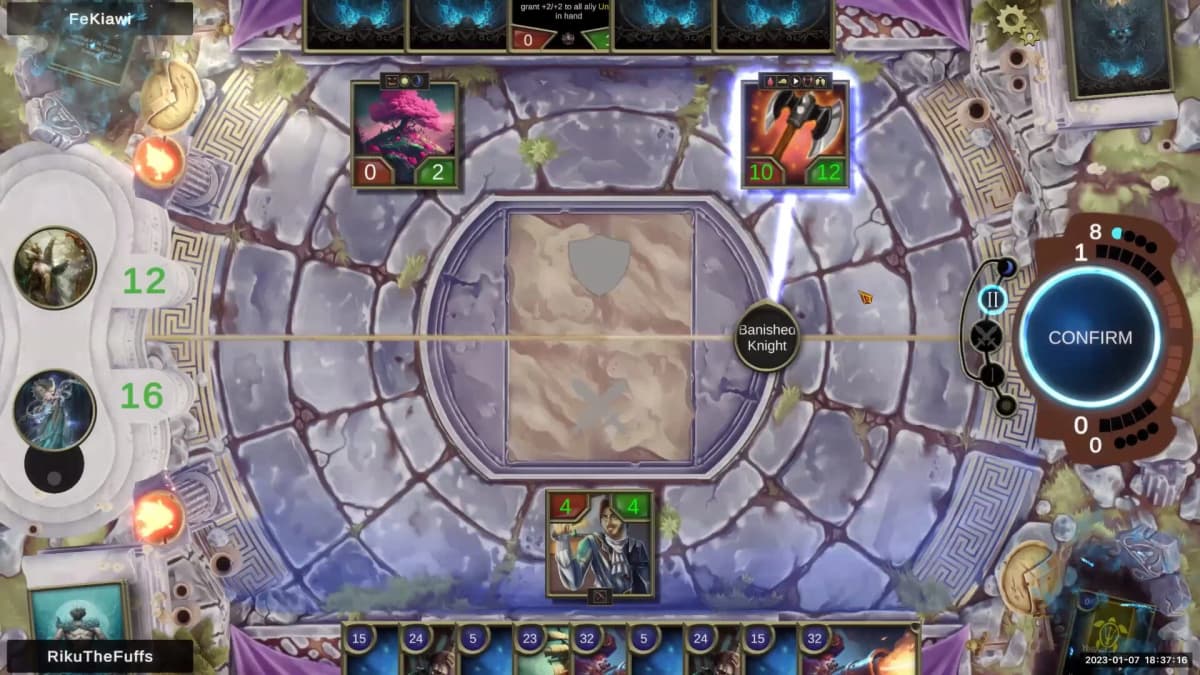
Ariokan grabbed my attention for one simple reason: it’s the rare online card game that hands the keys to the meta to players. Independent studio Fatum Games launched its Kickstarter on September 23, 2025, earned a “Project We Love” badge, and hit full funding in under a day. That’s not just momentum-it’s a signal that a lot of us are tired of samey decks, paywalls, and 10-minute solitaire turns. The pitch is gutsy: create official, balanced cards that everyone can unlock, summon comeback-sparking Legends by completing mini-quests mid-match, choose a God that reshapes how your deck plays, and even flip the rules in a special custom mode. Closed PC beta is already running on Epic, with an open beta planned for Epic and Steam in Q1 2026.
- Fast Kickstarter success shows demand for a fresher, more player-driven CCG.
- Player-made cards being “official” is revolutionary-and a moderation nightmare if mishandled.
- Legends (summoned via in-match quests) and Gods (deck-defining levers) could make gameplay swingy but strategic.
- “No pay-to-win,” no floodgates, and faster back-and-forth turns target pain points from Hearthstone, Yu-Gi-Oh!, and the like.
Breaking Down the Pitch
Fatum Games’ hook is clear: “players can create new (and balanced) official cards” and those cards slot into a shared, ever-growing library. That’s not Steam Workshop mods-it’s canon. According to the studio, over 1,000 closed beta players have already made 8,000+ unique cards, fueling 50+ official tournaments. If that’s true at scale, we’re not just talking seasonal metas; we’re talking a living ecosystem where discovery never stops.
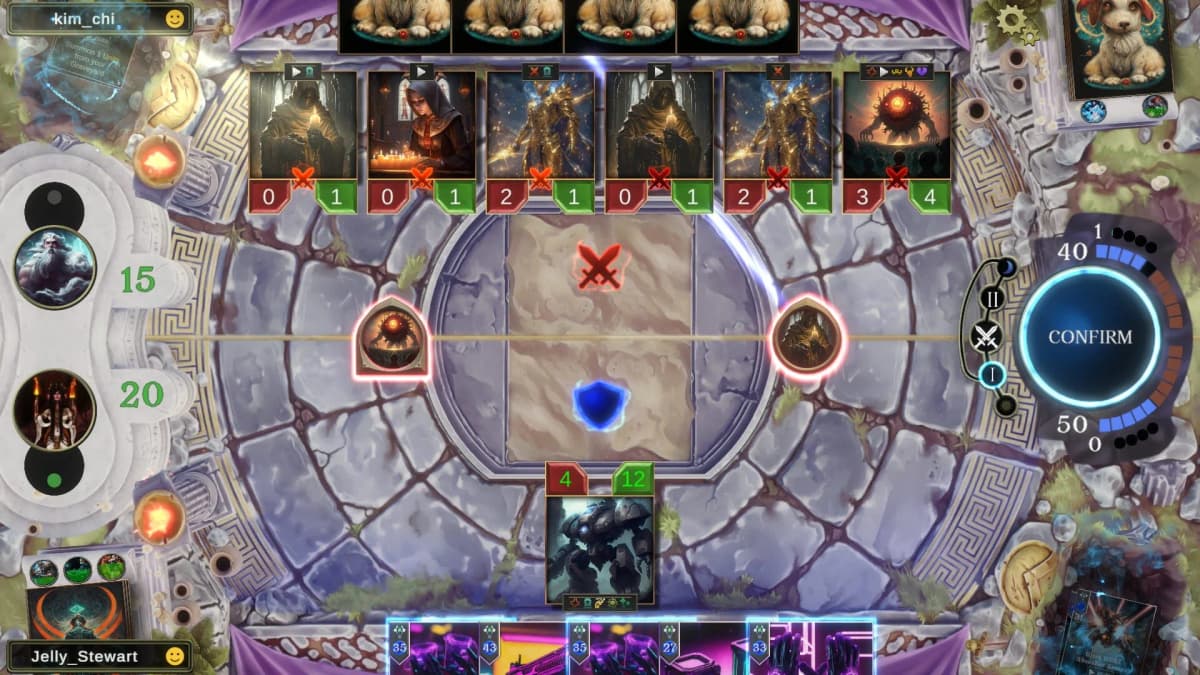
Legends function like mid-match power plays: complete specific mini-quests to bring a faction’s deadliest hero onto the board and flip the script. It sounds a bit like Runeterra’s champion level-ups crossed with a Commander-style payoff—except you earn them by playing to conditions each game. Then there are Gods, which the team says can change how a deck behaves entirely. Think of them as macro-level rule-benders—closer to a persistent hero identity than a one-off card. Add a rule-bending custom mode and you’ve got the kind of sandbox that could keep theorycrafters up till 3 a.m.
They’re also poking at long-standing CCG gripes: no floodgates (Yu-Gi-Oh!-style lockout effects), no 10-minute turns, and a “back-and-forth action system” that influencers say keeps both players engaged. There’s a consumer-friendly touch too—craft a card once and you can use it everywhere, no hunting duplicates. You can also test decks you don’t own against AI before unlocking them. If “no pay-to-win” holds, this could be one of the more generous economic models in the space.
Big Ideas, Bigger Risks
Letting players make official cards is both the coolest and most terrifying idea here. We’ve seen procedural or player-shaped designs before—KeyForge’s algorithmic decks, Runeterra’s champion-defining mechanics, even community-driven banlists in fan scenes—but not a mainstream digital CCG that bakes player-designed cards into the core product at scale. How do you keep power creep in check without crushing creativity? Who vets the 8,001st burn spell with a twist that breaks everything?
The studio says cards are “balanced,” but balance doesn’t happen by mantra. You need guardrails in the editor, a rigorous review pipeline, clear criteria, and a fast-reacting live-ops team with the guts to nerf or retire outliers. Banlists and rotation are table stakes; discoverability is another monster entirely. With thousands of new cards, how do you find the good stuff without drowning in chaff? Strong tagging, curation, and smart recommendation systems will make or break daily playability.

Then there’s monetization. Kickstarter rewards mention booster packs, which raises eyebrows alongside “no pay-to-win.” If duplicates aren’t a thing and cards can be unlocked broadly, are boosters purely cosmetics and resources? If they’re progression-critical, that’s a red flag. I’m hopeful the “craft once, use everywhere” line is the cornerstone of a fair economy—because if they nail that, Ariokan immediately stands apart from the usual gacha grind.
Want to Level Up Your Gaming?
Get access to exclusive strategies, hidden tips, and pro-level insights that we don't share publicly.
Ultimate Gaming Strategy Guide + Weekly Pro Tips
Why This Matters Now
As someone who has sat through mirror-match hell in Hearthstone and seen Yu-Gi-Oh! duels locked behind floodgates, the idea of a CCG that’s truly player-led is enticing. The recent success of fast, reactive pacing—Marvel Snap’s snappy turns, Runeterra’s spell-speed dance—proved there’s a hunger for interaction over solitaire. Ariokan wants to go a step further: let the community define the tools themselves. That’s the kind of swing that could reset what we expect from digital card games—or implode if the scaffolding isn’t there.
The early signals are strong: funded in under 24 hours, “Project We Love,” and a community already churning out thousands of cards and dozens of tournaments. But Kickstarter hype is not delivery. The real test comes in the open beta window in Q1 2026. I’ll be watching for three things: how strict the card editor’s guardrails are, how quickly balance patches hit when something breaks, and whether the economy respects player time without nudging toward pack spend.
What Gamers Need to Know
- Closed PC beta is live on Epic; open beta is planned for Epic and Steam in Q1 2026.
- Kickstarter runs until October 23, 2025; rewards include closed beta access, cosmetics, and even chances to design a Legend or God.
- If you love brewing and hate stale metas, this is laser-targeted at you. If you crave airtight esports balance, you’ll want to stress-test the editor and watch tournament policy closely.
- “Modding!” is on the fact sheet. That’s exciting, but fragmentation and security need clear messaging before launch.
Bottom line: Ariokan is chasing the dream so many of us have had mid-ladder—“If only I could make the exact card my deck needs.” If Fatum Games can translate that dream into a stable, fair live service without drowning us in broken nonsense, this could be the most interesting CCG experiment since Snap reinvented turn structure.
TL;DR
Ariokan is a bold, player-driven CCG that funded fast and promises official, community-made cards, dynamic Legends, and deck-defining Gods. The concept rules; the challenge is balance, curation, and a fair economy. Put it on your watchlist for the Q1 2026 open beta—this could either redefine the genre or be a spectacular mess. Here’s hoping for the former.