
Table of Contents (6)
Why this matters: Ark may finally run like a modern game – and on new hardware
Studio Wildcard’s move to upgrade Ark Survival Ascended (ASA) to Unreal Engine 5.7 isn’t just a routine engine bump. According to co-founder and dev director Jeremy Stieglitz, one specific change – new nanite tessellation for large-scale foliage – is a “magic bullet” that delivers dramatic, near-instant gains. For a franchise notorious for being rough around the edges, a predictable 30-33% performance bump on foliage-heavy scenes (and reported 40-50% improvement since ASA’s 2023 launch) could be the difference between the game feeling playable or constantly punished by framerate drops. It also opens a door we’ve heard about for years: a possible Nintendo Switch 2 port.
- UE5.7’s new foliage nanite tessellation yields ~33% performance improvement in tests, on top of earlier 40-50% gains since launch.
- Studio Wildcard aims to ship the engine upgrade by end of March 2026 — it’s a priority tied to Lost Colony fixes and future content.
- Switch 2 builds exist and are “in active development,” but release timing is still unknown and other hurdles remain.
Breaking down the “magic bullet”
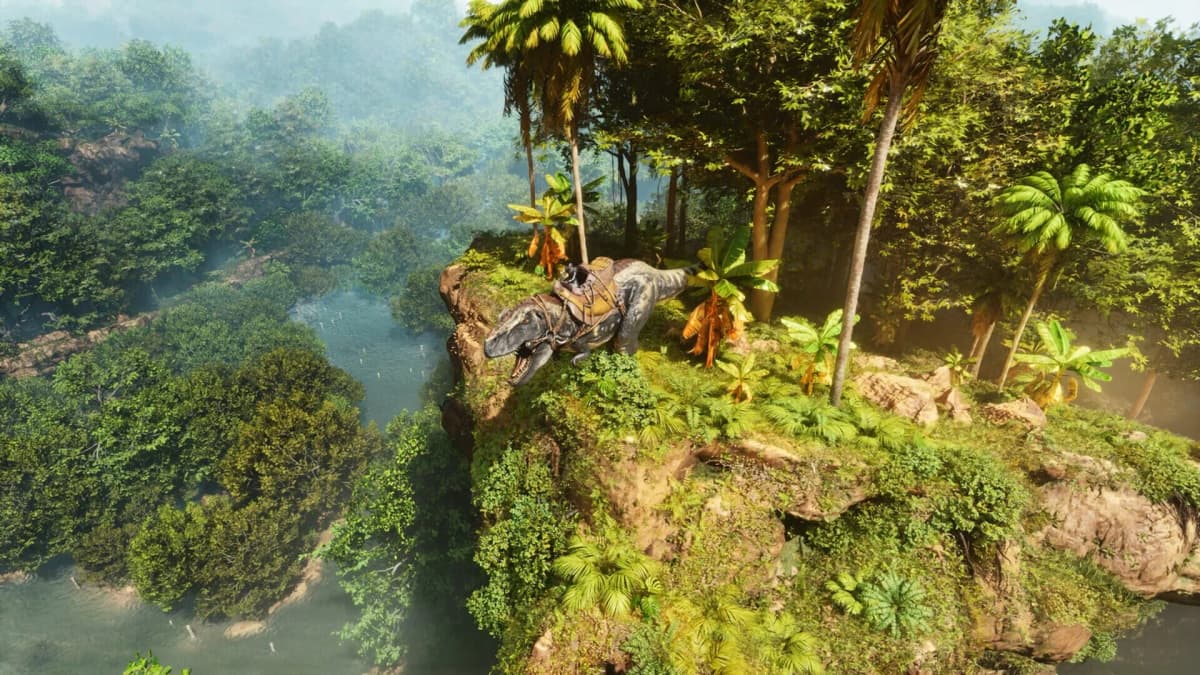
Stieglitz’s enthusiasm is specific, not vague marketing hyperbole: Epic improved how Nanite handles dense foliage in UE5.7, and ASA uses a lot of foliage. In practical terms that means trees, bushes and undergrowth — the things that historically kill framerate in Ark’s large open maps — can be rendered far more efficiently. Wildcard’s initial tests reportedly show the difference is “night and day.” Turn on the new method and performance spikes without major visual downsides. That’s rare in this industry; most engine upgrades trade something for gains. If those internal metrics hold across diverse saves, builds and mods, it’s a real technical win for ASA.

Switch 2 port: realistic or wishful thinking?
Wildcard says Switch 2 builds already exist and are feasible only because of the UE5.7 improvements. That’s a big step beyond “we’d like to someday.” But a usable port is several steps beyond a promising build. Shipping on Nintendo hardware involves resolution and memory budgets, control remaps, storage and download size limits, QA and certification hurdles, plus making sure core systems like multiplayer, saves and mods behave reliably. ASA brought massive maps, complex base structures and extensive mod mechanics to PC — all of which must be scaled or reworked for a mobile-style console to be viable. That said, UE5.7 making this “doable” turns something previously impossible into a solvable engineering puzzle, and that is meaningful.
Why now: Lost Colony, community frustration and the pressure to perform
Lost Colony shipped amid high expectations but mixed reviews, mostly due to bugs and performance issues. That pressure clarifies priorities: Wildcard can’t rest on future content alone; it must make the core experience feel polished. Upgrading the engine by March 2026 becomes both a reactive fix and a forward-looking enabler. If the team can stabilize ASA across existing platforms first, then leverage UE5.7 to expand to new ones, that squares both player demands and growth ambitions.
What gamers should actually expect
Players should be cautiously optimistic. Expect noticeable performance gains where foliage and dense environments are the bottleneck. But don’t assume Switch 2 is next-week real — “in active development” is not a release date. Also keep in mind mods, community servers and existing saves complicate any cross-platform push. Wildcard’s roadmap and ongoing fixes will be the better gauge: if they ship the engine update on schedule and use it to stabilize current platforms, the door to new hardware stays open. If not, the Switch 2 conversation will remain an attractive but distant possibility.

TL;DR
Unreal Engine 5.7’s foliage improvements could be the single best technical boost ASA has seen — the kind that makes the game run markedly better and puts a Switch 2 port within reach. It’s not a guarantee, and many practical obstacles remain, but this is the kind of rare, concrete win that changes development math. For now, keep an eye on Wildcard’s March 2026 engine update and whether it actually improves player experience across real-world builds and servers.
FinalBoss // Gear
Level up your setup
01Best-selling Switch 2 gameson Amazon→02Switch 2 accessorieson Amazon→038BitDo controllerson Amazon→04Discounted game keyson Kinguin→Affiliate links · As an Amazon Associate, FinalBoss earns from qualifying purchases.
Want to Level Up Your Gaming?
Get access to exclusive strategies, hidden tips, and pro-level insights that we don't share publicly.
Ultimate Gaming Strategy Guide + Weekly Pro Tips