
When a real rocket leaves Earth and the game that benefits most is an 11-year-old indie sim with no major recent updates, that tells you something about where players actually want their space games to go.
NASA’s Artemis II launch has quietly pushed Kerbal Space Program back into the spotlight, driving its biggest Steam peak in more than a decade. Under the hype graphs and Reddit threads is a simple story: when the world cares about space again, Kerbal is still the default way to explore it interactively – and that’s awkward news for its troubled sequel.
Table of Contents (7)
Key takeaways
- Steam peak hits a 10+ year high: KSP reached around 11,900 concurrent players on Steam on April 5, 2026, its best showing since the 1.0 launch era in 2015, off a baseline of 3,000-4,000.
- Artemis II is the clear trigger: Player numbers climbed in lockstep with NASA’s crewed lunar flyby, showing how tightly this particular game is wired to real-world spaceflight.
- No big patch, no huge sale: This spike wasn’t manufactured by marketing; it came from curiosity, word of mouth, and a renewed cultural fixation on space.
- KSP2 loses by omission: While the original is booming, Kerbal Space Program 2 remains in early access limbo with no updates since 2024 and a studio that’s been heavily downsized.
Artemis II lit the fuse on an 11-year-old game
According to SteamDB data cited by multiple outlets, Kerbal Space Program hit roughly 11,890-11,933 concurrent players on Sunday, April 5, 2026 – different trackers round it slightly, but everyone agrees the peak is just under 12k. That’s the highest player count KSP has seen since its 1.0 launch window in 2015, where it briefly pushed above 19k.
The more interesting number isn’t the peak; it’s the baseline. Through early 2026, KSP was cruising at around 3,000–4,000 concurrents on a typical day. With Artemis II, that ceiling suddenly became the floor. Over the two weeks surrounding launch, daily peaks more than doubled, then tripled, as returning players and complete newcomers piled in.
The timing lines up almost too neatly. Artemis II launched on April 1, 2026, sending a crew on a lunar flyby that’s been streamed, clipped, and dissected to death. As that mission settled into its orbit around the moon, KSP’s player curve bent sharply upward. No major patches, no flashy new DLC, no front-page Steam sale. Just a big, very public reminder that orbital mechanics are real, and complicated, and kind of terrifying – which happens to be exactly what KSP is built around.
This isn’t the first time real-world events have jolted a sim: Plague Inc. during Covid, Microsoft Flight Simulator around travel bans, F1 games every time a season gets spicy. But KSP’s bump is notable for how cleanly it maps to one mission and how long after release it’s happening. Most live-service titles would kill for an 80–200% concurrent increase 11 years in.
This is what “evergreen” actually looks like
Publishers like to throw around the term “evergreen” for games they want you to keep buying cosmetics for. KSP is the less glamorous version of that idea: a system-deep sandbox that quietly becomes infrastructure for anyone who gets suddenly obsessed with space.
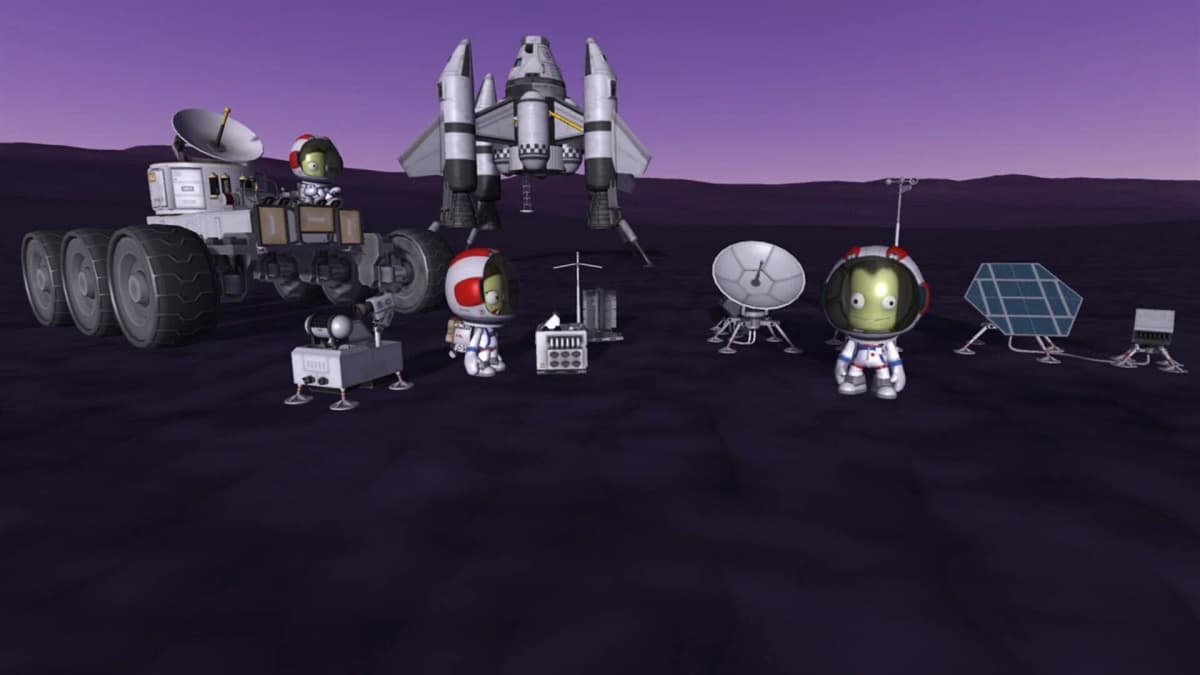
NASA has collaborated with KSP before – the Asteroid Redirect Mission update wasn’t just a branding exercise – and the community has spent a decade turning the game into an informal training ground for orbital thinking. Teachers use it. Aerospace students use it. Space nerds use it as a way to turn “wait, how does a free-return trajectory work?” into something tangible.
When Artemis II takes over news feeds and TikTok, people don’t go looking for a story-driven blockbuster. They go looking for the closest thing to a playful physics lab. KSP still owns that niche because:
- The core simulation is still strong: Orbital mechanics, delta-v budgets, staging – the fundamentals haven’t aged the way a graphics pipeline would.
- The mod scene never really died: Visual overhauls, realism packs, total conversions – they keep the game current without official content drops.
- It respects your intelligence: There’s slapstick, but under it is a game that assumes you’re willing to learn something hard.
High concurrent spikes get headlines; the long tail is where the money and cultural relevance sit. KSP’s Artemis bump is a reminder that deeply systemic games can go dormant for years and still surge when reality lines up with what they simulate.
The uncomfortable part: this spotlight isn’t on KSP2
There’s one name conspicuously absent from all these Artemis-fueled charts: Kerbal Space Program 2.
The sequel launched into early access in 2023 under Intercept Games and has had a rough trajectory: performance issues, missing promised features, and a roadmap that slipped repeatedly. Layoffs at the studio and the lack of updates since 2024 left many players assuming the project was effectively frozen, even if nobody wanted to say it out loud.
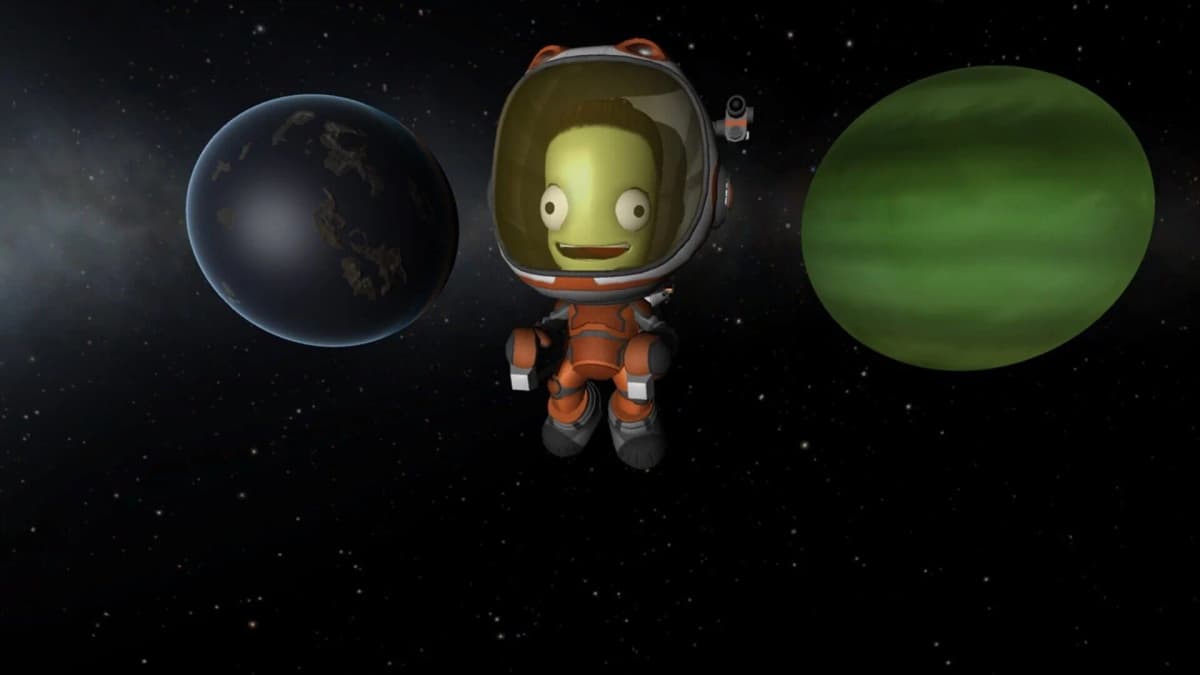
That context makes Artemis II’s impact awkward. A global wave of interest in crewed lunar flight just handed the KSP franchise a once-in-a-decade marketing opportunity – and the game capitalizing on it is the original, not the one Take-Two has been trying to position as the future of the brand.
If I had a PR rep from the publisher in front of me, the blunt question would be: what, exactly, is your plan to meet this renewed interest? Because right now, it’s the 2013–2015 design philosophy that’s paying off, not the modern early-access live roadmap.
Players are effectively voting with their installs:
- When they want stability and proven systems that match what they’re seeing from NASA, they go to KSP1.
- When they look at KSP2, they see uncertainty – about performance, about support, and in some regions about whether the studio will even be intact to finish the roadmap.
That’s not an unsalvageable position for a sequel, but it raises the bar. Any eventual KSP2 revival now has to compete not just with launch expectations, but with the reminder that the “old” game works perfectly as a companion to real spaceflight.
Space sims age differently from other genres
The other story hiding in these numbers is about how simulation games, especially ones rooted in real science, sit slightly outside the normal hype cycle.
In most genres, an 11-year-old title spiking to decade-high concurrents would be a nostalgia play. Here, it’s relevance. Artemis II isn’t sending players back to relive an old story; it’s sending them to learn how the current one works. That’s closer to how strategy and grand sim games behave than typical single-player releases.
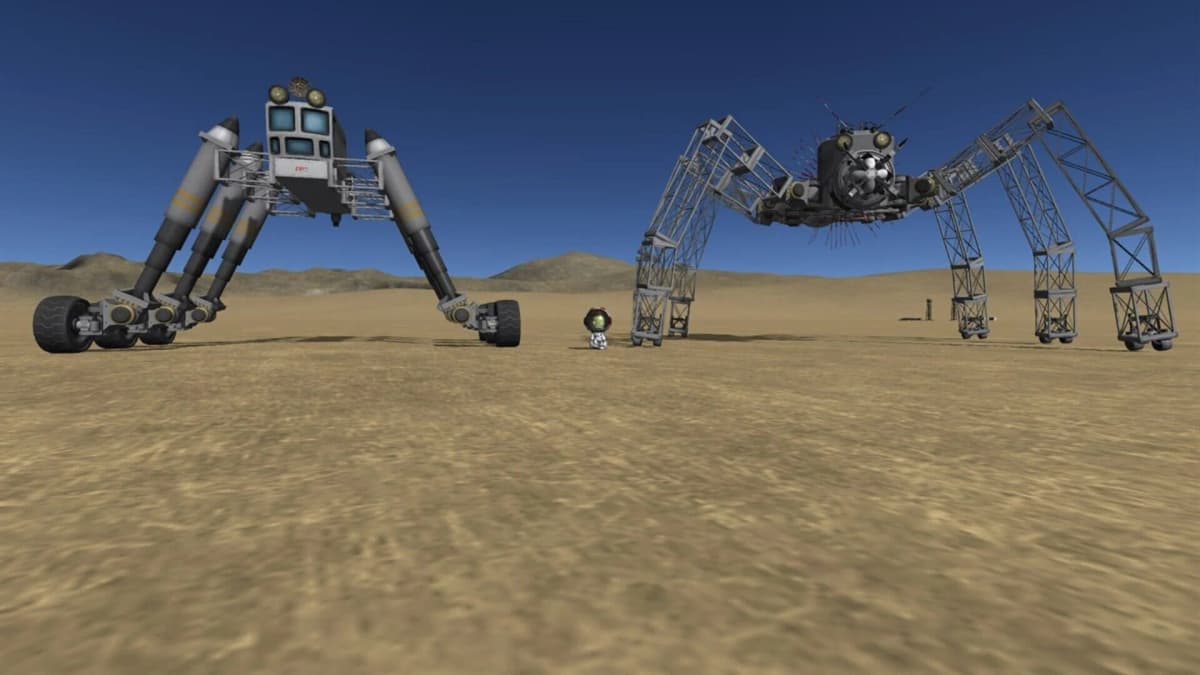
We’ve seen similar patterns:
- Universe Sandbox charts whenever there’s a big astronomy milestone or viral exoplanet story.
- SpaceEngine and other planetarium-style tools get bumps around new telescope imagery.
- Historical grand strategies like Hearts of Iron and Crusader Kings rise when their eras trend in film or TV.
In that context, Kerbal’s Artemis spike isn’t a fluke; it’s a case study in how to build something that can keep syncing with the real world over a decade later. The fact that the game is still being sold in packages like “Enhanced Edition Complete” on consoles just extends that runway – newcomers can jump straight into a definitive version that already has a proven ecosystem behind it.
For developers watching this from the outside, the lesson is not “launch another early-access space sim.” It’s that if you build a robust enough systemic model – whether that’s orbital physics, climate, economics, or something else – the news cycle will eventually route attention back to you. But only if your game is still maintained, stable, and discoverable when that moment hits.
What to watch next
The 11.9k spike makes the headlines; the next six months will decide whether this was a curiosity blip or the start of a new normal for Kerbal.
- The new floor: Do daily peaks settle back at 3–4k, or do they stabilize closer to 6–8k? That tells us whether a meaningful chunk of new players actually stick.
- Publisher response: Does Private Division or Take-Two surface KSP with featured spots, mild discounts, or curated “learn Artemis-style maneuvers” content while the mission is still in news cycles?
- Any sign of a KSP2 heartbeat: Even a small technical update or roadmap clarification in the wake of Artemis II would suggest the sequel isn’t being left to drift.
- Next real-world trigger: If future Artemis flights or other headline missions cause similar KSP spikes, we can start treating this as a predictable pattern, not a one-off.
For players, the practical takeaway is simple: if Artemis II has you thinking about transfer windows and free-return trajectories, the original Kerbal Space Program is still the most proven, well-supported way to poke at that curiosity yourself – and right now, you’ll have more company in orbit than the game has seen in years.
TL;DR
NASA’s Artemis II mission pushed Kerbal Space Program to around 11.9k concurrent players on Steam, its highest peak since the 2015 1.0 launch era. The spike came without major new content, underlining how deeply KSP is tied to real-world spaceflight and how robust its underlying simulation still is. The original game is thriving off the renewed attention; whether the long-dormant KSP2 can do anything with this moment is the open question hanging over the franchise.
FinalBoss // Gear
Level up your setup
01Top-rated gaming headsetson Amazon→02High-refresh gaming monitorson Amazon→03Gaming chairson Amazon→04Discounted game keyson Kinguin→Affiliate links · As an Amazon Associate, FinalBoss earns from qualifying purchases.
Want to Level Up Your Gaming?
Get access to exclusive strategies, hidden tips, and pro-level insights that we don't share publicly.
Ultimate Gaming Strategy Guide + Weekly Pro Tips