
Table of Contents (6)
Big change at Xbox: Spencer steps back, CoreAI chief Asha Sharma named CEO
The headline is simple but seismic: Phil Spencer – the public face of Xbox for more than a decade – is stepping back, and Asha Sharma, who led Microsoft’s CoreAI unit, is taking over as Executive Vice President and CEO of Microsoft Gaming. Spencer will remain an advisor through the summer, Xbox president Sarah Bond is leaving, and long‑time studio boss Matt Booty has been shifted to Executive Vice President and Chief Content Officer. Sources including Push Square, 3DJuegos and IGN all reported the shake‑up within hours of Microsoft’s internal emails hitting the press.
- New leadership signals a strategic pivot from console-first stewardship toward platform and cross‑device play under an AI and platform executive.
- Sharma outlined three public priorities: invest in games and studios, “return” the Xbox identity, and invent new models of play – framed by platform thinking.
- Several big questions remain: what this means for Xbox hardware, the fallout from past studio cuts, and why Sarah Bond — once considered Spencer’s likely successor by many industry watchers — is leaving now.
Breaking down the shake‑up
All three outlets are in agreement on the core facts: Spencer, who joined Microsoft in 1998 and became the top Xbox executive in the 2010s, told staff last fall he was thinking of stepping back; that transition is now happening. Push Square highlighted Spencer’s note welcoming Sharma and confirming his advisory role. 3DJuegos reported a specific effective date for Spencer stepping back (February 23), while IGN focused on the human story behind Sarah Bond’s departure, noting her later LinkedIn farewell and that she had been widely seen as a likely internal successor.
Why handing the reins to Microsoft’s CoreAI chief matters
This wasn’t a random internal swap — it signals a deliberate directional change. Asha Sharma comes from CoreAI, not a traditional Xbox or studios background. Satya Nadella described her as someone who “builds and grows platforms” and aligns business models to long‑term value — language that suggests Microsoft wants gaming to operate more explicitly as a platform business that spans console, PC, cloud and mobile.
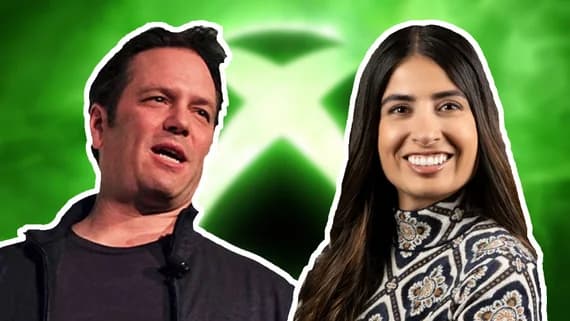
Sharma’s first memo leaned into that: three commitments centered on “great games,” a “return of Xbox,” and a “future of play.” Crucially, she framed Xbox as something that should feel “seamless, instant, and worthy” across devices and promised tools to let developers “build once and reach players everywhere without compromise.” That is platform thinking — not just chasing exclusive hits, but building infrastructure, services and monetization that work across hardware.
She also tempered hype about AI, promising not to “flood our ecosystem with soulless AI slop” and emphasizing games as art crafted by humans. That’s a contrast to the most breathless corporate AI messaging: Sharma appears to want AI as developer tooling and platform augmentation rather than a content substitute.
Where sources diverge — and what’s still fuzzy
There’s agreement on the leadership moves, but the reporting highlights different angles. IGN focused on Bond’s exit as an underexplained personal decision and the awkwardness of the announcement order; 3DJuegos pointed to timing details like Spencer’s last day; Push Square emphasized the internal tone of Spencer’s handoff. None of the outlets could fully answer the biggest strategic question: is Microsoft done with console hardware or merely reprioritizing investments? Sharma referenced “celebrating our roots with a renewed commitment to Xbox starting with console,” but did not explicitly confirm or deny any next‑gen console plans — leaving hardware strategy ambiguous.
What this means for players and studios
Practically, expect three things. First, Microsoft will likely double down on platform and services: Game Pass, cloud streaming, PC integration and developer tooling will be framed as the primary levers for growth. Second, investment in “iconic franchises and bold new ideas” is promised, but how that balances with past rounds of studio cuts will be the real test of commitment. Third, AI will be treated as a productivity and personalization layer rather than an end in itself — that reduces some concerns but raises new ones about how AI tools change studio workflows and what smaller teams can afford to adopt.
TL;DR — The shape of Xbox’s next chapter
Phil Spencer’s exit closes an era and Asha Sharma’s arrival opens another: expect Microsoft to reposition gaming as a platform business led by cross‑device ambitions and AI‑enabled tooling, while promising renewed attention to big games and Xbox identity. That’s an exciting direction if you like services and scale — but gamers should watch how hardware plans, studio investments, and Bond’s unexplained departure play out. The strategy feels clear; the execution and trade‑offs will decide whether this is a reset or a rebrand.
FinalBoss // Gear
Level up your setup
01Best-selling Xbox Series X|S gameson Amazon→02Xbox controllerson Amazon→03Top-rated gaming headsetson Amazon→04Discounted game keyson Kinguin→Affiliate links · As an Amazon Associate, FinalBoss earns from qualifying purchases.
Want to Level Up Your Gaming?
Get access to exclusive strategies, hidden tips, and pro-level insights that we don't share publicly.
Ultimate Gaming Strategy Guide + Weekly Pro Tips