
Table of Contents (7)
Black Flag Resynced Was Rebuilt to Make the Caribbean Behave Better
Assassin’s Creed Black Flag Resynced matters because the rebuild reaches beyond sharper water and denser ports. Its technical work targets the systems that decide whether a pirate sandbox feels coherent while moving at speed: world streaming, collision, animation, AI logic, mission scripting, and persistent progression. The headline feature to scrutinize is naval combat, where Ubisoft is improving cannon-shot fidelity and directional variation rather than leaving broadsides as the same old canned spectacle.
That is the right priority. The 2013 original still has a superb sailing loop, but its age shows whenever the world has to juggle a fast-moving ship, shore activity, combat effects, and scripted objectives at once. A remake earns its keep by smoothing those joins. Prettier palm trees are welcome; a Caribbean that streams cleanly, reacts consistently, and carries progression into New Game+ is the more important upgrade.
Black Flag Resynced Rebuild: What Each System Changes
Cannon Fire Is the Best Test of the Rebuild
Naval combat is where Black Flag Resynced has the most to prove. Cannon fire asks several systems to work together: ship orientation, target position, impact feedback, effects, collision, camera readability, and the surrounding world all have to remain believable while the player is turning, accelerating, and taking fire.
The rebuild focuses on stronger cannon-shot fidelity and directional variation. In plain terms, the firing behaviour should better communicate where a volley is coming from and how the ship is positioned, instead of making every broadside feel like a generic effect pasted onto the encounter. That matters because naval combat lives on spatial awareness. A player needs to read whether an enemy has a clean firing line, whether a turn has exposed the Jackdaw, and whether a broadside was earned through positioning.
Legendary ships provide the cleanest repeatable test. They sit at the corners of the map and become visible after the fortresses in their respective regions are destroyed. Those encounters put sustained pressure on steering, cannon placement, incoming fire, and collision. Replaying one after learning its patterns should reveal whether Resynced’s directional cannon work changes the feel of a broadside or merely changes its presentation.
Streaming and Collision Matter More Than a Screenshot
A pirate game cannot hide behind static scenery. The player is constantly moving between sea lanes, ports, beaches, forts, enemy patrols, and missions. More robust streaming is therefore a gameplay feature: it gives the world a better chance of keeping its state intact while the player moves through it at speed.
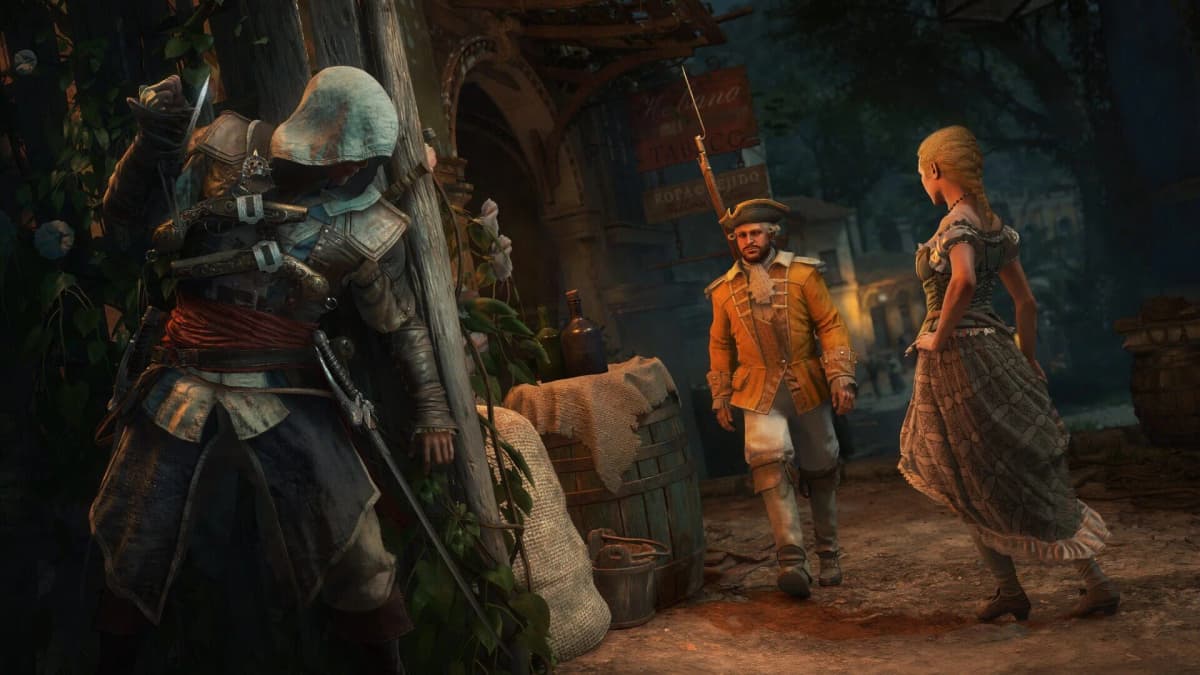
Collision sits beside streaming for the same reason. A ship battle near a coastline can fall apart quickly if objects fail to register cleanly or interactions lack weight. Better collision gives naval encounters a firmer physical language. It also helps contextual movement on land, where stealth routes, crowds, cover, and combat animations depend on the game agreeing about where Edward and everyone around him actually are.
Modern AI Logic Can Change Stealth and Combat Without Changing the Fantasy
Black Flag Resynced’s system-driven AI work has the potential to be felt in the small moments that define an Assassin’s Creed mission: how a guard responds after losing sight of Edward, whether combat escalation follows the surrounding situation, and how objectives cope with an unexpected approach.
That is more useful than a superficial overhaul of the original’s missions. Stealth, combat, and mission scripting benefit when they draw from shared logic rather than behaving like isolated tracks. The strongest version of this rebuild lets the game accommodate a player who climbs, sneaks, starts a fight, retreats, and returns without the mission feeling like it has fallen off its rails.
The practical checks are straightforward: break line of sight during infiltration, enter and leave combat around an objective, approach missions from different angles, and watch whether enemy behaviour and scripting remain readable. The point is consistency. A modern system should make failure, recovery, and improvisation easier to understand.
New Game+ Points to a More Flexible Progression Backbone
New Game+ is a revealing addition because it forces a campaign to separate what the player keeps from what the story needs to reset. Gear, upgrades, unlocks, story gates, mission states, difficulty choices, and accessibility settings all need to coexist without breaking progression. That requires a more adaptable save and data layer than a one-and-done campaign structure.
For returning players, the value is clear. A second run can preserve the investment that made the Jackdaw and Edward feel like their own while offering scalable difficulty and accessibility support. For the remake itself, it is evidence that the systems are being built to persist and flex rather than merely replay the 2013 campaign in higher resolution.
The Practical Takeaway
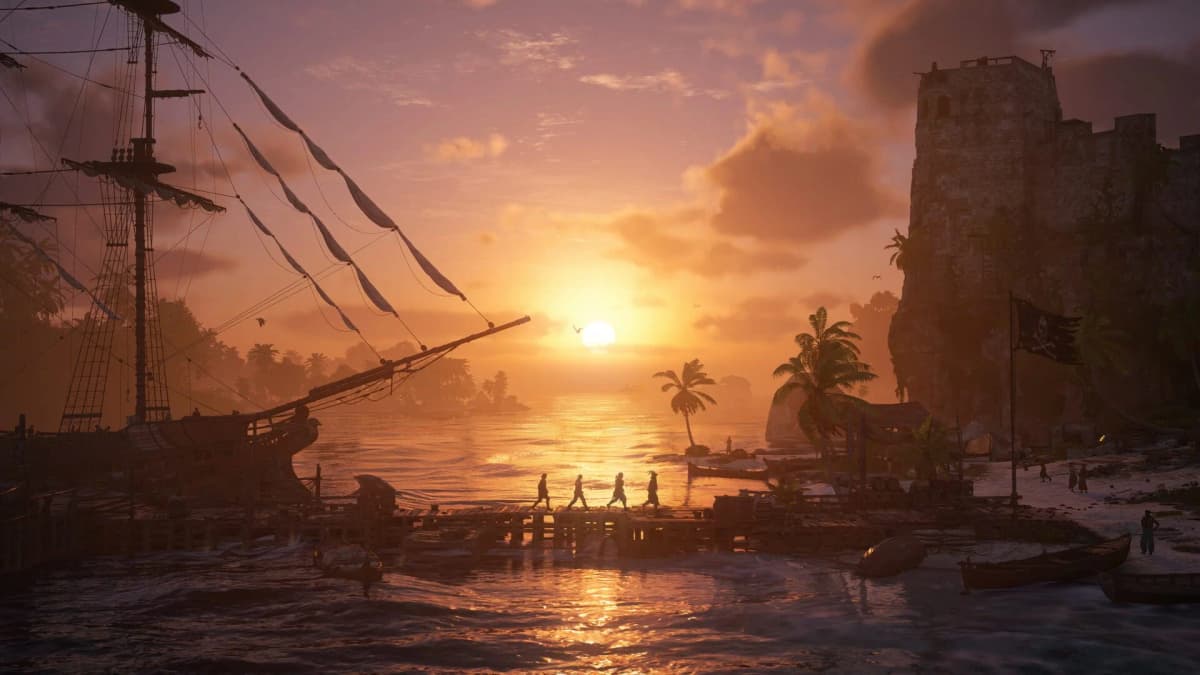
Black Flag Resynced should be judged less by still images than by its worst-case gameplay loops: a crowded port after a long sail, a fort assault that turns into an escape, and a Legendary ship battle where every broadside needs to be readable. Those are the moments where streaming, collision, AI, animation, and cannon direction either form a convincing pirate world or expose a cosmetic remake.
The PC, PlayStation 5, Xbox Series X|S, Steam, and PlayStation release is worth a close look for players who wanted the original Black Flag’s sailing and naval combat supported by a more flexible modern structure. The key feature to verify first is cannon combat; it is the rebuild’s most direct, player-facing measure of whether the technology changed the game rather than simply redecorating it.
FinalBoss // Gear
Level up your setup
01Top-rated gaming headsetson Amazon→02High-refresh gaming monitorson Amazon→03Gaming chairson Amazon→04Discounted game keyson Kinguin→
Affiliate links · As an Amazon Associate, FinalBoss earns from qualifying purchases.