
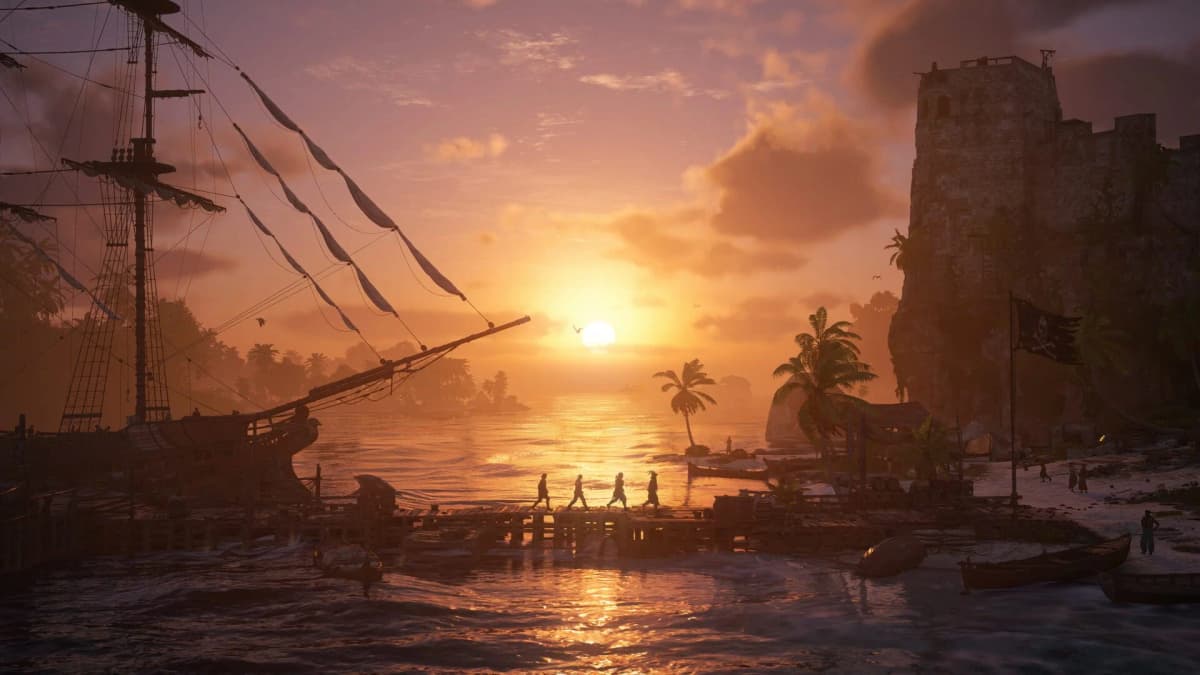
Assassin’s Creed spent years asking players to care about more than the person wearing the hood. The historical worlds supplied the fantasy, the fights, the cities, and the spectacular escapes, but the modern-day thread gave those memories a larger purpose. Every Animus session was supposed to reveal another piece of a conflict that had survived centuries. Every strange artifact, encrypted message, and glimpse of the Isu was part of a promise: keep following this series and the larger story will eventually mean something.
Assassin’s Creed Black Flag Resynced breaks that promise in the most frustrating way possible. It delivers the sharper, smoother, more expansive pirate adventure players wanted. Edward Kenway remains one of the franchise’s best protagonists, the Caribbean remains a glorious place to disappear into for an evening, and the remake has clearly succeeded at preserving the reasons this entry became such a community favorite. Then Ubisoft cuts away the playable Abstergo office framework that made the original game part of Assassin’s Creed’s central narrative rather than a superb historical detour.
That choice leaves a gorgeous remake with a hole at its center. Ubisoft has improved the vessel and thrown the map open wider, but it has removed the compass.
Table of Contents (7)
Edward Kenway Still Carries the Pirate Adventure
Let’s give Black Flag Resynced its due before getting to the part Ubisoft mangled. This is a successful full remake of a beloved Assassin’s Creed game because it understands where the original’s strength lived. Edward’s story has always worked because he begins with a hunger for money, freedom, and status, then repeatedly discovers how hollow those things become when everyone around him pays the price. His journey gives the pirate fantasy a pulse. He is reckless, funny, selfish, wounded, and eventually forced to recognize what he has lost.
The world around him helps. Sailing remains the fantasy that sells the whole package: plotting a route across open water, spotting trouble on the horizon, boarding an enemy ship, and carrying the consequences of that victory back into the wider campaign. The remake’s polish and smart expansions make that loop easier to love. Returning to this version of the Caribbean means more room for its characters, its corners, and the messy pirate history woven through figures such as Stede Bonnet.
Even the material surrounding Edward’s campaign has real value. Freedom Cry matters because it expands the world without treating its darker realities as decorative scenery. Richard Knight and the other connections surrounding the broader conflict matter because Assassin’s Creed was built to make history feel interconnected, contested, and alive. A remake that respects that texture deserves praise.
That is exactly why the modern-day cut stings. Ubisoft did not botch a disposable side feature in a weak game. It removed the structural element that explained why players were reliving Edward’s life in the first place.
The Abstergo Office Was the Game’s Narrative Engine
The original Abstergo office sections were never the flashy part of Black Flag. They did not compete with naval battles. They did not offer the immediate pleasure of stalking a target through a tropical city. They were quieter, stranger, and deliberately intrusive. Players stepped outside Edward’s memories and became physically present inside a corporation that had turned human history into product development.
That concept is pure Assassin’s Creed. The series has always been interested in control: who gets to write history, who gets to hide it, who gets to package somebody else’s life as harmless entertainment. Walking through Abstergo made that theme playable. You were not simply told that the modern conflict existed through a text box or a distant cutscene. You were placed inside the machinery of it, asked to snoop through it, and made complicit in its corporate blandness.
Removing that framework changes the player’s role from participant to spectator. Black Flag Resynced now positions the player as an anonymous Animus user within a new narrative arrangement. That may sound clean on a pitch deck. In practice, it drains the tension from the framing device. An anonymous user cannot carry the same weight as a player-character who can investigate, trespass, uncover evidence, and become exposed to the danger behind the simulation.
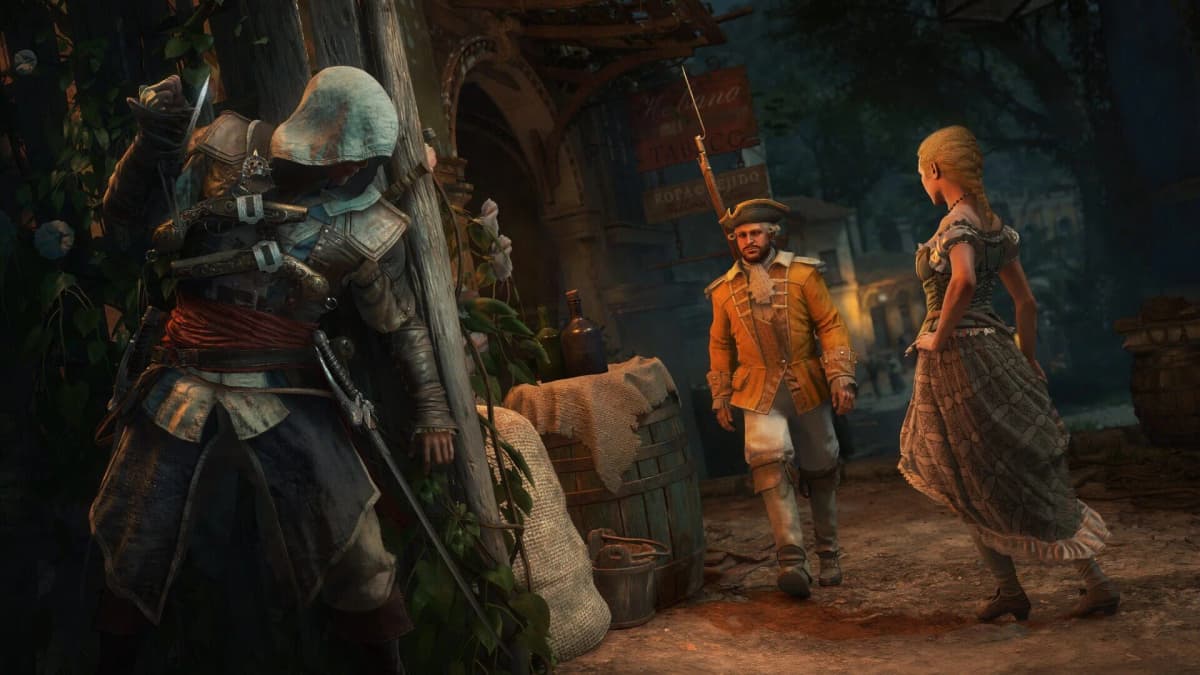
This is where I stop accepting the usual remake defense that every old feature deserves to be judged by whether it is “fun” in isolation. The Abstergo office was not there to win a minigame contest against ship combat. It was there because Assassin’s Creed has always been a conspiracy story as well as a historical adventure. Cut the conspiracy out of the game, and the history loses its present-tense urgency.
Ubisoft Has Turned a Payoff Into Homework
The modern-day and Isu threads have been stretched, rerouted, softened, and repeatedly pushed into the background across Assassin’s Creed’s long life. That history makes narrative closure more important, not less. Longtime players have spent years following fragments of a conflict that was always bigger than one assassin, one city, or one era. The reward for that commitment should exist inside the game that asks for their time and money.
Instead, Black Flag Resynced asks players to accept that essential answers and continuity can live elsewhere: in comics, in transmedia material, or in the franchise’s expanding pile of supplementary lore. I have no patience for that arrangement. Supplemental stories can deepen a world. They can add perspective, fill gaps, and give side characters their due. They cannot replace a conclusion that the game itself has stopped delivering.
A comic can be good and still fail this contract. A lore summary can be thorough and still fail this contract. A video explaining what happened between releases can be useful and still fail this contract. The player bought Assassin’s Creed Black Flag Resynced, sat through the Animus framing, and followed the breadcrumbs. The game owes that player a coherent version of the story it is invoking.
That is the ugly part of Ubisoft’s approach: it turns investment into homework. Players who care enough to chase the modern/Isu mystery are expected to leave the interactive work, hunt down material in another format, and mentally stitch it back onto a remake that has already removed the playable context. The franchise trained its audience to look for connections, then punished that attention by moving the answers off the board.
Calling Both Versions Canon Makes the Problem Worse
Ubisoft’s decision to preserve the original 2013 modern-day story as canon while presenting Black Flag Resynced with a divergent replacement creates a particularly bizarre kind of narrative dissonance. The remake wants the authority of a faithful reimagining while treating a major part of the original experience as something players no longer need to play.
Players are left holding two incompatible ideas at once. The original Abstergo material still matters to the canon. The remake removes the opportunity to experience that material as part of the game’s natural flow. The old storyline remains important in theory, while the new version does not properly carry it in practice.
That is a terrible deal for anyone discovering Edward Kenway through Resynced. They receive the polished version of the pirate adventure and a reduced version of the series story surrounding it. They may finish the remake with no understanding of why the Abstergo premise once mattered, why the Isu thread has such a hold on veteran fans, or why the franchise’s modern conflict was ever worth protecting.
The situation also cheats returning players. A remake should be an opportunity to preserve what made a game distinctive while improving the parts that aged badly. Here, Ubisoft has preserved the sea shanties, the raids, the islands, and Edward’s emotional arc, then discarded the feature that made the original uniquely valuable to the larger Assassin’s Creed timeline. That is preservation with a selective memory.
Yes, the Old Modern-Day Sections Interrupted the Pace
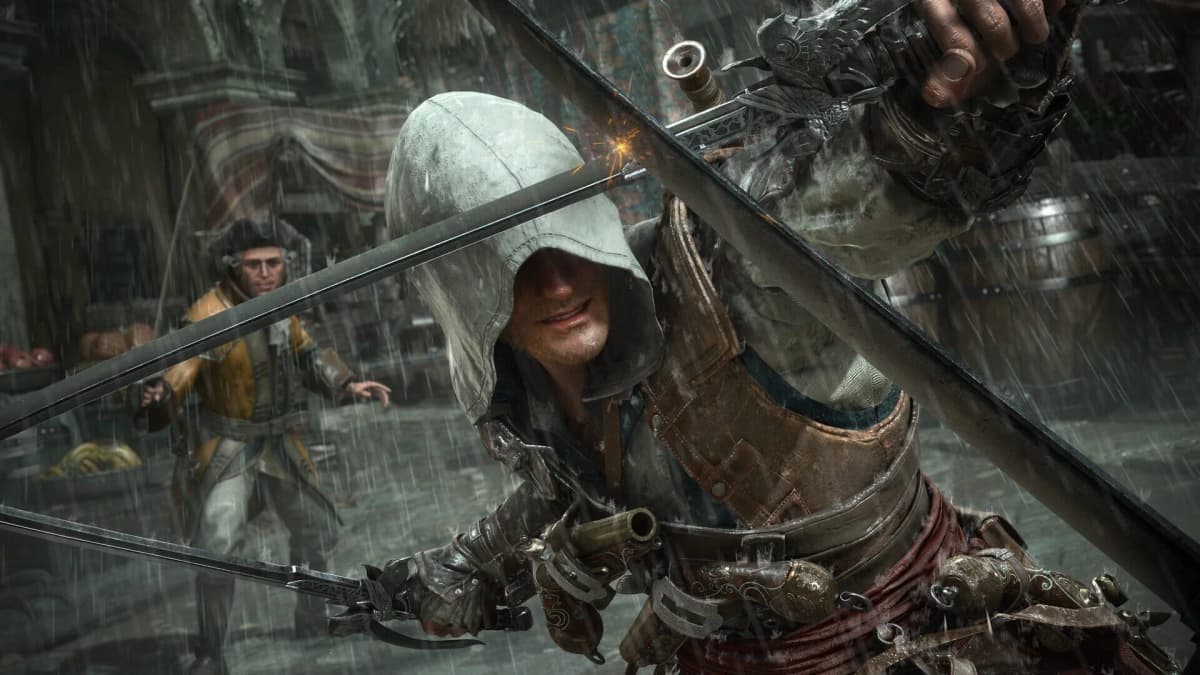
I understand the argument for removing them. Plenty of players wanted to stay on the Jackdaw, keep chasing contracts, and avoid being pulled out of the Caribbean for office exploration and file hunting. A remake designed around momentum can look at those interruptions and decide that the cleanest version of Black Flag is the one that leaves Edward’s world untouched.
That is a fair preference for a player who only wants a pirate game. It is still the wrong answer for Assassin’s Creed. The series has always asked players to tolerate a little friction in service of its larger ideas. The Animus itself is friction. The historical simulations, the interruptions, the glitches, the artifacts, and the hidden messages all exist because the franchise has never been satisfied with making a straightforward period action game.
When Ubisoft strips that away to keep the pace immaculate, it creates a more convenient game and a less meaningful Assassin’s Creed. Convenience is not a replacement for identity. A pirate adventure can survive without modern-day material. This franchise’s long-running story cannot.
Assassin’s Creed Shadows Shows Why This Still Matters
Assassin’s Creed Shadows proved the series can still generate excitement around its historical settings, its assassinations, and its enormous worlds. Ubisoft clearly knows how to build a modern Assassin’s Creed release around the immediate fantasy players want. That makes the handling of Black Flag Resynced more disappointing, because the studio had the chance to show that the old narrative ambitions still mattered alongside those improvements.
Instead, the remake sends the opposite message. The historical parts are worth polishing, expanding, and celebrating. The modern/Isu material is something to sidestep, relocate, or explain elsewhere. That split may satisfy players who view the contemporary story as baggage, but it abandons the people who kept caring because Assassin’s Creed once promised a complete mythos.
I do not need every entry to spend hours in sterile offices or drown itself in cryptic lore. I do need Ubisoft to stop pretending that a story can remain central while its playable chapters are treated as removable clutter. The franchise has earned its giant historical playgrounds by giving players a reason to look beyond them. Throwing away that reason is a creative retreat.
Buy the Pirate Remake, But Do Not Pretend the Story Is Whole
Assassin’s Creed Black Flag Resynced is still worth celebrating as a remake of Edward Kenway’s pirate adventure. Its technical upgrades, polished presentation, and expanded approach to a cherished setting give players a stronger way to revisit the Caribbean on PC, PlayStation 5, and Xbox Series X/S. If the goal is to sail, fight, explore, and follow Edward’s hard-earned transformation, this is a compelling version of a great game.
Players should also go in with clear eyes: this is not the complete Assassin’s Creed experience the original offered. The missing Abstergo office framework takes direct player agency away from the modern-day conflict and leaves the Isu thread without satisfying closure inside the remake itself. Ubisoft has delivered a better pirate playground while weakening the narrative foundation beneath it.
My practical recommendation is simple. Treat Black Flag Resynced as the definitive way to enjoy Edward Kenway’s historical story, but do not accept it as a full replacement for the original’s larger narrative role. Ubisoft can keep remaking its classics, but future remakes need to preserve the playable connective tissue that made Assassin’s Creed more than a parade of beautiful historical vacations. That story belongs in the controller-holder’s hands, where it always did.
FinalBoss // Gear
Level up your setup
01Top-rated gaming headsetson Amazon→02High-refresh gaming monitorson Amazon→03Gaming chairson Amazon→04Discounted game keyson Kinguin→
Affiliate links · As an Amazon Associate, FinalBoss earns from qualifying purchases.
Want to Level Up Your Gaming?
Get access to exclusive strategies, hidden tips, and pro-level insights that we don't share publicly.
Ultimate Gaming Strategy Guide + Weekly Pro Tips