
Assassin’s Creed’s Longtime Boss Says He Was Pushed Aside — Here’s What That Really Means
Game intel
Assassin's Creed (Series)
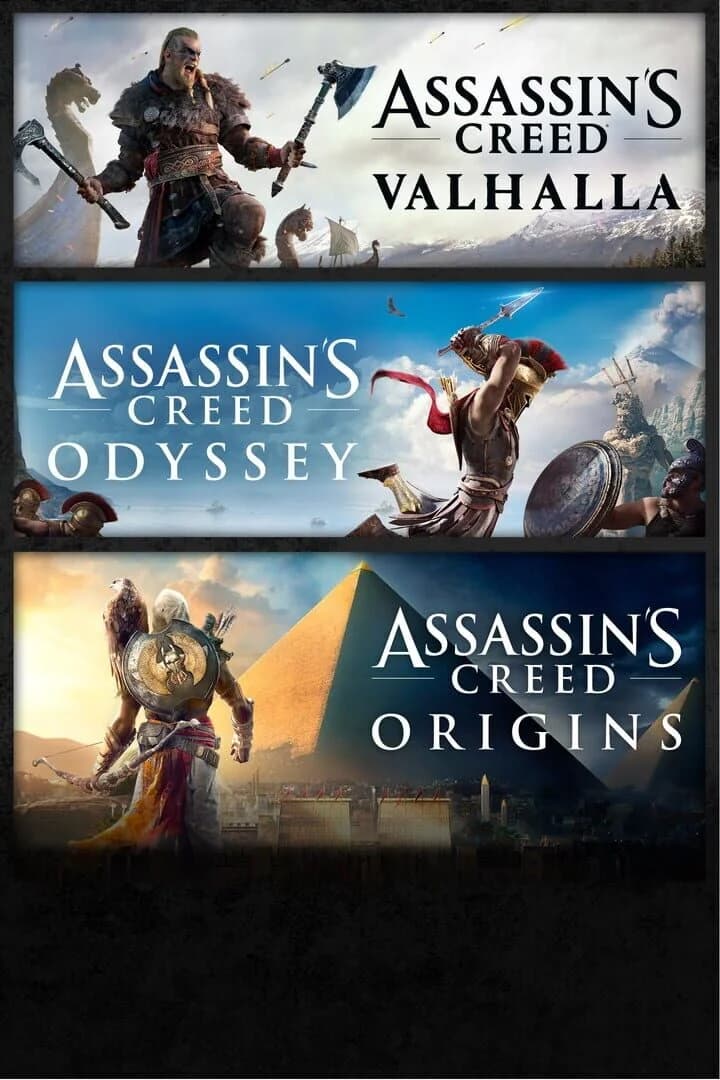
A bundle including three Assassin's Creed titles: Assassin's Creed Valhalla, Assassin's Creed Odyssey, and Assassin's Creed Origins.
Why This Story Hit Different for Assassin’s Creed Fans
I’ve followed Assassin’s Creed since climbing my first tower in 2007, through Origins’ RPG pivot and Valhalla’s sprawling bloat. So when Marc-Alexis Côté – the guy who’s steered the ship for years – says he didn’t leave by choice, that’s not just corporate gossip. That’s the person who greenlit big swings saying the wheel was pulled from his hands. In his LinkedIn note, Côté essentially wrote: “I did not walk away. I stayed at my post until Ubisoft asked me to step aside.” The French summary floating around tells the same story: management removed him from leading the license during the reorg, offered a different job with less scope, and the transfer to a new unit called Vantage Studios triggered it. That’s the real headline, not the polite farewell email.
Key Takeaways
- This wasn’t a clean “mutual parting.” Côté says he was pushed aside during restructuring.
- Ubisoft has moved its crown jewels under a new banner (Vantage Studios), signaling a shift in who calls the shots.
- Expect safer settings and stronger live-service monetization pushes if the new mandate is growth-first.
- Short term: current projects stay the course. Long term: AC’s identity will be tested – again.
Breaking Down the Announcement
Officially, Ubisoft thanked Côté for two decades of service — creative director, senior producer, executive producer, then the franchise’s VP. The internal tone was “respectful exit.” Côté’s version is blunt: he was asked to move aside and offered a role that didn’t carry the same mandate or continuity. That frames the move less as a goodbye and more as a change in governance. Whatever you call it, the message to the teams is clear: the power structure around Assassin’s Creed has shifted.
For players, the person in the big chair matters. Under Côté, AC took real risks: Origins and Odyssey rebuilt the combat and progression; Valhalla doubled down (arguably too hard) on content scale; Shadows finally cashed the “feudal Japan” check fans have been waving for a decade. You can debate every choice, but you can’t say the series stood still.
Industry Context: Ubisoft’s Reshuffle and the Vantage Question
Ubisoft’s been in “permanent reorg” mode for years — cost cuts, studio consolidations, greenlight pivots — trying to steady earnings while chasing the next live-service hit. Moving mega-franchises into a separate group (Vantage Studios) screams two things: tighter P&L management and a clearer mandate to scale. Depending on how independent Vantage is, that can mean faster decisions and focused roadmaps… or centralization that flattens creative weirdness in favor of predictable KPIs.
The money reality matters. Assassin’s Creed is Ubisoft’s safety net. When the publisher talks about “platforms” like Assassin’s Creed Infinity — a hub that ties projects together, potentially seasons, crossovers, and long-tail spending — that’s the business logic showing through. If Vantage is the monetization engine, then leadership chosen for alignment over idiosyncratic vision makes unfortunate sense.
What This Changes for Players
Short term, don’t expect whiplash. Shadows shipped this year on PC and current-gen consoles and will get the usual patch and DLC cycle. Pipelines that far along don’t flip overnight. The more interesting tells will be the next greenlights: do we see bolder historical bets and experimental systems, or highly marketable “safe” settings with content-roadmap-first design?
Watch these signals:
- Live-service loadout: battle passes, rotating activities, and seasonal grinds integrated into the hub rather than each game reinventing the wheel.
- Time-saver creep: XP boosters and resource packs baked into progression friction. Valhalla flirted with this; a harder push would be loud and clear.
- Mobile and cross-platform tie-ins: spin-offs feeding the hub, cosmetics or unlocks crossing PC/console/mobile.
- Setting selection: controversial eras getting iced in favor of “tourist-friendly” picks. There have already been reports of riskier concepts being shelved.
As someone who loved Origins’ reinvention but bounced off Valhalla’s content sprawl, my worry isn’t “change” — it’s homogenization. Assassin’s Creed at its best marries dense historical nerdery with mechanical ambition. At its worst, it’s a checklist machine. If the new leadership optimizes for daily active users over authorship, we’ll feel it fast.
The Gamer’s Perspective: Hope, Skepticism, and What to Demand
I’m not doomposting. Centralization can fix AC’s bloat, unify tech, and stop every entry from reinventing stealth for the fifth time. A clear multi-year roadmap could give us tighter, more varied adventures instead of 100-hour sprawl. But the community should be loud about the line in the sand: no pay-to-skip progression traps, keep optional monetization cosmetic, and don’t neuter settings because they’re “messy.” History is messy — that’s why it’s interesting.
Ultimately, Côté speaking up matters because it punctures the usual PR bubble. If leadership changes are about philosophy, not just org charts, we deserve transparency. Tell players what Assassin’s Creed stands for in this new era — and then prove it with the next reveal.
TL;DR
Marc-Alexis Côté says Ubisoft removed him from leading Assassin’s Creed during a restructuring, signaling a shift in who steers the franchise. Short term, expect business as usual; long term, watch for stronger live-service hooks, safer settings, and a tighter monetization loop. The series can stay great — but only if the new mandate values creative risk as much as recurring revenue.