
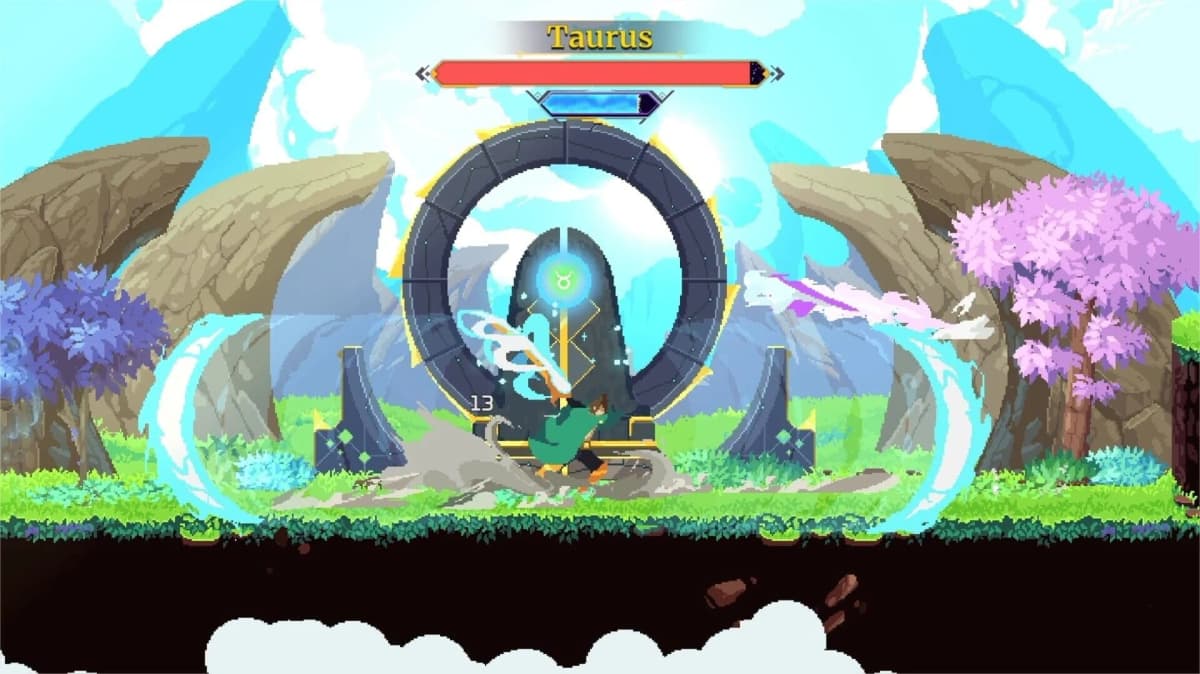
In Astral Ascent the first question most players ask is which character is best. The more useful one is which character fits how you already play, because the four base heroes are unlocked from the start and the only true “unlocks” are the two paid DLC fighters. If you want the short version, here is the plan.
Table of Contents (13)
The short version
- All four base heroes are available immediately. Ayla, Kiran, Calie, and Octave are unlocked from your first run – there is no grind to reach them.
- Easiest start: Calie or Octave. Both are ranged, so they give you space to read bosses while you learn.
- Kiran is the balanced melee pick – a strength bruiser who deals and takes damage, not a safe ranged character.
- Ayla is the aggressive melee assassin for players who want speed and twin-dagger pressure.
- The only real unlocks are DLC: Yamat ($4.99) and Arven ($4.99, added May 14, 2026). Everything else is already in the game.
What the Astral Ascent roster actually looks like
The unlock picture is simpler than in most roguelites. The four launch heroes – Ayla, Kiran, Calie, and Octave – are all playable from the start, so your first decision is which one to learn, not which one to grind for. Two more characters sit outside the base cast and are tied to paid DLC: Yamat the Breach Traveler and Arven the Wolf Blade, who joined the roster on May 14, 2026.
That changes what “unlocking” means here. In many games a new hero is the reward loop. In Astral Ascent the base four already cover the core archetypes – fast melee, balanced melee, ranged magic, and ranged summoning – so the meaningful progression is learning which hero matches how you dodge and manage pressure. For more on how the DLC fits together, see our Astral Ascent DLC guide.
The best character to start with
For most new players, a ranged hero is the easiest place to start, and in Astral Ascent that means Calie or Octave – not Kiran. Calie fights at range with magical gemstones that pierce enemy defenses, so you can chip bosses down from a safer distance while you learn their patterns. Range buys you reaction time and makes a weak early spell draft far less punishing, which is exactly what a beginner needs.
If you already prefer fast, close-range characters in action roguelites, Ayla is the better starting point. She is a twin-dagger assassin built around speed and a teleport that marks enemies for extra damage. She asks more of your positioning, but she teaches the game’s movement and punish windows quickly – useful if you know you want an aggressive style anyway.
- Start with Calie for the safest learning curve: ranged gemstone attacks and clean boss practice from a distance.
- Start with Octave if you like ranged play but want a more technical, summon-driven kit.
- Start with Kiran if you want a forgiving melee bruiser who can both give and take hits.
- Start with Ayla if you like dash-heavy melee pressure and quick decision-making.
- Add Yamat or Arven later once you own the DLC and have the fundamentals down.
Who to play: each character’s real strength
Ayla: the aggressive twin-dagger assassin
Ayla is the cleanest pick for players who want to feel strong immediately. As the sole survivor of a guild of assassins, she fights with twin daggers and a teleport that marks targets, so her game plan is to stay close, convert short openings into real damage, and keep moving. She performs best when your spell bar supports constant pressure: fast casts, short cooldowns, mobility-friendly spells, and anything that lets you deal damage while moving.
The main Ayla mistake is overloading on “cool” melee spells that all ask you to stand in danger. One close-range nuke is fine. Four of them usually means you lose runs to chip damage long before your damage ceiling matters. On Ayla, a balanced spell bar beats a flashy one.
Kiran: the balanced melee bruiser
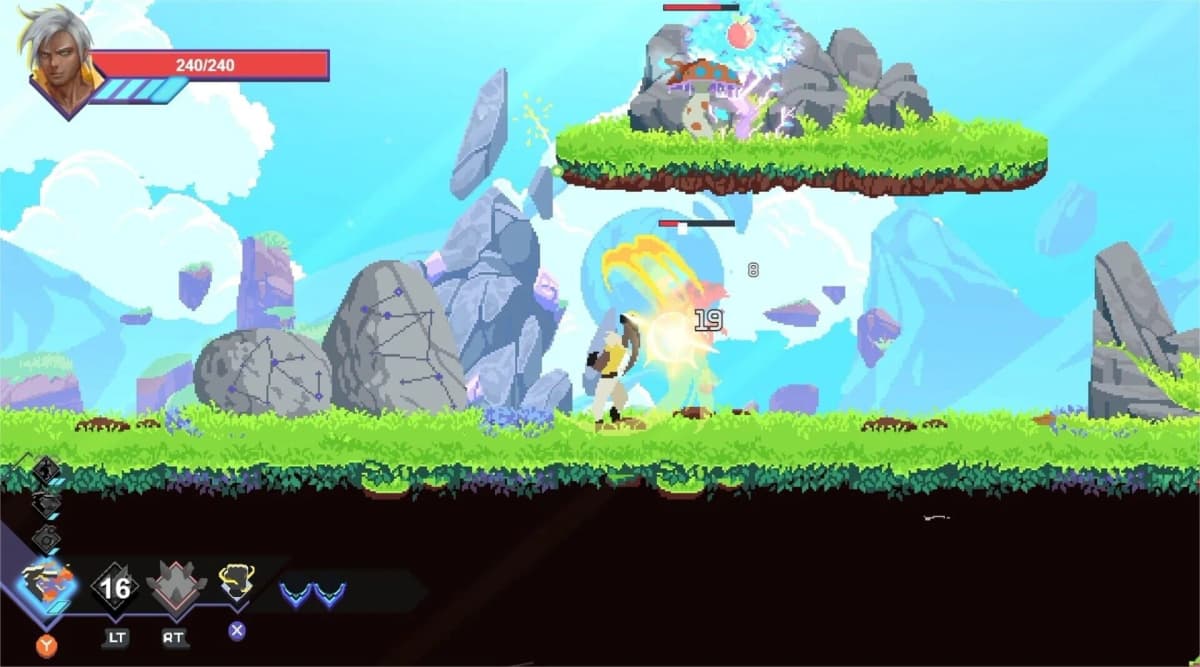
Kiran is a melee strength fighter – an orphan who learned life the hard way and uses raw power to deliver attacks strong enough to create shockwaves. He is relatively balanced for a brawler: he can both deal and absorb damage, which makes him forgiving in a different way than a ranged hero. Where Calie keeps you safe through distance, Kiran keeps you stable through durability.
He works well with spells that reinforce close-range pressure: shockwave-style hits, area damage, and anything that lets him punish a boss the moment it opens up. The trap is treating him like a tank and ending up with slow, passive fights. You still want at least one spell that meaningfully punishes bosses when they give you a clean window.
Calie: the ranged setup specialist
Calie attacks at range with magical gemstones that pierce enemy defenses, and she is where Astral Ascent starts rewarding planning over comfort. She suits players who like controlling space, layering effects, and turning separate spell pieces into a larger engine. Because her base attack is ranged, she is also one of the most forgiving heroes to learn the game on – you can think a room ahead instead of constantly dodging in melee.
She becomes awkward when your build has no fast confirm tool. A run full of delayed, conditional, or purely setup-based spells can look powerful on the selection screen and still feel terrible in combat. On Calie, make sure at least one spell is reliable under pressure. The rest of the build can be clever after that.
Octave: the ranged summoner with high synergy payoff
Octave is a ranged caster who summons ethereal guns – and bigger conjured weapons when needed – to attack from a distance and control the battlefield. He is the clearest proof that spell synergy matters more than tier lists. A good Octave run feels absurdly smooth because the whole kit works toward one rhythm; a bad one feels like carrying four unrelated ideas into the same fight. He rewards players who can identify a run’s real direction early.
If you choose Octave too early, the usual failure point is not raw difficulty – it is indecision. You keep one spell because it is strong alone, another because it solved one room, another because it has good numbers, and suddenly the build has no identity. Octave does best when you prune aggressively and stop pretending every good offer belongs in the same run.
Yamat and Arven: the DLC characters
Yamat the Breach Traveler is a $4.99 DLC character and a versatile multi-weapon fighter who covers both melee and ranged options. Even without buying the DLC you will see Yamat in the Garden, can battle Yamat’s Shadow Clone, and can collect and use two Yamat Echoes during runs – so you get a taste before committing.
Arven the Wolf Blade is the newest character, added on May 14, 2026 as a separate $4.99 DLC. He is a Ranger who fights alongside the wolf Kat and plays as a hybrid rather than a pure melee or ranged hero: he switches between the Alpha Sword for close and medium range and Ethereal Missiles for long-range magic blasts, with 25 unique spells and two weapon styles. For a full breakdown of his kit and the update around him, see our Arven and 2026 update guide.
The mistake with the DLC cast is assuming “newer” means “stronger.” In practice, more demanding characters can produce worse results until your fundamentals are solid. If a base hero already feels unstable for you, a DLC character will usually magnify that problem rather than solve it. For a deeper look at every hero, see our Astral Ascent character roster guide.
Why spell synergies decide more runs than the roster
The roster sets your baseline. Spells decide your ceiling and your consistency. Characters influence how you approach fights, but the run itself is usually won by whether your spells solve three problems at once: room clear, boss punish, and safe damage while moving.
A strong run has a recognizable engine – rapid casts that keep proccing the same damage bonuses, a status loop that rewards repeated application, or lingering effects that let you reposition while enemies melt. What matters is that your spells do related work. Four individually strong spells with different tempos and ranges are often worse than four merely decent spells that reinforce each other.
This is also why hard tier lists age badly in Astral Ascent. The “best” character on paper can feel weak if the draft forces awkward cooldowns or unsafe cast animations, while a supposedly mid-tier hero looks fantastic when the spell bar forms a clean loop.
How to build a run without forcing bad synergy
- Lock in a role for each spell slot early. A stable bar usually wants one quick confirm spell, one room-clearing spell, one higher-damage punish tool, and one utility or safety piece.
- Respect cast rhythm. If every spell has long commitment, your damage windows become fake because you cannot safely use them. If every spell is a tiny poke, bosses take too long and mistakes pile up.
- Do not draft only for raw damage. Reliable damage while moving is often worth more than a harder-hitting spell that gets interrupted or forces bad positioning.
- Keep one answer for bad rooms. A run often dies in crowded encounters before the boss. At least one spell should hit wide, track well, or control space.
- Replace overlap, not weakness alone. Two similar spells can be worse than one mediocre but different tool. Coverage matters.
One simple rule that improves almost every run: once you have a functioning damage pattern, stop breaking it for isolated upgrades. A new spell can be stronger and still be wrong for the build.
Common mistakes when choosing a main character
- Picking Kiran expecting a safe ranged hero. He is a melee bruiser – if you want distance, pick Calie or Octave instead.
- Judging a hero after one bad draft. Some weak runs are spell problems, not roster problems.
- Copying high-ceiling builds too early. Technical, synergy-heavy routes look great when fully online but punish shaky fundamentals.
- Buying DLC characters to “fix” struggles. Yamat and Arven are sidegrades in style, not power upgrades over the base four.
The cleanest learning order
If the goal is to understand Astral Ascent quickly, start with a ranged hero for safety and spacing – Calie first, then Octave for ranged synergy routing – before moving to melee with Kiran for durable close-range play and Ayla for aggressive assassin tempo. Layer in Yamat or Arven after that if you own the DLC. That order teaches the game in useful steps: spacing first, then synergy, then melee pressure and punish timing. Once those pieces click, the roster question gets easy – you stop hunting for the strongest hero and start recognizing the strongest run shape.
FinalBoss // Gear
Level up your setup
01Top-rated gaming headsetson Amazon→02High-refresh gaming monitorson Amazon→03Gaming chairson Amazon→04Discounted game keyson Kinguin→
Affiliate links · As an Amazon Associate, FinalBoss earns from qualifying purchases.
Want to Level Up Your Gaming?
Get access to exclusive strategies, hidden tips, and pro-level insights that we don't share publicly.
Ultimate Guide Strategy Guide + Weekly Pro Tips