

Action roguelites have spent the last few years fighting over identity. Some lean on story and charm. Some live or die on buildcraft. Some are all movement, all reflex, all the time. Astral Ascent matters because it does not try to split those priorities evenly. It picks a lane. This is a combat-first roguelite built around aggression, repetition, and the satisfying snap of a run that finally starts making sense.
There is one important caveat up front: this verdict is based on published reviews, player guides, community feedback, and broad critical consensus rather than a personal review diary. That means the value here is not a fake story about “my build” or “my first boss kill.” It is a clearer read on the patterns that show up again and again around Astral Ascent. Those patterns are pretty consistent. The combat is excellent. The boss structure gives runs real shape. The build variety is a major hook. The friction comes from visual clutter, busy systems, and the simple fact that not everybody wants a roguelite this invested in mastery.
The short version is easy: Astral Ascent is one of the stronger modern action roguelites, but it is not a universal crowd-pleaser. If the genre clicks for you when movement, spell chains, and boss learning all start feeding each other, this is an easy recommendation. If you want cleaner readability, lighter systems, or a run structure driven more by story than by mechanical improvement, the praise around it can feel a little too generous.
Table of Contents (9)
Key takeaways
- Astral Ascent’s defining idea is simple and strong: attack aggressively to build mana, then spend that mana on spells and summons.
- The four playable heroes, large spell pool, and layered upgrade systems give it serious replay value.
- Boss fights are a real strength, especially because they force the game’s movement, timing, and buildcraft to work together.
- The same density that makes the game deep can also make it noisy, hard to read, and intimidating for new or more casual roguelite players.
- Score: 8.5/10. Great for mastery-driven action fans, less convincing for players who want simplicity or story-first momentum.
The whole game hangs on one smart rule: offense fuels magic
Astral Ascent’s pitch can sound dangerously familiar at first. You choose one of four heroes, move through randomized biomes, grab upgrades, beat bosses, die, come back stronger, repeat. That is a crowded shelf. What separates this game from the pile is how hard it commits to a very specific combat rhythm. Basic attacks are not just filler between your flashy moves. They are how you generate the mana that powers your spells. That one rule changes the feel of everything.
In a lot of roguelites, magic or special abilities sit on cooldowns, or they are treated like occasional burst tools. Astral Ascent ties them to momentum. If you hang back too much, your run slows down. If you stay active, keep pressure on enemies, and keep your spacing tight enough to land regular hits, your build starts to sing. It turns aggression into economy. That is a big part of why so many players and reviewers keep describing the combat as addictive rather than merely competent.
That loop also gives the game its personality. Astral Ascent is not really interested in cautious, low-commitment play. It wants you close. It wants you moving. It wants you earning your strongest tools in the middle of the fight instead of waiting for a bar to refill while you kite enemies from a safe corner. For players who like action games where the resource system is welded directly to execution, that is catnip. For players who prefer a cleaner, more relaxed pace, it can feel like the game is shoving them forward by the shoulders.
Build variety is the real long-term hook
Once that combat loop makes sense, the next reason people stick with Astral Ascent is the buildcraft. The game gives you dozens of spells, multiple upgrade paths, and a steady stream of run-shaping choices that can change how a character plays well beyond a flat damage increase. The strongest praise around the game rarely stops at “it feels good.” It usually ends up talking about synergies, loadouts, and how differently one run can unfold from the next.
The four heroes matter here too. Even without pretending every character completely reinvents the game, their distinct kits do change your relationship to spacing, pressure, and spell timing. That helps Astral Ascent avoid one of the genre’s common problems: a big upgrade system wrapped around a mostly static combat shell. Here, the shell itself shifts. A room is not just a room when a different hero, different spell package, and different upgrade path can change the safe angles, burst windows, and rhythm of the fight.

This is also where one of the game’s biggest weaknesses lives. Astral Ascent has a lot of terms, currencies, modifiers, and subsystems floating around at once. Depending on the source, people talk about spells, auras, stones, summons, echoes, fragments, and other layers of permanent or semi-permanent progression. Depth is good. Noise is not. The line between those two is where some players start to push back. If you love digging through interconnected mechanics, this looks rich. If you want to grasp a build at a glance, it can feel overfurnished.
That matters more in Astral Ascent than it might in a slower game because you are being asked to make decisions in a title that prizes tempo. Roguelites often live or die on whether their complexity feels immediately useful. Astral Ascent’s complexity is often useful, but not always immediately. A new player can absolutely look at the upgrade language and wonder which choices are run-defining and which are just nice little bumps around the edges.
The bosses are where Astral Ascent proves itself
Good roguelites need structure. Without it, runs blur together into a long hallway of decent combat rooms. Astral Ascent gets around that by making its boss progression a core attraction rather than an obligation. The Zodiac bosses are not there to politely end a biome. They are the places where the game cashes its checks. Movement, aggression, mana flow, spell sequencing, and defensive discipline all stop being separate ideas and turn into one test.
That is a huge reason the game has such a strong reputation among players who value mastery. Repeated boss encounters are not a drawback by default when the fights are designed as learning walls instead of simple stat checks. In Astral Ascent, that repetition gives runs a shape you can actually feel. You are not just hoping for a broken build to carry you. You are learning patterns, recognizing where your current setup is strong, and seeing whether your build survives contact with a fight that asks something specific from you.
The flip side is that bosses also expose the game’s weakest habit: visual busyness. Community feedback has repeatedly circled back to readability, especially when a late-run screen is crowded with player effects, enemy attacks, spell flashes, and upgrade-driven chaos. A hard boss is fine. A hard boss that becomes harder to parse because the screen is yelling at you from six directions is a different problem. Astral Ascent does not cross into unplayable mess, but it gets close enough at times that this complaint cannot be brushed off as simple skill issue whining.
Where the praise is real, and where it gets a little too broad
Astral Ascent has earned the positive reputation it carries. The consensus around it is not hype without substance. It is widely treated as one of the better action roguelites in its lane, and the reason is not hard to see. The game understands its own priorities. It knows that gamefeel matters more than exposition, that long-term engagement comes from build diversity, and that bosses need to function as more than damage sponges. Plenty of games in this genre get one or two of those things right. Astral Ascent gets several of them right at once.
Still, strong praise can create the wrong expectation. This is not the kind of roguelite that reaches out to every player with the same warmth. If you come to the genre for narrative drip-feed, world exploration, or low-pressure improvisation, Astral Ascent may feel colder than its reputation suggests. It is much more interested in whether you understand its combat language than in selling you on atmosphere between fights. That narrower focus is not a flaw in itself. It is a fit issue, and fit issues are exactly where a lot of review scores stop being useful if nobody explains them.
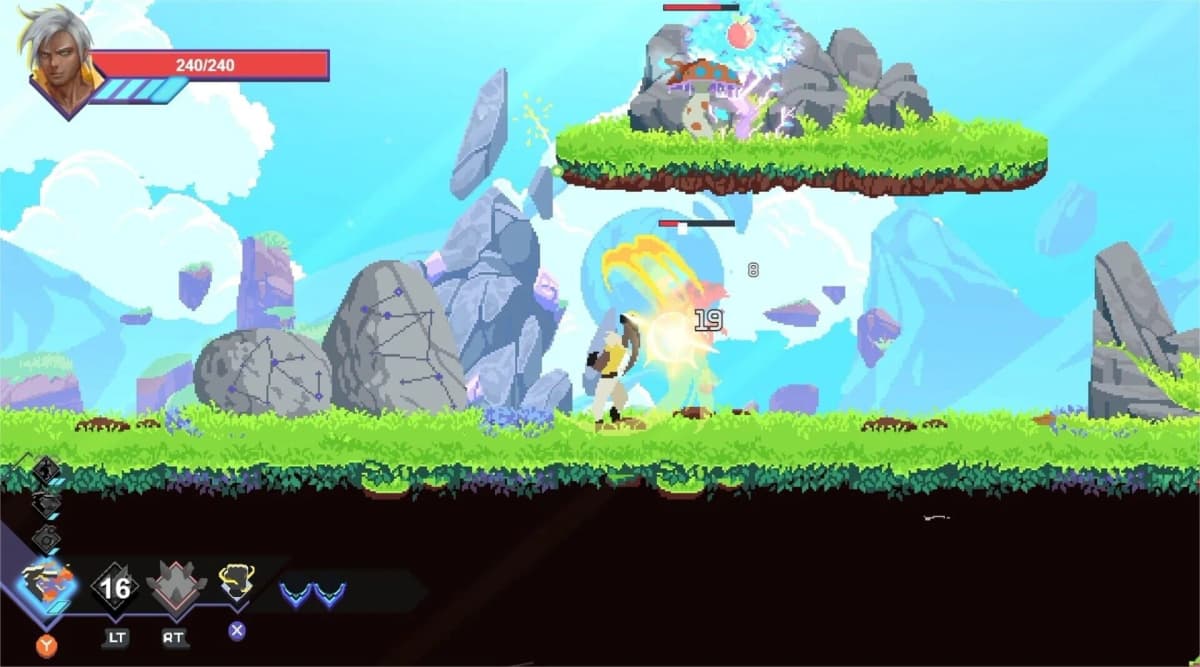
In other words, Astral Ascent is polished in the places that matter most to its target audience, but its target audience is more specific than the broad “everyone who likes roguelites” label implies. That distinction is the difference between a great purchase and a baffling one.
Technical and platform notes
Because this piece is built from broader coverage and player discussion instead of a controlled platform benchmark, it would be dishonest to make hard claims about exact performance on every machine. What does show up consistently is that the friction around Astral Ascent is usually not framed as major technical collapse. It is framed as combat readability, UI density, and how much information the game throws at you once a build gets rolling.
That distinction matters. A game can run well and still feel messy in motion. Astral Ascent’s public reputation suggests the foundation is strong, including on platforms where fast 2D action can be harder to trust, but the more practical concern for many players is whether they are comfortable parsing a busy screen. If you are unusually sensitive to particle clutter, overlapping effects, or upgrade text that takes time to internalize, that is the warning flag worth paying attention to.
Who Astral Ascent suits, and who should probably look elsewhere
Astral Ascent is a strong fit for players who want their roguelites to feel demanding in a satisfying way. It makes sense for people who enjoy mechanical learning, who like discovering how one upgrade changes the value of another, and who do not mind repeated boss fights as long as those fights sharpen over time.
- Play it if: you enjoy aggressive combat loops, layered buildcraft, repeated mastery runs, and characters with distinct combat identities.
- Play it if: your favorite roguelite moments come from a build suddenly locking into place during a boss fight.
- Play it if: you can tolerate a learning curve in exchange for long-term depth and replay value.
It is a weaker recommendation for players who want a gentler onboarding or a more instantly readable action game. The more you value simplicity, narrative momentum, or low-friction decision making, the less convincing Astral Ascent becomes.
- Skip it for now if: you dislike dense upgrade systems or get annoyed when a game explains itself in too many moving parts.
- Skip it for now if: visual clarity is a deal-breaker and late-run chaos tends to wear you out.
- Skip it for now if: you want a story-forward roguelite rather than one that keeps dragging you back into combat drills and boss rematches.
Bottom line
Astral Ascent earns its reputation. It takes a familiar roguelite framework and gives it a sharper identity through an aggression-driven mana system, strong build variety, and bosses that actually justify the reruns. The downside is that the same ambition that makes it sticky also makes it busy. Some players are going to love the density. Some are going to bounce off the noise.
FinalBoss verdict: 8.5/10. This is a great action roguelite for players who want combat mastery and build experimentation to sit at the center of the experience. It falls short of true genre royalty because readability and system overload can get in the way, but for the right audience, those flaws are not enough to drown out how good the core loop is.
TL;DR
- Astral Ascent stands out because basic attacks generate the mana that powers your strongest spells.
- The buildcraft is deep, replayable, and one of the game’s biggest selling points.
- Boss fights are a highlight and give the roguelite loop real structure.
- Its main problems are visual clutter, readability, and upgrade systems that can feel too busy.
- Score: 8.5/10. Best for mastery-focused action roguelite fans, not ideal for players chasing simplicity or story-first pacing.
FinalBoss // Gear
Level up your setup
01Top-rated gaming headsetson Amazon→02High-refresh gaming monitorson Amazon→03Gaming chairson Amazon→04Discounted game keyson Kinguin→
Affiliate links · As an Amazon Associate, FinalBoss earns from qualifying purchases.
Want to Level Up Your Gaming?
Get access to exclusive strategies, hidden tips, and pro-level insights that we don't share publicly.
Ultimate Reviews Strategy Guide + Weekly Pro Tips