
Table of Contents (9)
Avowed Didn’t Change. We Did.
I remember booting up Avowed on launch week with this weird mix of excitement and dread. Excitement, because it was Obsidian back in Eora, the Pillars of Eternity universe I’ve sunk an embarrassing number of hours into. Dread, because my feed was already a mess of “broken promises,” culture-war outrage over a “body type” slider, and people insisting it had “killed” Pillars by not being a Skyrim-sized open world.
I played it anyway, via Game Pass, put around 40 hours in, rolled credits, and my gut reaction was: “Yeah, this is good. Not earth-shattering, but good.” Then I watched the internet act like it was some sort of war crime. The gap between what I’d actually played and the discourse around it was so massive it almost made me question my own taste.
Fast forward one year. Avowed gets an anniversary update, a sensible price drop from $70 to $50, and suddenly the noise dies down. I dive back in for a second run, and it hits me: Avowed didn’t have a redemption arc. It didn’t need one. What changed was the expectations, the price tag, and the fact that the angriest people moved on to harassing some other game.
The Launch Backlash Was Always Built on Nonsense
Let’s be blunt: a huge chunk of Avowed’s early “controversy” was manufactured garbage. The second people saw a “body type” option instead of a clean little male/female toggle, a certain corner of the internet lost its mind. Threads full of bad-faith ranting about “forced ideology” and “ruining fantasy,” as if a slider in a character creator is somehow more immersion-breaking than the talking god-trees and soul magic.
That alone would’ve been tedious but predictable. The more interesting backlash came from players who clearly went in expecting “Obsidian’s Skyrim” and got something closer to “Obsidian’s Mass Effect, but in first-person, in Eora.” Not a giant seamless open world where you can climb every mountain and pick every flower, but a hub-and-spoke structure with chunky, handcrafted regions packed with quests, dungeons, and companion banter.
Then there was the third camp: people who didn’t really engage with the upgrade system, got absolutely wrecked because they were still using out-of-date gear, and decided the game was “broken” instead of “demanding you respect its progression rules.” Obsidian themselves later admitted they were surprised how many players bounced off that “strict and punishing” upgrade tuning. When your design expectation and your audience reality are that far apart, that’s on you.
Combine all three, sprinkle on the usual console-war sniping and viral “Avowed is a disaster” thumbnails, and suddenly a solid 8/10 RPG with an 80-ish Metacritic score looked like some catastrophic failure. It’s the same pattern we’ve seen a dozen times now. The game isn’t actually burning; Twitter just says it is.
What Avowed Actually Is: A Double-A RPG With Teeth
Strip away the drama and Avowed is, at its core, exactly the kind of “double-A” RPG people constantly claim they miss. It’s focused instead of bloated, reactive without drowning you in spreadsheets, and it actually respects your time. It’s not trying to be a 150-hour life simulator; it’s an Obsidian story delivered through chunky zones and punchy combat you play in first-person.
Combat-wise, think of it as a deliberate mix of Pillars’ buildcraft with something closer to The Outer Worlds’ immediacy. You’re swapping between melee weapons, guns or ranged options, and spells on the fly. Timing parries, weaving in abilities, proc’ing status effects, and leaning into your class fantasy actually matters. On my first run I went heavy on magic with a backup sword-and-board setup; on my second playthrough, I built a more martial character and leaned into the new quarterstaff weapon, and the difference in rhythm was real, not just cosmetic.
Where it diverges hard from Skyrim is structure. This is not “walk in any direction and find a cave.” It’s more like Witcher 2 meets Mass Effect: you’ve got distinct regions, each a dense slab of side-quests, faction drama, secrets, and environmental storytelling. You’re shepherded, but not shackled. The payoff is pacing-quests don’t feel like endless checkbox filler. When you pick up a side mission in Avowed, the odds are decent it links back to a companion, a faction, or some bit of Eora lore that actually matters.
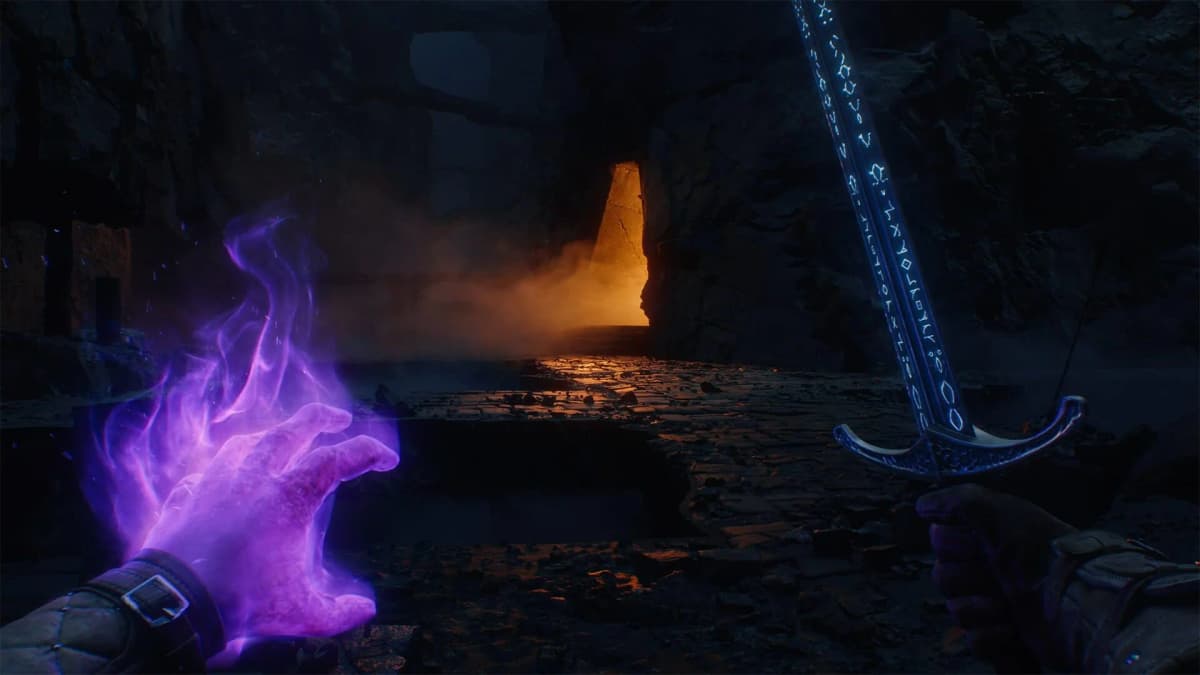
And the writing? It’s Obsidian. Is it as layered as Pillars of Eternity II: Deadfire at its best? No. That game was a political philosophy textbook disguised as a pirate RPG. But Avowed still gives you classic Obsidian moments-messy moral choices, factions that aren’t just “good” vs “evil,” and companions who will call you out when your decisions don’t line up with what you claimed to believe ten hours ago. It’s not as verbose as Pillars, but it’s a hell of a lot smarter than most big-budget fantasy fare.
The Anniversary Update: Cyberpunk 1.5, Not 2.0 (And That’s Fine)
When I patched up Avowed for the anniversary update, I half expected the kind of desperate overhaul you see when a publisher smells blood in the water. What we got instead was something much more restrained-more Cyberpunk 1.5 than “we’ve remade the game from the ground up.” And honestly, that’s exactly what Avowed needed.
On the feature side, the update is surprisingly generous: three new playable species (dwarves, orlan, and aumaua) that finally let you represent more of Pillars’ world in first person, a new quarterstaff weapon type, New Game Plus, photo mode, custom difficulty options, respawning encounters, performance tweaks, and a bunch of bug fixes and UI quality-of-life stuff. On top of that, Obsidian loosened that infamous “strict and punishing” upgrade system—tuning progression so you’re less likely to brick your build just because you didn’t min-max your crafting route from hour two.
Crucially, the director has been clear: they didn’t fundamentally change Avowed. And playing it again, I felt that. This isn’t some Frankenstein relaunch. It’s the same game I finished a year ago, just sanded in the right places. The early-level gear curve is less brutal, experimenting with weird builds doesn’t feel like a trap, and custom difficulty lets you crank combat without also turning every trash mob into a bullet sponge. It’s refinement, not reinvention—and that’s a sign the foundations were already solid.
The $70 Problem: Avowed Was Priced Like a Blockbuster It Never Tried to Be
The change that actually matters most for Avowed’s perception isn’t a patch note. It’s the price tag. At launch, Avowed came in at $70. That’s the modern industry’s way of standing on a table and yelling, “We are a full-fat, AAA, 100-hour monolith. Compare us directly to Starfield, Assassin’s Creed, whatever.” Except Avowed was never that kind of game.
At 20-40 hours for a typical playthrough, with tightly scoped regions and a double-A budget sensibility, Avowed at $70 felt… off. I didn’t pay that—I played on Game Pass—but if I’m being honest, if you’d asked me on launch week if it “felt” like a $70 purchase, I probably would’ve hesitated. Not because it wasn’t good, but because the price anchored expectations in the wrong place. When you charge prestige money, people expect prestige scale, not smart, lean design.
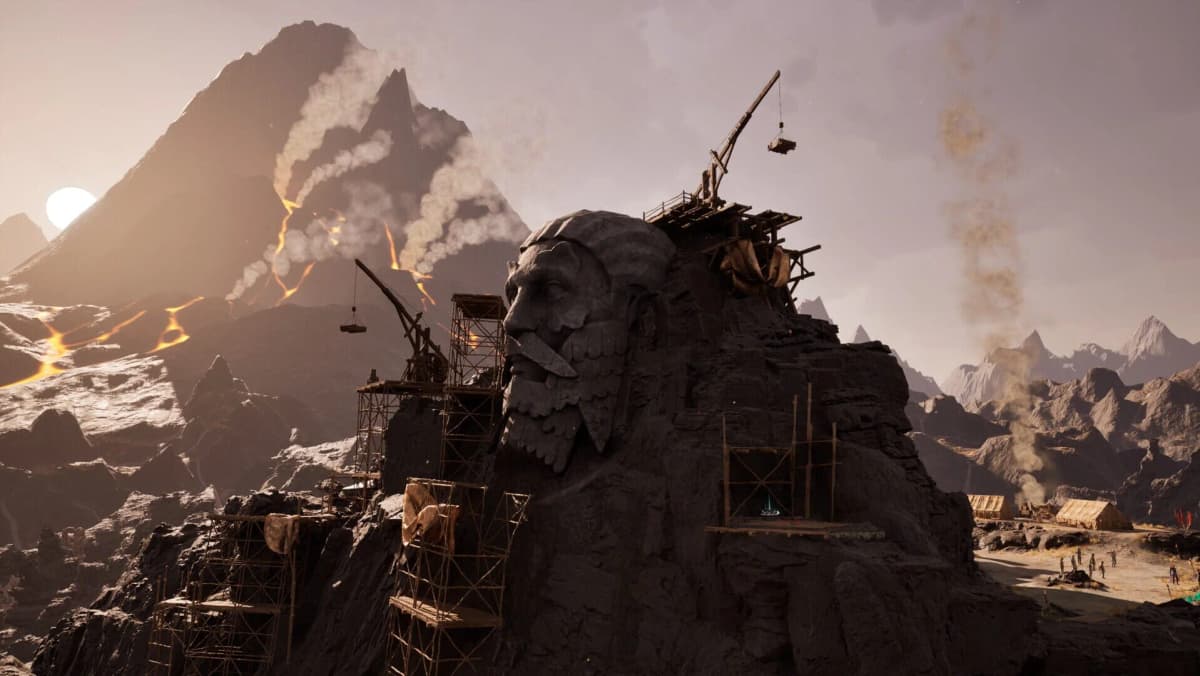
Now it’s $50, and suddenly the conversation shifts. Fifty bucks feels right for what Avowed is aiming for: a meaty but not endless RPG, strong writing, flexible builds, high production values but not a blank-cheque budget. The value proposition finally matches the actual shape of the game. This is the price it probably should’ve launched at, and the fact it didn’t feels like classic modern bullshit—another side effect of Game Pass-era economics where games are over-priced at retail so the subscription looks like a better deal.
Obsidian’s Curse: Always Great, Rarely Understood on Day One
Here’s the thing: this isn’t new territory for Obsidian. Knights of the Old Republic II launched “unfinished” and later became a cult classic once people actually dug into what it was doing thematically (and modders patched it up). Fallout: New Vegas got slammed for bugs and jank at release and is now widely regarded as the best modern Fallout. Pillars of Eternity II: Deadfire landed to a shrug and is now the gold standard for party-based isometric RPG design if you talk to anyone who actually plays the genre.
Obsidian games are almost built for reappraisal. They’re dense with choices, lore, and mechanical nuance, and they almost never line up cleanly with whatever marketing pitch the internet has latched onto beforehand. Avowed followed the pattern: pitched as the big first-person Eora epic, read as “Obsidian finally does Skyrim,” then judged for not being exactly that. Only this time, the turnaround took a year instead of five.
Now that the culture-war brigades and Skyrim-or-bust crowd have moved on, the vibe around Avowed is different. You see more people saying, “I bounced off it at launch, came back after the update and price drop, and… yeah, this is actually good.” That phrase—“actually good”—drives me up the wall because it implies some shocking revelation, but fine. If that’s what it takes for people to notice what was there the whole time, I’ll take it.
Avowed’s Mechanics vs Its Peers: Not Skyrim, Not Pillars, and That’s the Point
Comparing Avowed to its peers is where its identity really snaps into focus. Versus Skyrim, it trades breadth for intent. You’re not stealing cheese wheels off every shelf in Tamriel; you’re making fewer, more impactful choices in dialogues and builds. The world is smaller, but it’s more authored. You can feel the designer’s hand in encounter layouts, enemy compositions, and the way side-quests dovetail back into main themes.
Compared to Pillars of Eternity, the shift to first-person changes everything. No more pausing every half-second to queue ability rotations for six characters. Instead, think in terms of synergies between your personal kit and your companions’ AI behaviors. Do you spec into hard crowd control and let companions stack damage over time? Or build a fragile glass-cannon caster and rely on a heavily armored frontline buddy to keep enemies off you? It’s still fundamentally about party composition, but filtered through your hands-on perspective.
And versus The Outer Worlds, Avowed feels less like satire and more like earnest fantasy. Outer Worlds was obsessed with dunking on corporations; Avowed is more interested in faith, colonial legacy, and what power actually means in a world where souls are a literal, manipulable resource. It’s closer in spirit to Pillars than anything else Obsidian’s done, just condensed and wearing a different camera angle.
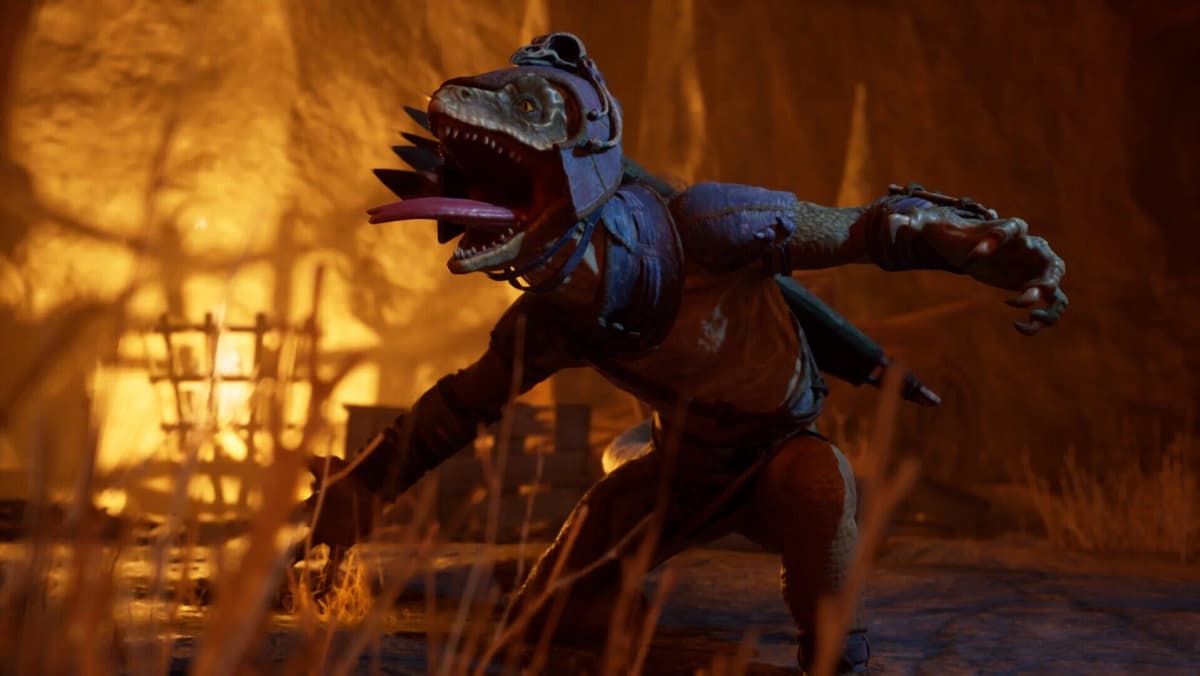
Mechanically, that’s why the anniversary changes land so well. New races matter because Eora is one of the few fantasy settings where being an orlan or aumaua actually changes how people treat you and how you read the narrative. New Game Plus makes sense because the moral and faction routes genuinely diverge enough to justify replays. Custom difficulty and respawning encounters fit because the combat systems are deep enough to carry that extra friction. These additions are built on a spine that was already doing something distinct.
Why This Quiet Reappraisal Actually Matters
I care about this reappraisal not just because I like Avowed, but because I’m tired of watching the exact type of mid-budget RPG I want slowly get squeezed out of existence. Every time a game like this gets dogpiled for not being a 200-hour content buffet, publishers take notes. They greenlight fewer Avoweds and more safe open-world sludge stuffed with map markers and battle passes.
Avowed, especially now at $50 with a year of patching and extra content, is the argument for why that would be a mistake. It proves there’s still room for a focused, story-driven first-person RPG that doesn’t waste your time but still gives you deep builds and meaningful decisions. It shows there’s value in “double-A sunshine,” as one reappraisal put it—games that know their limits, lean into their strengths, and don’t pretend to be something they’re not.
Going back to Avowed after the anniversary update has changed how I’ll approach Obsidian games going forward. I’m done letting day-one discourse and prestige pricing dictate my feelings. I’ll happily scoop up their stuff around the one-year mark, when the patches are in, the price is sane, and the loudest bad-faith voices have moved on. Not because Obsidian “fixes” their games later, but because it takes that long for everyone else to finally see what was there from the start.
So Where Does That Leave Avowed Now?
Avowed, one year on, is exactly what it always was: a strong, confident RPG from a studio that understands choice, consequence, and world-building better than most of the industry. The difference now is that the expectations, the pricing, and the surrounding noise finally line up with reality.
If you skipped it because $70 for a “not-Skyrim” felt wrong, I don’t blame you. At $50, with loosened progression, more character options, and a community that’s no longer on fire, it hits completely differently. Not because the heart of the game has changed, but because you’re finally allowed to meet it on its own terms instead of through a wall of outrage thumbnails and bad Twitter takes.
Avowed didn’t earn a second chance by reinventing itself. It earned it by staying the course while the conversation around it calmed down. And in a landscape where every game is either instantly crowned a masterpiece or torn apart for clout, that kind of slow-burn vindication feels almost revolutionary. For Obsidian, it’s business as usual. For the rest of us, it’s a reminder to maybe, just maybe, play the damn game before deciding it’s a disaster.
FinalBoss // Gear
Level up your setup
01Top-rated gaming headsetson Amazon→02High-refresh gaming monitorson Amazon→03Gaming chairson Amazon→04Discounted game keyson Kinguin→Affiliate links · As an Amazon Associate, FinalBoss earns from qualifying purchases.
Want to Level Up Your Gaming?
Get access to exclusive strategies, hidden tips, and pro-level insights that we don't share publicly.
Ultimate Gaming Strategy Guide + Weekly Pro Tips