
Table of Contents (10)
Dropping into the Living Lands on PS5
Avowed landing on PlayStation 5 feels weirdly symbolic. Here’s an Obsidian RPG – the studio behind Fallout: New Vegas and Pillars of Eternity – releasing under the Xbox Game Studios banner on Sony’s hardware, right as people are getting antsy waiting for The Elder Scrolls 6. It’s almost like Microsoft quietly snuck an Elder Scrolls stand‑in onto PS5 and hoped people would notice.
Set in the Pillars of Eternity universe but played from a first‑person, action‑RPG perspective, Avowed borrows heavily from the Elder Scrolls template: magic in one hand, steel in the other, wandering a strange land and sticking your nose into everyone’s problems. But it’s not just a reskin. The PS5 release lands alongside a chunky Anniversary Update that fleshes out character options, adds New Game+, and – more importantly – highlights where Obsidian is quietly iterating on Bethesda’s design rather than copying it.
The basic setup: you’re an Envoy of the Aedyran Empire, sent to the Living Lands to investigate a spiritual plague called the Dreamscourge, a sort of fungal nightmare that feels one part dark fantasy, one part The Last of Us. When the ship finally docks in Paradis – the major hub city – the game pivots away from “save the world from evil blight” and leans into a more grounded conflict about colonizers, native peoples, and clashing cultures.
That tonal shift is very Obsidian. The plague is the ticking clock, but the real juice comes from conversations in back alleys, tensions between factions, and how your choices sand down (or sharpen) those frictions. It’s not a sprawling sandbox epic, but it is a focused RPG with enough systemic depth and smart quality‑of‑life touches that it feels like a modern answer to the Elder Scrolls formula rather than a wannabe.
Story, companions, and that Obsidian flavor
The first thing that stands out isn’t actually the combat or the visuals – it’s the companions. Obsidian leans hard into a Mass Effect‑style party setup: you take two companions with you at any given time, they banter as you explore, chime in during quests, and occasionally drag you into their own ideological messes.
Kai, your early companion, sets the tone. Voiced by Brandon Keener (yep, Garrus from Mass Effect), he gives the party that familiar, dry, capable energy. Other companions fill out different ends of the spectrum – idealistic, cynical, devout, opportunistic – and they’ll react when you push the story one way or another. It’s not as reactive as something like New Vegas, but it’s comfortably above the “silent followers who just swing swords behind you” design you still see in some action RPGs.
The story itself is a slow burn. The Dreamscourge is always there in the background, but Avowed keeps pulling you back to the smaller, more human conflicts: turf wars in Paradis, cultural friction between colonists and natives, religious disagreements, the usual “empire isn’t as noble as it thinks” thread. The writing is solid and the worldbuilding is rich, especially if you’ve brushed up against Pillars of Eternity before, but even newcomers get enough context to follow along.
Where it stumbles is in how predictable some of the major beats feel. The big turns in the main plot are telegraphed pretty clearly, and anyone who’s spent time in modern fantasy RPGs will see certain twists coming a mile off. Side quests and companion arcs tend to fare better – they’re where the writers let themselves get messy, funny, or oddly touching in ways that the main story sometimes plays safe.
Voice acting, across the board, is strong. That helps sell a lot of the exposition, because Avowed is a talky game. The PS5 version benefits from a year’s worth of polish, too – line reads flow more naturally, and there’s less of that awkward dead air between responses that can drag down story‑first RPGs.
Combat: Elder Scrolls bones, Mass Effect brains
Imagine the basic rhythm of an Elder Scrolls fight – first‑person melee swings, blocks, firing spells or arrows from range – but with more deliberate pacing and a little Mass Effect squad control mixed in. That’s essentially Avowed’s combat loop.
You can equip two full “loadouts” and swap between them instantly with a button press. One moment you’re rocking a wand and grimoire, slinging spells and buffs; tap the swap and suddenly you’re up in something’s face with a greatsword and shield. The Anniversary Update makes this even more interesting by expanding the toybox: a new quarterstaff weapon type and more build tools give you more reasons to experiment with hybrid setups.
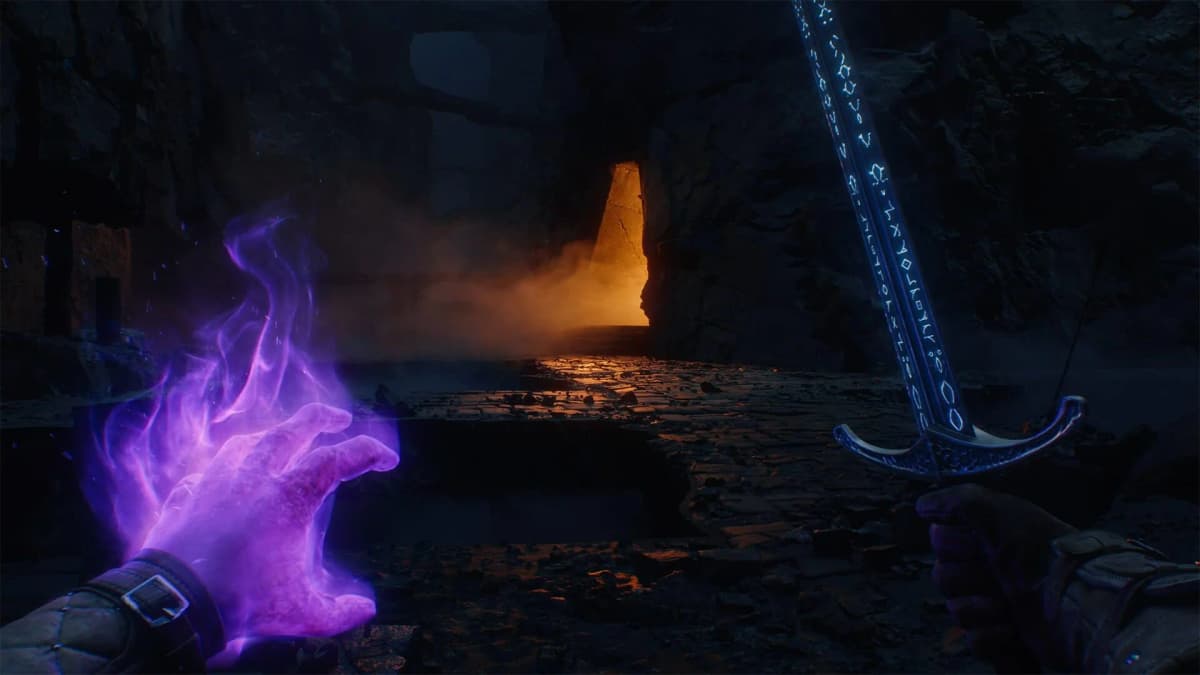
Companions aren’t just stat sticks either. A radial menu lets you choose when they blow their cooldowns on specific targets, so tough encounters become mini‑puzzles: stagger that elite with your knockdown, have a companion follow up with a big finisher, then swap loadouts and clean up the trash mobs. It’s not as systems‑dense as, say, Dragon’s Dogma 2 or as twitchy as a pure action game, but it’s got a satisfying crunch and a nice tactical layer.
The skill and attribute systems reinforce this. Points are finite; you can’t be great at everything, even across multiple playthroughs. Do you lean into raw weapon damage, shore up your survivability, or chase specific elemental synergies in your magic tree? The Anniversary Update’s New Game+ mode doubles attribute caps and lets you carry progress over, which nudges the game into that power‑fantasy territory on replay, but the first run still forces you to commit.
Where combat feels a bit “double‑A” is in the animations. Attacks can look stiff, enemy reactions occasionally feel canned, and the hit feedback isn’t as immediate as the best in the genre. The numbers go up, enemies fall over, and once you understand your build, standard encounters can start to blur together. Bosses and set‑piece fights break things up, but don’t come in at the same frequency or wildness level as something like Elden Ring.
Still, taken as a whole, the PS5 version lands in that sweet spot between clunky and slick – weighty enough to be satisfying, flexible enough that you can actually express a playstyle instead of just mashing one button forever.
Exploration and level design: not Skyrim‑big, but smarter
If someone goes into Avowed expecting a fully contiguous, Skyrim‑sized world, they’ll bounce off pretty hard. The Living Lands are broken up into large, interconnected zones rather than one giant open map. You travel between them via transitions, more like Dragon Age: Inquisition or chunks of The Witcher 3 than a single sprawling continent.
The payoff is that individual areas feel more deliberately built. There’s a clear focus on verticality and traversal – climbing ledges, dropping onto enemies from above, spotting an out‑of‑reach ledge and remembering you’ve got a spell that can solve it. Simple platforming comes up often enough to matter but never crosses into “3D platformer in disguise” territory. One of the more common examples is using frost magic to create temporary ice platforms across gaps to reach a chest or side path. It’s hardly complex, but it tricks your brain into paying attention to the environment instead of just following the quest marker.
Crucially, the world isn’t overstuffed. Side quests exist, but you’re not being pummeled by icons every three steps. Avowed resists the urge to bury you in filler content for the sake of boasting about 200‑hour playtimes. Instead, each area has a handful of meaningful side stories, some collectible hunts, and optional combat challenges, and then you move on. That restraint feels almost luxurious in an era of bloated RPGs.
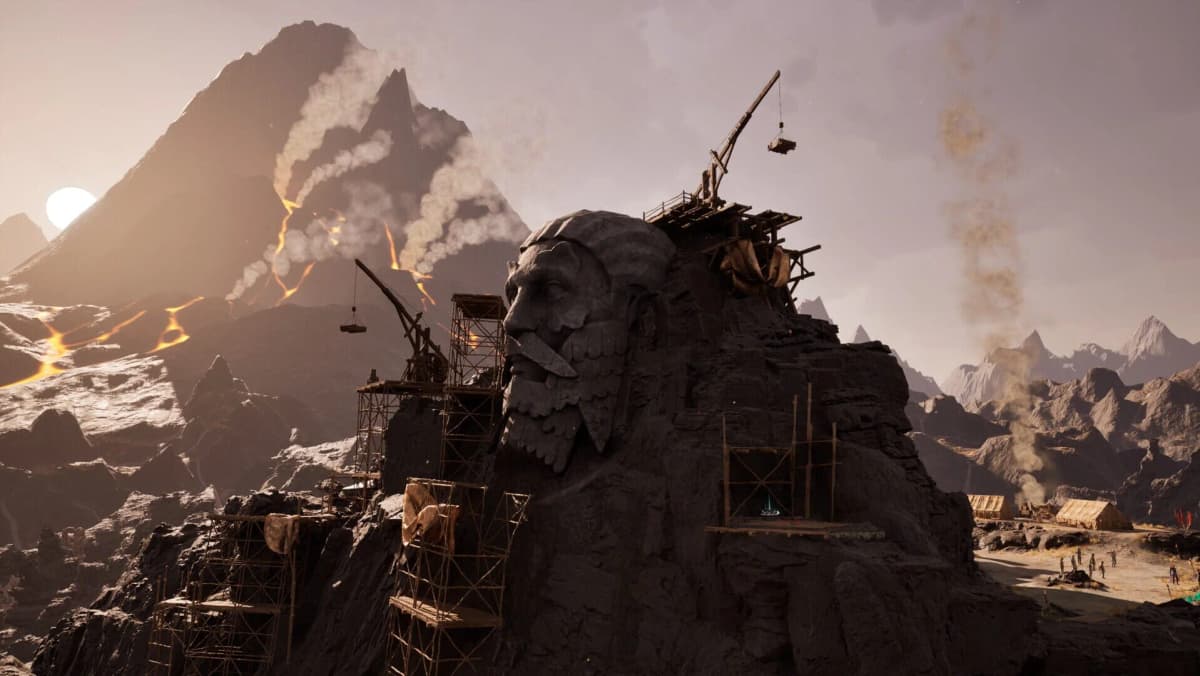
Visually, the Living Lands lean more vibrant and plant‑drenched than the usual “muddy fantasy” look. Think lush greens, saturated skies, weird fungal growths – it’s closer to the painterly side of fantasy than the grim‑dark realism of something like Dragon’s Dogma 2. It’s not pushing photo‑realism, but it has a cohesive style that reads beautifully in motion.
Codex overlays, custom difficulty, and other smart systems
Where Avowed genuinely feels ahead of the curve is in its systems and interface choices – all the little touches that acknowledge how people actually play big RPGs in 2026.
The standout feature is the contextual codex overlay. Instead of burying all the lore in a static menu, the game lets you pop up an overlay during cutscenes and conversations that highlights entries relevant to what’s being discussed right then. A faction name comes up you only half remember? Pull up the overlay and it surfaces the exact page instead of making you trawl through a hundred entries. It sounds minor, but for anyone who bounces between games or takes breaks mid‑campaign, it’s a lifesaver.
The options menu is another quiet win. Beyond your standard difficulty presets, the Anniversary Update folds in granular modifiers – things like enemy damage taken, your own resilience, and even XP incentives if you decide to crank the challenge. It’s not quite as wild as a full “custom ruleset” mode, but it lets people tailor their experience without feeling like they’re cheating or locked into a single slider.
Completionists can toggle UI aids like loot icons on the mini‑map, while players who hate visual clutter can strip things back. Accessibility and comfort options are reasonably thorough for a mid‑budget RPG: text sizing, camera tweaks, some aim assists, and more. It’s clearly the result of a year of patches and community feedback rather than a 1.0 feature set, and the PS5 version benefits from all of that out of the box.
The Anniversary Update also adds three new playable races – Dwarves, Orlans, and Aumaua – plus expanded character presets and a “Magic Mirror” feature that lets you revisit character appearance later on. Combined with New Game+ (where your progression carries over and attribute caps are increased), Avowed leans into replayability in a way that feels organic. This isn’t a game you absolutely must replay, but the systems are there if you want to push a second build into ridiculous territory.
A photo mode rounds out the update, and while it’s somewhat standard fare these days, it makes sense here: the art direction pops when you take the time to frame shots, especially in some of the stranger fungal or temple environments.
PS5 performance: solid, familiar, and unobtrusive
From a technical perspective, there isn’t some dramatic gulf between the PS5 version and the existing Xbox Series X build. Performance is broadly comparable: stable, with reasonable load times and no show‑stopping bugs looming over the experience. The year of updates since the original launch has clearly helped here; the PS5 release arrives in that “mature 1.5” state rather than the shakier launch window feel some RPGs ship with.
Avowed looks like what it is: a well‑funded double‑A game rather than a blank‑cheque blockbuster. Textures and geometry are good enough not to distract, lighting and atmospheric effects do a lot of heavy lifting, and the art direction does the rest. Animation is where the budget edges show the most, particularly in conversations, but nothing breaks immersion so badly that it derails the story.
On PS5, the game benefits from quick resume‑style loading from the SSD, which makes hopping between regions and retrying tougher encounters painless. It’s the kind of performance profile you stop thinking about after the first few hours, and that’s usually a good sign.
Where Avowed falls short
For all its smart design, Avowed isn’t the new gold standard of fantasy RPGs. There are a few consistent weak spots that anyone eyeing it as their “next Skyrim” should be aware of.
First, the scope. Some players will love that it wraps up in a reasonable, human‑sized runtime rather than engulfing them for months. Others will reach the end credits wishing there’d been one more region, a couple more major questlines, or a deeper postgame. New Game+ and the expanded races and builds help, but they don’t fully replace that sense of wandering into the unknown you get from a larger, more free‑form world.
Second, the writing – while strong on a moment‑to‑moment level – plays it safe thematically more often than it needs to. The colonization angle is interesting, but the game rarely pushes it into genuinely uncomfortable territory. Likewise, the Dreamscourge concept has all the makings of a weird, occult horror thread, but the story sometimes steers back toward familiar fantasy beats when it could have gotten stranger.
Finally, there’s a certain repetitiveness to some encounter design. Trash fights can blend together, and if your build ends up overtuned, the game doesn’t always keep pace by throwing smarter or more varied enemy combinations at you. Cranking difficulty with the new modifiers can help, but there’s only so much variety the existing bestiary can provide.
Who Avowed is really for
Avowed on PS5 feels tailor‑made for a specific kind of player:
- Anyone who loves Elder Scrolls‑style first‑person fantasy but is burned out on bloated, 200‑hour sandboxes.
- Fans of Obsidian’s writing and companions who always wished Pillars of Eternity had a more action‑forward combat system.
- Players who value smart quality‑of‑life features – codex overlays, custom difficulty sliders, flexible UI – as much as raw graphical spectacle.
- PS5 owners curious about Xbox’s single‑player catalog now that Microsoft is going multiplatform in a more serious way.
If what you want is an enormous, endlessly moddable playground to live in for years, this won’t replace Skyrim or The Witcher 3. But if you’re after a tightly scoped, modern fantasy RPG that respects your time, lets you build a character that actually feels different from your friends’, and doesn’t ask you to fight the UI to understand its lore, Avowed more than earns a shot.
Bottom line and score
Avowed’s PS5 launch and Anniversary Update don’t magically turn it into a different game – they just showcase what was already there, with extra polish and better on‑ramps for experimentation. It’s still a “double‑A blast” rather than a mega‑budget tentpole, but that actually works in its favor more often than not. The focus on well‑designed zones, crunchy but approachable combat, and thoughtful systems helps it stand out in a genre crowded with either live‑service bloat or oversized epics.
As a spiritual cousin to Elder Scrolls that actually shipped this decade, it scratches the itch surprisingly well, while quietly nudging the genre forward with its codex overlay, customizable difficulty, and smart New Game+ design.
TL;DR
- Obsidian’s take on Elder Scrolls: First‑person fantasy combat, flexible builds, and open zones instead of a single massive sandbox.
- Companion‑driven: Two‑party setup with Mass Effect‑style radial commands and solid banter; story leans into political and cultural tension.
- Dual loadouts & New Game+: Instantly swap builds, experiment with new weapons like quarterstaves, and push attributes higher in replay.
- Smart systems: Contextual codex overlay, granular difficulty modifiers with XP incentives, UI customization, and Magic Mirror respecs.
- Anniversary Update perks: New playable races (Dwarf, Orlan, Aumaua), expanded presets, photo mode, and a year of QoL tweaks.
- Technical profile: Solid performance on PS5, polished visuals with strong art direction, but clearly a “double‑A” production in animations and scope.
- Best for: Players craving a focused, modern fantasy RPG on PS5 or Xbox/PC that respects their time and offers genuine build variety.
FinalBoss // Gear
Level up your setup
01Best-selling PS5 gameson Amazon→02DualSense controllerson Amazon→03PS5 SSD upgrades (M.2 NVMe)on Amazon→04Discounted game keyson Kinguin→Affiliate links · As an Amazon Associate, FinalBoss earns from qualifying purchases.
Want to Level Up Your Gaming?
Get access to exclusive strategies, hidden tips, and pro-level insights that we don't share publicly.
Ultimate Reviews Strategy Guide + Weekly Pro Tips