
Ayaneo Next 2 Preview: Pocket PS5 Power or Mirage?
It’s become a rite of passage in handheld PCs: blink and you’ll miss Ayaneo’s next big reveal. Now the company is touting the Next 2 as “more powerful than a PlayStation 5.” That claim raises eyebrows—even among hardened PC enthusiasts. After a string of incremental updates, could this be Ayaneo’s portable gaming game-changer, or is it just another spec sheet fantasy?
Overview: Chasing Console-Level Muscle
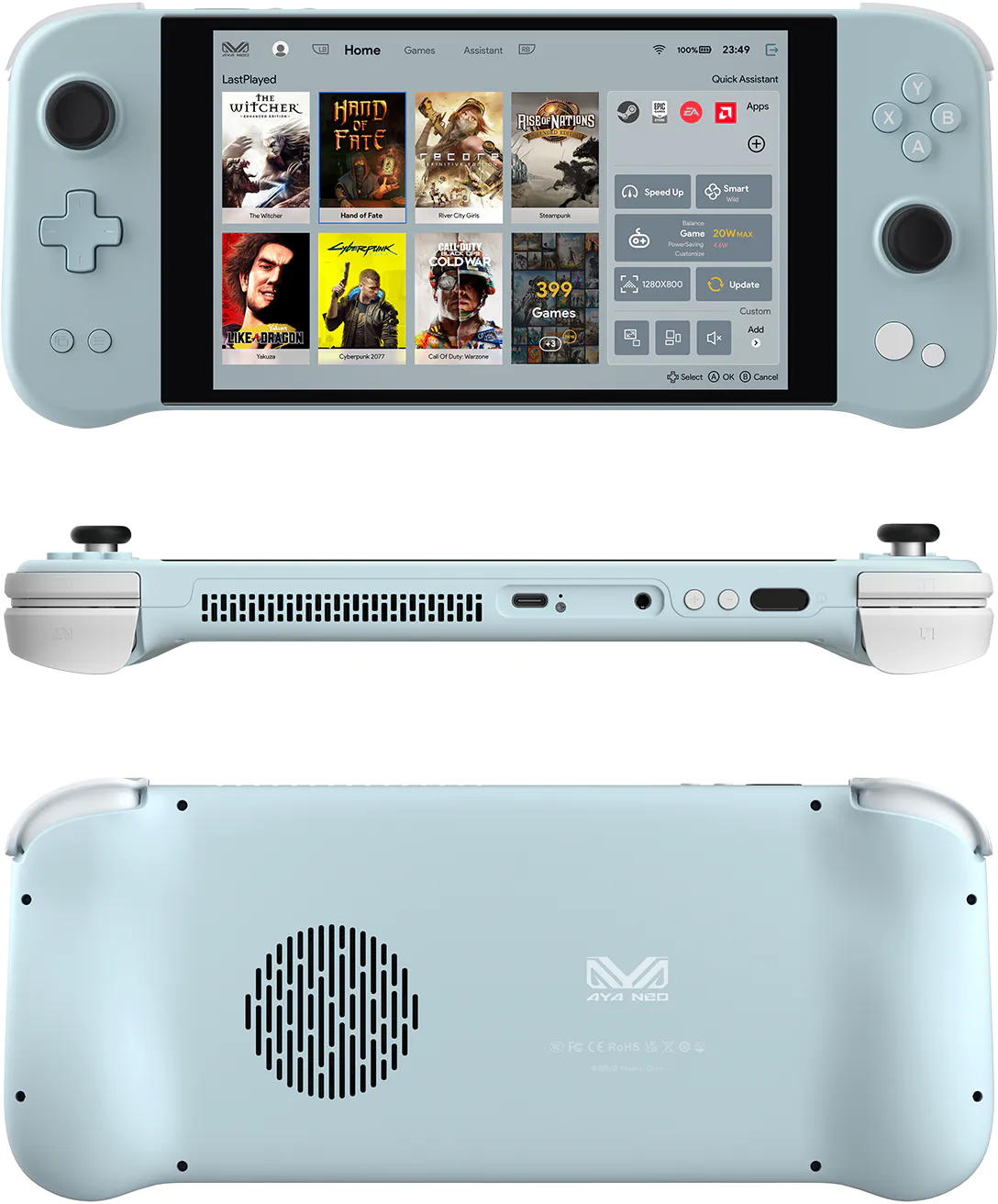
The Ayaneo Next 2 centers on AMD’s latest Strix Halo Ryzen AI Max+ 395 APU, packing 16 Zen 5 CPU cores and an RDNA 3.5 GPU with 40 compute units (CUs). Early renders hint at an 8-inch touchscreen, dual fans with beefy heatsinks, and the familiar controller layout. Pricing is rumored to align with laptop-class devices, and a late-2025 launch window is expected, though neither has been officially confirmed.
Key Specs: On-Paper Beast
- Processor: AMD Strix Halo Ryzen AI Max+ 395 (16× Zen 5 cores)
- GPU: Integrated RDNA 3.5 with 40 compute units
- Memory: Up to 64 GB or 128 GB LPDDR5X
- Storage: Multiple M.2 slots (exact count TBA)
- Display: ~8-inch touchscreen (resolution and refresh unconfirmed)
- Battery: High-capacity pack (ratings pending)
- Cooling: Dual fans plus large heatsinks
- Ports: 2× USB-A, USB-C, HDMI, DisplayPort 1.4, dual Ethernet, microSD slot
- OS: Expected Windows 11
Why Compute Units Matter
Compute units are AMD’s way of grouping shader cores for parallel graphics workloads. The PS5’s RDNA 2 GPU offers 36 CUs, while Valve’s Steam Deck runs on a custom RDNA 2 chip with just eight. In theory, 40 CUs could deliver higher frame rates—but only if the handheld can supply enough power and dissipate the resulting heat efficiently.

Real-World Challenges: Thermals & Battery
On paper, 40 CUs outmuscling a PS5 sounds impressive. In practice, portable devices usually cap out around 15–30 W to manage heat and conserve battery. Ayaneo’s dual-fan, hefty-heatsink setup will need to sustain performance without turning into a hair dryer. Previous Ayaneo models delivered strong bursts but often ran out of juice in under two hours during demanding games, and Windows on handhelds can feel patched together. Until we see sustained benchmarks and endurance tests, thermals and battery life remain the Next 2’s biggest question marks.

Battle Lines: Steam Deck and Beyond
Valve’s Steam Deck set the gold standard for balanced price, performance, and a polished Linux-based OS. Competitors like GPD’s Win 5 and ASUS ROG Ally have since raised the horsepower bar—ROG Ally even uses a Zen 4-based APU. Ayaneo is cranking that dial higher, chasing what could be the most powerful handheld APU yet. But gamers care about consistent frame rates in titles like Cyberpunk 2077, reasonable fan noise, and a smooth software experience.
What Gamers Should Watch
If the Next 2 ships as promised, true desktop-class gaming in your backpack moves from fantasy to near reality. That ups the ante for Valve, GPD, ASUS, and anyone else in the handheld space. Key battlegrounds won’t just be raw specs—they’ll be sustained performance, upgradeability, battery life, and overall polish. After all, convenience features like easy storage swaps and quiet fans often matter more than headline numbers.
Conclusion
The Ayaneo Next 2 could be the pocket powerhouse we’ve been waiting for—provided it stays cool, quiet, and charged long enough to finish a gaming session. I’ll reserve judgment until I’ve held one, played on it, and still have battery left at the end of the day. Specs excite, but real-world experience ultimately rules.