
Table of Contents (8)
The Baldur’s Gate 3 run that flipped the table for me
About 20 hours into my first Baldur’s Gate 3 playthrough, something felt off and I couldn’t put my finger on it. I’d built the perfect custom character – a min-maxed, carefully coiffed elf with a backstory I’d overthought to hell – and yet every major story beat bounced off me like I was a guest in someone else’s campaign.
Then I started a Dark Urge run.
Suddenly the game had teeth. My past wasn’t just a paragraph I’d typed into my headcanon; it was a loaded gun pointed at every decision I made. Companions reacted to me like I was a real problem, not a polite adventurer-shaped void. The narrative stopped gently asking, “Who are you?” and started yelling, “This is who you are – now what are you going to do about it?”
That was the moment I realised something I honestly didn’t want to admit: I’d been romanticising the blank-slate protagonist for years. I’d convinced myself that “pure roleplay” meant maximum sliders and minimum definition. Baldur’s Gate 3 – and specifically Dark Urge – made that sacred cow look ridiculous.
And I am absolutely not saying BG3 is some flawless manifesto for defined characters. It tries to straddle both sides: custom Tav, Origin companions, Dark Urge. But the difference in narrative punch between my generic Tav and my cursed freak of a Dark Urge was so stark that it crystallised something I’d felt for a long time across Skyrim, Fallout, Mass Effect, The Witcher, Disco Elysium, and basically every RPG I’ve sunk unhealthy hours into.
The “great debate” between defined protagonists and blank slates is usually framed like a polite design panel. Let’s drop the politeness. Pure blank slates are wildly overrated, and modern RPGs are better off when they stop pretending the player character can be everything and nothing at once.
Blank slates give you systems, not a soul
I grew up on the Infinity Engine games. Baldur’s Gate, Icewind Dale, all that crunchy nonsense where half the fun was rereading your character sheet like it was holy scripture. Later came Oblivion, Skyrim, Fallout 3 and New Vegas, and I fully bought into the idea that the less defined my character was, the more I was roleplaying.
On paper, blank slates are a designer’s dream for mechanical freedom: build diversity, replayability, the joy of discovering a busted multiclass that trivialises Act 2. Those games are brilliant sandboxes for combat builds and weird playstyles. You want to be a stealth archer in Skyrim on one playthrough and a naked destruction mage on the next? Done. You want a pacifist run in Fallout where you talk your way out of everything? Go wild.
The problem is that almost all of that “roleplaying” lives entirely in your head, because the game can’t meaningfully acknowledge it beyond a few reactive lines and faction toggles. The more tabula rasa the protagonist is, the more the world bends around them instead of pushing back. You stop being a person in a story and start being a physics object in a system.
Skyrim is the poster child for this. After a while, “You are the Dragonborn” starts to feel less like a character role and more like a technical requirement. Yes, you can dress like a wandering scholar, swear off shouts, refuse to join factions – the game doesn’t really care. Every guild happily lets you become its leader. Nobody seriously interrogates you about your past because you don’t have one. You’re a beautifully modelled question mark.
Fallout does it too. In New Vegas, companions like Boone and Veronica feel like real people with baggage and political opinions. Your Courier? A walking save file with a vibe. You can paste on “I’m pro NCR” or “I’m Caesar’s psycho” but those are toggles, not personality. The truly interesting history is external – the factions, the wasteland, the lore – and you’re mostly a camera wandering through it.
Blank-slate design prioritises mechanics over identity. You get the freedom to be almost anything mechanically, but you’re narratively foggy. And once you’ve played RPGs where the protagonist has sharp edges – actual history, actual flaws, actual voice – it’s very hard to unsee that trade-off.
Defined protagonists hit harder because writers have something to grab
Take Geralt in The Witcher series. On a spreadsheet he’s everything blank-slate fans claim to hate: fixed backstory, fixed profession, fixed relationships, even a pretty specific moral baseline. Yet those games deliver some of the most gutting choices I’ve ever made in an RPG – precisely because the writers know who they’re writing for.
When Geralt decides whether to kill a monster, spare it, or walk away, it’s not a generic “good/evil/neutrish” picker. It’s a witcher with decades of history, politics, and personal trauma negotiating a world that already has opinions about him. The questions are stronger because they hit a shaped target.
Mass Effect pulls the same trick with Shepard. People love to trot out “your Shepard” as an argument for agency, but that only works because the foundation is fixed. Shepard is Alliance military, a Spectre, a person with a known résumé. You choose their origin, you choose their morality, you pick Paragon versus Renegade, but all of that sits inside a strong narrative frame. When you punch the reporter or romance Garrus or sacrifice the Council, it means something because those actions are filtered through a coherent character.
At the extreme end you’ve got Disco Elysium and Planescape: Torment. Harry Du Bois and the Nameless One are not you. They are catastrophes with philosophies attached. You don’t create them; you excavate them. Every skill check, every line of dialogue, every deranged ideological spiral is rooted in the fact that you’re inhabiting a person with baggage you can’t simply opt out of.
That’s what blank-slate defenders conveniently ignore. Defined protagonists don’t “steal” your choices; they give your choices weight. The writing can be deeper, sharper, more specific, because it isn’t terrified of invalidating someone’s headcanon about their androgynous stealth bard who is also secretly a dragon prince and a pacifist serial killer. The story has a spine.
Baldur’s Gate 3’s hybrid trick: Tav, Origins, and the monster in the room
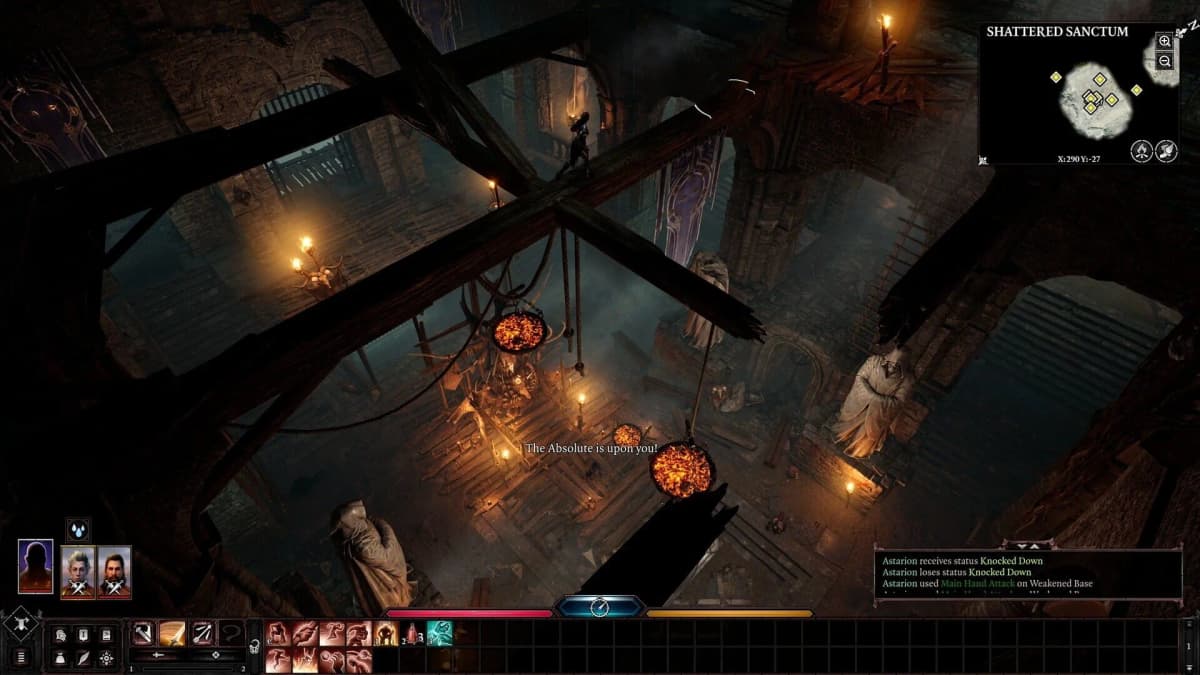
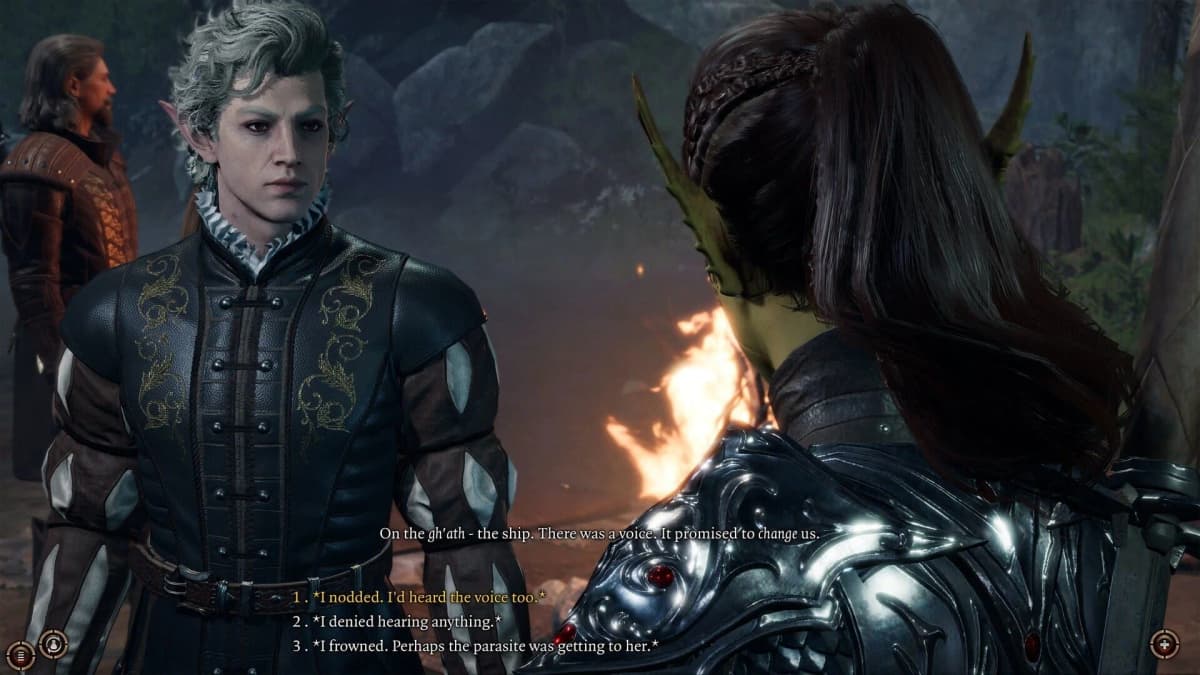
Baldur’s Gate 3 is fascinating because it very openly tries to have it every which way. You’ve got Tav – the default custom protagonist, basically a D&D character creator gotten drunk and shoved into a videogame. You’ve got full-blown Origin characters like Shadowheart and Astarion, who come with detailed backstories and bespoke arcs. And then you’ve got Dark Urge, which is secretly Larian’s opinion on this whole debate with the serial numbers half-filed off.
My Tav run was fun in a “let’s smash systems together and watch the dice explode” way. Respec builds, multiclass horrors, running Act 1 with a goofy party composition just to see what breaks – BG3 is an excellent D&D toybox. But when I look back on that playthrough, I mostly remember the companions and the set-pieces. My character is a blur of “some guy who helped.”
My Tav run was fun in a “let’s smash systems together and watch the dice explode” way. Respec builds, multiclass horrors, running Act 1 with a goofy party composition just to see what breaks – BG3 is an excellent D&D toybox. But when I look back on that playthrough, I mostly remember the companions and the set-pieces. My character is a blur of “some guy who helped.”
🎮 Get This Game at the Best Price
Compare prices instantly and save up to 80% on Steam keys with Kinguin — trusted by 15+ million gamers worldwide.
*Affiliate link — supports our independent coverage at no extra cost to you
Dark Urge was the opposite. I remember specific scenes like they’re from a film I watched last week. Companions confronting me about what I’d done. The internal war between resisting and indulging the urges written into my past. Even simple dialogue choices felt loaded, because the game wasn’t pretending I was clean slate adventurer #245; it knew exactly what kind of monster I might be, and it wrote to that.

Here’s the thing: mechanically, I had less freedom on that run. There were constraints. Some outcomes were clearly framed around my origin. I couldn’t just invent a wholesome background and expect the game to salute it. But story-wise? It was night and day. That run is etched into my brain in a way my “max freedom” Tav never will be.
Larian even hard-bakes this tension into their design behind the scenes. The companion approval system – those little dis/approval pop-ups, the trust thresholds – exists, in part, because they literally cannot write bespoke reactions to an infinite number of player behaviours and still ship the game this decade. So they settle on a reputation scaffold that covers broad lines of play without trying to model every possible psyche. It’s a brute-force reminder that, yes, narrative has limits – and pretending otherwise is how you end up with shallow writing that talks around your character instead of to them.
The immersion lie: you are not actually the main character
A lot of blank-slate evangelism hangs on one word: immersion. The argument goes, “If the protagonist is too defined, I can’t project myself onto them. I want to be the character.”
But this is where the fantasy trips over its own feet. You never really “are” the character in a videogame. You are driving a constructed persona through a system of authored responses. Even in something as abstract as Myst, where the protagonist is essentially a nonentity, the story is still about the worlds and the people trapped in them. You’re a ghost pushing buttons.
Blank slates don’t actually fix that. They just hide it. By refusing to commit to who the protagonist is, the game sidesteps the hard work of meaningfully interrogating your actions. If you want a brutal demonstration of this, look at how differently Disco Elysium and Skyrim treat failure.
In Disco, failing a check is an expression of Harry’s character. His skills mock him, interrogate him, drag out his history. A snake-eye roll can become a defining moment. In Skyrim, failing a persuasion check is just a numbers problem. Nobody asks why the so-called hero of legend is socially inept; they just reroute you to different quest logic. One failure is about a person. The other is about stats.
Immersion isn’t “I can project anything I want onto this mannequin.” It’s “I believe this character exists, and I care what happens to them.” The best defined protagonists don’t lock you out of that; they turbocharge it. Planescape lets you steer the Nameless One in massively different moral directions, but they’re all rooted in the same metaphysical disaster of a being. Disco lets you be a communist wreck, a moralist cop, a fascist clown, or a washed-up apolitical drunk, but you’re always Harry. The agency is still there – it’s just anchored.
Where blank slates still make sense (and why BG3 honestly cheats)
I’m not saying every game needs a Geralt or a Harry Du Bois. There are genres where a defined protagonist would actively get in the way.
Systems-first sandbox RPGs – the purest form of “go anywhere, do anything” – genuinely benefit from a looser lead. Something like classic Elder Scrolls lives or dies on breadth. You want to be a wizard-thief-bard-vampire-werewolf who owns three houses and leads five guilds? Fine. That’s the appeal. A too-specific protagonist would snap that fantasy in half.
Tabletop-adjacent games also get some leeway. If the whole point is to simulate being at a D&D table, like early Baldur’s Gate or Icewind Dale, a custom party of weirdos with made-up backstories works because that’s literally how people play pen-and-paper. The “story” is mostly the dungeon crawl and the banter.
But that’s not really what modern, narrative-heavy CRPGs are doing any more, and Baldur’s Gate 3 is the proof. It cheats. It markets itself like a glorious blank-slate playground – and then quietly makes the most interesting, most resonant protagonist option a highly defined origin with deep bespoke content. Tav is there for people who want the illusion of infinite flexibility. Dark Urge is there for people who actually want a story that might scar them a bit.
That’s the hybrid future most of the genre seems to be shuffling toward. Dragon Age: Origins experimented with it via origin stories and a voiced-but-flexible Warden. Later Dragon Age games doubled down on semi-defined leads like Hawke. Baldur’s Gate 3 pushes it further with a full spread: silent custom, voiced origins, heavily authored “evil past” route. You can feel the designers trying to square an impossible circle: don’t alienate the “I want to be me” crowd, but also don’t hamstring the writing.
What I actually want from future RPGs after Baldur’s Gate 3
After BG3, Witcher, Mass Effect, Disco, Planescape, and the rest of my backlog of life-consuming RPGs, my tolerance for full blank-slate protagonists in story-heavy games is basically gone. If your marketing is screaming about narrative depth and consequence and “every choice matters,” but my character has the personality of a napkin, I’m out.
I don’t need every game to hand me a fully voiced, hyper-specific lead. But I do need designers to stop being cowards about defining who I am in their world. Give me:
- A past I can’t totally rewrite – Some scars, some history, some non-negotiable facts that the world reacts to.
- A point of view with room to bend – Let me steer ideals and decisions, but from a starting personality, not a void.
- Writing that assumes I’m someone – Companions, factions, enemies who already have opinions about me; not a universe waiting in neutral until I press “new game”.
- Mechanical freedom inside narrative constraints – Go wild with builds and combat, but keep the story focused instead of pretending it can cover every possible player fantasy.
If you really want to chase the “I am literally myself in this world” fantasy, go build a systemic sandbox with minimal authored narrative and lean all the way into simulation. Don’t half-commit to a grand cinematic story and then hand me a mannequin and call that agency.
Baldur’s Gate 3 accidentally exposes how flimsy that illusion is. The run everybody talks about, the one that sticks in people’s heads and gets dissected in essays and podcasts, isn’t “my pure custom Dragonborn analogue.” It’s the one where the game looked the player dead in the eye and said, “You are this broken, dangerous thing. What now?”
That’s the bar now. Not how many sliders you give me at character creation, but how much your game is willing to commit to who I am once the story actually starts.
FinalBoss // Gear
Level up your setup
01Top-rated gaming headsetson Amazon→02High-refresh gaming monitorson Amazon→03Gaming chairson Amazon→04Discounted game keyson Kinguin→Affiliate links · As an Amazon Associate, FinalBoss earns from qualifying purchases.
Want to Level Up Your Gaming?
Get access to exclusive strategies, hidden tips, and pro-level insights that we don't share publicly.
Ultimate Gaming Strategy Guide + Weekly Pro Tips