
Table of Contents (11)
From burned by 2042 to 2 a.m. grins: my first nights with Battlefield 6
I came into Battlefield 6: La renaissance with a chip on my shoulder. 2042 burned me-hard. I’m one of those sad sacks who stuck around through the patches, praying the chaos would cohere. It didn’t. So when EA started whispering “we listened,” I rolled my eyes and installed the beta anyway. Two weeks later with the final build in hand, after finishing the entire campaign on normal in just over six hours and grinding a little over a dozen hours of multiplayer, I’m ready to eat some humble pie: this one feels like a real course correction.
My setup matters here. I played on PC with a Ryzen 7 5800X3D, RTX 3080, 32GB RAM, on a 1440p 144Hz monitor. Mouse and keyboard, FOV set to 90, motion blur off, film grain off, DLSS on Quality. I tested a controller for an hour just to feel the aim curves (fine, but I’m sticking to mouse). Performance hovered between 110-140 fps on most maps on Ultra, dipping into the 90s when explosions stacked and entire walls of a refinery started collapsing.
The campaign: six hours that made me stop muttering “just play CoD”
I didn’t expect to care about Battlefield’s campaign again. Bad Company is ancient history and the recent attempts were either fragmented vignettes or forgettable cop drama. This time it’s a full-on, single-thread story set in 2027. NATO is fracturing under financial and political strain, and a private army called Pax Armata is busy stepping into the power vacuum like it owns the place. You play through the eyes-and rifles-of Dagger 1-3, a US Marine special unit, bouncing between squadmates who each map to the classic Battlefield roles: Assault, Engineer, Support, Recon.
The arc leans modern military thriller: state secrets, betrayals, “who’s funding who” paranoia. It doesn’t reach the cinematic polish of Call of Duty’s latest Modern Warfare entries in cutscenes, but it outdoes them once boots hit the ground. The environmental detail is what grabbed me first. In the opening mission, a storm-lit harbor bathes container stacks in slick reflections. I ducked into a warehouse where fluorescent bulbs hummed and threw hard light across painter’s tape and forklift tire trails. That density of detail matters because the game leans on immersion to sell its spectacle—when entire floors shear off a tower or a tank shells the facade off a tenement, it pops because the world looks lived in.
Combat-wise, it’s more varied than I expected. You get your bread-and-butter infantry firefights, but the campaign mixes in quieter infiltration beats and a couple of long-range engagements that made me actually value my Recon’s optics. One standout moment for me came around the three-hour mark on a rainy night mission through a hillside estate. I told my AI Recon through the radial order wheel to scan the courtyard—her sweep tagged a half-dozen guards patrolling under pergolas. I slipped through a hedge, leaned from cover to line up a shot (yes, there’s proper peeking now), and cleared a side building before the alarm tripped when a spotlight caught the Engineer hauling a breaching charge. It felt tense in a way Battlefield usually reserves for multiplayer.
There’s a satisfying rhythm to swapping kits mid-mission. Ammo’s not handed to you on a platter, so I found myself rummaging caches and picking up Pax Armata hardware just to try it all. That pays off later when you hit multiplayer and already have a feel for how certain rifles buck or how a DMR behaves on a long sightline. I also liked how the campaign acknowledges team play without breaking the fiction: you can order your AI squad to hold, breach, or mark, and having the Recon tag enemies or the Support drop a resupply makes sense, not like some abstract “press X to make numbers go up” prompt.
It’s not flawless. The stealth sequences wobble between forgiving and brittle—there’s one checkpoint where a guard’s cone of vision feels glued to your spine no matter which route you try. The AI oscillates from flanking smartly to forgetting I exist if I break line-of-sight for ten seconds. And while there are great set pieces (a collapsing overpass chase had me actually shouting at my screen), the ending leaves threads dangling. Not in a “what a nuanced ending” way, more in a “see you in Season 2” way. Also, I rolled my eyes at the America-saves-the-world framing. Given the setting, an international Dagger squad would have been an easy win for variety and perspective.
Still, for six hours on normal difficulty, I had a good time. I finished with a handful of missed collectibles taunting me, plus optional challenge conditions that grant cosmetic bits. It’s not a replay-heavy campaign, but it’s a clean, well-paced one that made me stop muttering “just play CoD” under my breath.

Classes are back, and so is Battlefield’s soul
Let’s talk multiplayer, because that’s the lifeblood. The big headline: Battlefield 6 walks back the operator system and returns to real classes—Assault, Engineer, Support, Recon—each with dedicated gadgets, an active ability, and a slate of passive bonuses. You start with three passives per class; by leveling and clearing challenges, you unlock three more, then pick the trio that fit your playstyle. In practice, that means two Assault players can feel distinct: one sprint-junkie specced for fast revives, another kitted for explosives and durability.
Even better, DICE actually responded to beta feedback with visible changes. The most obvious tweak I noticed? The spawn beacon, which was initially on Recon, now sits under Assault. It sounds small, but it reshapes flow on offense-heavy squads. Recoil has also been nudged up since the last beta build I played, and the result is a gun game with teeth that feels more BF4 than 2042’s early laser-tag chaos.
Weapons are plentiful: north of 50 at launch across categories. The attachment system uses a point budget, so you can’t staple every meta piece onto your favorite rifle and call it a day. I found myself weighing a heavy muzzle brake and extended mag against a grip I loved and a sight I didn’t want to ditch. It nudges you into intent, not kitchen-sink builds. Does it fix balance by itself? No, but coupled with the recoil tuning and class identity, it kept early lobbies from converging into one or two dominant kits in my sessions.
The contentious class-weapon restriction debate? Battlefield 6 hedges in a way that—surprisingly—I like. There are playlists with no weapon restrictions so you can run wild, and there are “class iconic” playlists where an Assault uses assault rifles, Support leans on LMGs, you know the deal. I bounced between both and appreciated the choice. The iconic lists produce more readable fights and stronger role synergy; the anything-goes lists let me experiment with fringe builds. My only fear is support—will both playlist types get equal love, or will one become the sweaty default?
Modes, maps, and a new favorite: Expansion
Content-wise, it’s a greatest hits lineup with one clever newcomer. Classic Conquest and Breakthrough are here for big-objective tug-of-wars, Rush returns for lane-based demolition, and the smaller rotations—Team Deathmatch, Domination, King of the Hill—fill in the lower player counts. I miss Frontlines from Battlefield V, but maybe that’s a future-season hope.
The new mode, Expansion, is where I lost a few “one more game” nights. On paper, it looks like Conquest. In practice, it plays like dynamic territory compression. You fight to hold a majority of points to push a round meter. When your team wins a point, one of the capture zones disappears for the next round, shrinking the battlefield and forcing both squads to re-evaluate routes and spawns. I had a match on a windswept steppe map that turned into a three-round masterclass in adaptation. Round one was wide arcs of armor and flanking. Round two cut the outer field, and infantry lanes suddenly mattered. Round three reduced it to a nasty village core, where dragging a downed teammate behind a crumbling wall while an LMG stitched the brick above us literally changed the fight. It’s the most fun I’ve had in Battlefield in years because the map itself evolves with your momentum.
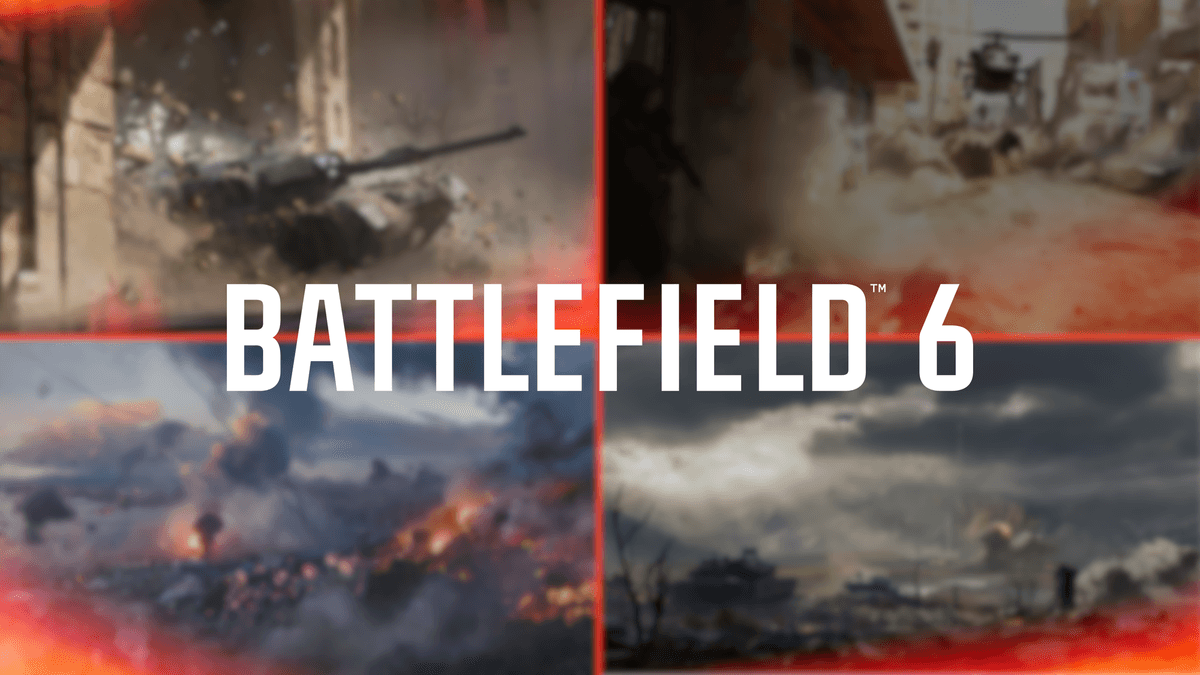
There are nine multiplayer maps at launch. That’s par for the series and, crucially, they don’t feel like the empty, awkward sprawls of 2042’s release. I’ve run gunfights through a neon-streaked financial district that actually funnels players into productive conflict instead of aimless jogging, battered urban blocks laced with sightlines for DMRs and snipers, and an industrial coast where a refinery’s gantries become high-ground dueling platforms. They’re not all winners—there’s one dust-choked layout where two flags invite endless stalemates—but overall the rotation feels tighter and more deliberate.
Moment-to-moment, Battlefield 6 adds a few smart mechanics that matter. You can drag a downed ally out of the open before reviving; the difference between ressing behind a jersey barrier or in a street is the difference between a momentum swing and a free headshot for the enemy. Leaning from cover is a simple addition that goes a long way on console especially, and the ability to grab onto certain vehicles as an external rider is the kind of messy, emergent fun the series thrives on. Yes, you’re vulnerable clinging to the side of a transport, but rolling up a squad that way and peeling off into a building is pure Battlefield.
Gunplay, TTK, and that old BF4 feel
Shooting feels good—heavy without being sluggish. There’s enough recoil to demand burst control and attachment intention. Time-to-kill skews a hair faster than BFV in my tests but slower than MW’s more twitchy modes. I’ll be honest: netcode gremlins haven’t vanished entirely. On a couple of 64-player lobbies I saw a handful of “I died behind cover” moments and packets spiking for a few seconds, but it was miles better than 2042’s launch week. When it sings, it really sings: smoke pops, an Engineer zaps a vehicle back into the fight, Support drops ammo, a Recon pings a rooftop nest, and Assaults cut through alleys to pressure the back flag. It’s Battlefield.
Destruction (finally) matters again
I’ve missed meaningful destruction. Battlefield 6 doesn’t resurrect full-scale “entire skyscraper topples” gimmicks every match, but it brings back the gritty, tactical version: chopping new angles in plaster walls, eroding cover until your last sandbag is dust, vehicles ripping facades off shops and turning them into shooting galleries. The cost? No 128-player chaos. I didn’t cry about it. Smaller player counts keep the fighting focused and the server simulation steadier, and the environments look richer for it.
Performance, settings, and sound: how it actually felt to play
On my PC, Ultra at 1440p with DLSS Quality felt smooth with sporadic dips when the screen became an index card of particles. I did hit a couple of shader compilation hitches in the first 20 minutes of boot-up and one gnarly stutter when a gas pipeline event triggered, but they didn’t repeat after the initial session. The options let me tweak ADS sensitivity by zoom level (a must), change hold/toggle states for lean, and adjust peripheral highlights to cut down on visual clutter. The scoreboard is back in a sane format, with class icons doing real UI work instead of cosplay.
Audio is back to Battlefield’s crunchy best. The crack of a 7.62 on a cold morning map versus the soft thump of suppressed SMGs in rain, the metallic twang of tank shells skipping the edge of a shipping container—chef’s kiss. Directional audio helped me locate flanks, though I did notice a couple of weird footstep occlusion moments where a sprint above me read as being on my level.
What works for me (and what still grates)
- Campaign has actual pacing and variety. Infiltration beats, long-range engagements, and a couple of excellent armor sequences kept it from blurring into noise.
- Classes are meaningful again. Gadgets and passives give identity without turning every fight into ability spam.
- Expansion mode is brilliant. The shrinking control set injects urgency and variety into match flow.
- Gunplay lands in that sweet spot: punchy recoil, readable feedback, satisfying headshots.
- Destruction is back in a tactical way. Not just spectacle—useful, fight-shaping erosion of cover.
- AI in the campaign rubber-bands between “smart flank” and “goldfish.” Stealth sequences can break in frustrating ways.
- Ending feels unresolved. Thread dangles read like setup for seasonal content more than narrative closure.
- Netcode hiccups still pop up. Fewer than before, but you’ll die behind cover a couple of times a night.
- Playlist split (restricted vs anything-goes) worries me. If one falls out of favor, the other will feel neglected.
- Still no aircraft piloting in the campaign. Missed opportunity given how good the tanks feel.
Progression, challenges, and the dangling carrot
Progression follows the familiar arc: account levels unlock gear, weapons and vehicles level to open attachments and armaments, and a mastery track rewards persistence with camos and badges. Challenges dole out cosmetics, XP boosts, and weapon packages, which is a nice nudge to try kits you’d otherwise ignore. A season pass is slated to launch with Season 1; the studio hasn’t laid out its full progression path yet, so I’m withholding judgment there. I’ll take earned cosmetics and map drops over stat-creeping guns any day.
Who should play Battlefield 6: La renaissance?
If you loved Battlefield 3 and 4’s tempo and dropped 2042 like a hot potato, this is the apology tour that actually feels sincere. Teamplay-first squads that like defined roles will thrive, especially in Expansion and Breakthrough where coordination can steamroll or save a match. If you’re more of a Call of Duty player who wants bigger battles without sacrificing snappy gunfeel, the no-restriction playlists and smaller modes give you a softer entry point.
Solo campaign seekers? Six hours is six hours. It’s better than “obligatory mode” fluff, but it’s still appetizer-sized. If you want a narrative meal, you’ll finish this and be back in multiplayer by dinner.
The moments that won me over
Specifics sell a Battlefield more than any feature list ever could. The minute I realized Battlefield 6 might have its mojo back came about 10 hours in. Expansion mode, third round, the last control point sat in a crumbling apartment block. Our Recon marked a rooftop MG, our Engineer slapped repair on a battered IFV in the alley, and I dragged our Support behind a chipped concrete planter while tracers stitched the rain in front of us. We popped smoke, bolted, and I felt the whole squad move as one wave; the scoreboard at the end didn’t matter as much as how that minute felt. That, right there, is why I stuck with this series through the weird years.
FinalBoss // Gear
Level up your setup
01Top-rated gaming headsetson Amazon→02High-refresh gaming monitorson Amazon→03Gaming chairson Amazon→04Discounted game keyson Kinguin→Affiliate links · As an Amazon Associate, FinalBoss earns from qualifying purchases.
Want to Level Up Your Gaming?
Get access to exclusive strategies, hidden tips, and pro-level insights that we don't share publicly.
Ultimate Reviews Strategy Guide + Weekly Pro Tips