
Battlefront Classic Collection Broke Me: I’m Done Trusting Lazy ‘Remasters’
Game intel
Star Wars Battlefront Classic Collection
Fight in iconic battles from across the STAR WARS galaxy! Play the classic STAR WARS Battlefront games on modern consoles, online and offline in this complete…
The Day a “Remaster” Finally Broke Me
I don’t throw the word “disgusted” around lightly. Games frustrate me, disappoint me, even bore me sometimes-but it takes a special kind of malpractice to make me feel genuinely disgusted. Star Wars Battlefront Classic Collection managed it. And that hurts to admit, because I grew up on the 2004 and 2005 Battlefronts. LAN parties in cramped dorm rooms, split-screen chaos with my brother on PS2, late-night PC matches on Mos Eisley Heroes-these games helped write my gaming DNA. So when Aspyr announced a so-called “classic collection,” I was ready to throw money at it just for the chance to relive those nights with modern convenience and full lobbies. Instead, after an hour, I knew I’d been sold a brick in a Star Wars box.
This isn’t me nitpicking about a few texture seams or a quirky animation. This is me calling out a studio that promised the basics and failed at the basics. This is me staring at an ugly UI, fighting a clunky lobby system, and being told there were only two 64-player servers available on launch day when over nine thousand players had shown up to play. Do the math. Two lobbies, 128 total slots, thousands locked out. That’s not a hiccup-that’s a catastrophic failure of planning. And it torpedoed the one thing that mattered most for this rerelease: the multiplayer rush at peak population.
The Promise I Bought—and the Reality I Got
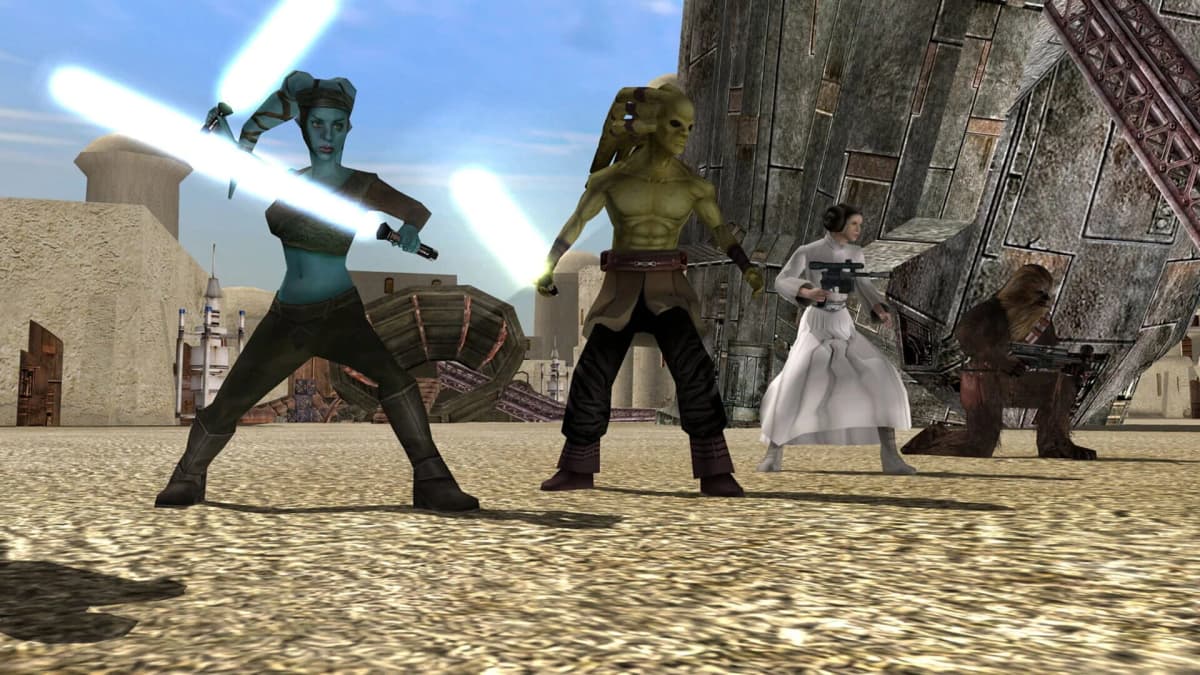
On paper, this should have been a layup. Bundle Battlefront 1 and 2. Add cross-pollinated maps and modes. Bring Asajj Ventress and Kit Fisto into the roster. Support 64-player lobbies. Touch up the visuals without doing anything reckless to the original feel. And release on modern platforms so the whole galaxy can jump in together. That’s it. That’s the job. You don’t need a Jedi Council to sign off on that roadmap.
Instead of an elegant remaster, we got an awkward, half-hearted port. The “Classic Collection” split the games into two siloed executables—why? If you’re selling a unified package, unify it. The UI? Somehow managed to look worse than a twenty-year-old menu. Navigating with a mouse felt like trying to turn a Star Destroyer with a toothpick. Familiar quality-of-life basics from the originals—yes, including being able to select your class with the mouse without breaking rhythm—were stripped out or broken. It’s surreal when a rerelease removes utility that the ancient version nailed.
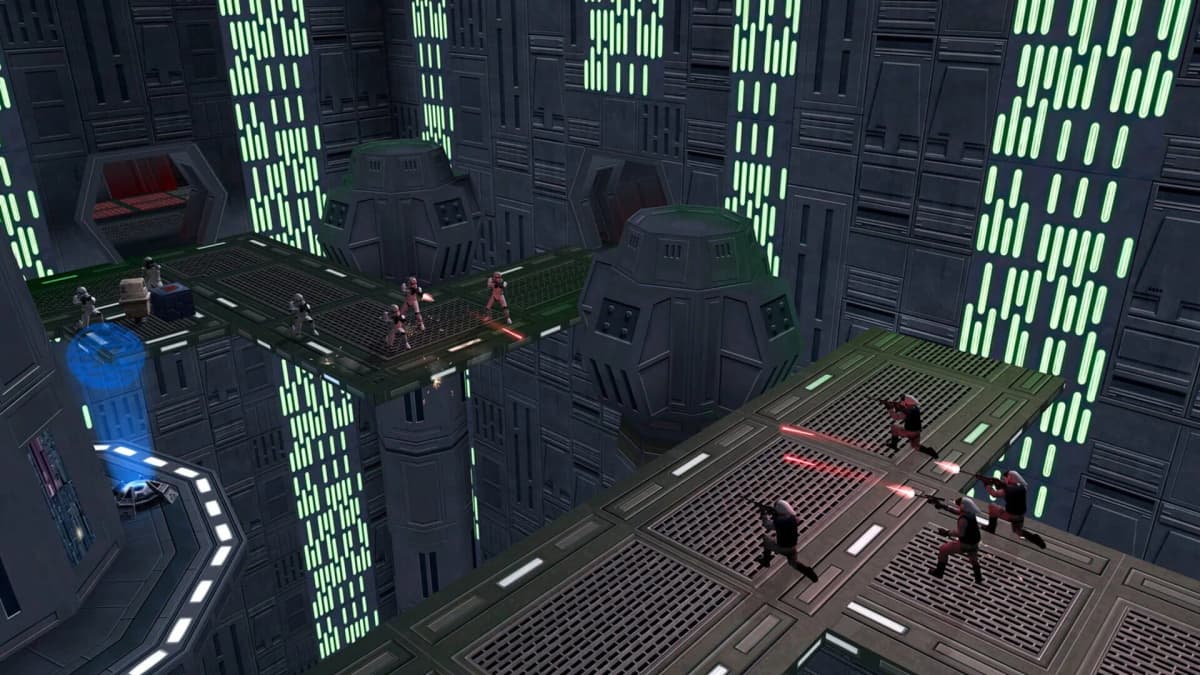
And let’s talk about that “64 players” pitch. The entire point of day-one hype for a multiplayer-focused rerelease is the crush of bodies. You want to log in and instantly swim in full servers, every map popping. But launch day came, and there were reportedly only two 64-player lobbies standing. Two. With more than nine thousand day-one players, that was a guaranteed stampede of angry fans stuck in menus, watching a Star Wars-shaped spinning wheel instead of a firefight on Polis Massa. The result was predictable: a flood of “Mostly Negative” user reviews on Steam, Metacritic dipping into the high 50s, and a user score around 3/10 at launch. PR disaster, community meltdown, and a rapid population collapse that even post-launch patches struggle to undo. You don’t get a second first impression on a nostalgia product. You either respect the audience or you lose them.
The Price Tag That Told Me Everything
The marketing choice to call this a “Classic Collection” rather than a “remaster” wasn’t accidental. It’s hedging. It’s a verbal force field: “We never said it was a remaster! We said ‘collection’!” Meanwhile, the price tag sits at about 35€, while the original games are perpetually on sale around 5€ each on PC. That gap only makes sense if the rerelease earns its keep with stability, smart integration, and feature parity at a minimum. But this package couldn’t even guarantee functional servers at launch or maintain the feature set of the decades-old originals. So what exactly are we paying for here? Two shabby wrappers around two games I already own?
I’m not allergic to paying for convenience and curation—I’ll happily buy a faithful remaster that respects my time. I bought Mass Effect Legendary Edition without blinking. I’ve doubled and even tripled-dipped on Resident Evil remakes because Capcom actually put the work in. But charging premium money for a downgrade? That’s where I draw the line. And that’s why I felt swindled within an hour.
When Aspyr’s Name Became a Red Flag for Me
Here’s the part where someone says, “Cut them some slack, launch issues happen.” Sure, they do. I’ve been gaming long enough to see messy launches turn into redemption arcs. But patterns matter. And the pattern I’ve seen around Aspyr’s handling of classic Star Wars ports doesn’t inspire confidence. Remember the KOTOR II release on Switch where a bug made it impossible to finish the game without unofficial fixes? That wasn’t just a rough edge; that was a main quest-killing glitch. When your specialization is ports and remasters, you don’t get to stumble on the fundamentals. That is the job.
And this isn’t just an Aspyr problem. It’s an industry problem. We lived through the GTA Trilogy Definitive Edition faceplants, the Warcraft 3: Reforged fiasco that basically unmade a beloved classic, and the PC launch of The Last of Us Part I that felt like a benchmark test rather than a product. The whole remaster-to-remake pipeline has become a minefield of “trust us, pre-purchase now” marketing, shipped half-formed products, and band-aid patches that arrive after the community already moved on.
Why This One Cut So Deep
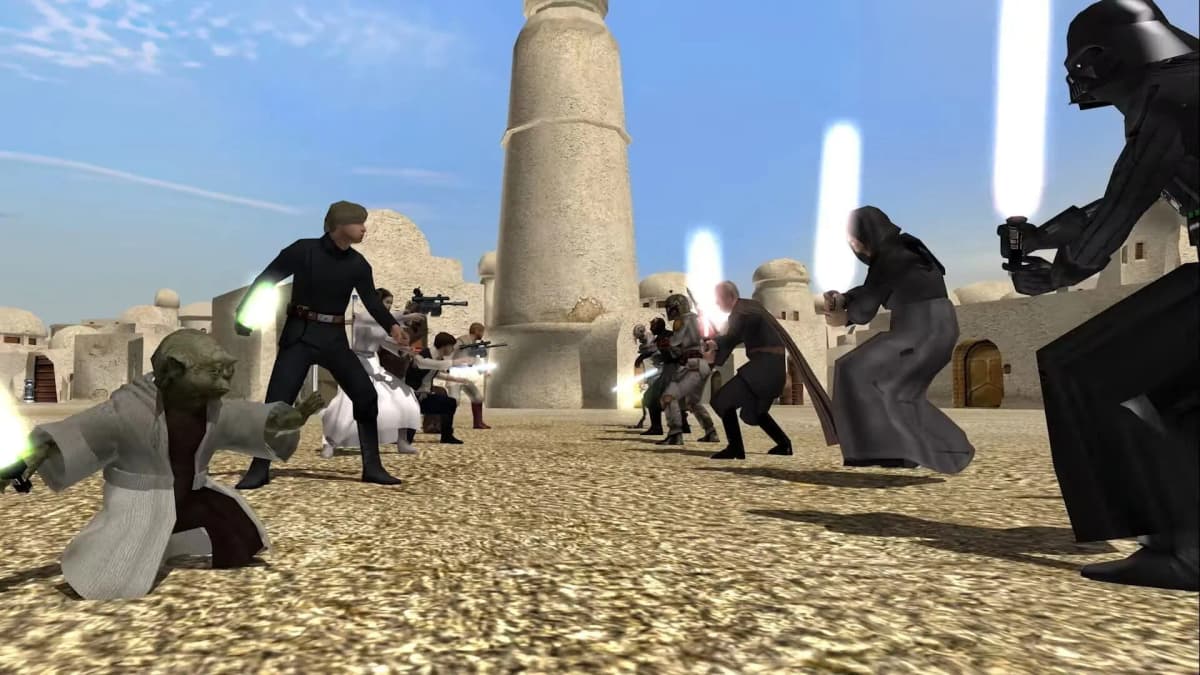
Battlefront is not just another game to me. It’s the rhythm of rolling spawns on Galactic Conquest, the sound of a capture point slipping away at the last second, the janky-but-glorious lightsaber clashes on Mos Eisley where everyone is a hero and nobody is safe. It’s a time capsule. And when you sell me “Classic Collection,” you’re selling me the idea that you understand that. You’re promising to respect the feel, the flow, and the community that survived on unofficial servers and mods for years because those games were worth preserving.
Instead, I booted into menus that felt like a mobile port, server capacity that might as well have been a closed beta, and random bugs that didn’t exist in the originals. How do you regress on twenty-year-old code? How do you strip out basic mouse navigation for class selection and expect PC players to clap? I shouldn’t have to justify that expectation. The originals are right there to measure against. If the rerelease isn’t at least that solid, don’t ship it. Or be honest in your marketing and price it accordingly as a convenience port. Don’t dangle “64-player lobbies” like a carrot and then run out of carrots on day one.
“But They Patched It!” Isn’t a Get-Out-of-Jail Card
Yes, some issues were addressed after launch. Yes, the online situation improved. But I’m done grading rereleases on the “eventually fine” curve. Rereleases trade on trust and nostalgia. You don’t buy a remaster hoping it becomes good later—you buy it to relive greatness right now with fewer headaches. When the first hour is a parade of jank and scarcity, you’ve squandered the moment people came to you for. That matters, and it should matter. If we let “we’ll fix it later” be the norm for rereleases of all things, we’re admitting preservation doesn’t need care, just a patch pipeline.
How I Now Vet Rereleases in the First Hour
I used to preorder this stuff on muscle memory. Not anymore. Here’s the reality: your refund window is your power window. On PC, Steam’s two-hour policy gives you enough time to learn if a rerelease deserves your time or if it’s a black hole of nostalgia tax. Console refund policies are stricter and murkier, so on those platforms I’m even more cautious. These days, my first-hour checklist is ruthless, and Battlefront Classic Collection helped write it.
- Server sanity check: Can I join a match in under three minutes at peak time? Are there multiple populated lobbies? If a multiplayer-focused rerelease can’t put me in a match quickly, refund.
- UI and input parity: Can I navigate everything smoothly with mouse and keyboard on PC? Does controller mapping make sense on console? If the rerelease removes obvious quality-of-life features from the original (like direct class selection without fiddly menu gymnastics), refund.
- Stability and performance: No crashes, no weird sound stutters, consistent framerate on recommended hardware. If I’m hunting for ini hacks in the first hour, refund.
- Feature fidelity: Are promised features actually there and usable? If the marketing sold specific lobby sizes or hero additions, test them immediately. If they’re missing or bottlenecked by infrastructure, refund.
- Communication receipts: Are patch notes specific, transparent, and frequent? Vague “bug fixes” after a meltdown screams “we don’t have a plan.” Consider refunding and revisiting months later.
- Price-to-value gut check: Does the build feel like a clear improvement over the originals I can buy for a fraction of the price? If not, refund. You can always buy back in later.
This approach has saved me money and rage. It’s not about being cynical—it’s about making studios earn the nostalgia premium instead of handing it to them out of muscle memory.
Want to Level Up Your Gaming?
Get access to exclusive strategies, hidden tips, and pro-level insights that we don't share publicly.
Ultimate Gaming Strategy Guide + Weekly Pro Tips
The Cost of Calling It “Classic” Without Earning It
Words matter. Calling this package the “Classic Collection” suggests a curated, definitive edition. But the product we got at launch was anything but definitive. It felt like a middleman build rushed to meet a calendar date, not a love letter to a pair of games that defined mid-2000s multiplayer for a generation. And charging 35€ for something the community quite reasonably perceived as a buggy port—while the originals sit at 5€—isn’t just a misread of the market; it’s an insult to the fans paying attention.
I know some will say, “If you wanted the perfect Battlefront, go play the originals.” I do. I have. And I will again. But that’s the point, isn’t it? A rerelease should make it easier to love the old thing in the present, not force us to retreat to it like refugees because the new wrapper is worse than the antique. If you can’t hit parity, don’t pretend you did. Call it a port. Price it like one. Or better yet, take the time to do it right and watch the community show up with hearts and wallets open.
What Aspyr Could Still Do—If They Care
It’s not impossible to salvage a launch like this, but it takes transparency and a plan. If I were running this project, I’d prioritize five things:
- Server capacity and redundancy: Overprovision first, scale down later. Day one should be an embarrassment of riches, not a ration line.
- UI and control parity: Bring back the exact quality-of-life interactions from the originals, especially on PC. If people could do it in 2005, they should be able to do it in 2025.
- One unified client: Merge the split into a single, coherent package with shared matchmaking, playlists, and progression.
- Hard patch notes with timelines: List every bug, every regression, and when it’ll be addressed. Own the problems publicly.
- Make goods: Price cut, partial refunds, or a meaningful content drop that isn’t just a skin. Show contrition with action.
Will they do all that? Probably not. But the path exists. And fans aren’t unreasonable—we just want what was promised at the level of quality the originals already achieved.
Why I’m Done Preordering Remasters
I’m the guy who used to chase the warm fuzzies. Midnight launches, collectors’ editions, the whole ritual. After Battlefront Classic Collection, that era is over for me. I’ll still get hyped—nostalgia is a hell of a drug—but I won’t pay upfront. Not for remasters, not for ports, not for “collections” wearing remaster clothes. I’ll wait for day-one player reports, check server counts on Twitch or Discord, read user impressions, and then decide. The first hour tells you what you need to know. If a rerelease respects me, I’ll respect it back with my cash. If not, I’ll go replay the originals and have a better time.
The Bigger Picture: Preservation Deserves Better
Underneath the frustration is something I care about way more than any one game: preservation with integrity. These old titles aren’t museum pieces; they’re living spaces we revisit together. Remasters, ports, and collections are supposed to be bridges between eras, not toll booths. When a company botches a rerelease, it doesn’t just waste a weekend—it erodes trust in the entire notion that classics can survive the march of hardware cycles without losing their soul. That’s the part that stings the most. We shouldn’t have to choose between janky abandonware fixes or overpriced downgrades.
It’s not high art to deliver a competent rerelease. It’s attentiveness. It’s testing server capacity properly. It’s replicating controls faithfully. It’s labeling your product honestly. And it’s pricing it in a way that acknowledges a twenty-year-old foundation. Do those things, and you’ll have fans singing your praises for years. Skip them, and you’ll get exactly what we saw here: a PR crater, abandoned lobbies, and a community that won’t forget how it felt to be left out in the cold on day one.
My Final Word to Fellow Fans
I wanted to love Battlefront Classic Collection. I wanted to log in, hear the blaster fire, and feel twenty again for a night. Instead, I got a cautionary tale. If you felt the same, you’re not crazy—you were sold a promise that wasn’t kept. So hold your ground. Use your refund window. Demand clear communication. Reward the studios that earn your trust and leave the rest on the shelf until they do. We have the power here, and the market listens when we stop paying for sloppy nostalgia.
I’m not cynical about gaming. I’m still the kid who believes in magic when a great game starts. But I’m done giving my faith for free, especially to rereleases that can’t meet the bar set by their own ancestors. If you’re going to call it a “classic,” act like it. Otherwise, don’t be surprised when we walk back to the real thing and never return.